
Miryam Naddaf in Nature:
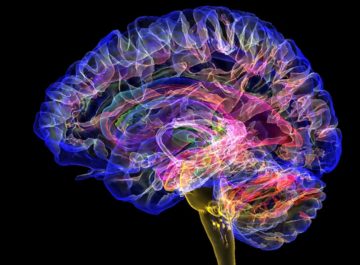 The technique known as deep brain stimulation (DBS) has improved cognition in people with traumatic brain injuries, a small clinical trial has found.
The trial data, published in Nature Medicine on 4 December1, show that the five participants had a 15–52% improvement in their processing speed in a cognitive test after three months compared to their performance before the DBS implants.
“For some participants, the improvements have been transformative, even many years after the injury,” says study co-author Jaimie Henderson, a neurosurgeon at Stanford University in California. Medium to severe traumatic brain injury (msTBI), often a result of wounds or trauma to the head, causes neurons to die and brain circuits to disconnect, leading to long-term cognitive difficulties. People who have this type of injury — of which there are more than 5 million in the United States — often cannot resume their pre-injury life and work.
More here.
 I will never forget the first time I saw the devil—leering at me, lurking in the corner of the room, glowing red and approaching my motionless body. I was caught between sleep and waking; I blinked furiously; I struggled to rouse my heavy limbs as he raised his hand to my face. I could not even muster the strength to open my mouth and cry out, help, mommy, help, the monster will get me—
 Based on Paul Theroux’s novel of the same name, the film is the director Peter Bogdanovich’s Vietnam movie as well as his Casablanca, a wartime melodrama about a raffish American trying to make a buck on the periphery of the conflict. A lot happens to Jack Flowers—he falls in love, finds a kindred spirit (platonic), fulfills his dream of running a brothel, runs afoul of local gangsters, goes into business with the U.S. military, witnesses the death of a friend, and gets roped in to a smear operation by the CIA—but the film’s tone and pacing belie its density of event. Saint Jack is laid-back, even chill. Applied to heavy material, this attitude usually produces a comedy, but Saint Jack, while full of funny moments, achieves something serious: the sublime.
 In 1989, when Thomas Heatherwick was eighteen years old, he picked up a Taschen book about the Catalan architect Antoni Gaudí in a student book sale. Inside it, he saw a double-page spread showing Gaudí’s Casa Milà, an apartment building in central Barcelona. ‘I was stunned,’ he writes in the introduction to Humanise. ‘I had no idea that buildings like this existed. I had no idea that such buildings could exist.’
 Great critics enjoy magisterial prerogatives, and one of them is the right of comparing John Milton to William Shakespeare. When Samuel Taylor Coleridge took his turn, he was wise enough to refrain from making the two contenders for the title of England’s greatest poet. They are simply too different, he avers. Milton is Shakespeare’s “compeer, not his rival.” Shakespeare, Coleridge explains, “passes into all the forms of human character and passion,” while Milton, “attracts all forms and things to himself, into the unity of his own ideal. All things and modes of action shape themselves anew in the being of Milton; while Shakespeare becomes all things, yet forever remaining himself.” For Coleridge the authorial personality of the one is perfused throughout his work until no stable, freestanding sense of “Shakespeare” remains; the work of the other, line by exacting line, demands to be read in light of the man himself. Not even Dante, who cast himself as the protagonist of his own great poems, or Tolstoy, who pauses a narrative to interject whole philosophical essays, press themselves on the reader as forcefully as does Milton.
 Earlier, during more critical times, he had been accused of many bad things. Now that he’s gone, his critics will get a chance to rehearse the charges. Christopher Hitchens, who made the case that the former secretary of state should be tried as a war criminal, is himself dead. But there’s a long list of witnesses for the prosecution: reporters, historians, and lawyers eager to provide background on any of Kissinger’s actions in Cambodia, Laos, Vietnam, East Timor, Bangladesh, against the Kurds, in Chile, Argentina, Uruguay, and Cyprus, among other places.
 Today, even seasoned researchers find understanding in short supply when they confront the central open question in theoretical computer science, known as the P versus NP problem. In essence, that question asks whether many computational problems long considered extremely difficult can actually be solved easily (via a secret shortcut we haven’t discovered yet), or whether, as most researchers suspect, they truly are hard. At stake is nothing less than the nature of what’s knowable.
 Arthur Conan Doyle secretly hated his creation Sherlock Holmes and blamed the cerebral detective character for denying him recognition as the author of highbrow historical fiction, according to the historian Lucy Worsley.
 By the time Amanda Stern was in her mid-40s, she no longer suffered from clinical depression. And her panic attacks, which had started in childhood, were mostly gone. But instead of feeling happier, she said, “I felt wallpapered in an endless, flat sadness.” Confused, she turned to her therapist, who suggested that she had dysthymia, a mild version of persistent depressive disorder, or P.D.D. Ms. Stern, an author based in New York City, often writes about mental health, but she had never heard the term. She soon realized that she had experienced dysthymia on and off for decades. “I am not suffering from it right now,” she added, “but I imagine I’ll live with it again.” She decided to write about it in her newsletter,
 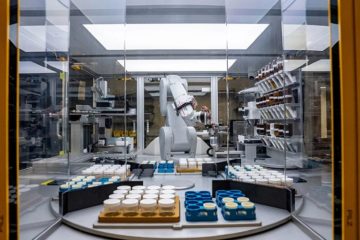 An autonomous system that combines robotics with artificial intelligence (AI) to create entirely new materials has released its first trove of discoveries. The system, known as the A-Lab, devises recipes for materials, including some that might find uses in batteries or solar cells. Then, it carries out the synthesis and analyses the products — all without human intervention. Meanwhile, another AI system has predicted the existence of hundreds of thousands of stable materials, giving the A-Lab plenty of candidates to strive for in future.
 As we head into COP28, the annual global meeting on climate change underway in Dubai, there are two dominating schools of thought, both of which are wrong. One says the future is hopeless and our grandchildren are doomed to suffer on a burning planet. The other says we’re all going to be fine because we already have everything we need to solve climate change.