Andrew Sepielli in Aeon:
Many academic fields can be said to ‘study morality’. Of these, the philosophical sub-discipline of normative ethics studies morality in what is arguably the least alienated way. Rather than focusing on how people and societies think and talk about morality, normative ethicists try to figure out which things are, simply, morally good or bad, and why. The philosophical sub-field of meta-ethics adopts, naturally, a ‘meta-’ perspective on the kinds of enquiry that normative ethicists engage in. It asks whether there are objectively correct answers to these questions about good or bad, or whether ethics is, rather, a realm of illusion or mere opinion.
Most of my work in the past decade has been in meta-ethics. I believe that there are truths about what’s morally right and wrong. I believe that some of these truths are objective or, as they say in the literature, ‘stance-independent’. That is to say, it’s not my or our disapproval that makes torture morally wrong; torture is wrong because, to put it simply, it hurts people a lot. I believe that these objective moral truths are knowable, and that some people are better than others are at coming to know them. You can even call them ‘moral experts’ if you wish.
Of course, not everyone agrees with all of that. Some are simply confused; they conflate ‘objective’ with ‘culturally universal’ or ‘innate’ or ‘subsumable under a few exceptionless principles’ or some such. But many people’s misgivings about moral objectivity are more clear headed and deeper. In particular, I find that some demur because they think that, for there to be moral truths, let alone objective, knowable ones, morality would have to have a kind of ‘foundation’ that, in their view, is nowhere to be found. Others, anxious to help, try to show that there’s a firm foundation or ultimate ground for morality after all.
It’s my view that both sides of this conflict are off on the wrong foot. Morality is objective, but it neither requires nor admits of a foundation.
More here.

 Twenty-five years ago, the burgeoning science of consciousness studies was rife with promise. With cutting-edge neuroimaging tools leading to new research programmes, the neuroscientist Christof Koch was so optimistic, he bet a case of wine that we’d uncover its secrets by now. The philosopher David Chalmers had serious doubts, because consciousness research is, to put it mildly, difficult. Even what Chalmers called the easy problem of consciousness is hard, and that’s what the bet was about – whether we would uncover the neural structures involved in conscious experience. So, he took the bet.
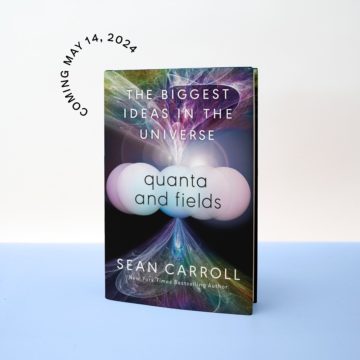 The basic issue is that people hear the phrase “quantum mechanics,” or even take a course in it, and come away with the impression that reality is somehow pixelized — made up of smallest possible units — rather than being ultimately smooth and continuous. That’s not right! Quantum theory, as far as it is currently understood, is all about smoothness. The lumpiness of “quanta” is just apparent, although it’s a very important appearance.
 O
O Things in Gaza have been in constant deterioration. Every single day that passes, new crises are compounded over the crises that already exist. It’s been over 40 days of non-stop bombardment. I’ve been saying many times throughout my coverage that what we have seen in this war, what we are witnessing is unlike any other war in any other place that anyone else has witnessed or lived through. The bombardments of hospitals, of UNRWA schools, residential homes—there’s no place that is not under fire. There’s no place that is not targeted from day one.
 It is difficult to predict when one will spend the night at a hotel in Newark, let alone three, and uncommon to agree to such a scenario willingly. If you live there already, you stay home. If you’re there for a professional engagement, your boss made you go. If your flight has been canceled, you go there as a last resort. Whereas, though I felt compelled to be there, I couldn’t point to an authority outside of myself that had forced my hand. The room had been booked a week in advance.
 Is it appropriate to call the three members of the sketch comedy group Please Don’t Destroy “boys”? They are grown men, in a sense, with jobs (Saturday Night Live writers) and, one assumes, growing 401(k)s. They’re in their mid-to-late 20s, six years into a career that started at New York University. Yet in other ways they are very obviously still tweens, gangly and silly, still figuring it all out. They’ve been known to sign emails to reporters “The Boys.” (This was revealed in
  “T
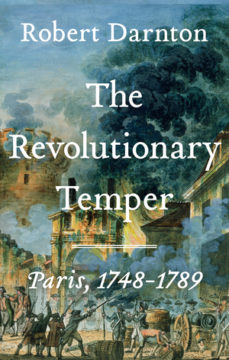
“T This format ensures an extraordinary — and bewildering — range of striking details. We learn that the bloated bodies of those who died in German U-boat attacks wash up along the coastline of Savannah, Ga.; that at the Treblinka death camp “there is almost always a jam when the door of one of the gas chambers is opened,” as the limbs of the corpses are so densely entangled; that when British soldiers in North Africa take five Italian prisoners, one of them happens to be a tenor from the Milan opera, and all five sing as they help with breakfast; that a Chinese civil servant tasked by the Nationalist government with collecting taxes from the starving population of Henan reports that people are eating bark and grass and selling their children for steamed rolls; that U.S. troops at Guadalcanal, desperate for alcohol of any kind, drink after-shave lotion “filtered through bread”; and that when a private with the Red Army northwest of Stalingrad peers out from his trench one night, he discovers a scene of terrible and staggering beauty — a freezing rain, reflecting the full moon’s light, has formed a shimmering veil over the landscape and the corpses of his dead companions.