
Jeff VanderMeer at The Paris Review:
 Halfway through Sven Holm’s taut unfolding nightmare, Termush, the unnamed narrator encounters “ploughed-up and trampled gardens” where “stone creatures are the sole survivors.” Holm describes these statues as “curious forms, the bodies like great ill-defined blocks, designed more to evoke a sense of weight and mass than to suggest power in the muscles and sinews.” Later, a guest of the gated, walled hotel for the rich from which the novel takes its name relates a dream in which “light streamed out of every object; it shone through robes and skin and the flesh on the bones, the leaves on the trees … to reveal the innermost vulnerable marrow of people and plants.” The same could describe the novel, which accrues its strange effects via both this stricken, continuous revealing and the “curious forms” of a solid, impervious setting, in which the ordinary elements of our world come to seem alien through the lens of nuclear catastrophe.
Long before the sanctuary of Termush becomes visibly unsafe, these tears at the fringes of reality signify the truth of the narrator’s situation. The very texture of the world becomes unknowable, imbued with a potency, vibration, or sheen that alters reality.
more here.
 Novelist Hanif Kureishi sustained life-changing injuries when he collapsed and landed on his head on Boxing Day last year. Left without the use of his arms and legs, the award-winning writer of The Buddha of Suburbia and My Beautiful Laundrette has charted his experience in brutally-honest blog posts. He credits his sense of purpose to his relationship with his responsive readers. A year on, he joined BBC Radio 4’s Today programme as a guest editor and described the accident’s profound impact on his life.
 Ozempic and other drugs like it have proven powerful at regulating blood sugar and driving weight loss. Now, scientists are exploring whether they might be just as transformative in treating a wide range of other conditions, from addiction and liver disease to a common cause of infertility. “It’s like a snowball that turned into an avalanche,” said Lindsay Allen, a health economist at Northwestern Medicine. As the drugs gain momentum, she said, “they’re leaving behind them this completely reshaped landscape.” Much of the research on other uses of semaglutide, the compound in Ozempic and Wegovy, and tirzepatide, the substance in Mounjaro and Zepbound, is only in the early stages. One of the biggest questions scientists are seeking to answer: Do the benefits of these drugs just boil down to weight loss? Or do they have other effects, like tamping down inflammation in the body or quieting the brain’s compulsive thoughts, that would make it possible to treat far more illnesses?
 Any time you walk outside, satellites may be watching you from space. There are currently
  The ongoing horrors unfolding in Israel and Gaza have deep-rooted origins that stem from a complex and contested question: Who has rights to the same territory?
 Maria Haro Sly in Phenomenal World:
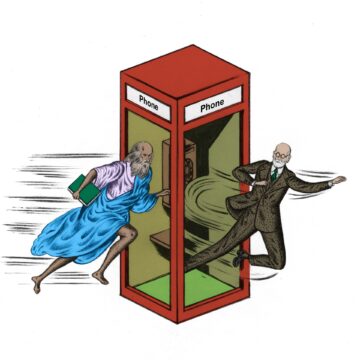 Around five years ago, David—a pseudonym—realized that he was fighting with his girlfriend all the time. On their first date, he had told her that he hoped to have sex with a thousand women before he died. They’d eventually agreed to have an exclusive relationship, but monogamy remained a source of tension. “I always used to tell her how much it bothered me,” he recalled. “I was an asshole.” An Israeli man now in his mid-thirties, David felt conflicted about other life issues. Did he want kids? How much should he prioritize making money? In his twenties, he’d tried psychotherapy several times; he would see a therapist for a few months, grow frustrated, stop, then repeat the cycle. He developed a theory. The therapists he saw wanted to help him become better adjusted given his current world view—but perhaps his world view was wrong. He wanted to examine how defensible his values were in the first place.
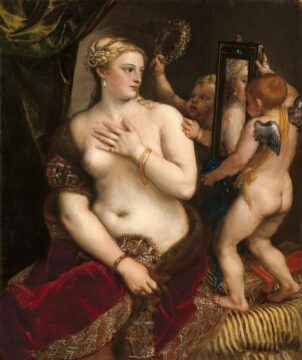 The cosmetics entrepreneur Helena Rubinstein once observed, “There are no ugly women, only lazy ones.” The kind of beauty she had in mind is an ambivalent gift. On the one hand, it is not confined to the biologically blessed but available to everyone; on the other, it is a hard-earned prize, a product of ritualistic and often painstaking devotions at the mirror. Is this sort of beauty worth pursuing? Some feminist thinkers have bashed it as a superficial distraction. “Taught from infancy that beauty is woman’s sceptre, the mind shapes itself to the body, and roaming round its gilt cage, only seeks to adorn its prison,” Mary Wollstonecraft wrote disdainfully in 1792. Yet there is a tinge of misogyny to the familiar accusation that cosmetic projects are fluffy trivialities. Perhaps there is more truth (and more respect) to be found in the view of the novelist Henry James, who once described a female character’s flair for fashion as a form of “genius.”
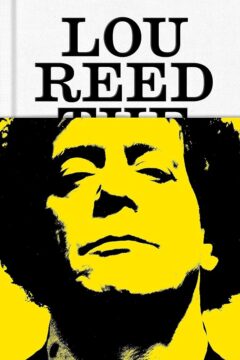 “King of New York” was the epithet given to him by David Bowie, an obsessive Velvets fan who rescued Reed’s lacklustre solo career by producing Transformer, which spawned his biggest hit, Walk on the Wild Side. It’s also the title of Will Hermes’s meticulous yet vivid new biography, the first to draw on the archive donated to the New York Public Library by Reed’s widow Laurie Anderson. As in his 2011 book Love Goes to Buildings on Fire, about the city’s mid-70s musical landscape, Hermes expertly conjures the different scenes Reed inhabited, placing him amid a rich cast of collaborators, friends and lovers.