
Alice Callahan in The New York Times:
 As a health reporter who’s been following nutrition news for decades, I’ve seen a lot of trends that made a splash — and then sank. Remember olestra, the Paleo diet and celery juice? Watch enough food fads come and go, and you realize that the most valuable nutrition guidance is built on decades of research, in which scientists have looked at a question from multiple perspectives and arrived at something like a consensus.
1. The Mediterranean diet really is that good for you.
Decades of research support the Mediterranean diet — which is centered on fruits and vegetables, whole grains, legumes, olive oil, nuts, herbs and spices — as one of the healthiest ways you can eat. Its heart-health benefits are numerous, and it has been linked to a lower risk of Type 2 diabetes, cognitive decline and certain types of cancer. Here are 10 science-backed pearls to carry you into the new year.
2. It’s OK to drink coffee on an empty stomach.
Some people may experience heartburn, but there’s no evidence that drinking coffee on an empty stomach can damage your gastric lining or otherwise harm your digestive system, experts say. And there are reasons to feel good about your morning brew: Drinking coffee has been linked to a longer life and a lower risk of heart disease and Type 2 diabetes.
More here.
 Hanif Kureishi has spoken candidly of how his sense of self and privacy have been “completely eradicated” after a fall on Boxing Day last year left him unable to use his hands, arms or legs.
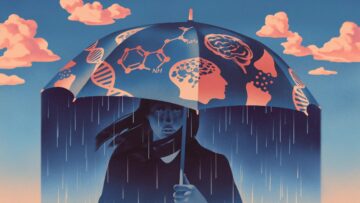 People often think they know what causes chronic depression. Surveys indicate that more than 80% of the public blames a “chemical imbalance” in the brain. That idea is widespread in pop psychology and cited in
  It is worth remembering the vast majority of what we call free-speech issues have little basis in the First Amendment, which only forbids the abridgment of speech by the government, not private organizations like magazines, cultural centers, or Hollywood production companies. In most states, for instance, it is perfectly legal for employers to fire workers for speech, as a
  In “
In “ B
B Our conveniently vague or unrealistic
 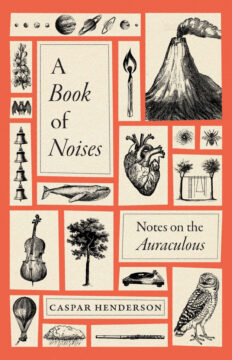 Did you know that sperm whales make sounds using “lips” located near their blowholes — and that those sounds are so loud they could burst the eardrums of a human diver at close range? Or that, near the start of the Covid-19 lockdowns in Britain in 2020, residents on newly quiet streets became aware of “noisy lovemaking” by amorous hedgehogs? Or that, according to legend, churchbells in the English coastal town of Dunwich, which largely disappeared into the sea following storm surges in the 14th century, can still be heard when the tide is just right?
 Two years ago, I gave an academic talk via Zoom on the need to limit work in order to combat the culture of burnout in the United States. Following my presentation, a senior scholar had more of a comment than a question for me. He said that “we” needed to acknowledge our privileged status among workers. When academics criticize the American work ethic, he added, we ought to recognize that most workers “can’t afford to burn out.” Burnout, I took him to be saying, was a luxury, and to complain about it was like flaunting your wealth before someone desperately poor.
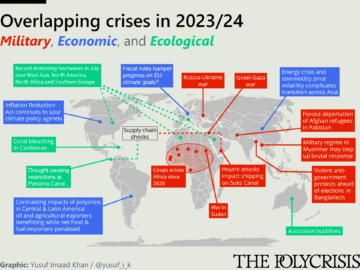 Tim Sahay in Polycrisis:
 I HAVE FREQUENTLY BEEN SEATED in the dark near those who have variously been called “the pilly-sweater crowd,” “cinemaniacs,” or “Titus-heads” (referring to the two main movie theaters at MoMA). They are pejorative terms for a certain type of New York City cinephile, one whose zeal for the seventh art seems to have been leached of all pleasure and has instead transmogrified into grim compulsion. Demographically, they are often (but not always) white, male, and middle-aged or older.