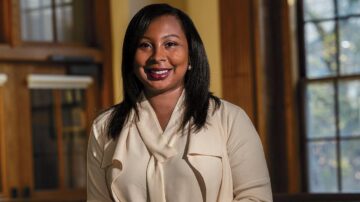
A Nobel for the story of women in the workforce

Noah Smith in Noahpinion:

The 2023 Econ Nobel went to Claudia Goldin for her work on women’s labor market outcomes. I can’t say I’m particularly surprised to see Goldin get the nod, here. Economists generally recognize Goldin as one of the key pioneers of the “credibility revolution” in empirical economics.

The main thing you have to understand about the Econ Nobel (or, if you prefer, the Bank of Sweden Prize in Memory of Alfred Nobel) is that it’s typically a methods prize; instead of specific discoveries, like in chemistry or medicine, the Econ Nobel is typically awarded to researchers who invent new ways of making discoveries. In recent years, the prize has been awarded more and more to researchers whose primary focus is empirical analysis rather than pure theory.

More here.

Thursday Poem

Someone Should Start Laughing

I have a thousand brilliant lies
For the question:

How are you?

I have a thousand brilliant lies
For the question:

What is God?

If you think that the truth can be known
From words,

If you think that the Sun and the Ocean

Can pass through that tiny opening
Called the mouth,

O someone should start laughing—

Someone should start laughing—
Now!

Hafiz
from
I Heard God Laughing-
Renerings of Hafiz
by Daniel Ladinsky

Why AI stories are more about humans than about machines

Stephen Humphries in The Christian Science Monitor:

Humans are at war with machines. In the near future, an artificial intelligence defense system detonates a nuclear warhead in Los Angeles. It deploys a formidable army of robots, some of which resemble people. Yet humans still have a shot at victory. So a supersoldier is dispatched on a mission to find the youth who will one day turn the tide in the war.

No, it’s not another movie in “The Terminator” series.

In “The Creator,” opening Sept. 29, the hunter is a human named Joshua (John David Washington). He discovers that the humanoid he’s been sent to retrieve looks like a young Asian child (Madeleine Yuna Voyles). It even has a teddy bear. As Joshua bonds with the robot, he wonders whether machines are really the bad guys.

More here.

Discovering Our Roots: An Introduction to the History of Human Evolution

Conor Feehly in Discover:

Since Darwin revealed his seminal theory of evolution by natural selection, human beings have endeavored to understand their own evolutionary origins and history. A lot of questions still remain, but these mainly pertain to the specifics. Today, paleoanthropologists understand in great detail the evolutionary emergence of a number of traits that we consider, at least superficially, unique to modern humans.

Human beings and chimpanzees, our closest living genetic relatives, are thought to share a common ancestor that lived 6 to 8 million years ago. This is based on genetic differences, where anthropologists have compared rates of mutation in both species and estimated how long this might have taken to result in the genetic differences we see today, resembling something of a genetic clock. Since then, multiple branches in the tree of human evolution have come and gone, while some had descendants who evolved into species that eventually became modern humans.

More here.

Mind-Blowing New Law of Physics Could Mean We Really Live in a Simulation, Physicist Proposes

Becky Ferreira in Vice:

Are we living in a simulation? It’s a trippy idea that has inspired many classic tales, from Plato’s Allegory of the Cave to The Matrix franchise, but it is also increasingly becoming a subject of genuine scientific debate and inquiry.

A scientist has now proposed that evidence of this so-called “simulation hypothesis” might be hidden in laws that govern information, such as the genetic information in our DNA or digital information stored in computers, according to a new study. The results of the research suggest that different information systems undergo the same process of minimization over time, almost akin to the way a computer compresses and optimizes its data, a finding that could support the idea that the universe is a simulation.

More here.

Niche Interactions Lock Down Leukemia Cells

Deanna MacNeil in The Scientist:

In solid cancers, cellular behaviors such as motility and invasiveness are well characterized contributors to poor prognosis and cancer spread. Scientists pay close attention to a process called epithelial to mesenchymal transition (EMT) in solid cancers, as this transformation primes malignant cells for metastasis. However, EMT is somewhat of an enigma for blood and lymphatic cancers, which originate from cells that already freely circulate in the body before becoming malignant. Although conventional EMT transcription factors are often differentially expressed in leukemias and lymphomas, their oncogenic role remains unclear in different hematopoietic contexts.

More here.

Wednesday, October 11, 2023

On John Freedman’s “A Dictionary of Emotions in a Time of War”

Ada Wordsworth in the Los Angeles Review of Books:

SINCE RUSSIA’S FULL-SCALE INVASION of Ukraine in February 2022, Ukrainian cultural figures have been grappling with Theodor Adorno’s declaration: “To write poetry after Auschwitz is barbaric.” After the massacre at Bucha, the siege of Mariupol, and the seemingly endless stream of war crimes revealed every time a Ukrainian hamlet is liberated, artists, musicians, and writers are left wondering if they can possibly create something meaningful out of the barbarism—and, perhaps more pertinently, if they should. Theater critic John Freedman’s new anthology A Dictionary of Emotions in a Time of War: 20 Short Works by Ukrainian Playwrights is a response to this question.

More here.

Your brain finds it easy to size up four objects but not five — here’s why

Mariana Lenharo in Nature:

For more than a century, researchers have known that people are generally very good at eyeballing quantities of four or fewer items. But performance at sizing up numbers drops markedly — becoming slower and more prone to error — in the face of larger numbers.

Now scientists have discovered why: the human brain uses one mechanism to assess four or fewer items and a different one for when there are five or more. The findings, obtained by recording the neuron activity of 17 human participants, settle a long-standing debate on how the brain estimates how many objects a person sees.

More here.

Chris Hedges: Fascism Comes to America

Chris Hedges in SheerPost:

The parting gift, I expect, of the bankrupt liberalism of the Democratic Party will be a Christianized fascist state. The liberal class, a creature of corporate power, captive to the war industry and the security state, unable or unwilling to ameliorate the prolonged economic insecurity and misery of the working class, blinded by a self-righteous woke ideology that reeks of hypocrisy and disingenuousness and bereft of any political vision, is the bedrock on which the Christian fascists, who have coalesced in cult-like mobs around Donald Trump, have built their terrifying movement.

More here.

Greta Thunberg: Who is the climate activist and what has she achieved?

From BBC News:

The 20-year-old has become one of the world’s best-known campaigners against climate change. She first learned about climate change when she was eight. At the age of 11 or 12, she started suffering from depression, according to her father, Svante: “She stopped talking… she stopped going to school,” he said. Around the same time she was diagnosed with Asperger’s syndrome, a form of autism.

In summer 2018, aged 15, Ms Thunberg held the first “School Strike for Climate” outside the Swedish parliament. The protest was widely covered the international media, and hundreds of thousands of young people across the world joined her Fridays For Future strikes. Mr Thunberg says Greta became “much happier” after she started campaigning. She has described her autism diagnosis as a “superpower” which has helped motivate her protests. “Being different is a gift,” she told the BBC. “If I would’ve been like everyone else, I wouldn’t have started this school strike, for instance.”

More here.

Wednesday Poem

Eastbound

I have lived in the mountains,
the metropolis piedmont,
and now the sandhills.
All with you.

Last year we brought with us

the spoils of big box bookstores
and a frosting of Appalachian snow.

Today, the wild onions

and daffodils in our yard
do indeed grow through sand.

Perhaps we will make it to the coastal plain
on our slow crawl toward the sunrise,

toward the sea—the hinged clamshell
of you and me teeming with life.

by Rebecca James
from
My Laureate’s Lasso

“The Fate of These Two Peoples Are Intertwined”

Aymann Ismail in Slate:

Hamas’ attack on Israel this weekend—including the indiscriminate murder of Israelis—has led to a spiraling of an already dire situation in the region. The recent declaration of war, and the subsequent military actions in Gaza, has set off a crisis in an already calamitous conflict, particularly for the 2 million Gazans—half of whom are children—who have been living in one of the mostly densely populated places on Earth. The UN already deemed this 25-mile-long area “unlivable” five years ago due to the Israeli blockade. Civilian residents are now facing a “complete siege,” per Israel’s defense minister’s order, including the cutting of electricity and a total blockade on food, water, and fuel. They’re also being bombed in nonstop airstrikes with heavy munitions following the unprecedented incursion into Israel by Hamas, which left a trail of hundreds of innocent Israelis dead, thousands injured, and at least 100 more captured. Meanwhile, rocket attacks continue to set off air raid sirens as far away as Jerusalem and Tel Aviv.

To help contextualize and understand what happened this weekend, and the decades before it, I reached out to Peter Beinart, a writer and editor at large of Jewish Currents, a progressive Jewish magazine. I wanted to know how Beinart was feeling as both a Jewish person and a critic of Israel’s far-right government, and what ripple effects he expects from its new war with Gaza. Our conversation has been edited and condensed for clarity.

More here.

Scientists Unearth Brand New Links Between Genes and Disease in Our Blood

Shelly Fan in Singularity Hub:

A blood draw is one the most mundane clinical tests. It can also be a Rosetta stone for decoding genetic information and linking DNA typos to health and disease. This week, three studies in Nature focused on the watery component of blood—called plasma—as a translator between genes and bodily functions. Devoid of blood cells, plasma is yellowish in color and packs thousands of proteins that swirl through the bloodstream. Plasma proteins trigger a myriad of biological processes: they tweak immune responses, alter metabolism, and even spur—or hinder—new connections in the brain.

They’re also a bridge between our genetics and health.

Ever since first mapping the human genome, scientists have tried to link genetic typos to health and disease. It’s a tough problem. Some of our most troubling health concerns—cancer, heart and vascular disease, and dementia and other brain disorders—are influenced by multiple genes working in concert. Diet, exercise, and other lifestyle factors muddle gene-to-body connections. The new studies tapped into the UK Biobank, a comprehensive database containing plasma samples from over 500,000 people alongside their health and genetic data. The research found multiple protein “signatures” in plasma that mapped onto specific parts of the genetic code—for example, rare DNA letter edits that were previously hard to capture. Digging deeper, several plasma protein signatures reflected genetic changes that linked to fatty liver disease. Other associations between gene and plasma predicted blood type, gut health, and other physical traits.

More here.

Why aren’t we watching more short films?

Alissa Wilkinson in Vox:

The short film is a neglected form of American entertainment, prevalent — you can find them most anywhere, and pretty much every filmmaker has made a few — and yet barely watched or talked about. That’s strange, when you think about it. We talk about movies (by which we mean features), and we talk about TV. Paramount recently uploaded all of Mean Girls to TikTok, in 23 separate clips, and the platform’s subscriptions spiked. Short films, however, dwell in a liminal space between movies and TV, and they simply don’t get the same respect and interest. Even anthology shows like Black Mirror, which might be described as a collection of short films, are designed to generate meaning through their juxtaposition. I know the stand-alone short film is still a rarity on my entertainment menu, and I suspect I am not alone.

In a sense that may be because nobody really knows what a short film … is. According to the Academy of Motion Pictures Arts and Sciences — the group that gives out the Oscars, including three for short films (animated, live action, and documentary) — a short film runs a maximum of 40 minutes, including credits. That’s about the length of a network TV drama episode, once you strip out the commercials, but a short film nominee could be, in theory, the length of an Instagram Reel. A feature-length film, according to the Academy, is anything over 40 minutes. But that has little to do with the length attributed to most movies. (When was the last time you went to the theater for a movie that was, say, 61 minutes long?) It’s vanishingly rare for any feature film to be less than around 82 minutes.

More here.

Tuesday, October 10, 2023

First-person narrators and the stories they tell

Richard Hughes Gibson in The Hedgehog Review:

In 1946 a short-lived British literary journal named Gangrel—a Scots word meaning “tramp” or “vagrant”—announced an upcoming issue in which leading writers would address the theme of “Why I Write.” Multiple contributors then dropped out or changed topics, and even the pieces that came in were not entirely in line with the editors’ stated interest in writing as a “vocational task.” The issue would be Gangrel’s last. Yet one submission, George Orwell’s, would endure, giving the editors’ assigned title an unanticipated afterlife in numerous subsequent writers’ testimonies. (“Of course I stole the title for this talk from George Orwell,” Joan Didion observes at the beginning of her 1976 essay, “Why I Write.”)

Orwell’s essay is so memorable because he did not do as he was asked.

More here.

Nobel Prize Honors Inventors of ‘Quantum Dot’ Nanoparticles

Yasemin Saplakoglu in Quanta:

Imagine a nanocrystal so minuscule that it behaves like an atom. Moungi G. BawendiLouis E. Brus and Alexei I. Ekimov have been awarded the 2023 Nobel Prize in Chemistry for discovering a category of such minute marvels, now known as quantum dots, and for developing a precise method of synthesizing them. Quantum dots are already playing important roles in electronics and in biomedicine, such as in drug delivery, imaging and medical diagnoses, and have more promising applications in the future, the Nobel Committee for Chemistry said in its announcement of the prize.

Quantum dots, sometimes called artificial atoms, are precise nanocrystals made of silicon and other semiconductor materials that are just a few nanometers wide — small enough to exhibit quantum properties just as individual atoms do, although they are a hundred to a few thousand atoms in size.

More here.

The Dead Internet to Come

Robert Mariani in The New Atlantis:

Dread gives way to the cold stab of terrible certainty as it hits you: they aren’t people. They’re bots. The Internet is all bots. Under your nose, the Internet of real people has gradually shifted into a digital world of shadow puppets. They look like people, they act like people, but there are no people left. Well, there’s you and maybe a few others, but you can’t tell the difference, because the bots wear a million masks. You might be alone, and have been for a while. It’s a horror worse than blindness: the certainty that your vision is clear but there is no genuine world to be seen.

This is the world of the Internet after about 2016 — at least according to the Dead Internet Theory, whose defining description appeared in an online forum in 2021. The theory suggests a conspiracy to gaslight the entire world by replacing the user-powered Internet with an empty, AI-powered one populated by bot impostors.

More here.