
Kangkook Lee in Phenomenal World:
The South Korean economy is widely seen as the paragon of the East Asian miracle, characterized by its rapid economic growth and a fairly equal income distribution. The country continued its upward growth trajectory even in the aftermath of the 1997 financial crisis, emerging as a global leader in manufacturing semiconductors, automotive, and batteries. But the South Korean economic outlook has proven far less hopeful since the dawn of the twenty-first century. Income inequality began to rise in the early 2000s, and Korea now is home to the lowest birth rates and highest suicide rates in the developed world. In 2017, President Moon Jae-In attempted to change course, introducing a progressive income-led growth strategy. Through more active state intervention, the policy focused on increasing household consumption and promoting aggregate demand. Five years into its government, however, the administration lost its leadership and was replaced by the current conservative government of Yoon Suk Yeol. Keynesian wage-led growth has been replaced with trickle-down economics, with poor prospects for growth and redistribution. What went wrong? Examining the trials and tribulations of South Korea’s experiments with income-led growth reveals important implications for fiscal policy and the enduring influence of austerity.
Reversing the miracle
In 1997, foreign capital flowed rapidly out of East Asia, beginning from Southeast Asian countries that had high foreign debt and vulnerable economic fundamentals. Korea was no exception: its corporate sector had made substantial debt-financed investments, and its economy had lots of foreign short-term debt. Across the West, the crisis was explained as the result of crony capitalism and political interference in market processes. Grossly overlooked were the reckless financial openings and government retreat from economic management since the 1990s.
More here.
 A
A I had two memorable experiences with the moon this year. The first was seeing the
  It struck me recently that it’s been quite some time since I last heard anyone speak of the importance of maintaining a “work/life balance”. Like co-dependency, like low blood-sugar,
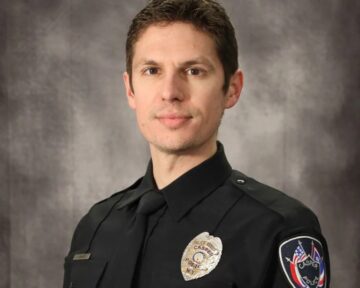 This might sound as though Lincowski is a crime-fighting hunter of aliens in a Marvel superhero film, and that interpretation isn’t far off. Until the end of last year, Lincowski worked as a police detective in Casper, Wyoming, from Monday to Thursday. And on Fridays, he looked for signs of life on planets beyond the Solar System, as part of a research team at the University of Washington in Seattle. Earlier this month, he started working as a mathematician at Eastern Wyoming College in Torrington, where he will be teaching mainly 18–21-year-old students. However, he will continue his one-day-a-week planetary science research at Washington.
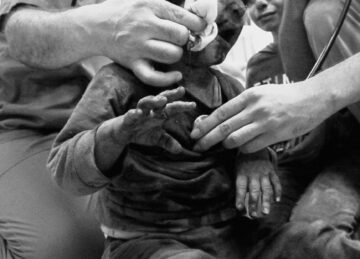 GAZANS HAVE INDEED SOUGHT OUR EYES and attention amid these days of peril. Defying Israel’s
 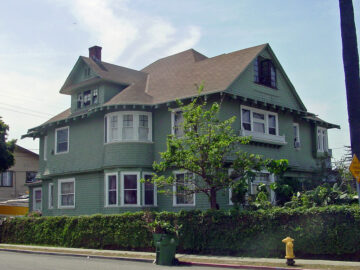 Architectural historians can easily stray into advocacy. Consider Sigfried Giedion, the Swiss author of Space, Time and Architecture and a self-appointed propagandist of early Modernism, or Henry-Russell Hitchcock, who with Philip Johnson curated the exhibition at the Museum of Modern Art that launched the International Style in the United States. The late Vincent Scully, a Hitchcock student and longtime Yale professor of architectural history, was an advocate too, one of his early forays into advocacy being a book provocatively titled The Shingle Style Today: Or the Historian’s Revenge.
 SAM GILLIAM’S 1980 painting Robbin’ Peter seethes with pigment. The colors densely clot in some areas and in others are scraped flat to reveal the weave of the raw fabric canvas. Reds and blues clump and splat and drip, interrupted by short linear marks dragged through the paint to create rhythmic grooves. The work is a puzzle-like collage of previous Gilliam paintings, which have been cut up, reassembled, and glued in patchwork-quilt fashion, and in fact it takes its name from a vernacular quilt pattern known as “Robbing Peter to Pay Paul”—conventionally, a two-color needlework with curved diamond seams and overlapping, interlocked quartered circles. The pattern is found on quilts across the United States from the nineteenth century to the present day and is sometimes called simply, as Gilliam’s title acknowledges, “Robbing Peter.”1 Part of “Chasers,” a series of nine-sided works that Gilliam made between circa 1980 and 1982, pursuing in the process his always restless experiments with texture, shape, and surface, the quilt painting is muscular and assertive, pressing into space with its thick, built-up impasto excrescences.
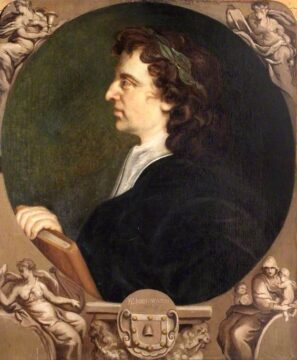 As a sophomore in college, I completely earned the C+ that I received in a survey course called “British Literature.” There could be no blaming of the professor on my end, no skirting responsibility for those missed assignments, no excuse for having confused Belphoebe for Gloriana in Edmund Spenser’s
 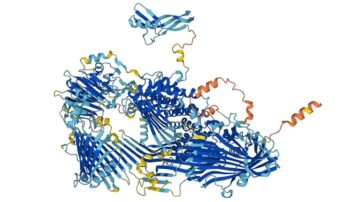 Researchers have used the protein-structure-prediction tool AlphaFold to identify
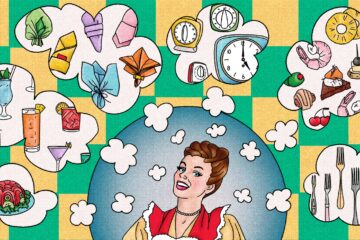 Your napkins need to be folded in a way that suggests you hold a degree in structural engineering.
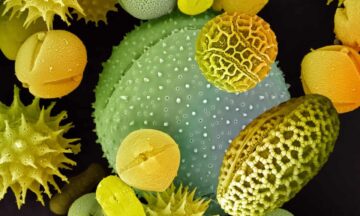 You might think, with the completion of the Human Genome Project 20 years ago now, and the discovery of the double helix enjoying its 70th birthday this year, that we actually know how life works. In physics, the quest for a so-called Grand Unifying Theory has preoccupied the most ambitious minds for generations, alas to no avail. But in the life sciences, we managed to find four grand unifying theories in the space of 100 years or so. Three are well known: cell theory – all life is made of cells, which only come from existing cells; Darwin’s evolution by natural selection; and universal genetics – all life is encoded by a cypher written in the molecule DNA. The fourth, no less important, goes by the chewy name chemiosmosis, and describes the way that all living things live by drawing fuel from their surroundings and using it in a continuous chemical reaction. In summary, life, made of cells that extract energy from their environment, comes modified from what came before. Job done; suck it, physicists!
 Since early December, the end of my 20-year career teaching at Harvard has been the subject of