
Mario Arriagada Cuadriello in the Ideas Letter from Open Society Foundations:
Evita, the Falklands, the Hand of God: if you are an English speaker you have already guessed the subject. For the Spanish-speaking world, the key terms would be different: Peronismo, Malvinas, and, again, Maradona. But irrespective of language there is a more robust set of signifiers that (all too often) effectively describes Argentina’s zeitgeist: Inflation, debt, and the International Monetary Fund (IMF). And it’s the last that will be the central protagonist of this story.
Rotten governance in Argentina is undoubtedly to blame for the country’s knocking on the IMF’s door to the point of becoming it largest debtor. But what about the IMF? How are they reacting to newly-inaugurated President Javier Milei’s promise of a radical reboot via old-line shock therapy? In a world in which “we are all post-neoliberals now” (in the way that we were all Keynesians once upon a time) has the progressives’ Darth Vader, the International Monetary Fund, mended its ways? Can it push back against the paleo-austerity ideas of President Milei? Or will the world find out that the world’s last neo-liberal, an Argentine far-right devotee of libertarian economics, is just the ticket for the IMF’s return to form?
Before we go there let’s rewind and travel back to the annus horribilis of 1976. On 29 March, a civilian-military coup deposed Isabel Perón, who had assumed the presidency after her recently returned husband Juan died in 1974, and made Jorge Rafael Videla the de facto president of Argentina.
More here.
 …incoherence can hold between mental states of various types: for example, between beliefs, preferences, intentions, or mixtures of more than one of these types. In all cases, though, it’s crucial that the defect is in the combination of states, not necessarily in any of them taken individually. There’s nothing wrong with preferring chocolate ice cream to vanilla, or preferring vanilla to strawberry, or preferring strawberry to chocolate; but there is something very strange about having all of these preferences together.
 Despite millennia of arguments, the question of whether we have free will or not remains unresolved. Last year October, two neurobiologists stepped into the fray, giving me the chance to dip my toes into the free-will debate. I just reviewed Robert Sapolsky’s
  There seem to be two words in the air at the moment, that keep popping up in articles and finding their way into American political discourse. One is “sleepwalking.” The other is “homelessness.”
 The prestigious Dana-Farber Cancer Institute (DFCI) in Boston, Massachusetts,
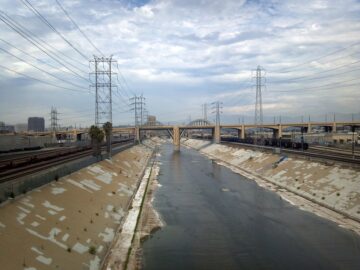 There are many places in L.A. you can go to think about the city, and my own favorite has become the Los Angeles River, which looks like an outsize concrete sewer and is most famous for being forgotten. The L.A. River flows fifty-one miles through the heart of L.A. County. It is enjoying herculean efforts to revitalize it, and yet commuters who have driven over it five days a week for ten years cannot tell you where it is. Along the river, the midpoint lies roughly at the confluence with the Arroyo Seco, near Dodger Stadium downtown. L.A. was founded near here in 1781: this area offers the most reliable aboveground supply of freshwater in the L.A. basin. It’s a miserable spot now, a trash-strewn wasteland of empty lots, steel fences, and railroad tracks beneath a tangle of freeway overpasses: it looks like a Blade Runner set that a crew disassembled and then put back together wrong. It’s not the most scenic spot to visit the river but may be the finest place on the river to think about L.A.
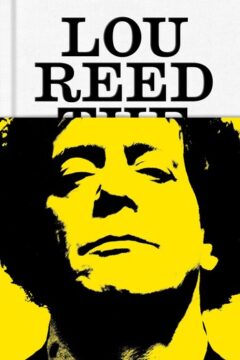 BEYOND AN OLDER SIBLING’S headphones wringing the sweet, distorted fuzz of the Velvet Underground out and into my ears, my second most notable encounter with Lou Reed was in the pages of the Lester Bangs anthology Psychotic Reactions and Carburetor Dung, which has a whole section dedicated to Bangs and his relentless sparring with Reed. A book within a book, almost. There are two interviews that would, today, seem alarming in both their approach and the nature of their candidness, with Bangs demeaning Reed’s pal David Bowie, Reed taking the bait, Bangs shouting that Reed is full of shit. The interviews go on like this, Bangs and Reed clashing, arguing loudly, or with an on-page ferocity that occasionally veered into affection. Reed clamors on about the drugs he consumes to survive, Bangs takes Reed to task for his songwriting’s increasing laziness. Ultimately, in the essays Bangs wrote about Reed, without Reed in the room, we find that these clashes, brutal and invasive as they might have seemed in the interview form, were born out of a writer being present with a subject he admired deeply, growing frustrated that the mythology he’d made of the subject wasn’t being manifested in the person he had been so fascinated by. This frustration inspired some terribly cruel writing that eventually led to a permanent falling-out between the two.
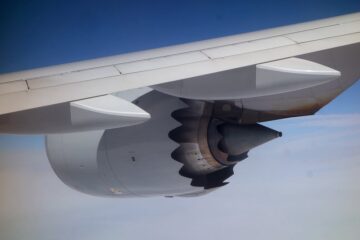 In the aftermath of a disaster, our immediate reaction is often to search for some person to blame. Authorities frequently vow to “find those responsible” and “hold them to account,” as though disasters happen only when some grinning mischief-maker slams a big red button labeled “press for catastrophe.” That’s not to say that negligence ought to go unpunished. Sometimes there really is a malefactor to blame, but equally often there isn’t, and the result is that normal people who just made a mistake are caught up in the dragnet of vengeance, like the famous 2009 case of six Italian seismologists who were charged for failing to predict a deadly earthquake. But when that happens, what is actually accomplished? Has anything been made better? Or have we simply kicked the can down the road?
 Edward Said, the 20th anniversary of whose death has just passed, was one of the United States’ greatest literary critics of the last 50 years. But he was also an intellectual, a figure who transcended or stepped beyond his professional location to think and speak publicly, about matters of public import, for and to a public.
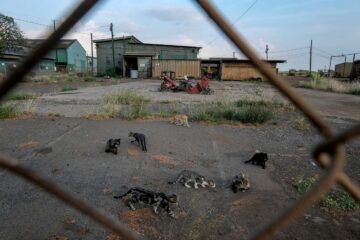 On a warm day last spring, dozens of protesters gathered outside a shopping center on the west side of Hawaii’s Big Island. They weren’t there to boycott a store or a pipeline or to deride a politician. They came to revolt against a new ban on feeding cats in the parking lot. “Stop starving the cats,” the protesters chanted, according to a
 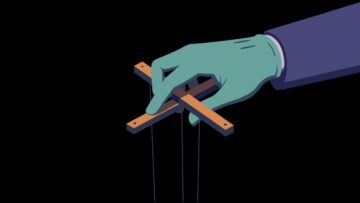 One evening in June 2023, Nicholas Wise, a fluid dynamics researcher at the University of Cambridge who moonlights as a scientific fraud buster, was digging around on shady Facebook groups when he came across something he had never seen before. Wise was all too familiar with offers to sell or buy author slots and reviews on scientific papers—the signs of a busy paper mill. Exploiting the growing pressure on scientists worldwide to amass publications even if they lack resources to undertake quality research, these furtive intermediaries by some accounts
  On Saturday, December 30, our front door was busted down, and twenty masked men barged in and took my father, a widely respected and deeply learned imam here in Gaza.
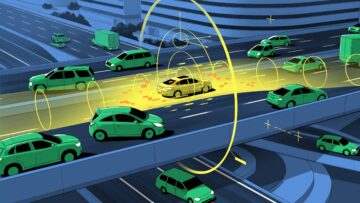 Driverless cars and planes are no longer the stuff of the future. In the city of San Francisco alone, two taxi companies have collectively logged 8 million miles of autonomous driving through August 2023. And more than 850,000 autonomous aerial vehicles, or drones, are registered in the United States — not counting those owned by the military.