
Alexandra Jacobs at the NYT:
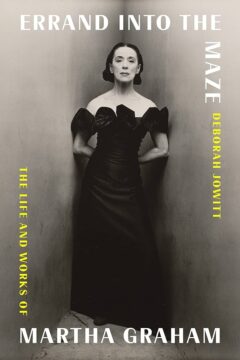 The choreographer’s collaborations were top-notch: the sculptor Isamu Noguchi; the composer Samuel Barber; and the designer Halston. Learning how she drew inspiration from so many disparate cultures (Greek, Indigenous, biblical) — with occasional gross insensitivity — one begins to realize that the term “modern dance,” like “classical music,” is if not a misnomer, then a massive oversimplification.
Critics could be “uncomprehending and denunciatory”; the public, “baffled but moved in some way they do not understand.” But Graham early on achieved one of the clearest marks of success: She was parodied. (By Fanny Brice, no less. And who can forget Robin Williams’s rapid-fire tour of American dance forms in “The Birdcage”?) Should she have gotten a piece of the Pulitzer that the composer Aaron Copland picked up for their ballet, “Appalachian Spring”? You bet your bottom Barbie.
more here.
 F
F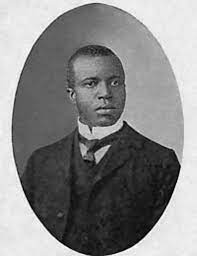 Ragtime, propulsively syncopated musical style, one forerunner of
 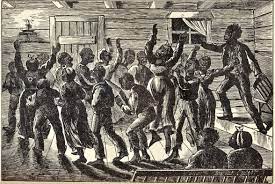 The tunes and the beats of
 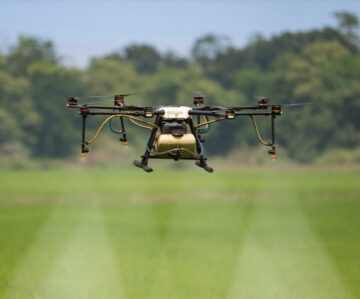 Depending on the kind of sensor they’ve been armed with, drones can do a lot more than spray chemicals. Some can analyze the terrain for weeds, check moisture levels, assess for signs of pest infestation, suggest field planning, determine crop health, and even create a nutrient map of the growing harvest.
 Psychology researcher Eli Finkel and his colleagues have suggested that moral judgment
  EARLY ON IN Wim Wenders’s new documentary Anselm, we hear the whispers of Anselm Kiefer’s famous headless female sculptures. “We may be the nameless and forgotten ones,” they whisper, “but we don’t forget a thing.” These full-bodied specters haunt us in the way only Kiefer’s art can. His body of work interrogates myth and memory, wrestling with Germany’s past in ways that helped form the foundation of its postwar present.
 T
T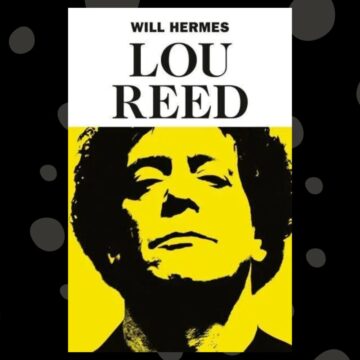 To write about Lou Reed is to fight with Lou Reed. It is difficult to say, however, who started what, and there is more than a little evidence that the sourness of rock males and their broadsheets were a somewhat common culprit. It feels inaccurate to blame any single party (even Jann Wenner). In 2018, Hat and Beard Press released My Week Beats Your Year: Encounters With Lou Reed, a collection of 36 tussles that range in character from amicable slap-boxing to tearful negotiations. Sometimes Reed is responding in nasty bad faith when being asked anodyne questions about his Poe adaptation; other times, he’s fielding provocative tabloid nonsense about the “greasers” who “get off” to his music. It’s a bad soup. Howard Sounes, who published The Life of Lou Reed: Notes from the Velvet Underground in 2019, told me over the phone recently that “the problem isn’t with the journalists; the problem is with him.” Sounes never had the chance to interview Reed, who died in 2013, but among the people who knew him, Sounes noted, “the word that kept coming up was ‘prick.’”
 There are certain images that slither past good taste and politics and sink their teeth straight into the subconscious. For instance: a man dressed in a tuxedo and a Ronald Reagan mask, using a gasoline pump as a flamethrower. He is torching his getaway vehicle and taking his time; the scene isn’t shot in slow motion, but I always remember it that way. In about thirty seconds, a cop will tackle him, prompting a long foot chase, but for now he waves his weapon like a kid with a sparkler on New Year’s Eve. We can’t see his expression, but Reagan’s face is grinning, and I’d like to imagine that the face underneath is, too. Don’t all bad guys dream of being children again?
 Everyone knows politics makes people crazy. But what kind of crazy? Which page of the DSM is it on?
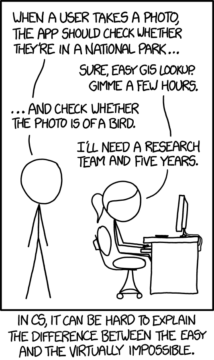 Last week, Austria-based Swarovski Optik
 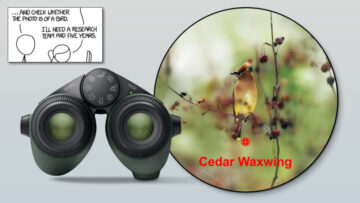 The binoculars, aimed mostly at bird watchers, gain their ability to identify birds from the
  Sathnam Sanghera’s Empireworld tells the story of Bartram and Kew as part of a nuanced, complicated account of the British empire’s impact on the world as we know it, and it is a story that is strikingly, remarkably alive to the contradictions inherent in its telling. For example, the technologies that facilitated the transporting of the plants and seeds that changed the English landscape and accelerated modern plant science also drove the large-scale cultivation of indigo, sugar cane, and rubber, and thereby determined the destinies of countless thousands of enslaved and indentured labourers in British-owned plantations across the world. And these enterprises, leading as they did to the kind of large-scale ecological destruction whose effects are still felt today, also created a need for conservation movements and environmental activism. Neither global communication, nor global cuisines, would be the same without any of this.