Tomas Tranströmer’s Wild Associative Leaps.

Jared Marcel Pollen at Poetry Magazine:

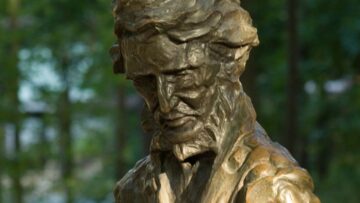
Tranströmer has been praised for the apparent effortlessness of his craft. The poet and critic David Orr writes, “The typical Tranströmer poem is an exercise in sophisticated simplicity, in which relatively spare language acquires remarkable depth, and every word seems measured to the millimeter.” I think of his poetry as being like a Kagan couch, its upholstery fixed with a single staple, or a Newtonian bridge that needs no nails and is held together by the elegance of its stress equations. It is free of any superfluous furniture—“Truth doesn’t need any furniture,” Tranströmer writes in “Preludes.”

But this risks making Tranströmer sound like a Swedish minimalist. Far from it: the poems gathered in this collection—spanning 50 years—are remarkably varied, incorporating prose poems, long lines, and haiku. They move easily from the idyll to the suburb, the cloudscape to the metro station, the nave to the waiting room, yet all bear what his friend Robert Bly—whose early translations were partly responsible for introducing Tranströmer’s work to English readers in the 1970s—described as his “strange genius for the image” and a “mystery and surprise [that] never fade, even on many readings.”

more here.

The Miracle of Photography

Ed Simon at The Millions:

More shadows than men, really; just silhouettes, might as well be smudges on the lens. Hard to notice at first, the two undifferentiated figures in the lower left-hand of the picture, at the corner of the Boulevard du Temple. A bootblack squats down and shines the shoes of a man contrapasso above him; impossible to tell what they’re wearing or what they look like. Obviously no way to ascertain their names or professions. At first they’re hard to recognize as people, these whispers of a figure joined together, eternally preserved by silver-plated copper and mercury vapor; they’re insignificant next to the buildings, elegant Beaux-Arts shops and theaters, wrought iron railings along the streets and chimneys on their mansard roofs. Based on an analysis of the light, Louis Daguerre set up his camera around eight in the morning; leaves are still on trees, so it’s not winter, but otherwise it’s hard to tell what season it is that Paris day in 1838. Whatever their names, it was by accident that they became the first two humans to be photographed.

more here.

Days of The Jackal: how Andrew Wylie turned serious literature into big business

Alex Blasdel in The Guardian:

Andrew Wylie, the world’s most renowned – and for a long time its most reviled – literary agent, is 76 years old. Over the past four decades, he has reshaped the business of publishing in profound and, some say, insalubrious ways. He has been a champion of highbrow books and unabashed commerce, making many great writers famous and many famous writers rich. In the process, he has helped to define the global literary canon. His critics argue that he has also hastened the demise of the literary culture he claims to defend. Wylie is largely untroubled by such criticisms. What preoccupies him, instead, are the deals to be made in China.

Wylie’s fervour for China began in 2008, when a bidding war broke out among Chinese publishers for the collected works of Jorge Luis Borges. Wylie, who represents the Argentine master’s estate, received a telephone call from a colleague informing him that the price had climbed above $100,000, a hitherto inconceivable sum for a foreign literary work in China. Not content to just sit back and watch the price tick up, Wylie decided he would try to dictate the value of other foreign works in the Chinese market. “I thought, ‘We need to roll out the tanks,’” Wylie gleefully recounted in his New York offices earlier this year. “We need a Tiananmen Square!”

More here.

This hybrid baby monkey is made of cells from two embryos

Carissa Wong in Nature:

Scientists have created an infant ‘chimaeric’ monkey by injecting a monkey embryo with stem cells from a genetically distinct donor embryo1. The resulting animal is the first live-born chimaeric primate to have a high proportion of cells originating from donor stem cells.

The finding, reported today in Cell, opens the door to using chimaeric monkeys, which are more biologically similar to humans than are chimaeric rats and mice, for studying human diseases and developing treatments, says stem-cell biologist Miguel Esteban at the University of Chinese Academy of Sciences in Guangzhou, a co-author of the study. But the monkey chimaera had to be euthanized when it was only ten days old because of hypothermia and breathing difficulties, highlighting the need for further optimization of the approach and raising ethical concerns, say researchers.

More here.

Thursday, November 9, 2023

Salman Rushdie on peace, Barbie and what freedom cost him

Salman Rushdie in The Guardian:

I have always been inspired by mythologies, folktales and fairytales, not because they contain miracles – talking animals or magic fishes – but because they encapsulate truth. For example, the story of Orpheus and Eurydice, which was an important inspiration for my novel The Ground Beneath Her Feet, can be told in fewer than 100 words, yet it contains, in compressed form, mighty questions about the relationship between art, love and death. It asks: can love, with the help of art, overcome death? But perhaps it answers: doesn’t death, in spite of art, overcome love? Or else it tells us that art takes on the subjects of love and death and transcends both by turning them into immortal stories. Those 100 words contain enough profundity to inspire 1,000 novels.

More here.

The Hidden Connection That Changed Number Theory

Max G. Levy in Quanta:

There are three kinds of prime numbers. The first is a solitary outlier: 2, the only even prime. After that, half the primes leave a remainder of 1 when divided by 4. The other half leave a remainder of 3. (5 and 13 fall in the first camp, 7 and 11 in the second.) There is no obvious reason that remainder-1 primes and remainder-3 primes should behave in fundamentally different ways. But they do.

One key difference stems from a property called quadratic reciprocity, first proved by Carl Gauss, arguably the most influential mathematician of the 19th century. “It’s a fairly simple statement that has applications everywhere, in all sorts of math, not just number theory,” said James Rickards, a mathematician at the University of Colorado, Boulder. “But it’s also non-obvious enough to be really interesting.”

Number theory is a branch of mathematics that deals with whole numbers (as opposed to, say, shapes or continuous quantities). The prime numbers — those divisible only by 1 and themselves — are at its core, much as DNA is core to biology. Quadratic reciprocity has changed mathematicians’ conception of how much it’s possible to prove about them.

More here.

Queasy about lab-grown meat? Too bad — you’ve pretty much been eating it for decades

Garth Brown in The New Atlantis:

For the past century, agriculture in America has been getting more productive and more efficient. After stagnating for decades at twenty-something bushels per acre, average corn yields have risen to nearly two hundred. Horses have been replaced by horsepower. Chicken meat, once a relatively rare byproduct of the egg industry, has become the most consumed meat in the country, a shift made possible by advances in genetics and feed. Now over a billion dollars, from sources as varied as Bill Gates, venture capital funds, and agribusiness giants, have been invested in the idea that the next big thing in food is to leave farming behind, at least the livestock part of it. Instead of growing chicken meat in a chicken, why not grow it in a test tube?

In June, U.S. regulators for the first time gave two California companies, Upside Foods and GOOD Meat, a green light for offering lab-grown chicken to American consumers, with star chef José Andrés becoming the first to cook it for his guests in July.

More here.

The Secret History Of A Psychoanalytic Cult

Hannah Zeavin at Bookforum:

According to The Sullivanians, the story goes something like this. In the ’50s, just as Jim Jones was moving to make a Marxist revolution by nestling politics inside an Indianapolis church, one Saul Newton, alongside his fourth wife, Jane Pearce, sought to braid Marx and Freud and spark a revolution in and through the consulting room. Communist movements, they felt, had failed precisely because they left out the psyche and socialization. Psychoanalysis, on the other hand, was being used in conservative ways and was largely pro-family, pro-babies, and pro-adjustment to the difficulty of same. To unlock their full potential, each theory needed the other. The problem was that Newton was not a clinician. (The solution: lie about it.)

While Pearce was a medical doctor and licensed to practice psychotherapy, Newton was not. He claimed that he had mailed his social-work thesis, but his advisor never received it (dog, homework).

more here.

Simone de Beauvoir On Freedom And Difference

Toril Moi at The Point:

One evening in 1932, Simone de Beauvoir joined Jean-Paul Sartre and his old schoolfriend, the philosopher Raymond Aron, for a drink at a bar in Montparnasse. The three of them enthusiastically ordered apricot cocktails, the specialty of the house. Aron, who had just returned to Paris from a year studying philosophy in Berlin, suddenly pointed to his glass and said: “If you are a phenomenologist, you can talk about this cocktail and make philosophy out of it!” According to Beauvoir, Sartre “turned pale with emotion.” This was exactly what he wanted to do: “describe objects just as he saw and touched them, and to make philosophy out of it.”

Phenomenology—the tradition of philosophy after Husserl and Heidegger—sets aside questions of essence and ontology and tries instead to grasp phenomena as a particular subject experiences them. A philosophy concerned with perception and experience would allow Sartre to shrink the gap between literature and philosophy and write philosophical texts filled with scintillating, though sometimes sexist, descriptions, anecdotes and stories: a cafe waiter playing at being a waiter, a woman who has gone to a cafe for a first date, a man flooded with shame when he is caught peeping through a keyhole in a hotel corridor.

more here.

The Best Movies of 2023 (So Far)

From Vulture:

Not to trigger the ol’ existential panic, but 2023 is drawing to a close quite soon. That means it’s time to tally what the year in movies has brought us. So far, we’ve seen Wes Anderson unveil what might be his masterpiece, his maddest expression yet of our human need for control. We’ve learned that the romantic comedy isn’t dead; it’s streaming on Hulu. Martin Scorsese did it again. It’s been a fantastic year for animation, too, with stunners like Suzume, the anime auteur Makoto Shinkai’s swoon-worthy latest, Hayao Miyazaki’s return, and Spider-Man: Across the Spider-Verse. (You ever weep at the sheer scope of a movie’s visual imagination before? You will!) Musicians Teyana Taylor and Park Ji-min have both proved themselves born movie stars. We even got a great Marvel movie — that increasing rarity — in James Gunn’s Guardians of the Galaxy swan song. We had Barbenheimer! Here are our favorite films of the year so far, curated by Vulture film critics Alison Willmore, Bilge Ebiri, and Angelica Jade Bastién.

More here.

Thursday Poem

Casida of the Rose

The rose
was not searching for the sunrise:
almost eternal on its branch,
it was searching for something else.

The rose
was not searching for darkness or science:
borderline of flesh and dream,
it was searching for something else.

The rose
was not searching for the rose.
Motionless in the sky
it was searching for something else.

by Frederico García Lorca
translation by Robert Bly
from
News of the Universe
Sierra Club Books, 1995

Cancer Metastasizes Via Fusion of Tumor and Immune Cells

Marcus Banks in The Scientist:

Cancer metastasizes through the fusion of tumor cells with immune cells, according to a case report published online May 28 in Cancer Genetics. “We think what is happening is the initial cancer cells from the primary tumor are blending or hybridizing with immune system cells that respond to the tumor as nonself. By hybridizing with those immune system cells, it looks like ‘self’ so that the immune system doesn’t attack and destroy [the tumor],” says first author Greggory LaBerge, a medical geneticist at the University of Colorado School of Medicine who also directs the Denver Police Department’s Forensics and Evidence Division. LaBerge and his colleagues analyzed the DNA of a woman in her late 70s who had received a bone marrow transplant from an anonymous male donor several years earlier as treatment for her chronic myelomonocytic leukemia. She later developed metastatic melanoma.

…The authors used this sample to test a theory that immune cells and cancer cells fuse to lead to metastasis. Because the immune cells had the genome of the donor, while the cancer cells had the genome of the patient, it was possible to track the relative proportion of each at every stage in the metastatic journey. The team’s hypothesis was that, if patient and donor cells were fused together at every point in metastasis, this would support the idea that the patient’s metastasis occurred due to such fusion. If only the patient’s DNA were evident at later steps of metastasis, then this would disprove the hypothesis that fusion fuels metastasis.

More here.

Wednesday, November 8, 2023

Memory, Identity, Representation: A Conversation with Viet Thanh Nguyen, Pulitzer Prize-Winning Author of “The Sympathizer”

From APA Studies on Asian and Asian American Philosophers and Philosophies:

The modern age, Edward W. Said poignantly observes, is largely the age of the refugee, an era of displaced people from mass immigration.  Writing about what it means to be a refugee, he admits, is, however, deceptively hard. Because the anguish of existing in a permanent state of homelessness is a predicament that most people rarely experience frsthand, there is often a tendency to objectify the pain, to make the experience “aesthetically and humanistically comprehensible,” to “banalize its mutilations,” and to understand it as “good for us.” Rare is the literature that can meaningfully and empathetically capture the scale, depth, and magnitude of the suffering of those who are today displaced and rendered homeless by modern warfare, colonialism, and “the quasi-theological ambitions of totalitarian rulers.”2 It is not surprising therefore, as Said suggests, that the most enduring stories about being an exile come from those who have personally been exiled themselves, ones like Faiz Ahmad Faiz, Eqbal Ahmad, Joseph Conrad, and Mahmoud Darwish, who have embodied the experiences of living without a home, without a fxed identity, and without a country. Pulitzer Prize-winning Vietnamese American writer and academic Viet Thanh Nguyen, a refugee himself, is one such rare voice in American literature today, a voice that has been a relentless force in making visible, through storytelling, the highly diverse and multifaceted experiences of Vietnamese refugees arriving, settling, and living in diferent parts of the United States since the Fall of Saigon in 1975.

More here. [Scroll down to page 26.]

Cryptographers are preparing for new quantum computers that will break their ciphers

Neil Savage in Nature:

In July 2022, a pair of mathematicians in Belgium startled the cybersecurity world. They took a data-encryption scheme that had been designed to withstand attacks from quantum computers so sophisticated they don’t yet exist, and broke it in 10 minutes using a nine-year-old, non-quantum PC.

“I think I was more surprised than most,” says Thomas Decru, a mathematical cryptographer, who worked on the attack while carrying out postdoctoral research at the Catholic University of Leuven (KU Leuven) in Belgium. He and his PhD supervisor Wouter Castryck had sketched out the mathematics of the approach on a whiteboard, but Decru hadn’t been sure it would work — until the pair actually ran it on a PC. “It took a while for me to let it sink in: ‘Okay, it’s broken.’”

More here.

Interview of Michael Spence, Nobel laureate in economics

From Project Syndicate:

Project Syndicate: You, Anu Madgavkar, and Sven Smit recently pointed out that “economic dynamism and improvements in living standards are vital both to finance climate action and to ensure adequate public support for it.” In your new book, Permacrisis: A Plan to Fix a Fractured World – co-authored with Gordon Brown and Mohamed A. El-Erian (with Reid Lidow) – you highlight major growth headwinds, including “trends that have reduced the supply elasticity of the global system.” In what ways should this new supply environment change how we think about economic growth and stability?

Michael Spence: The last two decades brought a massive increase in productive capacity, as rapidly growing emerging economies, especially China, were integrated into the global economy. As a result, the supply side was not a significant constraint on growth. In fact, global growth remained largely robust even as productivity declined, though there were, of course, some setbacks, such as during the 2008 global financial crisis.

This has changed.

More here.

Wednesday Poem

The Wretched of the Earth

I don’t like to start my day off with the dreadful news.
I feel fresh and enlivened in the mornings and refuse to taint
this short-lived joy with the hideous happenings   “out there.”

Instead, I turn to the artists, poets, and philosophers
—the true awakeners of the human spirit.

Black coffee, old books, and the music of Gustav Mahler
— the breakfast of champs.

Today, as the world continues to trudge along on its ruinous path,
I’m reading the essays of one of the most eloquent and profound
writers of the 20th century, James Baldwin.

He once reminded us:

“You think your pain and your heartbreak are unprecedented
in the history of the world, but then you read. It was
books that taught me that the things that tormented me most
were the very things that connected me with all the people
who were alive, who had ever been alive.”

The New York Times once labeled Baldwin “the best essayist in this country
—a man whose power has always been in his reasoned, biting sarcasm;
his insistence on removing layer by layer the hardened skin with which
Americans shield themselves from their country.”

by Writer Unknown
from
Poetic Outlaws