
Jordan Michael Smith in Smithsonian Magazine:
 Norval Morrisseau was certain. “I did not paint the attached 23 acrylics on canvas,” he wrote in a typed letter in 2001 to his Toronto gallery representative, who had sent him color photocopies of works that had recently sold at an unrelated auction.
Morrisseau, then in his late 60s and suffering from Parkinson’s disease, was the most important artist in the modern history of Canada’s Indigenous peoples—the “Picasso of the North.” He had single-handedly invented the Woodlands school of art, which fused European and Indigenous traditions to create striking, vibrant images featuring thick black lines and colorful interiors of humans, animals and plants, as though they had been X-rayed and their insides were visible and filled with unusual patterns and shapes. He was one of the first Indigenous painters to garner national attention and the first to have a solo exhibition at the National Gallery of Canada in Ottawa. “Few exhibits in Canadian art history have touched off a greater immediate stir,” swooned the Canadian edition of Time magazine after Morrisseau’s sold-out 1962 debut exhibition in Toronto.
More here.
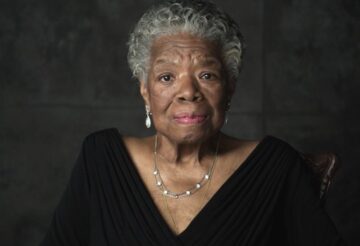 Maya Angelou
 T
T A journal entry from me, dated January 1, 1984, records a list of what appear to be New Year’s resolutions. Most of them are unimaginative, and only testify to the common hopes and aspirations of an 11-year-old child. One however stands out: “No Beatles from after 1965”.
 Before my first classes were scheduled to begin, I was sitting in the courtyard of my residential college when a young woman asked for help lifting some boxes into her dorm room. She introduced herself and told me she was a senior. I explained that this was my first semester.
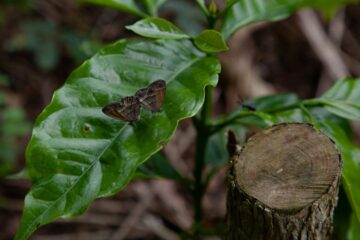 Twentieth-century science doubled the life expectancy of Homo sapiens, but our health still declines at nearly the same age today as it did in 300 BC. We’ve learned to keep chronically ill adults alive, and made some welcome
  T
T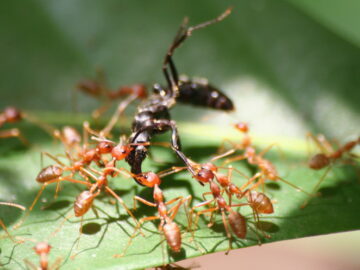 It is a familiar story: a small group of animals living in a wooded grassland begin, against all odds, to populate Earth. At first, they occupy a specific ecological place in the landscape, kept in check by other species. Then something changes. The animals find a way to travel to new places. They learn to cope with unpredictability. They adapt to new kinds of food and shelter. They are clever. And they are aggressive.
 J
J Sitting on a log, in the ever-present shadow of the Amazon forest, Roseno Wajãpi and I shared pieces of cassava bread and chunks of smoked fish. He told me about the beginning of time.
 I like the ashes on Ash Wednesday. I am at best a lapsed Catholic though it would be more accurate to say that I never really began, just that I was raised against the backdrop of already-faded-Catholicism and its associated traumas, now transmuted and passed on in their mysterious ways to me. I inherited also the pining and the predilection that many Americans have for certain things to do with Ireland. In San Francisco, I used to drink afternoons after I got off work at an Irish bar in Noe Valley, the Valley Tavern, or a different Irish bar downtown, the Chieftain, or sometimes come to think of it an Irish bar on Guerrero with big windows where my friend Graham and I used to like to watch the rain. San Francisco is a more Catholic city than most people think, and more Irish too. More Irish American, which is really what I am talking about: girls in red school uniforms and tennis shoes outside the Convent of the Sacred Heart, looking forward to football games Friday nights at St. Ignatius, the high school by the church where my feet were washed as a kid on Holy Thursday.