
Bruno De Conti , Pedro Rossi, Arthur Welle, and Clara Saliba in Phenomenal World:
In December 2023, Brazil began presiding over the G20. The one-year presidency, which will culminate in the annual summit being hosted in Rio de Janeiro in November 2024, is the third of four terms from the global South—following Indonesia in 2022 and India in 2023, and preceding the already decided South African presidency in 2025. When India’s Narendra Modi formally handed over the presidency to Brazil last November, Lula announced three priorities to “place the reduction of inequalities at the center of the international agenda: (i) social inclusion and the fight against hunger (ii) energy transition and sustainable development in its three aspects (social, economic and environmental) and (iii) reform of global governance institutions.” The proposals were well received internationally; now is the time for concrete agendas to build toward the November summit.
Though the Brazilian government’s proposals are progressive, the G20’s multilateral dialogue continues within the context of international institutions that long predate it—reflecting the balance of global economic power in the middle of the twentieth century. Forged after World War II, institutions such as the IMF and the World Bank, now undergird an international governance system that does not represent the tremendous changes that have occurred in the world economy since the fiscal rules they prescribed in the 1970s. Dominated by countries whose economies represent a shrinking share of world production and trade, these institutions reproduce asymmetries of power over the subjects of multilateral diplomacy—which are today indispensable for mitigating global climate change and extending social protections over the world’s economically and socially vulnerable populations.
The increased weight of the global South among countries making up the G20 indicates a changing balance of forces within the group—and shows how the moment is conducive for a shift in strategy. The group’s last summit in New Delhi illustrated the enhanced importance of the global South. Under the Indian presidency, this group of global South countries had at least two major victories representing the shift towards multipolarity: the absence of a unilateral position on the war in Ukraine and, more importantly, the inclusion of the African Union (AU) as a permanent member of the group.
More here.
 C
C “Carson McCullers: A Life” is a necessary book, though. It builds on Carr’s work and considers newly released material, including letters and journals and, most tantalizingly, transcripts of McCullers’s late-life psychiatric sessions with the female doctor who would become her lover and gatekeeper. It has been seven years since McCullers (1917-67) had her
  Blackface isn’t just about painting one’s skin darker or putting on a costume. It invokes a racist and painful history. The origins of blackface date back to the minstrel shows of mid-19th century. White performers darkened their skin with polish and cork, put on tattered clothing and exaggerated their features to look stereotypically “black.” The first minstrel shows mimicked enslaved Africans on Southern plantations, depicting black people as lazy, ignorant, cowardly or hypersexual, according to the Smithsonian’s National Museum of African American History and Culture (NMAAHC). The performances were intended to be funny to white audiences. But to the black community, they were demeaning and hurtful.
 The mesmerizing performance from Academy Award-nominated actress and singer Andra Day in
  Panpsychism is the view that consciousness is a fundamental and ubiquitous feature of the physical world. It is the view that the basic building blocks of the physical universe – perhaps fundamental particles – have incredibly simple forms of experience, and that the very sophisticated experience of the human or animal brain is rooted in, derived from, more rudimentary forms of experience at the level of basic physics. Panpsychism has received a lot of attention of late. The world of academic philosophy has been rocked by the conversion of one of the most influential materialists of the last thirty years, Michael Tye, to a form of panpsychism (
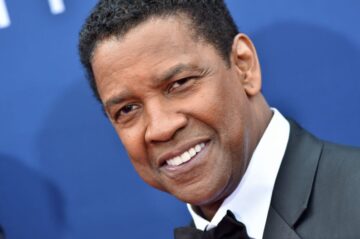 Throughout cinematic history, legendary Black actors have shattered barriers and
  In the end, Faith in Art offers neither comprehensive views of these artists nor definitive conclusions about the religious bearings of their work. Nor is it concerned with establishing these artists’ faithful (or unfaithful) adherence to particular religious traditions—indeed, “none was religious in any conspicuous way.” Rather, Masheck seeks to show how “they believed that art had something formative to say about the possibility of a new, more humane society, by a faith ultimately based on scriptural, and sometimes surprisingly theological, intellectual formations.” This effectively pries open the critical histories of these artists, such that reducing these formations to either “materialism” or “spiritualism” becomes untenable.

 Evolution is sometimes described — not precisely, but with some justification — as being about the “survival of the fittest.” But that idea doesn’t work unless there is some way for one generation to pass down information about how best to survive. We now know that such information is passed down in a variety of ways: through our inherited genome, through epigenetic factors, and of course through cultural transmission. Chris Adami suggests that we update Dobzhansky’s maxim “Nothing in biology makes sense except in the light of evolution” to “… except in the light of information.” We talk about information theory as a subject in its own right, and how it helps us to understand organisms, evolution, and the origin of life.
 Just days before October 7, President Joe Biden’s national security advisor, Jake Sullivan, was radiating confidence that Washington had effectively brought all of West Asia’s long-roiling conflicts under control. Washington could now, he believed, accelerate the pivot of attention, forces, and funding toward what had long topped Biden’s agenda: containing Chinese power in East Asia. Then came the Hamas-led attack on Israel and Israel’s onslaught on Gaza. By late January, Sullivan was flying to Bangkok to plead with top Chinese diplomat Wang Yi for help in defusing the sharp, Gaza-spurred conflict that had erupted in the globally vital waterway of the Red Sea. (Wang politely blew him off.)
 E
E The Oscars have never been about art. As Louis B. Mayer
  The field of biology has driven remarkable advancements in medicine, agriculture, and industry over the last half-century, despite facing a significant hurdle: The immense complexity of biological systems makes them incredibly difficult to predict. This lack of predictability means that any innovation in biology requires many expensive trial-and-error experiments, inflating costs and slowing down progress in a wide range of applications, from drug discovery to biomanufacturing. But we are now at a critical inflection point in our ability to predict and engineer complex biological systems—transforming biology from a wet and messy science into an engineering discipline. This is being driven by the convergence of three major innovations: advancements in deep learning, significant cost reductions for collecting biological data through lab automation, and the precision editing of DNA with CRISPR.