
Susan Orlean at The New Yorker:
Probably the only people at the Oscar Nominees Luncheon at the Beverly Hilton Hotel last week who were out on bail were Bobi Wine, the Ugandan politician and musician, and his wife, Barbie Kyagulanyi. Their presence was seemingly the result of some rather cynical political calculations. Once the film about Wine’s Presidential campaign, “Bobi Wine: The People’s President,” was nominated for an Oscar, in the Best Documentary Feature category, the government of the authoritarian Ugandan President, Yoweri Museveni, was apparently in a pickle: If the government prevented Wine from travelling, his absence during the pre-Oscars festivities—not to mention the ceremony itself—would highlight its tireless campaign of harassment, torture, and detention against him. The alternative, of allowing Wine and Kyagulanyi to travel to Los Angeles and other cities, including London (where the film was nominated for a bafta), must have seemed the lesser of two evils. One day, Wine and Kyagulanyi were under house arrest in their home in Kampala, with three of their children, not sure if Museveni would drag Wine off to prison again, and a few days later they were in the Hilton. “I would sleep on the street and go without food to get attention for what’s going on in Uganda,” Wine said the other day. “Instead, I’m achieving that by sleeping in a nice bed in a nice hotel in Los Angeles. It’s very strange.”
more here.
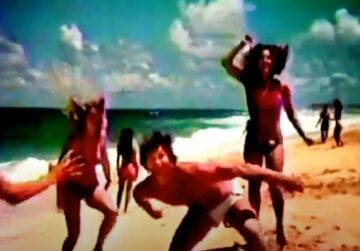 A journal entry from me, dated January 1, 1984, records a list of what appear to be New Year’s resolutions. Most of them are unimaginative, and only testify to the common hopes and aspirations of an 11-year-old child. One however stands out: “No Beatles from after 1965”.
 Before my first classes were scheduled to begin, I was sitting in the courtyard of my residential college when a young woman asked for help lifting some boxes into her dorm room. She introduced herself and told me she was a senior. I explained that this was my first semester.
 Twentieth-century science doubled the life expectancy of Homo sapiens, but our health still declines at nearly the same age today as it did in 300 BC. We’ve learned to keep chronically ill adults alive, and made some welcome
  T
T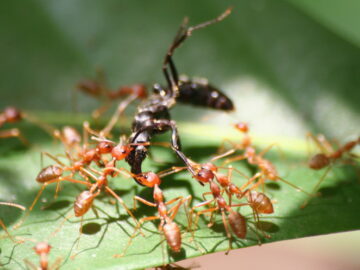 It is a familiar story: a small group of animals living in a wooded grassland begin, against all odds, to populate Earth. At first, they occupy a specific ecological place in the landscape, kept in check by other species. Then something changes. The animals find a way to travel to new places. They learn to cope with unpredictability. They adapt to new kinds of food and shelter. They are clever. And they are aggressive.
 J
J Sitting on a log, in the ever-present shadow of the Amazon forest, Roseno Wajãpi and I shared pieces of cassava bread and chunks of smoked fish. He told me about the beginning of time.
 I like the ashes on Ash Wednesday. I am at best a lapsed Catholic though it would be more accurate to say that I never really began, just that I was raised against the backdrop of already-faded-Catholicism and its associated traumas, now transmuted and passed on in their mysterious ways to me. I inherited also the pining and the predilection that many Americans have for certain things to do with Ireland. In San Francisco, I used to drink afternoons after I got off work at an Irish bar in Noe Valley, the Valley Tavern, or a different Irish bar downtown, the Chieftain, or sometimes come to think of it an Irish bar on Guerrero with big windows where my friend Graham and I used to like to watch the rain. San Francisco is a more Catholic city than most people think, and more Irish too. More Irish American, which is really what I am talking about: girls in red school uniforms and tennis shoes outside the Convent of the Sacred Heart, looking forward to football games Friday nights at St. Ignatius, the high school by the church where my feet were washed as a kid on Holy Thursday.
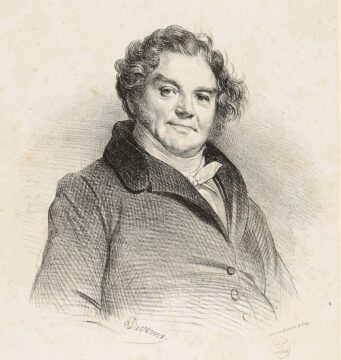 According to his memoirs, Eugène-François Vidocq escaped from more than twenty prisons (sometimes dressed as a nun). Working on the other side of the law, he apprehended some 4000 criminals with a team of plainclothes agents. He founded the first criminal investigation bureau — staffed mainly with convicts — and, when he was later fired, the first private detective agency. He was one the fathers of modern criminology and had a rap sheet longer than his very tall tales. Who was Vidocq?
 Moving a prosthetic arm. Controlling a speaking avatar. Typing at speed. These are all things that people with paralysis have learnt to do
  Notoriously, in the winter of 1969 the Metropolitan Museum of Art opened its first exhibition devoted to African American culture, but with a show devoid of art. Called “Harlem on My Mind: Cultural Capital of Black America, 1900—1968,” it was a photomural-with-texts affair of a kind found in ethnology museums.
 eDNA serves as a surveillance tool, offering researchers a means of detecting the seemingly undetectable. By sampling eDNA, or mixtures of genetic material — that is, fragments of DNA, the blueprint of life — in water, soil, ice cores, cotton swabs, or practically any environment imaginable, even thin air, it is now possible to search for a specific organism or assemble a snapshot of all the organisms in a given place. Instead of setting up a camera to see who crosses the beach at night, eDNA pulls that information out of footprints in the sand. “We’re all flaky, right?” said Robert Hanner, a biologist at the University of Guelph in Canada. “There’s bits of cellular debris sloughing off all the time.”