
Tomas Pueyo in Uncharted Territories:
 In We Can Already Stop Climate Change If We Want To, I explained that we have a path to solve climate change (renewables, nuclear, batteries, olivine weathering), but it will take at least a few decades to get there. In the meantime, CO2 emissions will keep growing, there’s nothing we can do to reverse them fast enough, and global temperatures will keep increasing.
There is only one thing we can do to avoid these potentially catastrophic consequences: Cooling the Earth artificially until we get CO2 levels in hand. And the best way we know to do that is sending SO2 to the stratosphere.
I outlined that solution in the article linked above, but I didn’t go in depth, and many of you had questions:
Does it really work? How?
Is this really the best solution? What are the alternatives?
How safe is it? What are the downsides?
Will states allow this? Is it legal?
How much will it cost?
Where should we release this SO2?
So I dove into this, talked with the only company that I know that is trying to do this at scale, and as a result of this deep dive, I am trying to invest in the company. Here’s what I found…
More here.
 Six froglets of one of the world’s most threatened frog species have been born at London Zoo.
 We breathe, eat and
  In the past decade or so, there’s been a flowering of philosophical self-help—books authored by academics but intended to instruct us all. You can learn How to Be a Stoic, How to Be an Epicurean or How William James Can Save Your Life; you can walk Aristotle’s Way and go Hiking with Nietzsche. As of 2020, Oxford University Press has issued a series of “Guides to the Good Life”: short, accessible volumes that draw practical wisdom from historical traditions in philosophy, with entries on existentialism, Buddhism, Epicureanism, Confucianism and Kant.
 Barbara Comyns (1907–92) was a true original. The word ‘unique’ was often applied to her writing, along with ‘bizarre’, ‘comic’ and ‘macabre’. Her characteristic tone of faux-naïf innocence was established in her first novel, Sisters by a River (1947), which, as the Chicago Tribune observed in 2015, mixed ‘dispassion, levity and veiled ferocity’. Her friend and fellow novelist Ursula Holden put it this way: ‘Barbara Comyns deftly balances savagery with innocence, depravity with Gothic interludes.’ That balance of savagery and innocence is the underlying theme of Avril Horner’s compelling biography of an extraordinary woman.
 T
T I
I In the mid-1960s, network TV was suddenly awash in what scholars would later call “supernatural sitcoms.” My Favorite Martian featured an anthropologist from Mars who crash-lands in Los Angeles and hides out at a newspaper reporter’s apartment while he tries to repair his spacecraft. Mister Ed starred a talking horse who only speaks to his bumbling owner, Wilbur, and constantly gets him in trouble. Bewitched depicted a nose-twitching witch named Samantha who marries a nervous ad executive who insists she refrain from using her magical powers.
 Last summer, OpenAI CEO Sam Altman
  T
T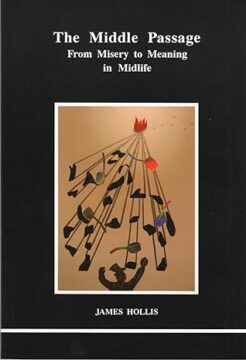 Hollis envisions these shifting identities as a change of axes, moving from the parent-child axis of early life to the ego-world axis of young adulthood to the ego-Self axis of the Middle Passage — a time when “the humbled ego begins the dialogue with the Self.” On the other side of it lies the final axis: “Self-God” or “Self-Cosmos,” embodying philosopher Martin Buber’s recognition that
 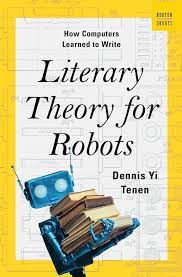 Literary Theory for Robots is mainly concerned with an alternative view—the “Aristotelian,” instrumental idea that intelligence represents the ability to successfully do shit—and not some internal, mental model. Intelligence is a set of mechanisms that one applies to one’s problems. It doesn’t matter what’s contained in those mechanisms, how conscious or self-conscious or “correct” they are, just that they work. Negotiating a ceasefire; completing a jigsaw puzzle; shifting gears; turning bread into toast—each of these requires intelligence to solve, and the degree of this intelligence is evaluated by (a) how well the set of mechanisms performs; and (b) how capably the same cocktail can be applied to other problems. A toaster is intelligent, Tenen argues, because its mechanism succeeds at turning bread into toast. And it sits at the bottom rung of a ladder, incapable of applying its wits to any other test.
 Young women’s social media feeds are flooded with
 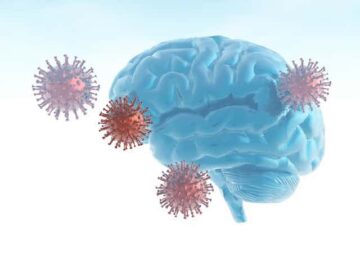 From the very early days of the pandemic,