
Aube Rey Lescure at The Millions:
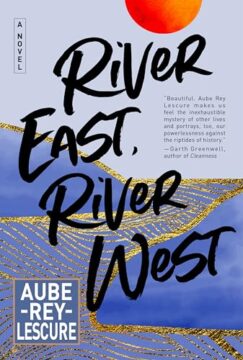 When I began writing a novel about adolescence in Shanghai, I knew rooftopping would weave into its fabric. I didn’t personally know any rooftoppers, but the mentality that drove so many young men to take up rooftopping was everywhere around me. I’d attended Chinese public schools through eighth grade and knew of boys who were deemed “problem students,” who disappeared for days and nights into cybercafe binges, who drank and fought and, once kicked out, would never be seen again. In eighth grade, a boy came to class with a knife and threatened to kill a girl—they’d been secretly dating, the girl’s parents found out and accused him of rape, and he was subsequently expelled from school and evicted by his parents. He’d been living and working in the barracks of a construction site not too far from school. I remembered his hysteria and desperation, though the knife never fell. He’d collapsed and been pulled away. But I remember thinking that this is what it meant to fall off track in this country: There was only one prescribed way forward, and once you diverged from the path, you were abandoned at the margins of a society that sped ahead and never looked back.
more here.
 Eye diseases
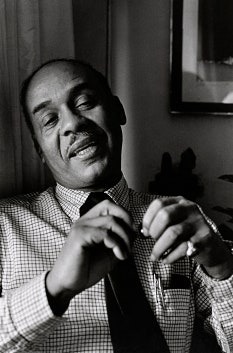 One of the greatest of all American books, Ralph Ellison’s “Invisible Man,” was published by Random House sixty years ago, on April 14, 1952, and became an immediate sensation. Almost everyone who cared about such things knew that something remarkable had happened. Ellison, a passionate reader of Twain, Dostoyevsky, Faulkner, Hemingway, Joyce, Malraux, T. S. Eliot, and Richard Wright, had marshalled a good part of the literary past and broken new ground as a novelist. His novel moves back and forth between stern realism and fantasia, despair and rhapsody, formal syntax and jazzy, impassioned riffs. Ellison pushed black folklore into surrealism and play—both sombre play and the most exuberant shenanigans.
 The requests from independent journalists for grants, including personal emergency grants, have been coming in extra fast lately. Receiving them, me and my staff at the
 In late 1936 George Orwell, like so many young idealists from Europe and the USA, went off to fight fascism in Spain. By the spring of 1937 he realized he was in a war with not two but three sides. The USSR was holding back a full Spanish revolution while attacking the socialists and anarchists outside its control.
 Language is a universal and democratic fact cutting across all human societies: no human group is without it, and no language is superior to any other. More than race or religion, language is a window on to the deepest levels of human diversity. The familiar map of the world’s 200 or so nation-states is superficial compared with the little-known map of its
  C
C “Carson McCullers: A Life” is a necessary book, though. It builds on Carr’s work and considers newly released material, including letters and journals and, most tantalizingly, transcripts of McCullers’s late-life psychiatric sessions with the female doctor who would become her lover and gatekeeper. It has been seven years since McCullers (1917-67) had her