
Jeannette Cooperman at The Common Reader:
 Why do I drink? “I like the taste” is a wan excuse, but I do. With my birthday filet mignon and dark chocolate cake, I want a velvety cabernet sauvignon, not chalky milk. For our ritual Friday night pepperoni pizza, I prefer cold beer to water. I love a chilled white wine with Indian curry or Chinese food, a Guinness with a burger, and champagne for any celebration. The cork’s airy pop is triumphant, and even the bubbles seem excited for you.
There is suspense in a slow corkscrew; poetry in a good wine list. God, I sound like a heroin addict rhapsodizing about the needle. But I do love all the accoutrements and arguments: how much foam should top a pilsner, is it better to age in a bourbon or sherry cask, and should that martini be shaken or stirred, dirty or pure? Over the centuries, drinking has accrued pearly layers of significance, becoming a symbolic and cultural ritual.
More here.
Enjoying the content on 3QD? Help keep us going by donating now.
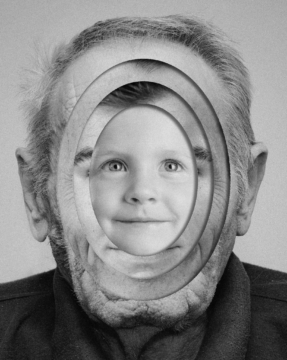 Why are babies born young? The most natural phenomenon on earth is actually hard to explain — at least on a cellular level. Consider this problem: The components of conception are old. When a woman gets pregnant, she has been carrying her egg cells since birth. The sperm that joins with the egg to form a zygote might have been just a few months in the making, but it inherits markers of age from the man who produced it. It only follows that the zygote would also show signs of age — and at first it does.
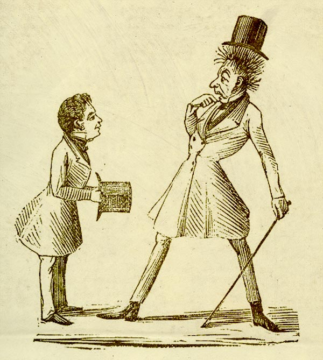 The year was 1845.
 I remember you used to give an intentionally provocative talk. One slide listed all the “positive things that drugs do for us,” and then you said something like “The question isn’t why ‘those people’ use drugs but ‘Why aren’t we all doing drugs all the time?’” This isn’t the sort of question often asked in scientific settings. How did you get there?
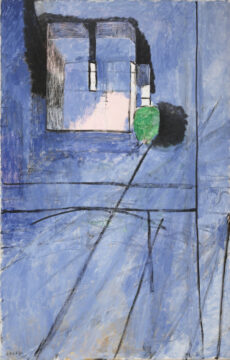 As we approach this painting, we have little idea of what it depicts, or whether it depicts anything at all. A washy blue covers the entire surface unevenly, and its space is traversed by several black vectors. A vertical line stretches the length of the canvas on the far right, where it intersects with two horizontal lines that cut across the center of the picture. In the lower half of the painting, three diagonal lines run roughly parallel to one another, also toward the right.
 Lord of the Flies looms so large in the canon of English-language allegory that it’s easy to forget
  A
A  At a TIME100 Talk on Friday night in Miami, just a few miles from the breakneck vehicular speed on display at the Formula 1 Miami Grand Prix, business leaders gathered to talk about the rapid acceleration of a different kind: the
  Every Sunday evening, I open the fridge, reach into the vegetable crisper, grab a pen, screw in a needle, pinch my stomach, and inject Ozempic. It hurts a bit, but I’ve gotten used to it. Twenty-five pounds down, 20 to go. I put on the weight after my brother died—the distortion in the mirror, random heavy breathing, strange hunger panics around 4 p.m., the constant need to self-soothe—and I wanted to let go, move on, heal.
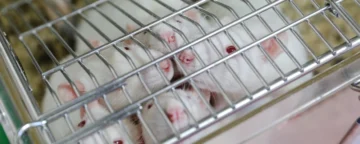
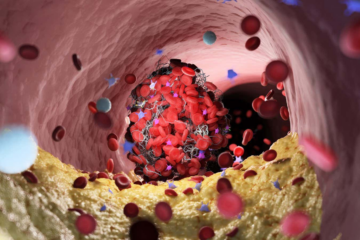 A simple modification to the cells that carry oxygen around our body seems to stop severe bleeds almost immediately. When applied to serious wounds in the livers of rats, the animals formed clots in just 5 seconds and lost very little blood, raising hopes that the approach could one day help people undergoing planned or emergency surgery.