
Richard Cohen in Lapham’s Quarterly:
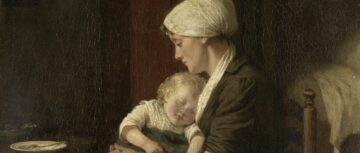 William Ewart Gladstone was Britain’s prime minister four times between 1868 and 1894, a member of Parliament for more than sixty years, a brilliant and passionate orator, an accomplished writer, and an indefatigable social reformer. Lord Kilbracken, his private secretary, estimated that if a figure of 100 could represent the energy of an ordinary man and 200 that of an exceptional one, Gladstone’s energy would be represented by a figure of at least 1,000.
…There are over a dozen common forms of energy, as usually itemized, from chemical, gravitational, and electromagnetic to nuclear, thermal, and wind. It is a formidable register—but human energy rarely appears in such listings. When set against those other categories, what do we mean by the term, anyway? The word energy itself comes from the ancient Greek ἐνέργεια, meaning “activity.” Aristotle said it was a condition that describes the capacity to do work. More recently, human energy has been similarly defined as the amount of stamina, vigor, or “juice” a person has to engage in a particular activity. None of this, unfortunately, takes us very far. There is obviously a difference between a person full of gusto and joie de vivre and a person with significant actual productivity. Marcel Proust spent much of his adult life lying in bed, but his masterwork, À la recherche du temps perdu, has 1,267,069 words in it, double the number in War and Peace. Voltaire spent eighteen hours a day writing or dictating to secretaries, eventually completing an output covering two thousand works; he sustained himself by drinking, so it was said, fifty cups of coffee a day. But while such prodigious feats are all about get-up-and-go, it is not something, a chemical reaction, but someone who has to do the getting up and going.
More here.
 A
A What made
  Cousin marriage rates are high in many countries today. We provide the first estimate of the effect of such marriages on the life expectancy of offspring. By studying couples married over a century ago, we observe their offspring across the lifespan. Using US genealogical data to identify children whose parents were first cousins, we compare their years of life to the offspring of their parents’ siblings. We find that marrying a cousin leads to more than a three-year reduction in offspring life expectancy. This effect is strikingly stable across time, despite large changes in life expectancy and economic environment.
 In 2007 Louise Glück selected Fady Joudah as the winner of the distinguished Yale Series of Younger Poets competition. In a foreword to his debut poetry collection published the following year, The Earth in the Attic, she called Joudah a “lyric poet in whom circumstance and profession . . . have compelled obsession with large social contexts and grave national dilemmas.” Since then, Joudah has published five more collections of poetry, won numerous awards, and translated several volumes of poetry by Palestinian writers, among them Mahmoud Darwish, perhaps the best-known Palestinian poet in the English-speaking world.
 “Where’s my tail?”
 T
T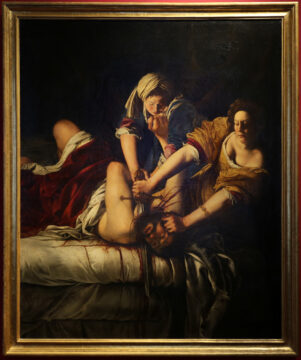 It’s true that Caravaggio’s reputation as a revolutionary force in Italian art remains unmatched, but Artemisia Gentileschi now overshadows all the other artists who drew on his influence. Édouard Manet, likewise, may still be seen as the key figure in the emergence of modernism in 19th-century Paris, but among those who recognized and built on his achievement, Mary Cassatt and Berthe Morisot appear far more important today than they did 50 years ago; the specific qualities of their work, unshared by their contemporaries, have come into focus. Paula Modersohn-Becker outshines most of her German Expressionist colleagues. And while Jackson Pollock remains the Abstract Expressionist par excellence, Lee Krasner and Joan Mitchell are now better appreciated than some of the male painters who were once accounted as his near-equals—Franz Kline, for example. Is just plain old “great” not great enough without the “supremely” added like a cherry on top?
 When my kids were little, I was always afraid that they would die, but that was mostly nervous ignorance on my part, knowing nothing about the resilience of little bodies. I used to worry how an infant would be able to tell me what was wrong. But the real worry was about my parents. They had language—and still they would die.
 In a recent interview with U.K. Prime Minister Rishi Sunak, Elon Musk
  Very few of us expected liberalism to have such a rocky
 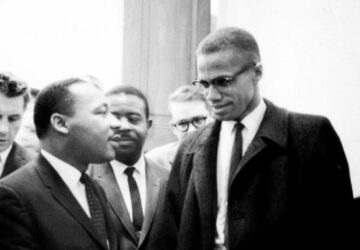 When most people think of the civil rights movement, they think of Martin Luther King, Jr., whose “I Have a Dream” speech, delivered on the steps of the Lincoln Memorial in 1963, and his acceptance of the Peace Prize the following year, secured his place as the voice of non-violent, mass protest in the 1960s. Yet the movement achieved its greatest results—the 1964 Civil Rights Act and the 1965 Voting Rights Act—due to the competing and sometimes radical strategies and agendas of diverse individuals such as Malcolm X, whose birthday is celebrated on May 19. As one of the most powerful, controversial, and enigmatic figures of the movement he occupies a necessary place in social studies/history curricula.