
Sophie Haigney at the New York Times:
 I spoke with several people like Marisa — people whose love lives were disordered, even dangerous, until they began identifying as love addicts.
The idea is that many people have an unhealthy, compulsive relationship with romance that makes stable relationships difficult and causes constant distress. Lately a burgeoning pocket of attention has focused on love addiction. There are first-person essays and podcasts like “Journals of a Love Addict” and the “Modern Love” episode “How Orville Peck Got Addicted to Love and Came out the Other Side.” There are much-discussed memoirs like Elizabeth Gilbert’s “All the Way to the River.” Online forums boom with discussion, with people suspecting that they, too, are problematically obsessive about love — that in a manner similar to alcohol or gambling, romance has come to control their lives and warp their choices.
Love addiction has also spread into the ways ordinary people think and talk about relationships, used casually to diagnose all sorts of drama.
More here.
Enjoying the content on 3QD? Help keep us going by donating now.

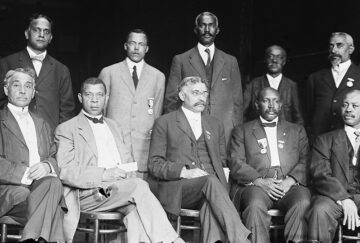 The term “identity politics” was first popularized by the 1977
  “Is this boring?”
 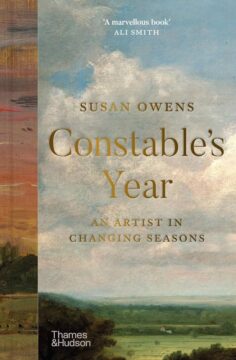 The depiction of ordinary places, and of the changing seasons and skies which shadow or illuminate them, is at the core of Susan Owens’s comprehensive and touching Constable’s Year. Near the beginning she quotes from one of Constable’s letters, proof that everything he saw and painted was based on his native Stour valley in Suffolk, and the intensity of observation developed there in boyhood:
 A parasitic species of ant from Japan is the first ever found to have done away with both males and female workers – instead, every individual is a queen that tries to take over the nests of other species.
 James Robinson is a professor at the University of Chicago and a co-winner of the Nobel Prize in Economics in 2024. Jim has been a friend for many decades and was for some time my colleague in Berkeley. This conversation is in 2 parts. Below you’ll find four questions by me and Jim’s response to them. The second part, consisting of four more questions and his answers, will be posted next week. I should mention here that by ‘institutions’ economists generally mean the social rules, conventions and other elements of the structural framework of socio-economic interaction.
 Having authored a multitude of fiction and nonfiction works, Howard University alumna and professor
  Artificial intelligence has rapidly become a central arena of geopolitical competition. The United States government frames AI as a strategic asset on par with energy or defense and seeks to press its apparent lead in developing the technology. The European Union lags in platform power but seeks influence over AI through regulation, labor protections, and rule-setting. China is racing to catch up and to deploy AI at scale, combining heavy state investment with administrative control and surveillance.
 Hidden inside every swipe, search, and AI prompt is a fingernail-sized slab of silicon — etched with billions of switches — built in $20 billion factories using machines so precise they border on science fiction. And because only a handful of companies (and a few chokepoint countries) can make the most advanced chips, the semiconductor supply chain has become the real front line of the AI race and U.S.–China competition.