
Ed Simon at Hyperallergic:
 Though firmly a Renaissance painter in regard to technical acumen, Grünewald was Medieval in his vision, an inheritor of the 14th and 15th centuries’ comfort with the horrors of embodiment. In Germany, in particular, there existed then a form of devotion that took succor precisely in visualizing the sort of gruesome tableaux that Grünewald expertly painted, especially as regards the paradox of an almighty God himself suffering and dying. “Be assured of this,” wrote Suso’s contemporary, the mystic Thomas à Kempis in The Imitation of Christ (c. 1418–27), “that you must live a dying life.” The so-called Imitatio, whereby the penitent would imagine the degradations of the passion, was common in Medieval Catholicism, and reinvigorated by the Ignatian exercises of the Jesuits centuries later.
As such, nothing is philosophically novel in the Isenheim altarpiece, with its Christ who appears slick with the clammy sweat of death, stinking with the purification of the sepulcher. But to see something so ugly so perfectly depicted remains shocking five centuries later.
more here.
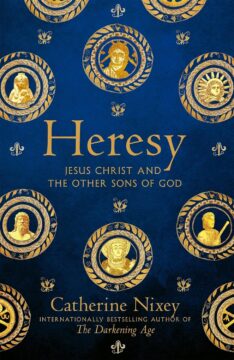 There were “many Jesuses, many Christs – many of them unimaginably strange to us today” – alongside other magi who resembled some of these Christs. Sometimes Jesus had a physical body; at others he was an apparition that left no footprints. There was a Jesus who warned his disciples against “filthy intercourse” and instructed them never to have children. In one account, an angry young Jesus curses a small boy, who becomes withered and deformed; later Jesus curses another boy, who falls down dead. There were Jesuses that hung in agony on the cross, and others who suffered no pain. In addition to diverse Jesuses, there was Apollonius, a first-century Greek philosopher and miracle-worker, sometimes called “the pagan Christ”.
 Say you’re at a party with nine other people and everyone shakes everyone else’s hand exactly once. How many handshakes take place?
 On Friday, March 22, gunmen toting assault rifles stormed Crocus City Hall, west of Moscow in the Krasnogorsk district, shot the guards and, as graphic videos show, opened fire on the concert audience without restraint. More than 6,000 tickets had been sold for the performance by the famed Russian rock band
  Old mice developed more youthful immune systems after scientists reduced aberrant
  “I FOUND IT extremely honest, forthright, and moving in ways I had not expected it to be,” Toni Morrison wrote to an aspiring novelist in 1977, “but it is a shuddering book and one that offers no escape for any reader whatsoever.” Still, Morrison, then a senior editor at Random House, liked the manuscript so much that, before responding, she passed it around the office to drum up support. The verdict was “intelligent,” but also “very ‘down,’ depressing, spiritually abrasive.” Whatever the merits of the writing, Morrison’s colleagues predicted, the potent mix of dissatisfaction, anger, and mournfulness would limit the book’s commercial appeal—and Morrison reluctantly agreed. “You don’t want to escape and I don’t want to escape,” her letter concludes, “but perhaps the public does and perhaps we are in the business of helping them do that.”
 I
I FILMMAKER ANNA BILLER begins her debut novel, Bluebeard’s Castle, with a warning: “Some husbands,” she writes, “are pussycats, some are dullards or harmless rogues, and some are Bluebeards.” Folklore and literary history are full of Bluebeards: Charles Perrault’s original fairy tale, two Brothers Grimm versions, Jane Eyre’s Mr. Rochester, modern retellings by writers, composers, and directors ranging from Georges Méliès and Béla Bartók to Helen Oyeyemi and Catherine Breillat. The elements of the story remain essentially the same: a young woman marries a mysterious, wealthy widower. Despite warnings (sometimes from her husband, sometimes from outsiders), she explores the recesses of his house and discovers that he has murdered all his former wives and keeps their bodies in a hidden chamber. The intrepid bride eventually reveals his secret, and the monster is punished—hacked to bits or burned alive. Though the story often has fantastic aspects—a talking bird, people who miraculously come back to life when their dismembered parts are reunited, a magical key or egg that proves that the wife found the chamber—true anxiety lies at its heart. Marriage is a gamble, it reminds us, and any husband could turn out to be a wife-killer.
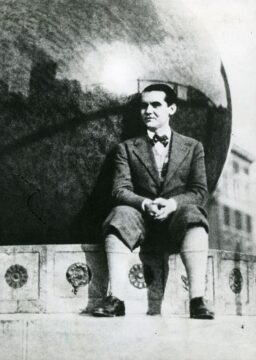 For a son of the titular city, reading Federico García Lorca’s Poet in New York is akin to curling into your lover, your nose dipped in the well of their collarbone, as they detail your mother’s various personality disorders. Yes, Federico, yes, my mother is thoroughly racist and takes every opportunity to remind me, her sometimes destitute child, about the silent cruelty of money. “At least you got to leave,” I want to tell him. “Imagine being stuck with her for the rest of your life.” He would likely understand my irrational attachment; after all, he was so consumed by Spain, its art and its politics, that his country would go on to swallow him whole.
 People of different nationalities appear to vary in their use of hand gestures, according to a study that seems to reinforce the idea that Italians, in particular, “talk with their hands”.
 It is a familiar story: a small group of animals living in a wooded grassland begin, against all odds, to populate Earth. At first, they occupy a specific ecological place in the landscape, kept in check by other species. Then something changes. The animals find a way to travel to new places. They learn to cope with unpredictability. They adapt to new kinds of food and shelter. They are clever. And they are aggressive.