
John Horgan at his own website:
 Claude Shannon can’t sit still. We’re in the living room of his home north of Boston, an edifice called Entropy House, and I’m trying to get him to recall how he came up with information theory. Shannon, who is a boyish 73, with a shy grin and snowy hair, is tired of dwelling on his past. He wants to show me his gadgets.
Over the mild protests of his wife, Betty, he leaps from his chair and disappears into another room. When I catch up with him, he proudly shows me his seven chess-playing machines, gasoline-powered pogo-stick, hundred-bladed jackknife, two-seated unicycle and countless other marvels.
Some of his personal creations–such as a mechanical mouse that navigates a maze, a juggling W. C. Fields mannequin and a computer that calculates in Roman numerals–are dusty and in disrepair. But Shannon seems as delighted with his toys as a 10-year-old on Christmas morning.
Is this the man who, at Bell Labs in 1948, wrote “A Mathematical Theory of Communication,” the Magna Carta of the digital age? Whose work is described as the greatest “in the annals of technological thought” by Bell Labs executive Robert Lucky?
Yes.
More here.
 F
F I force myself to watch videos of swarms. Swarms in flight, the frantic electricity of their communal passage, as if the air were awash in buzzing embers. And swarms at rest, noisy seething clumps clinging to branches and eaves and fire hydrants and bicycles. What is it that most alarms me about these images? The ominous rumble of the swarms’ wingbeats, for one thing. The nature of their flying, its chaotic zigzaggy suddenness. And their sheer, overwhelming numbers, the teeming mass of them, angry seeming, each of them with the potential to sting, like a vast force of tiny soldiers piloting tiny fighter jets. All this footage, which I find terrifying, even menacing, has been captured and narrated and posted by enthusiastic beekeepers across the globe. Unlike me, they are far from terrified or menaced; quite the opposite, they are exhilarated, awed, grinning like children. Most extraordinarily, they talk about getting stung with the amused matter-of-factness of someone getting caught in a passing rainstorm.
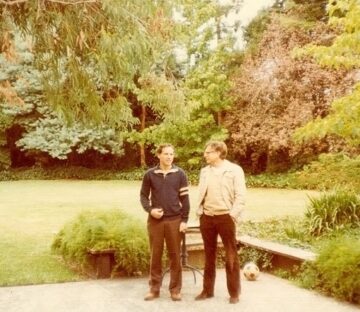 In 1968, Tversky and Kahneman were both rising stars in the psychology department at the Hebrew University of Jerusalem. They had little else in common. Tversky was born in Israel and had been a military hero. He had a bit of a quiet swagger (along with, incongruously, a slight lisp). He was an optimist, not only because it suited his personality but also because, as he put it, “when you are a pessimist and the bad thing happens, you live it twice. Once when you worry about it, and the second time when it happens.” A night owl, he would often schedule meetings with his graduate students at midnight, over tea, with no one around to bother them.
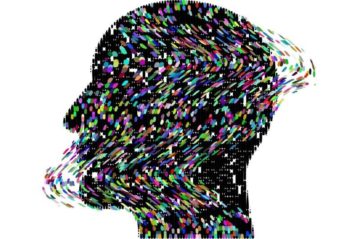 Inside the brains of people with psychosis, two key systems are malfunctioning: a “filter” that directs attention toward important external events and internal thoughts, and a “predictor” composed of pathways that anticipate rewards. Dysfunction of these systems makes it difficult to know what’s real, manifesting as hallucinations and delusions. The findings come from a Stanford Medicine-led study, published April 11 in Molecular Psychiatry, that used brain scan data from children, teens and
  You know the stereotype of the NPR listener: an EV-driving, Wordle-playing, tote bag–carrying coastal elite. It doesn’t precisely describe me, but it’s not far off. I’m Sarah Lawrence–educated, was raised by a
  For more than 40 years, Avi Wigderson has studied problems. But as a computational complexity theorist, he doesn’t necessarily care about the answers to these problems. He often just wants to know if they’re solvable or not, and how to tell. “The situation is ridiculous,” said
 From St Magnus Cathedral in Kirkwall, a lane once led through fields up to a small patch of grass. In the centre of this green, where formerly stood a stake, there is now a stone slab engraved: ‘in memory of those accused of witchcraft’. Convicted at trials held in the cathedral, the condemned were marched up the lane with hands bound, lashed to the stake and then ‘wyrried’ – that is strangled to death by the public executioner – and burned to ash. Other forms of execution were available; common criminals and traitors might also be wyrried but not reduced to ashes. Burning, however, was ‘cheust’ – ‘just’ – for witches. Yet the witches were otherwise quite undistinguished: ‘they wur cheust folk’ declares the slab’s main inscription in suitably Orcadian spelling.
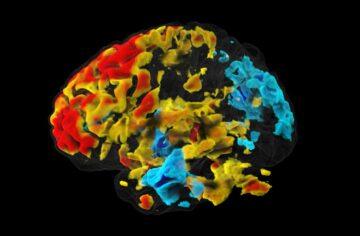 It was hailed as a potentially transformative technique for measuring brain activity in animals: direct imaging of neuronal activity (DIANA), held the promise of mapping neuronal activity so fast that neurons could be tracked as they fired. But nearly two years on from the
 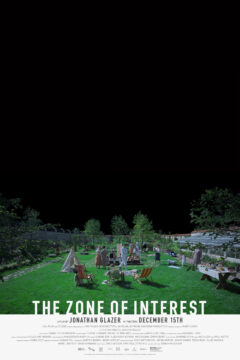 Glazer’s decision to only use hidden cameras, without any artificial lighting, creates formal limitations and challenges. But the images retain an intense tactility: patterns on fabrics, the pull of harshly parted and pinned hair, fuzz on a bee that circles a blossom, the softness of a dog’s muzzle, the glint of light reflected from an extracted human tooth. Close-ups punctuate longer observational takes, asserting the specificity of the surfaces that define this moment. The measured pacing of The Zone of Interest strikes me as distinct from the slow cinema tradition, where duration typically serves as a thematic focus. Instead, the length of the shots serves the function of extending the overarching tension. Glazer’s long takes are often paired with an uncomfortable intensity in the soundscape (perhaps the sonic analogue to an uncomfortable close-up), making these moments less an invitation to haptic reverie than an overwhelming of the senses. Suspense, tension, and a nauseating realization about what remains unseen dominate the affect, increased by the long takes that never fully reveal or resolve. The impact feels similar to the way the mind retains a vividly detailed image of a mundane moment preceding a traumatic event that itself can’t be fully recalled.