
Jason Castro in Aeon:
 What is the distance between the scent of a rose and the odour of camphor? Are floral smells perpendicular to smoky ones? Is the geometry of ‘odour space’ Euclidean, following the rules about lines, shapes and angles that decorate countless high-school chalkboards? To many, these will seem like either unserious questions or, less charitably, meaningless ones. Geometry is logic made visible, after all; the business of drawing unassailable conclusions from clearly stated axioms. And odour is, let’s be honest, a bit too vague and vaporous for any of that. The folksy idea of smell as the blunted and structureless sense is at least as old as Plato, and I have to confess that, even as an olfactory researcher, I sometimes feel like I’m studying the Pluto of the sensory systems – a shadowy, out-there iceball on a weird orbit.
In recent years, however, things have changed dramatically, and understanding what one might call ‘the geometry of smell’ is a field that now enlists task forces of neuroscientists working together with mathematically trained theorists and artificial intelligence (AI) experts.
More here.
 Arabic speakers are spoilt for choice when it comes to expressions of love. At least twenty-five Arabic words for different shades of love, affection and love-induced states of mind are in common usage, by my count. The actual number is said to be somewhere between fifty and one hundred, if formal Arabic words, less encountered in day-to-day speech, are included.
 Writing explicitly about sex is provocative. Being too interested in food would be tacky, domestic. Debré’s narrator is comfortable with the upper classes and the down-and-out—“when your parents are upper-class junkies, you get good training”—but with Agnès has her first experience of a member of the “petty bourgeoisie.” She’s cast off the comforts of her class position, but she’s still rich on the inside. She tries to get used to Agnès’s mannerisms—the phrases like “Oh shoot” and “the little ones,” the habit of taking one’s shoes off at the door—and can’t. She admits to speaking with a “snobby accent.” She’s related to duchesses on her mother’s side; her grandfather on her father’s side was the prime minister. (Debré doesn’t spell it out, but the reference is to Michel Debré, who held office for three years under de Gaulle, and drafted the Constitution of the Fifth Republic.) She loves filthy language, and bourgeois striving and planning make no sense to her. She lives cheaply and insists that her change of station involves real risk, casting aspersion on the middle-class assumption that “when your family name’s in the dictionary you must automatically have money invested in mutual funds.” She writes that making money “stresses me out,” that “it’s only when I’m poor and the bailiffs are on my ass that I feel like I’m where I belong.” She seeks extremity. But no bailiff actually comes to call. She’s “so rich that I don’t care about being poor.”
 T
T I
I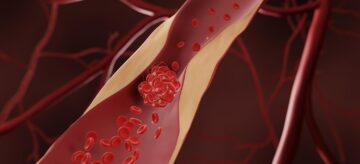 An experimental drug already tested as a potential treatment for cancer, lung disease, and
 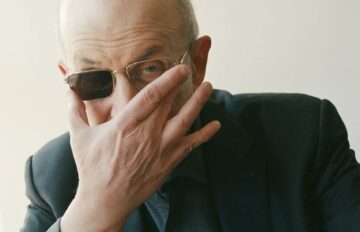 Last May, nine months after the knife attack that nearly killed him, Salman Rushdie made a surprise appearance at the 2023 PEN America literary gala. His voice was weak and he was noticeably thinner than usual; one of his eyeglass lenses was blacked out, because his right eye had been blinded in the assault. But anyone wondering whether the author was still his old exuberant self would have been immediately reassured by the way he began his remarks, with a racy impromptu joke.
 In January 2022, researchers at OpenAI, the company behind ChatGPT,
  As an investigative journalist, I write about war, weapons, national security and government secrets. I’ve previously written six books about US military and intelligence programmes – at the CIA, The Pentagon, Defense Advanced Research Projects Agency– all designed to prevent, or deter,
  Returning home after being away for any length of time is strange. The Moroccan explorer Ibn Battuta, who journeyed 70,000 miles across much of the 14th-century Islamic world, wrote that “traveling gives you home in a thousand strange places, then leaves you a stranger in your own land.” I’d venture that all travelers, whether they have been away for years, months or only weeks, know something of this estrangement. What gap year student hasn’t returned from their rite-of-passage journey to find that the “gap” now lies between them and their former life? This peculiar dislocation — a kind of out-of-body experience — might wear off after several days, or it might last much longer.
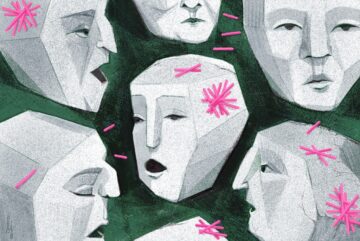 Determining whether someone has Alzheimer’s disease usually requires an extended diagnostic process. A doctor takes a patient’s medical history, discusses symptoms, administers verbal and visual cognitive tests. The patient may undergo a PET scan, an M.R.I. or a spinal tap — tests that detect the presence of two proteins in the brain, amyloid plaques and tau tangles, both associated with Alzheimer’s. All of that could change dramatically if new criteria proposed by an Alzheimer’s Association working group are widely adopted. Its final recommendations, expected later this year, will accelerate a shift that is already underway: from defining the disease by symptoms and behavior to defining it purely biologically — with biomarkers, substances in the body that indicate disease.
 While one segment of Silicon Valley lamented the perpetual absence of flying cars, another, it turns out, was quietly building them—or, at least, something flying-car adjacent. Just three months after the Founders Fund manifesto appeared, a Canadian inventor named Marcus Leng invited his neighbors and a couple of friends to his rural property, north of Lake Ontario. Leng was in his early fifties, with a bowl cut of coarse graying hair. He instructed his guests to park their (conventional) cars in a row and cower behind them. He strapped on a helmet and boarded a device that he’d built in his basement. It had a narrow single-seat chassis and two fixed wings, one in front and one in back, each with four small propellers. It was at once sleek and ungainly, as if a baby orca had been hitched to two snowplows. Observers described it, for lack of a better comparison, as looking like a U.F.O. Leng called it the BlackFly.
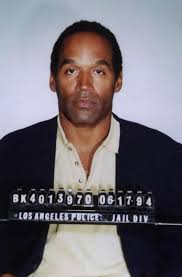 The two weeks spanning the O. J. Simpson verdict and Louis Farrakhan’s Million Man March on Washington were a good time for connoisseurs of racial paranoia. As blacks exulted at Simpson’s acquittal, horrified whites had a fleeting sense that this race thing was knottier than they’d ever supposed—that, when all the pieties were cleared away, blacks really were strangers in their midst. (The unspoken sentiment: And I thought I knew these people.) There was the faintest tincture of the Southern slaveowner’s disquiet in the aftermath of the bloody slave revolt led by Nat Turner—when the gentleman farmer was left to wonder which of his smiling, servile retainers would have slit his throat if the rebellion had spread as was intended, like fire on parched thatch. In the day or so following the verdict, young urban professionals took note of a slight froideur between themselves and their nannies and babysitters—the awkwardness of an unbroached subject. Rita Dove, who recently completed a term as the United States Poet Laureate, and who believes that Simpson was guilty, found it “appalling that white people were so outraged—more appalling than the decision as to whether he was guilty or not.” Of course, it’s possible to overstate the tensions. Marsalis invokes the example of team sports, saying, “You want your side to win, whatever the side is going to be. And the thing is, we’re still at a point in our national history where we look at each other as sides.”
 Walnuts can