
Lawrence Weschler at Wondercabinet:
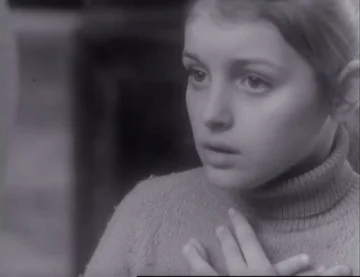 Veterans of this Cabinet will know that the states of absorption or immersion have been ongoing concerns of ours going back to our earliest issues, and even beyond, to “the Pillow of Air” column I used to contribute to The Believer magazine and the aesthetic upon which I originally founded my ill-fated single-issue Omnivore journal—which is to say those moments when our sudden stupefaction facing the world grows so profound that a pillow of air seems to lodge itself in our throats and we suddenly notice we haven’t even taken a breath in tens of seconds.
And some of you may remember two short films in particular which I linked to, I can’t remember the context, which deep-mined that specific territory of regard. The first being “Behold the Face,” the exquisite 1968 short in which the master Russian documentarian Pavel Kogan (1931-1998) trained his concealed camera upon a successions of visitors to The Hermitage Museum as they trained their own hushed gazes upon a magnificent Leonardo Madonna.
more here.
Enjoying the content on 3QD? Help keep us going by donating now.
 I
I Modern AI chatbots can do amazing things, from
  Consider the great Sufi mystic Ibn Arabi’s account of creation:
 In the flurry of literature and comment since 2021, a relatively settled version of O’Connor’s life has taken shape, the kind reproduced in books like Allyson McCabe’s Why Sinéad O’Connor Matters and Ariane Sherine’s The Real Sinéad O’Connor. First is her childhood (1966-’85). Second is her rise to fame (1985-’92). Third is most of her career (1993-2015). And fourth is what could be called her ‘comeback’ (2015-’23). But these are never equally weighted: her rise to fame dominates most accounts, and is, for instance, the sole focus of Kathryn Ferguson’s documentary Nothing Compares (2022). Even in larger versions, her SNL appearance is often framed as a kind of culminating point of her career more generally, which is why it comes at around the halfway mark of McCabe’s and Sherine’s books. (Even Adele Bertei’s Sinéad O’Connor’s Universal Mother, which focuses on her 1994 LP, includes a chapter about SNL as a preamble.) At first, this seems like an obvious chronological move to make, but it is also indicative of how little critical attention has been paid to most of O’Connor’s career since 1993. Not much is usually said about this period that goes beyond brief overviews of the albums and familiar headlines concerning Miley Cyrus and Dr Phil. This is also true of Rememberings, raising all sorts of questions about the influence that her memoir has had on how we think about her life and music more generally.
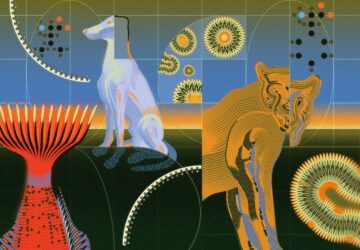 Biology is undergoing a transformation. After centuries of studying life as it evolves naturally, researchers are now using a combination of computation and genome engineering to intervene,
  Almost a century on, and with pithiatism relegated to the nosological archive, the case of Trénel and Lacan’s ‘strange patient’ remains interesting for several reasons. Firstly, their diagnosis is very much situated in a peculiar French psychiatric milieu, where broader questions about the nature of hysteria converge less on sexual repression and free association, and more on the French state and institutionalised psychiatry. (If Lacan would later become famous for his theatricality, it might in fact be traceable to this psychiatric milieu rather than psychoanalysis.) Secondly, the abasiac woman’s status as a fixture of the Parisian psychiatric scene – her constant appeals to doctors and the medical gaze’s equally intense fixation on her – could be seen to express the rhythms of her symptoms. Her relationship to the medical establishment takes the form of a game of proximity, repeated approaches and pullings away. In consulting numerous doctors, she would, as Lacan and Trénel aptly put it, attach the ‘utmost importance to every step she took’. Thirdly, there is a social and historical poignancy to the case. In Lacan’s early work as a psychiatrist, he wondered if symptoms were not themselves expressions of, or responses to, particular historical moments and contradictions. The final form her gait took – walking backwards on tiptoes while rotating regularly – could be read as a silent assessment of the impact the War had had not just on her, but on everyone: it was no longer possible to walk straight-forwardly into the future, now that it was wholly uncertain. One could only fix one’s eyes on the past, advance away from it carefully so as not to disturb it, and introduce one’s own regularities into a landscape bereft of clear, collective markers.
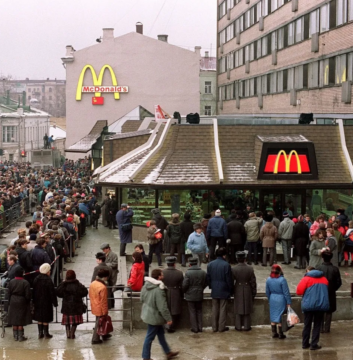 To truly feel the force of America’s cultural attraction you have to be born outside of it. The natives see the cracks up close and learn to take the whole thing for granted. Growing up in the Soviet Union in the 1980s, none of my friends had to be convinced of America’s appeal. Its jeans-clad, Ray-Ban-wearing, moon-dancing cultural exports were the opposite of propaganda. They were the natural overflow of a society so confident in its own desirability that it never had to make a case for itself.