
Henry Clements at the Los Angeles Review of Books:
 Consider the great Sufi mystic Ibn Arabi’s account of creation:
When God created Adam, there remained a surplus of the leaven of the clay from which He created the palm tree, Adam’s sister; yet this creation, too, left behind a remainder the size of a sesame seed, from which […] God created an immense Earth, the whole of our universe, in which was hidden so many marvels that their number cannot be counted.
The first surprise in Ibn Arabi’s narrative lies in its temporal inversion: the inaugural act—the creation of “the whole of our universe”—arrives belatedly, as the final consequence of a series of leftovers. And the disorientation deepens: this cosmos, so vast as to harbor innumerable hidden marvels, emerges not from an overflowing plenitude but from a diminishing remainder—a bit of clay the size of a sesame seed, left over from what was left over of the clay from which God made Adam.
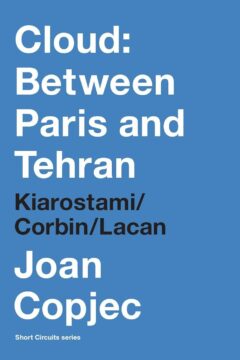
In Cloud: Between Paris and Tehran (2025), Joan Copjec seizes on this creation myth for the way it foregrounds repetition. Creation, for Ibn Arabi, does not occur in a singular moment, neatly cleaving “before” from “after” as in the standard account of the Uncreated summoning existence ex nihilo. Rather, it insists and reiterates: being emerges through repetition, each event leaving behind a remainder. The creative act, paradoxically, does not advance along the arrow of linear time but curls back upon itself; it yields a surplus, a bit of clay, that retroactively returns to the origin—to creation itself.
More here.
Enjoying the content on 3QD? Help keep us going by donating now.