
Walking the Beach, September 10, 2001
I like seashells, Jake announces as he holds up periwinkle
after periwinkle, as if each one’s so different
it can’t be left where it is. I like periwinkles,
he says, the way kids do
when they’ve just learned a word and won’t keep
from the pleasure of saying it again
and again. I like limpets. I like mussels. I like barnacles.
I like razor clams. I like spoon shells.
Is there nothing on the beach this kid doesn’t like?
He can’t just pick up a shell,
he’s got to declare his degree of commitment to it,
as if, at three and a half, he knows that it’s not enough
to fall in love; you’ve got to make the world
understand just how much.
I like canoe shells, Opa, but the big, spirally ones too.
and the ones with ripples. And this one
with scribble on it. Jake greets each day
as someone might welcome a long-lost cousin
who’s crossed thousands of miles
to meet him. If these shells had the patience
to travel such great distance to get here and were willing to be
broken in the effort, then he sees it as his and Opa’s job
to gather them all. But it’s exhausting
liking so many things: shells the color of old dentures,
clams even the seagulls are tired of, the ruined armor
of horseshoe crabs. Jake throws himself into his work.
Life would be so much easier for him
if he didn’t need to see, touch, know everything,
feel that it’s all up to him
to make sense of the universe. The world can’t help
but disappoint this child. Finally
it will have to break the heart of a boy determined
to pick up every snagged fishing line, washed-in buoy,
every tar-stained dog welk, heel of a slipper shell,
ponderous ark, spotted moon.
Jake’s got a whole beach to cover
and only so much time.
by Christopher Bursk
from The First Inhabitants of Arcadia
University of Arkansas Press, 2006
 Imagine you had a friend who gave different answers to the same question, depending on how you asked it. “What’s the capital of Peru?” would get one answer, and “Is Lima the capital of Peru?” would get another. You’d probably be a little worried about your friend’s mental faculties, and you’d almost certainly find it hard to trust any answer they gave.
 Few writers have possessed the short-story format as thoroughly as the Canadian author and Nobel laureate
 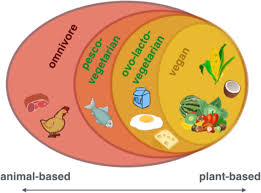 Western societies notice an increasing interest in plant-based eating patterns such as vegetarian and vegan, yet potential effects on the body and brain are a matter of debate. Therefore, we systematically reviewed existing human interventional studies on putative effects of a plant-based diet on the metabolism and cognition, and what is known about the underlying mechanisms. Using the search terms “plant-based OR vegan OR vegetarian AND diet AND intervention” in PubMed filtered for clinical trials in humans retrieved 205 studies out of which 27, plus an additional search extending the selection to another five studies, were eligible for inclusion based on three independent ratings.
 Cardiovascular diseases (CVDs) and cancer currently represent the leading causes of death and disability worldwide. Studies performed on large cohorts worldwide have identified several modifiable and non-modifiable risk factors. Among them, robust evidence supports
  A few years ago, when my daughter was a freshman at Columbia University, one of only a few from Arkansas, I had the audacity to propose to then-president Lee Bollinger that the university add a hands-on component to its core curriculum. The core curriculum is intended to build a common framework of understanding as a baseline for academic life and what proceeds from it. Even though my academic credentials might not have caught Bollinger’s attention, I believed that I had something to offer as a craftsman and woodworker, and a father.
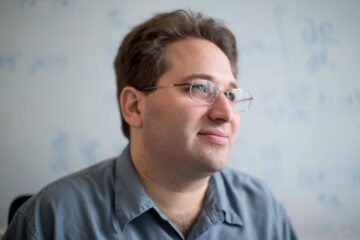 Dr. Scott Aaronson is the David J. Bruton Jr. Centennial Professor of Computer Science at UT Austin. He is known for his work as a computer scientist and research into complexity theory and quantum computing, and more recently for his work at OpenAI, the creators of ChatGPT, on AI alignment. I sat down with Dr. Aaronson to talk about the nature of quantum computing, why we should care, and his thoughts on the recent developments in artificial intelligence.
 Bérubé’s new book, The Ex-Human, is about science fiction. Bérubé offers thoughtful close readings of a number of classic science fiction texts: Ursula Le Guin’s The Left Hand of Darkness, Cixin Liu’s The Three-Body Problem, Margaret Atwood’s Oryx and Crake, Philip K. Dick’s Do Androids Dream of Electric Sleep? (with some reference to its film adaptation as Blade Runner), Arthur C. Clarke’s 2001 (with some reference to its better-known film adaptation by Stanley Kubrick), and Octavia Butler’s Parable series and Lilith’s Brood series.
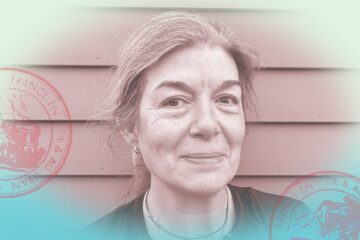 “I’m a writer; I tell stories,” reads the first line of Claire Messud’s
  Older people who aren’t picky eaters appear to have better brain health than those who prefer more limited diets, according to a large study of British adults. The
  I’m stressed and running late, because what do you wear for the rest of eternity?
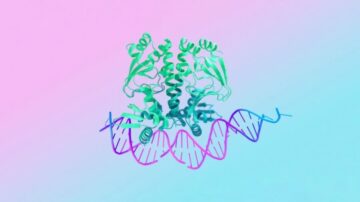 Proteins are biological workhorses. They build our bodies and orchestrate the molecular processes in cells that keep them healthy. They also present a wealth of targets for new medications. From everyday pain relievers to sophisticated cancer immunotherapies, most current drugs interact with a protein. Deciphering protein architectures could lead to new treatments. That was the promise of AlphaFold 2, an AI model from Google DeepMind that predicted how proteins gain their distinctive shapes based on the sequences of their constituent molecules alone. Released in 2020, the tool was a breakthrough half a decade in the making. But proteins don’t work alone. They inhabit an entire cellular universe and often collaborate with other molecular inhabitants like, for example, DNA, the body’s genetic blueprint.
 As radical as they might seem, calls for limits on wealth are as old as civilization itself. The Hebrew Bible and Torah recognized years during which debts should be cancelled, slaves set free and property redistributed from rich to poor. In classical Greece, Aristotle praised cities that kept wealth inequality in check to enhance political stability. And in 1942, then-US president Franklin D. Roosevelt argued that annual incomes should be capped at the current equivalent of US$480,000.
 Mr. Simons equipped his colleagues with advanced computers to process torrents of data filtered through mathematical models, and turned the four investment funds in his new firm,