
Hephzibah Anderson in The Guardian:
 Sam Taylor, 53, was living in rural France with four well-received novels to his name when he realised that he wasn’t going to be able to support his family through writing alone. After being turned down for bar work in nearby Lourdes, he decided to try literary translating, starting with Laurent Binet’s Goncourt-winning novel HHhH. So began an award-winning second career that has seen him work with high-profile authors including Leila Slimani and David Diop. Now based in Texas, he has returned to novel-writing with The Two Loves of Sophie Strom. Centring on a provocative idea, it opens in 1930s Vienna as antisemitic neighbours torch 13-year-old Max Spiegelman’s home. In a parallel universe, the fire leaves Max an orphan, and he’s adopted by an Aryan family who rename him Hans and encourage him to join the Hitler-Jugend. At night, Max and Hans, on opposing sides of history, dream of each other’s lives.
Where did the idea come from?
Weirdly enough, the spark came from a line in my first novel [The Republic of Trees, 2005], about the night self and the day self, the waking self and the sleeping self. It’s sliding doors, except the twist is Max and Hans are dreaming about each other, so they’re aware of each other’s lives.
More here.
 William Ewart Gladstone was Britain’s prime minister four times between 1868 and 1894, a member of Parliament for more than sixty years, a brilliant and passionate orator, an accomplished writer, and an indefatigable social reformer. Lord Kilbracken, his private secretary, estimated that if a figure of 100 could represent the energy of an ordinary man and 200 that of an exceptional one, Gladstone’s energy would be represented by a figure of at least 1,000.
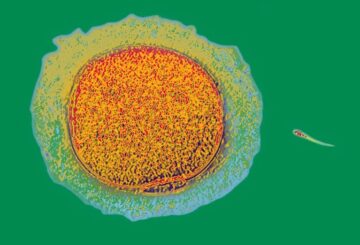 The day when
 ‘C
‘C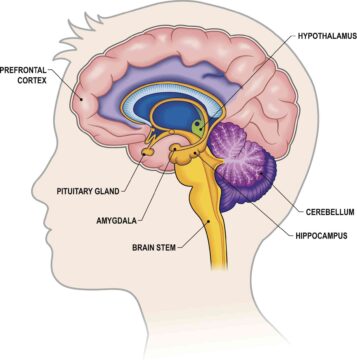 I am a neurobiologist focused on understanding the chemicals and brain regions that
  Donald Trump is incapable of meaningful participation in such an event. Only in the sense that “match” can apply to both chess and mud wrestling could the word “debate” apply both to the Kennedy-Nixon event and to Trump’s on-stage behavior. Trump cannot help but distort a debate into a cage-fight. He will, again, shamelessly lie and endlessly interrupt.
 Earlier this year, the singer and songwriter Billie Eilish, who is twenty-two, became the youngest two-time Oscar winner in history, collecting the Best Original Song award for “What Was I Made For?,” a delicate existential ballad that she co-wrote for the film “
 On the edge of the Alameda, practically bumping up against the old Church of Saint Francis, the gay club flashes a fuchsia neon sign that sparks the sinful festivities. An invitation to go down the steps and enter the colorful furnace of music-fever sweating on the dance floor. The fairy parade descends the uneven staircase like goddesses of a Mapuche Olympus. High and mighty, their stride gliding right over the threadbare carpet. Magnificent and exacting as they adjust the safety pins in their freshly ironed pants. Practically queens, if not for the loose red stitches of a quickie fix. Practically stars, except for the fake jeans logo tattooed on one of the asscheeks.
 Francis Ford Coppola’s Megalopolis took 41 years to make. It might take as long to understand. Coppola’s magnum opus, which premiered in competition at the Cannes Film Festival last night, is a movie of extraordinary highs and baffling lows, alternately dazzling and confounding. Sometimes, in the same moment, it’s both. When I asked colleagues who’d seen it—at a remote early-morning screening, added at the last minute to accommodate Coppola’s preference for IMAX—they looked at me like the mute humans in the
  H
H The
The  Getting microbes to eat plastic is a frequently touted solution to our growing waste problem, but making the approach practical is tricky. A new technique that impregnates plastic with the spores of plastic-eating bacteria could make the idea a reality. The impact of plastic waste on the environment and our health has gained increasing attention in recent years. The latest round of UN talks aiming for a global treaty to end plastic pollution
  Whether mobilizing for war or (re)constructing advanced manufacturing capabilities in peacetime, success turns on the functioning of complex supply chains. But this truth was long forgotten – or at least under-appreciated. Not until recent supply-chain shocks did academics, policymakers, and others start paying more attention to the complicated, barely studied “meso” (middle) domain between microeconomics and macroeconomics.
 For thousands of years, humankind has fancied itself the apex of creation and the dominant force in the world. Yet humans are now gripped by the fear that yet another species of our own creation—artificially intelligent machines—will presently displace us from our position of unchallenged domination, perhaps even enslaving us.
 I spent