Challenging Sex Taboos, With Help From the Koran

Robert F. Worth in the New York Times:

ScreenHunter_07 Jun. 06 08.03 Ms. Lootah sees about seven cases a day, individuals and couples. Most of them are native Emiratis, but in the multicultural world of Dubai — where about 90 percent of the population is foreign — she has also counseled some Europeans and Asians. As in the criminal courts next door, a translator sits in on the session, and sometimes even offers advice to bridge cultural gaps.

“Some people are amazed I can work with people with only my eyes showing,” Ms. Lootah said, with a ripple of laughter. “Maybe it’s because of the way I move my hands! But I can tell you that people come here, and they speak very frankly with me.”

She reels off stories from her practice in rapid fire: the Emirati military officer whose wife had an affair because he was away from home too much; the woman who thought fellatio was against Islam (not true at all, Ms. Lootah notes); the wife who discovered her husband dressing up as a woman and going out to gay bars. She seems bent on showing that there is a whole world of sexual confusion that would benefit from open discussion.

More here.
the three

Dissidents262x220

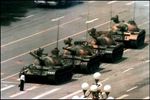
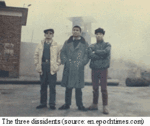
23 May 1989: In China, a student-led democracy movement is gathering momentum. It had begun one month before in the capital and from there had spread throughout the entire country. Its activities are centred on the Tiananmen, the Square of Heavenly Peace in Peking. Not only is this where Mao Tse-tung proclaimed the People’s Republic on 1 October 1949, it is also the site of the mausoleum in which, as if to warn against forgetting the achievements of the Long March, the embalmed corpse of the former communist party leader and head of state is contained. It’s no coincidence that the activists have chosen this place to publicize their demands. Tiananmen is simultaneously a forum, a tribune, and a tribunal. Since 13 May, several thousand people have been holding a hunger strike in an attempt to force the government to enter into dialogue with the protesters. Without success.

more from Wolfgang Kraushaar at Eurozine here.

a true servant of eros

Dd_gunn01

That sex and drugs go together should be no surprise to anyone, and in Thom Gunn’s poems they become dual aspects of eros: on the one hand, drugs and sex can open us up to vistas of human freedoms and discoveries; and, on the other, they can lead to darker recognitions about the world and ourselves. Gunn’s poems explore both aspects in a way that is compassionate, nuanced, and wide-ranging in scope. So let’s start with Gunn’s attitude toward drugs. I had long known that he used them—for that matter, so had I, speed, heroin, marijuana, a lot of psychedelics—and drug use was one of the bonds of our friendship. I don’t mean that we did drugs together, for we weren’t friends in that way. But I mean the psychological predisposition behind our drug use, the kinds of assumptions we shared about what drugs could teach you, how they opened up avenues of self-knowledge and wide-ranging spiritual and social understandings that would ordinarily be closed to you. You always took drugs for pleasure, of course, but part of that pleasure was the possibilities they gave you to test what it meant to be a human being. You might say that Gunn disagreed with Samuel Johnson when Johnson said that you didn’t need to experience evil in order to shun it—though Gunn never thought of drugs as evil: rather, drugs were part of the pleasure of people who have a romance with experience and, for better and worse, take seriously the choices and obsessions that such a romance involves you in, willy-nilly.

more from Tom Sleigh at Poetry here.

late picasso

Picasso-1969

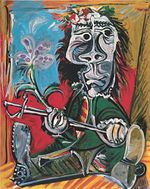
But the problem with late Picasso is real. It has to do with his stubborn insistence on diaristic expressionism increasingly isolated from changing times. Duchamp moved to New York, to the future, Picasso to the Mediterranean, the past. (Try finding a single contemporary artifact depicted in these works. No beer cans or soup cans here.) And anyway, didn’t Warhol, finishing what Duchamp started, drive a stake of ridicule into the heart of sincerity, into merely “optical” talent? From a postmodern point of view, Picasso’s restless hand, even at its most thrillingly uningratiating, even at its most goofy and cartoony, simply runs into a wall when it hits irony, as if trying too hard. To an extent, you can laugh uncomfortably at the current exhibition’s musquetero/clowns with their limp swords, their Marcel Marceau flowers, but is this really the game Picasso means to play or have we been conditioned by Jim Shaw’s thrift store art, Richard Prince’s sad jokes, Kippenberger, Koons, and so on? Picasso’s pretty girls and boys watched by old men seem rather prudish in light of sexual radicals like Aubrey Beardsley and Hans Bellmer, or even the gooey seductions of Lisa Yuskevage. As for tapping into an unbroken stream of blood and sand descending from Minoan funeral games by way of Goya, the lonely torero staring death in the face is, surely, an existential cliché. There are Jackson Pollock paintings from around 1940 of minotaurs’ heads, homages to Picasso by way of Jung, that are so full of punishing psychic fury that the master’s versions in comparison can seem like Cotes D’Azur tourist ceramics.

more from David Brody at artcritical here.

Did aging evolve to prevent epidemics?

Chris Patil in Ouroboros:

ScreenHunter_06 Jun. 05 14.22 How did aging evolve? Some evolutionary theories invoke tradeoffs between maintenance/repair and reproduction. Others postulate that genes that cause age-related decline can be positively selected, so long as these same genes confer a fitness advantage early in life.

A common feature of these theories is that they operate at the level of the individual organism, rather than the species. Models based on group selection usually have logical problems. For example, suppose that aging evolved in order to eliminate post-reproductive old organisms to preserve resources for the reproductively competent young. This is circular: Why are the old organisms were post-reproductive in the first place? i.e., the model presupposes some age-related decline in organ system function in order to rationalize the evolution of aging.

More here.

Truly terrifying data about the real state of the U.S. economy

Eliot Spitzer in Slate:

090603_BP_downArrow I have an unfortunate sense that the “green shoots” in the economy that everyone is talking about are nothing but dandelions. Sure, forcing $1 trillion of taxpayer money—in direct capital, guarantees, and diminished cost of borrowing—into the banking sector has permitted the major banks to claim solvency for the moment. Yet we should not forget that this solvency has come not through a much needed deleveraging of the banking sector but rather from a massive transfer of the obligations of private banks to the public, with the debt accruing to future generations. And overall loan quality at U.S. banks is still the worst in 25 years and deteriorating at the fastest pace ever.

It's a terrible mistake to confuse the momentary solvency of the financial sector and the long-term health of our economy.

While we have addressed the credit collapse, we have not begun to tackle the far more daunting, and more significant, structural problems in the economy. Instead of focusing on the green shoots, let's examine the macro data that will determine our national prosperity in the next generation. These data are terrifying.

More here.

Media That Matters Film Festival: A Girl Like Me

From the Media That Matters Film Festival press release:

Since its launch in 2001, several festival films have gone on to create change, including playing a role catalyzing national legislation and informing corporate hiring practices. Following its debut in the 2006 festival, A GIRL LIKE ME, a short video about young African American girls’ perceptions of race, became an online phenomenon, ultimately reaching millions of viewers and earning its 16-year-old creator an appearance on Oprah.

More information about the festival, including this year's lineup here.

Friday Poem

Trout
Seamus Heaney

Hangs, a fat gun-barrel,
deep under arched bridges
or slips like butter down
the throat of the river.

From depths smooth-skinned as plums,
his muzzle gets bull’s eye;
picks off grass-seed and moths
that vanish, torpedoed.

Where water unravels
over gravel beds he
is fired from the shallows,
white belly reporting

flat; darts like tracer-
bullet back between stones
and is never burnt out.
A volley of cold blood

ramrodding the current.

The Cairo Speech

From The New York Times:

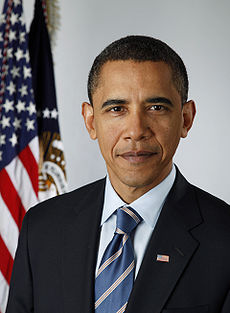
Obama When President Bush spoke in the months and years after Sept. 11, 2001, we often — chillingly — felt as if we didn’t recognize the United States. His vision was of a country racked with fear and bent on vengeance, one that imposed invidious choices on the world and on itself. When we listened to President Obama speak in Cairo on Thursday, we recognized the United States. Mr. Obama spoke, unwaveringly, of the need to defend the country’s security and values. He left no doubt that he would do what must be done to defeat Al Qaeda and the Taliban, while making it clear that Americans have no desire to permanently occupy Afghanistan or Iraq. He spoke, unequivocally, of the United States’ “unbreakable” commitment to Israel and of why Iran must not have a nuclear weapon. He was also clear that all of those listening — in the Muslim world and in Israel — must do more to defeat extremism and to respect the rights of their neighbors and their people.

Words are important. Mr. Obama was right when he urged leaders who privately speak of moderation and compromise to dare to say those words in public. But words are not enough. Mr. Obama, who, after all, has been in office for less than six months, has a lot to do to fulfill this vision. So do others.

Like many people, we were listening closely to how the president would address the Israeli-Palestinian conflict. He did not shy away from pressing Israel’s new government, insisting that the construction of settlements must stop, the existence of a Palestinian state cannot be denied, and “the situation for the Palestinian people is intolerable.” In the same stern tone, he pressed the Palestinians to reject violence and said that Arab states must stop using the conflict “to distract” their people from other problems. They must recognize Israel and do more to help Palestinians build strong state institutions. We couldn’t have agreed more when he said that the elements of a peace formula are known. We are now waiting to hear his strategy to move the process forward.

More here.

Meditation on Demand

From Scientific American:

Meditation-on-demand_1 In the fall of 2005, the Dalai Lama gave the inaugural Dialogues between Neuroscience and Society lecture at the Annual Meeting of the Society for Neuroscience in Washington, DC. There were over 30,000 neuroscientists registered for the meeting, and it seemed as if most of them attended the talk. The Dalai Lama’s address was designed to highlight the areas of convergence between neuroscience and Buddhist thought about the mind, and to many in the audience he clearly achieved his objective. There was some controversy over his being invited to deliver this lecture insofar as he is both a head of state and a religious leader, and for that reason he largely stuck to his prepared text. But he strayed from the text at least once, reminding the audience that not only was he a Buddhist monk but also an enthusiastic proponent of modern technology.

Elaborating, he shared a confidence with the audience, telling the audience of scientists that meditating was hard work for him (even though he meditates for 4 hours every morning), and that if neuroscientists were able to find a way to put electrodes in his brain and provide him with the same outcome as he gets from meditating, he would be an enthusiastic volunteer. It turns out that a recent set of experiments, from researchers at MIT and Stanford, moves us a step closer to making his wish a reality.

More here.

Thursday, June 4, 2009

Three Dialogues by Plato

John Holbo at Crooked Timber:

Want to see a neat trick? I can embed the book, like so.

Then you just click to turn the page (illegible at this size) or click to open and read in full-screen mode. It’s a very nice viewer they’ve got. Or I could make the embed open on a particular page, so when I’m blogging about a passage while teaching, I can just point the kids to the page in question. Or open the book itself onscreen in class and zoom so it’s readable. Neat, I call it.

The full book title (some would say: over-full): Reason and Persuasion, Three Dialogues by Plato: Euthyphro, Meno and Republic book I, with commentary and illustrations by John Holbo and translations by Belle Waring. It will be out in print by mid-August. The version that is up right now is actually the final draft – so far as I can tell. But I still have a week-and-a-bit to catch any last typos or mistakes.

More here.

Whither Pakistan? A five-year forecast

Pervez Hoodbhoy in Bulletin of the Atomic Scientists:

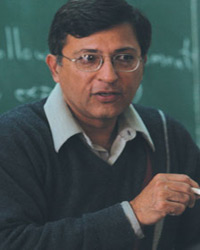
Pervez-Hoodbhoy First, the bottom line: Pakistan will not break up; there will not be another military coup; the Taliban will not seize the presidency; Pakistan's nuclear weapons will not go astray; and the Islamic sharia will not become the law of the land.

That's the good news. It conflicts with opinions in the mainstream U.S. press, as well as with some in the Obama administration. For example, in March, David Kilcullen, a top adviser to Gen. David Petraeus, declared that state collapse could occur within six months. This is highly improbable.

Now, the bad news: The clouds hanging over the future of Pakistan's state and society are getting darker. Collapse isn't impending, but there is a slow-burning fuse. While timescales cannot be mathematically forecast, the speed of societal decline has surprised many who have long warned that religious extremism is devouring Pakistan.

Here is how it all went down the hill: The 2001 U.S. invasion of Afghanistan devastated the Taliban. Many fighters were products of madrassas in Pakistan, and their trauma partly was shared by their erstwhile benefactors in the Pakistan military and intelligence. Recognizing that this force would remain important for maintaining Pakistani influence in Afghanistan–and keep the low-intensity war in Kashmir going–the army secretly welcomed them on Pakistani soil. Rebuilding and rearming was quick, especially as the United States tripped up in Afghanistan after a successful initial victory. Former President Pervez Musharraf's strategy of running with the hares and hunting with hounds worked initially. But then U.S. demands to dump the Taliban became more insistent, and the Taliban also grew angry at this double game. As the army's goals and tactics lost coherence, the Taliban advanced.

More here.

Science fiction’s vital contribution to the life of English

From The Guardian:

Robot-hand-001 I have a new test for checking English literary health. I make no claims for its originality, efficacy, scientific rigour or infallibility. But here it is: the more neologisms or new uses for existing words a literary movement donates to the English language, the stronger it is.

Coleridge and friends had their new uses for “sublime”, new constructions like “unfathomable seas” and “organic form”, new uses for “romantic” (of course), and totally new words like “reliability” (surprisingly). The Lost Generation, even though they tried so hard to do nothing fancy, still had “rotten shames”, “lovely pieces” and thousands of new inflections to the words “hell” and “damn”. The Beat Generation had, well, “beat”, as well as a whole new vocabulary centred around dharma, jazz and smoking “tea”. Writers in the Enlightenment went one better by inventing the modern dictionary, as well as a whole lexicon relating to “reason” and “capital” to add to it. Meanwhile, the king of them all – the one-man literary movement and word machine that was William Shakespeare – is credited with more than 2,000 neologisms – among them hundreds of words we now take entirely for granted: “articulate”, “pedant”, “accommodation”, “addiction”, “dislocate”.

More here.

The ghosts of Tiananmen

Tiananmen

Ten years after the Tiananmen massacre of 1989 I wrote a book, Bad Elements, about the fate of the protesters, dissidents and free-spirited Chinese who had wanted to change their country. Much had changed in those ten years, and even more has changed since. New buildings, ever taller, ever bigger, have made cities like Beijing, Shanghai and Chongqing virtually unrecognisable to anyone who has been away for longer than six months. Old neighbourhoods disappear overnight, to be replaced by high rises, shopping malls and theme parks, sometimes replicating in miniature, or in painted concrete, razed ancient landmarks. This isn’t just a matter of economic growth; it is a transformation. So was I wrong to detect a whiff of decay in the authoritarian one-party state when I travelled in the People’s Republic of China ten years ago? Was I misguided in my belief that the dissident “bad elements” still mattered? It is not hard to find educated, prosperous citizens in the wealthier coastal regions who will say so. The foreign traveller in China today will often be told, sometimes in excellent English, that the country is not yet ready for the freedoms my dissidents demanded. China is too big, one hears, too large, too old, the Chinese masses are too uneducated, in fact, China is just too damned complicated for democracy to take root. The whip-hand of authoritarian rule is still essential to keep chaos at bay and enable prosperity. Democracy is a luxury to be enjoyed after wealth and education; first food and shelter, then, possibly, freedom.

more from Ian Buruma at Prospect Magazine here.

creating creativity

090608_r18553_p465

Creative-writing programs are designed on the theory that students who have never published a poem can teach other students who have never published a poem how to write a publishable poem. The fruit of the theory is the writing workshop, a combination of ritual scarring and twelve-on-one group therapy where aspiring writers offer their views of the efforts of other aspiring writers. People who take creative-writing workshops get course credit and can, ultimately, receive an academic degree in the subject; but a workshop is not a course in the normal sense—a scene of instruction in which some body of knowledge is transmitted by means of a curricular script. The workshop is a process, an unscripted performance space, a regime for forcing people to do two things that are fundamentally contrary to human nature: actually write stuff (as opposed to planning to write stuff very, very soon), and then sit there while strangers tear it apart. There is one person in the room, the instructor, who has (usually) published a poem. But workshop protocol requires the instructor to shepherd the discussion, not to lead it, and in any case the instructor is either a product of the same process—a person with an academic degree in creative writing—or a successful writer who has had no training as a teacher of anything, and who is probably grimly or jovially skeptical of the premise on which the whole enterprise is based: that creative writing is something that can be taught.

more from Louis Menand at The New Yorker here.

modernist minotaurs

TLS_Holland_567620a

That the heroes of Homer’s epics might indeed have inhabited a world no less real than the Dublin of Joyce’s youth had been potently suggested by the exploits of Heinrich Schliemann, the excavator of Troy and Mycenae. Yet it was not only Agamemnon and his fellow warlords who appeared to have been redeemed from the oblivion of the fantastical. So, too, from 1900 onwards, had an even more primordial generation of heroes. Joyce, ever sensitive to the zeitgeist, had made play with it by surnaming his fictional alter ego Dedalus, after “the hawklike man” who had built, among many other wonders, the labyrinth in which the Minotaur was imprisoned. The excavation of an entire civilization on Crete, known as Minoan after the fabled king who was said to have ruled the island at the height of its prosperity, had served to reveal a wellspring for European civilization even more ancient than the grim warrior city of Mycenae. “In my beginning is my end”: to fathom the culture of Minoan Crete, so artists, historians and assorted prophets came to believe, might be to catch a glimpse of the West’s future as well as its past.

more from Tom Holland at the TLS here.

Microscopy

From Nature:

Dendrite Microscopes are biologists' window to life — and advances in microscopy over recent years are revealing some breathtaking new views. Here Nature profiles five microscopes that are changing the ways that researchers see the world, and examines the challenges involved in collecting and interpreting the microscopic image.

All in the details

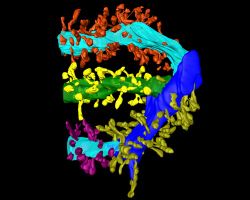
Image on the right: A 3D reconstruction of a Purkinje cell dendrite acquired on the ultrahigh-voltage electron microscope at Osaka. The specimen was 4 microns thick, allowing for examination of the dendrite and spines in their entirety. By imaging thick samples, researchers can study large biological structures at high resolution while avoiding cutting them into sections.

More here.

Thursday Poem

Question and Answer
Anthony Deaton

Knoxville, 1977. The question is an accusation,
split from the tight smile of a boy
just a grade or two ahead of me. He asks:
Are you a nigger lover?

He does not wonder because my parents
are activists (how could he know?),
or because my older sister domestically
thumps cantaloupe at Kroger's in public

company of a black man. I have no older
sister to push ahead. The case is much simpler.
This boy, who seems just shy of man-
hood (awkward cigarette between his lips,

the milky shadow of a mustache),
knows my white face is the only white face,
the only face framed by straight hair and bangs,
in a regular after-school carpool. And when

he dares me with who I love, I am standing
on a sidewalk in front of Chilhowie Elementary,
unsure what to say, and terrified my ride
will arrive before I've escaped the answer.

It isn't the word nigger that raked in my chest,
but lover. Lover, I realized must be touching
another's naked body; “lover” was reserved for grownups,
a taboo in the curious world of my childhood.

But on spring afternoons whetted with the greeny
scent of cut grass, and after the day's class,
I sometimes visited my neighbor Mary.
shutting ourselves in the gentle dim of her room,

we undressed and lay together close. Quietly
played at love, each coaxing the other's smooth
flesh into wakefulness with mouth and tongue,
like babies who learn first the world by taste.

Her flat nipples shone like ebony nickels,
a bodied currency, freshly minted desire, salt.
We traded childhood for something we did not
know how to speak or value, and thrilled and shamed

in our half-found, half-concealed provinces,
fearing only parents discovering– the punishment
we knew would attend such adventures.
So when that boy's voice broke over me,

Are you a nigger lover? I heard not a slur,
but an affronted adult, the glaring eyes
widening at a privacy suddenly gone public,
and the word lover hovering there, naming what I was
.

Barack Obama’s speech at Cairo University

I am honored to be in the timeless city of Cairo, and to be hosted by two remarkable institutions. For over a thousand years, Al-Azhar has stood as a beacon of Islamic learning, and for over a century, Cairo University has been a source of Egypt's advancement. Together, you represent the harmony between tradition and progress. I am grateful for your hospitality, and the hospitality of the people of Egypt. I am also proud to carry with me the goodwill of the American people, and a greeting of peace from Muslim communities in my country: assalaamu alaykum.

Art.obamapic.giWe meet at a time of tension between the United States and Muslims around the world – tension rooted in historical forces that go beyond any current policy debate. The relationship between Islam and the West includes centuries of co-existence and cooperation, but also conflict and religious wars. More recently, tension has been fed by colonialism that denied rights and opportunities to many Muslims, and a Cold War in which Muslim-majority countries were too often treated as proxies without regard to their own aspirations. Moreover, the sweeping change brought by modernity and globalization led many Muslims to view the West as hostile to the traditions of Islam.
Violent extremists have exploited these tensions in a small but potent minority of Muslims. The attacks of September 11th, 2001 and the continued efforts of these extremists to engage in violence against civilians has led some in my country to view Islam as inevitably hostile not only to America and Western countries, but also to human rights. This has bred more fear and mistrust.

So long as our relationship is defined by our differences, we will empower those who sow hatred rather than peace, and who promote conflict rather than the cooperation that can help all of our people achieve justice and prosperity. This cycle of suspicion and discord must end.

I have come here to seek a new beginning between the United States and Muslims around the world; one based upon mutual interest and mutual respect; and one based upon the truth that America and Islam are not exclusive, and need not be in competition. Instead, they overlap, and share common principles – principles of justice and progress; tolerance and the dignity of all human beings.

Read more »

The Iowa Supreme Court opinion on gay marriage

Our own Morgan Meis in The Smart Set:

ScreenHunter_05 Jun. 04 10.45 As a kid growing up in Los Angeles in the ’80s, I was rather free with the word “faggot.” It was used in a pejorative manner, though if you had asked me, I would have mouthed the basic tolerant platitudes. Once, in a “moral intervention” rather unusual for my Lefty but less-than-preachy parents, I was sat down and it was brought to my attention that the fag talk had gotten egregious. I remember suddenly feeling extremely uncomfortable, a flush spreading about my neck and face. It's just a word, I protested, no big deal. Then why use it, the parental figures retorted. The conversation went back and forth. But my father had reserved his secret weapon until the end. As he walked away from me, he said casually over his shoulder, “You know, your uncle Vince is gay.”

It blew my mind for a minute. I didn't know that Uncle Vince was gay. Sure, yeah, I said, but the revelation cut down to the core of me. It is a simple, human emotion. It is called shame. Taken too far it can lead to resentment, anger, self-hatred. But as the ancient Greeks liked to observe with some frequency, it is a hell of a gut check. How you respond to shame is, in a real sense, how you stack up as a human being. For Euripides and Sophocles, whoever cannot negotiate the territory of shame is usually guaranteed an ugly end, generally murder or suicide, sometimes worse. In this sense, we could all stand to be a little more Greek (no pun intended), more willing to listen to our internal conscience, that internal self-checking mechanism that makes us nervous and self-aware. That's when we have a chance of getting it right.

I'm a petty and self-absorbed little man, but I knew then, as I know now, that my Uncle Vince deserves every damn right afforded to every other human being. The fact that the “gay uncle” meme is something of a cliché only furthers the argument. There are too many gay uncles out there to pretend this is not a big deal. Point being, it has gotten to where gay rights, and its current manifestation as the “gay marriage” issue, has become a test of one's essential humanity. And that's not the kind of test you want to fail.

More here.