Susan Neiman in The New York Review of Books:
Decolonization, said Frantz Fanon, began a new chapter of history. It’s common enough for the politically engaged to magnify their engagement, if only to sustain themselves through the cycles of danger and boredom that accompany serious political struggle, but in this case Fanon might have understated things. Stronger nations have overtaken weaker ones since the beginning of recorded history—indeed, since before there were nations in our sense at all. Contrary to much current opinion, colonialism did not begin with the Enlightenment, whose ideas were later twisted to support it.
Until the last century imperialism was as universal a political practice as any: the Romans and the Chinese created empires, as did the Assyrians, the Aztecs, the Malians, the Khmer, the Mughals, and the Ottomans, to name just a few. Those empires operated with different degrees of brutality and repression, but all presupposed the logic recorded in Thucydides’ dialogue between the Athenians and the Melians: big states swallow little ones as night follows day. It’s a law of nature against which reason has no claim.
Enlightenment philosophers asked whether such assumptions really are as natural as alleged, and they used their reason to ground a thoroughgoing attack on colonialism. Kant congratulated the Chinese and the Japanese for their wisdom in refusing entry to “unjust invaders”; Diderot urged the “Hottentots” to let their arrows fly toward the Dutch East India Company. Like progressive intellectuals in our day, these thinkers had limited political success, at least in the short term: the colonial projects they condemned only expanded in the nineteenth century. Pace the ambivalent American experiment, it wasn’t until the twentieth century that Enlightenment ideals about universal human rights began to undergird real anticolonial struggles from Ireland to India.
More here.

 We’re comparing an electric car and a traditional petrol one and looking at the life-cycle emissions — that is, all the emissions produced from cradle to grave.
 William Galston is an author and academic who holds the Ezra K. Zilker Chair in Governance Studies at the Brookings Institution. Galston was also deputy assistant for domestic policy to President Bill Clinton. His latest book is
  Unlike many art historians and art critics, philosophers do not look for works of art that are necessarily beautiful or interesting. Most of us—at least those educated in the continental tradition of Hegel, Nietzsche, and Arendt—instead look for works that disclose a theoretical stance. Martin Heidegger’s writing on Van Gogh’s shoes paintings, Arthur Danto on Andy Warhol’s Pop Art, and Jacques Rancière on Alfredo Jaar’s photographs are paradigmatic examples. This does not mean we do not care about the artist’s effort in creating such work; rather, we focus more on whether the work discloses an aesthetic notion, political idea, or anthropological concept that has meaning for society at large. Artists, for us, have the same ontological purpose as scientists or politicians. A great work of art, new scientific discovery, or progressive policy can change people’s relationship with reality. If these works, discoveries, and policies change this relationship, it is not necessarily because they are “better” than others but because they touch our existence to a greater degree.
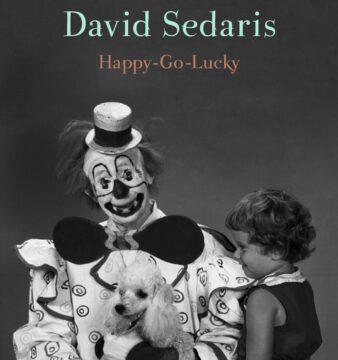 His father set a number of things in place so that after death “there would be little bombs that would explode upon me,” Sedaris tells me. “Like when I graduated from college, he said he’d set up an IRA for me and talked for years about it. You know, he never set it up. And he left me the minimum amount of money you can leave somebody so they wouldn’t contest the will. When I found out about it and confronted him, that was his big disappointment, that I’d found out before he died. It was also in his will that I would get any boats or cars that he owned. We’d never had a boat and I don’t even know how to drive. My father took pains to sell his 1964 mint-condition Porsche a year before he died just so I wouldn’t get it. It’s nasty things, hurtful things. I’m not hurting for money, but it’s not about that. It bothers me that I’m allowing him to hurt me. Everyone else in my family is getting two-and-a-half million dollars. If he had left me that two-and-a-half million dollars, I’d probably be thinking, you know, he’s not so bad, maybe I just misunderstood him. But to have been treated that way in life and then in death as well? I feel pathetic being a 65-year-old man whining because his father wasn’t nice. And then it bothers me that I’m being pathetic.”
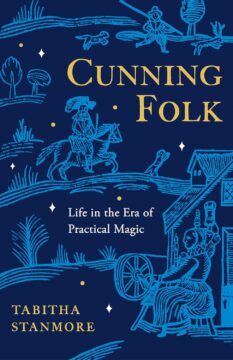 In her spirited and richly detailed “Cunning Folk,” Tabitha Stanmore, a specialist in medieval and early modern magic, writes that between the 14th and 17th centuries, “a whole host of magical practitioners” pervaded villages, cities and royal courts — diviners, astrologers, charm makers, healers. Their customers were commoners and courtiers, peasants and merchants, housewives and queens.“This book is not about witches,” Stanmore emphasizes. The cunning folk were different, she explains, because they used “service magic,” not the dark arts, “to positively affect the world around them.” What’s more, “most people” marked a “distinction” between magicians of this kind (good, basically) and witches (evil), although the boundary, she admits, could be “fluid.” That’s because their clients’ requests could be “sinister,” to put it mildly. In 1613, for instance, the depraved Countess of Essex (later imprisoned for murdering a foe with a toxic enema) requested a slow-acting poison from a fortuneteller named Mary Woods, so she could bump off the Count. Woods skipped town rather than comply (so she told authorities) but was tried anyway; her fate is unknown.

 The U.S. Food and Drug Administration (
 Francis Ford Coppola’s Megalopolis took 41 years to make. It might take as long to understand. Coppola’s magnum opus, which premiered in competition at the Cannes Film Festival last night, is a movie of extraordinary highs and baffling lows, alternately dazzling and confounding. Sometimes, in the same moment, it’s both. When I asked colleagues who’d seen it—at a remote early-morning screening, added at the last minute to accommodate Coppola’s preference for IMAX—they looked at me like the mute humans in the
  A decade has passed, but exhuming Elliot Rodger’s life and ghastly final actions remains fraught. It risks inflicting further pain for the victims’ families and other survivors, and new revelations could feed the kind of infamy many perpetrators seek. The case stands out among the hundreds I’ve studied in 12 years of reporting on mass shootings. To this day it fuels copycat attackers who fixate on misogyny, making it an ongoing subject of news coverage and various academic and security research. It also helped catalyze policy change, in particular the spread of “red flag” laws aimed at keeping guns away from unstable people.
 There is a buzz in India today – a sense of limitless possibilities. India has just