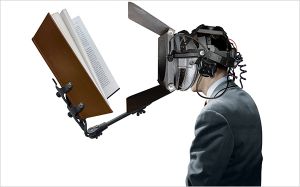
Sunday, March 8, 2009

A Global Moratorium on the Death Penalty

Bernard Kouchner and Carl Bildt in NPQ:

The good news is that there is a consistent trend toward abolition of the death penalty. Progress has been dramatic in last few decades, and today more than two-thirds of all states have abolished the death penalty in law or in practice.

Since the Third World Congress Against the Death Penalty, which took place in Paris in February, 2007, Albania, Cook Island, Rwanda, Uzbekistan and Argentina have abolished capital punishment. The use of the death penalty is also becoming increasingly restrained in retentionist countries. This global trend is supported by the various international tribunals, including the International Criminal Court, which, although dealing with the most heinous crimes, have no power to impose the death penalty.

There is, however, no room for complacency. The EU as well as the Council of Europe, have intensified their efforts against the death penalty in international fora such as the United Nations, where last year the General Assembly, in a historic vote, with cross-regional support, adopted a resolution calling for a moratorium on executions with a view to abolishing the death penalty.

This year the General Assembly will follow up on that initiative, through the recommendations of the secretary-general.

The end of the cash nexus

Over at Crooked Timber, John Quiggin has some thoughts on what new technologies and organization means for innovation and consequently for the market:

There has been a huge shift in the location of innovation, with much of it either deriving from, or dependent on, public goods produced outside the market and government sectors, which may be referred to as social production.

Some suggestions, not fully argued, over the fold

*If monetary returns are weakly, or even negatively correlated with the value of social production, there’s no reason to expect capital markets to do a good job in allocating resources to supporting innovation. (This point seems rather less controversial than when I made it in 2006.)

*As a corollary, it seems unlikely that large inequalities in income are beneficial to anyone except the recipients of high incomes (this issue is being discussed, in a much more abstract setting, at Crooked Timber)

*If improvements in welfare are increasingly independent of the market, it would make sense to shift resources out of market production, for example by reducing working hours.

See also here.

What Battered Newsrooms Can Learn From Stewart’s CNBC Takedown

Will Bunch in The Huffington Post:

The most talked-about journalism of this week wasn’t produced in the New York Times, CNN, Newsweek or NPR. It was Jon Stewart’s epic, eight-minute takedown on Wednesday night’s Daily Show of CNBC’s clueless, in-the-tank reporting of inflatable bubbles and blowhard CEOs as the U.S. and world economies slowly slid into a meltdown. You can quibble about Stewart’s motives in undertaking the piece — after he was spurned for an interview by CNBC’s faux populist ranter Rick Santelli — but you can’t argue with the results.

The piece wasn’t just the laugh-out-loud funniest thing on TV all week (and this was a week in which NBC rebroadcast the SNL “more cowbell” sketch, so that’s saying a lot) but it was exquisitely reported, insightful, and it tapped into America’s real anger about the financial crisis in a way that mainstream journalism has found so elusive all these months, in a time when we all need to be tearing down myths. As one commenter on the Romenesko blog noted, “it’s simply pathetic that one has to watch a comedy show to see things like this.”

But that’s not all.

More here.

The Pirate Latitudes

When the French luxury cruise ship Le Ponant was captured by a raggedy, hopped-up band of Somali pirates last spring, in the Gulf of Aden, it looked as if the bandits had bitten off more than they could chew. But after a week-long standoff, they got what they had come for—a $2.15 million ransom. Describing the terrifying attack, the ordeal of the ship’s epicurean crew, and the tense negotiations, the author examines the ruthless calculus behind a new age of piracy.

William Langewische in Vanity Fair:

ScreenHunter_03 Mar. 08 18.58 Last spring, as crew members of the small French-flagged cruise ship Le Ponant prepared to sail through the Gulf of Aden, off the coast of Somalia, they taped blackout cardboard over the windows, readied fire hoses to repel boarders, and mounted a special pirate watch to port and starboard. The Gulf of Aden is a hotbed of piracy, a crucial waterway where over the past several years Somali gangs operating far from shore have been hijacking ships, and allied navies have tried to respond. The Ponant was not built for such places. It is a modern, 290-foot, three-masted sailing vessel, with Riviera-style raked lines, that sells luxurious holidays to a maximum of 64 passengers at a time. It has four decks (including an upper one for lounging in the sun), two restaurants serving sophisticated French cuisine, individually air-conditioned cabins, a bar, a library, and a marina platform close to the water at the stern, for the launching of Zodiacs and water toys. It spends Northern Hemisphere summers in the Mediterranean on old-stone excursions to dead-city sites, and Southern Hemisphere summers in the Indian Ocean, visiting Madagascar and the pristine islands of the Seychelles. Its customers tend to be silver-haired and genteel. Most are American or French, traveling in groups sufficiently large to charter the entire ship. On this run now, however, no passengers were aboard. The ship was being repositioned to the Mediterranean for the summer season—a trip requiring a monotonous passage beyond sight of land for a full week at sea. The crew took advantage of the pause to relax and perform minor chores. Despite their precautions they did not believe that the Ponant would be attacked.

More here.

How do molecules behave at extremely high pressure?

Roald Hoffman in American Scientist:

ScreenHunter_02 Mar. 08 18.44 Scientists love subjecting matter to extreme conditions. And the variable of pressure, at its high end, is perhaps the most interesting one to explore for both chemistry and physics. For although we can estimate the (very short) lifetimes of molecules at temperatures of the sun, and what chemistry might transpire at a nanokelvin or in a vacuum “higher” than that of outer space, the realm of high pressure, such as that at the center of a planet, gives us pause.

The behavior of matter under high pressure is just not obvious, and this makes it fun to explore. No, it’s not sadism, just curiosity. Other motivations? It’s impossible to probe directly the core of Earth or Saturn; could we do it in the lab or on a computer? Also, predicting the behavior of matter under extreme conditions is a great test of whether we really do understand what’s going on.

Let me tell you about some remarkable goings on in the world of high pressure.

More here.

When worlds collide

Maya Jaggi in The Guardian:

Burnt-Shadows-by-Kamila-S-002 The huge ambition of Kamila Shamsie's fifth novel is announced in the prologue. As an unnamed captive is unshackled and stripped naked in readiness for the anonymity of an orange jumpsuit, he wonders: “How did it come to this?” The vastness of the question as applied to a prisoner in Guantánamo is a challenge to which this epic yet skilfully controlled novel rises in oblique and unexpected ways.

Unfolding in four sections, the novel traces the shared histories of two families, from the final days of the second world war in Japan, and India on the brink of partition in 1947, to Pakistan in the early 1980s, New York in the aftermath of 11 September and Afghanistan in the wake of the ensuing US bombing campaign. At its heart is the beautifully drawn Hiroko Tanaka, first seen in Nagasaki in August 1945 as a young schoolteacher turned munitions factory worker whose artist father is branded a traitor for his outbursts against the emperor and kamikaze militarism. She falls in love with a lanky, russet-haired idealist from Berlin, Konrad Weiss, with whom she shares – along with other key characters – a love of languages. But their romance is curtailed by the flash of light that renders Konrad a shadow on stone and burns the birds on Hiroko's kimono into her back, a fusion of “charred silk, seared flesh”.

Hiroko finds refuge in Old Delhi, in the twilight of the raj, with her dead fiancé's sister Ilse and her English husband James Burton. Befriended by the unhappy Ilse, Hiroko is more drawn to Sajjad Ali Ashraf, a dashing Muslim employee who agrees to teach her Urdu. Her hosts discourage their romance (“His world is so alien to yours”), even misinterpreting a moment of tenderness as one of predation by Sajjad. Yet the couple grow closer as partition sunders Sajjad from Delhi as shockingly as Nagasaki was lost to Hiroko.

More here.

Forget Survival of the Fittest: It Is Kindness That Counts

From Scientific American:

Kindness-emotions-psychology_1 DISALVO: You have a book that was just released called Born to Be Good: The Science of a Meaningful Life. What in a nutshell does the term “born to be good” mean to you, and what are you hoping people learn from reading the book?

KELTNER: “Born to be good” for me means that our mammalian and hominid evolution have crafted a species—us—with remarkable tendencies toward kindness, play, generosity, reverence and self-sacrifice, which are vital to the classic tasks of evolution—survival, gene replication and smooth functioning groups. These tendencies are felt in the wonderful realm of emotion—emotions such as compassion, gratitude, awe, embarrassment and mirth. These emotions were of interest to Darwin, and Darwin-inspired studies have revealed that our capacity for caring, for play, for reverence and modesty are built into our brains, bodies, genes and social practices. My hopes for potential readers are numerous. I hope they learn about the remarkable wisdom of Darwin and the wonders of the study of emotion. I hope they come to look at human nature in a new light, one that is more hopeful and sanguine. I hope they may see the profoundly cooperative nature of much of our daily social living.

DISALVO: You’ve said that one of the inspirations for your work was Charles Darwin’s insights into human goodness. Because most people equate his name with “survival of the fittest,” it’ll probably be surprising to many that Darwin focused on goodness at all. What were a few of your take aways from Darwin’s work that really inspired you?

KELTNER: What an important question. We so often assume both in the scientific community, and in our culture at large, that Darwin thought humans were violent and competitive and self-interested in their natural state. That is a misrepresentation of what Darwin actually believed, and where the evolutionary study of human goodness is going.

My take aways from Darwin are twofold, and as you suggest above, I was surprised as well in arriving at an understanding of Darwin’s view of human nature. The first take away is found in Descent of Man, where Darwin argues that we are a profoundly social and caring species.

More here.

Saturday, March 7, 2009

Last Evenings On Earth

2666 William Deresiewicz on Roberto Bolano's novel 2666, in the TNR:

Well, it's not dead yet. The modernist idea, which is really a Romantic idea, that the truest art comes from the margins, from the social depths, from revolt and disgust and dispossession, from endless cigarettes and a single worn overcoat, is still, in this age of MFA's and faculty appointments, when Pound's “make it new” long ago became Podhoretz's “making it”–is still, still, however improbably alive. A young man can still get up in a Mexico City bookstore and declare war on the literary establishment, give the finger to coffeehouses and Octavio Paz, plunge like a burning wreck into willed obscurity, toil in poverty for twenty years, and wind up forging, at the cost of youth and health and finally life, works that mark a time and point a new way forward.

This was Roberto Bolano's story, and beyond his works' particular merits–which are indeed great, though not quite as great as generally claimed–their value is just this: the tremendous courage that they bespeak. The audacity of Bolano's fiction, its disregard for convention and even probability, puts me in mind of a remark a friend once made after a jazz concert. I said I thought the keyboard player had really been taking chances, and he said, “No, he wasn't taking chances, he was doing whatever the fuck he wanted.” In every sentence he wrote, every image he conceived, every compositional choice he made, Bolano did whatever the fuck he wanted. In his art as in his life, he left a record of headlong daring that will become a rallying point for young writers for years to come. His myriad-minded fiction adumbrates no theory and swears allegiance to no school, embodying instead an unending search for new aesthetic and moral questions. At a time when the novel, at least in this country, has retreated into caution, he demonstrates again what is possible in fiction–which is to say, anything. His forms are sui generis, there is no emulating them, but his form-making is exemplary.

A personal history of Pakistan on the brink

Mohsin_BR34.2_fruitstand Moni Mohsin in The Boston Review:

Musharraf’s personal convictions had little bearing on the Pakistani army’s ingrained beliefs. Having fought three wars (one was lost badly, the others ended in ceasefires) with its hostile eastern neighbor, India, the army learned that, while it could not win a conventional war against a vastly superior army, it could keep India bogged down by supporting separatist insurgencies within its territory. The Pakistani army also came to count on “strategic depth” in the form of a friendly neighbor on its western flank to counter the threat in the east.

The Russian invasion of Afghanistan had set the stage twenty years earlier. When the United States elevated Pakistan to a “frontline state” in the war against Communism, not only did the Pakistani army, under the leadership of General Zia, receive huge military assistance from the CIA, but Peshawar also became the global headquarters of jihad. Muslim fighters from all over the world converged on Peshawar to receive training before going into Afghanistan to wage holy war against Russian infidels. The United States supplied dollars and arms to the war effort; the Pakistani army got training and logistical support. When, after nine years of brutal fighting, the Russians withdrew from Afghanistan, the victory belonged not just to the United States but to the Pakistani army, which now had a friendly neighbor on its western border in the shape of the Taliban— originally a group of young hardliners backed by both the CIA and the Pakistani army.

Of course, “victory” came at a price for Pakistan. Three million Afghan refugees streamed across the border and into the North West Frontier province. In their wake came the heroin trade, Wahhabism, and a wealth of sophisticated weaponry.

Postcards from Tomorrow Square: Reports From China

Spence-600 Jonathan Spence reviews James Fallows' new book:

James Fallows knows there are countless Chinas. He is refreshingly aware that one’s interpretations of this vast and elusive country will always change according to the angle of one’s vision and the flash of time one is observing. Over the years, in his writing for The Atlantic Monthly, Fallows has built a reputation as a shrewd observer of human foibles and political quagmires. He is also gifted with a disarming tenacity: he first obtained permission to enter China in the mid-1980s, when visas were still hard to secure, by learning Esperanto, together with his wife and children, so they could participate in the world Esperanto conference in Beijing. At the same time, Fallows has the eye for detail of an experienced journalist, capturing, for example, the spirit of China in late 2006 by noting that when he and his wife went to the local Shanghai Pizza Hut, they were turned away because they hadn’t made reservations.

Yet Fallows remains cautious about exaggerating his own powers as an observer. He tells us frankly that he has never managed to become fluent in Chinese, despite several years of determined effort, and that he tends to rely on interpreters during his interviews and to draw on his previous studies of Japanese to help him read Chinese posters and newspaper headlines. By using the word “postcards” for the title of this lively collection of a dozen reports written between the summers of 2006 and 2008 (11 of which were published in The Atlantic), he seems to be alerting readers to expect vignettes rather than extended essays.

Saturday Poem

Complicated Pleasures
Bill Ramsell

We were in bed together listening to Lyric,
to a special about the Russians,
when the tanks rolled into Babylon.

For a second I could feel their engines,
and the desert floor vibrating,
in the radio’s bass rattling your bedroom
as the drums expanded at the centre of the Leningrad,
as those sinister cellos invaded the melody.

We’d been trying, for the hell of it,
to speak our own tongue
and I was banging on about Iberia when your eyelids closed:
Tá do lámh I mo lámh” I whispered “ar nós cathair bán
sna sléibhte lárnach, d’anáil ar nós suantraí na mara i mBarcelona.
Codhladh sámh
.”

But as I murmured “sleep, my darling, sleep” into your sleeping ear
I found myself thinking of magnets
of what I’d learned in school about the attraction of opposites,
that the two of us, so similar,
could only ever repel one another.

For the closer I clutched your compact body
the further apart we grew.

You have eleven laughs
and seven scents
and I know them like a language.
But what will it matter when the bombs start falling
that you could never love me?

Then you turned in my arms
and it was midnight again on the beach at Ardmore,
when the starlight collected in some rock pool or rain pool
among the ragged crags at the water’s edge
and the two of us sat there
and we didn’t even breathe
determined not to the disturb that puddle’s flux,
the tiny light-show in its rippling shallows,
the miniature star-charts that for a moment inhabited it.

And you whispered that the planets, like us, are slaves to magnetism,
gravity’s prisoners, as they dance the same circles again and again,
and that even the stars ramble mathematically,
their glitter preordained to the last flash.

You turned again as I looked at the night sky
through your attic window
and thought of the satellites
gliding and swivelling in their infinite silence,
as they gaze down on humanity’s fumbling,
on you and me, as you sniffled against my neck
and the drumming, drumming flooded your bedroom,
on powerful men in offices pressing buttons
that push buttons in powerful men,
on the tanks, like ants, advancing through the wilderness.

Those pitiless satellites, aware of every coming conflagration
and what would burn in it,
knowing for certain in their whispering circuits
that, like our island’s fragile language,
like Gaudi’s pinnacles and the Leningrad symphony,
– even worse – like your teeth and our four hands,
the very stars through which they wander would be gone,

those brittle constellations with the billion sinners that orbit them,
extinguished in a heartbeat, absolved instantly,
as if your hand had brushed the water slowly once.


Poet's Note: The Irish text above can be translated as:
Your hand in my hand is like a white city in the central massif,
your breathing like the ocean’s lullaby in Barcelona.
Sleep tight.

Forgiveness and Irony

Roger Scruton in The City Journal:

City Wherever the Western vision of political order has gained a foothold, we find freedom of expression: not merely the freedom to disagree with others publicly about matters of faith and morality but also the freedom to satirize solemnity and to ridicule nonsense, including solemnity and nonsense of the sacred kind. This freedom of conscience requires secular government. But what makes secular government legitimate?

That question is the starting point of Western political philosophy, the consensus among modern thinkers being that sovereignty and law are made legitimate by the consent of those who must obey them. They show this consent in two ways: by a real or implied “social contract,” whereby each person agrees with every other to the principles of government; and by a political process through which each person participates in the making and enacting of the law. The right and duty of participation is what we mean, or ought to mean, by “citizenship,” and the distinction between political and religious communities can be summed up in the view that political communities are composed of citizens and religious communities of subjects—of those who have “submitted.” If we want a simple definition of the West as it is today, the concept of citizenship is a good starting point. That is what millions of migrants are roaming the world in search of: an order that confers security and freedom in exchange for consent.

More here.

Death: a great career move

From The Boston Globe:

Lewisin__1235790828_4054 NEVER SPEAK ILL of the dead, at least if they had some redeeming qualities. That's the pattern that emerges from research that asked people to evaluate biographical summaries of hypothetical leaders. In general, leaders were viewed more favorably when they were known to be dead. This halo even helped mitigate perceptions of incompetence. However, there was an opposite reaction – a more negative posthumous attitude – to leaders who had acted immorally before they died. When asked to explain their evaluations, people viewed death as a sort of final verdict, as if “the jury was still out” during life. Likewise, in an analysis of media coverage of celebrities who died in the 1990s, the researchers found that there was more positive coverage several years after death than several years before, especially in the case of Princess Diana, JFK Jr., and Tupac Shakur. The one exception: Richard Nixon.

More here.

Joseph Schumpeter’s Capitalism, Socialism and Democracy

Our own Morgan Meis in The Smart Set:

N538727847_607 You've got to admire a man who regularly wore a cape. This goes doubly if that man is an economist. But Joseph Schumpeter was no ordinary economist. Ending up at Harvard in the early 1930s, Schumpeter was an exile from the tumult of Central Europe, an orphan of the Austro-Hungarian Empire. He lost his mother, wife, and infant son all within a few months of each other. It was not difficult for Schumpeter to see the world as tragic, arbitrary, capricious.

Like Marx, Schumpeter didn't think that capitalism would last. But unlike Marx, the inevitable demise of capitalism made him sad. Schumpeter didn't think that capitalism would create a revolutionary class that would rise up to destroy it. He instead thought that capitalism was so inherently insane that the elites of society would simply get tired of the damn thing.

Schumpeter — and here is where the cape comes back in — admired the insanity. He saw capitalism as an immense innovation machine driving a process he named with the now-famous phrase “creative destruction.”

More Leave a comment

Wolfram|Alpha is coming

Steven Wolfram in his blog at Wolfram Research:

Stephen-wolfram-dr_med Mathematica has been a great success in very broadly handling all kinds of formal technical systems and knowledge.

But what about everything else? What about all other systematic knowledge? All the methods and models, and data, that exists?

Fifty years ago, when computers were young, people assumed that they’d quickly be able to handle all these kinds of things.

And that one would be able to ask a computer any factual question, and have it compute the answer.

But it didn’t work out that way. Computers have been able to do many remarkable and unexpected things. But not that.

I’d always thought, though, that eventually it should be possible. And a few years ago, I realized that I was finally in a position to try to do it.

I had two crucial ingredients: Mathematica and NKS. With Mathematica, I had a symbolic language to represent anything—as well as the algorithmic power to do any kind of computation. And with NKS, I had a paradigm for understanding how all sorts of complexity could arise from simple rules.

But what about all the actual knowledge that we as humans have accumulated?

A lot of it is now on the web—in billions of pages of text. And with search engines, we can very efficiently search for specific terms and phrases in that text.

More here.

The way Americans pay for college is a mess. Here’s how to fix it.

Eliot Spitzer in Slate:

ScreenHunter_05 Mar. 07 10.20 If we are going to improve American intellectual capital, we need to fix how Americans pay for higher education. For too long we have asked students entering college and graduate school to choose one of two unappetizing options: pay astronomical tuition bills upfront or amass enormous debt that demands fixed, sky-high monthly payments the moment they graduate and enter the work force. These options serve as barriers to educational opportunity, since many cannot afford upfront tuition payments or qualify for the needed loans. That also distorts career choices, since for most the obligation to repay loans immediately has reduced the ability to choose socially desirable jobs such as teaching, forcing the pursuit of the highest-paying job regardless of personal or social utility.

Yet there may be a “third way” that eliminates the educational financing problem. Milton Friedman first proposed the following idea, and James Tobin then refined and tried to effectuate it. If two Nobel laureates of decidedly differing worldviews agree, it must be worth at least a quick look. It is, moreover, successful and commonplace in Europe and Australia.

More here.

Friday, March 6, 2009

what DFW left

090309_r18266_p233

The writer David Foster Wallace committed suicide on September 12th of last year. His wife, Karen Green, came home to find that he had hanged himself on the patio of their house, in Claremont, California. For many months, Wallace had been in a deep depression. The condition had first been diagnosed when he was an undergraduate at Amherst College, in the early eighties; ever since, he had taken medication to manage its symptoms. During this time, he produced two long novels, three collections of short stories, two books of essays and reporting, and “Everything and More,” a history of infinity. Depression often figured in his work. In “The Depressed Person,” a short story about an unhappy narcissistic young woman—included in Wallace’s 1999 collection, “Brief Interviews with Hideous Men”—he wrote, “Paxil, Zoloft, Prozac, Tofranil, Wellbutrin, Elavil, Metrazol in combination with unilateral ECT (during a two-week voluntary in-patient course of treatment at a regional Mood Disorders clinic), Parnate both with and without lithium salts, Nardil both with and without Xanax. None had delivered any significant relief from the pain and feelings of emotional isolation that rendered the depressed person’s every waking hour an indescribable hell on earth.” He never published a word about his own mental illness.

more from the New Yorker here.