Max Kozlov in Nature:
 A small, unassuming fern-like plant has something massive lurking within: the largest genome ever discovered, outstripping the human genome by more than 50 times1.
The plant (Tmesipteris oblanceolata) contains a whopping 160 billion base pairs, the units that make up a strand of DNA. That’s 11 billion more than the previous record holder, the flowering plant Paris japonica, and 30 billion more than the marbled lungfish (Protopterus aethiopicus), which has the largest animal genome. The findings were published today in iScience.
Study co-author Jaume Pellicer, an evolutionary biologist at the Botanical Institute of Barcelona in Spain, who also co-discovered P. japonica’s gargantuan genome2, had thought that the earlier discovery was close to the genome size limit. “But the evidence has once again surpassed our expectations,” he says.
More here.
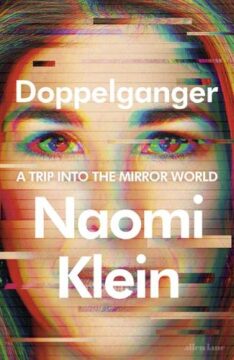 It is a matter of being able to identify the true conspiracies, recognise genuine injustices and abuses of power, distinguish between credible and dubious information, plausible and implausible explanations. Klein makes a point of acknowledging that the irrational theories she examines in Doppelganger often arise from a justified sense that something is wrong – large pharmaceutical companies, for example, have real histories of unethical conduct and they really did make out like bandits during the pandemic. The question she confronts is how, and why, the valid instinct to distrust the powerful ends up being rerouted into bizarre fantasies.
 For the most part, Bowlero doesn’t build its own centers. Instead, it purchases existing ones and makes them over in the Bowlero style: dim lights, loud music, expensive cocktails. At Bowleros, bowling isn’t bowling. It’s “
 A new documentary portrait series, From the Streets to the Heart, focuses on homeless LGBTQIA+ youth and young adults in New York City. The project was initiated and created by Dutch photographer Ernst Coppejans, who also interviewed each of the 30 subjects to get their background stories and current situations. The combination of dignified portraits and the often harrowing stories (including audio clips allowing us to hear each person’s own voice) creates a palpable and empathetic understanding of how these people came to be who and where they are in the present moment. The project is a testament to the courage and resilience of people who are compelled to take very difficult steps in their lives to be true to themselves — despite tremendous emotional and financial challenges, physical danger and everyday prejudice.
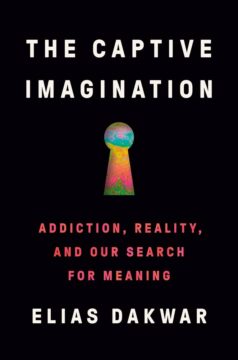 Dakwar explores the myths and misconceptions of addiction, as well as the science, and shows how the patient’s experience is at least as important as what the latest research tells us. He describes in detail the use of ketamine given in combination with psychotherapy, and of the difficulties he has faced acquiring permission and funding to pursue his research into a treatment that itself suffers from being labelled a dangerous “street” drug.
 L
L The region, we’re told, extends from the deserts of Sonora to the straits of Tierra del Fuego, encompassing 7.7 million square miles that are home to 660 million people who share two Latinate languages: Spanish and Portuguese. What complicates the picture is that many in that vast expanse also speak Nahuatl, Quechua, and hundreds of other tongues. But it’s not just the language: the people of this region, we hear, are
  “Any Person Is the Only Self,” the poet and critic Elisa Gabbert’s third collection of nonfiction, opens with an essay that should be, but isn’t quite, a mission statement. She starts by describing the Denver Public Library’s shelf for recent returns, a miscellaneous display of disconnected works she habitually browsed in the years she lived in Colorado. In part, Gabbert (who is also the Book Review’s poetry columnist) was drawn to the shelf for its “negative hype,” its opposition to the churn of literary publicity. But mainly, she enjoyed playing the odds. “Randomness is interesting,” she writes; “randomness looks beautiful to me.” At the essay’s end, she declares, “I need randomness to be happy.”
 We live in a weird time for autonomous vehicles. Ambitions come and go, but genuinely autonomous cars are further off than solid-state vehicle batteries. Part of the problem with developing autonomous cars is that teaching road cars to take risks is unacceptable.