Texting May Be Taking a Toll

From The New York Times:

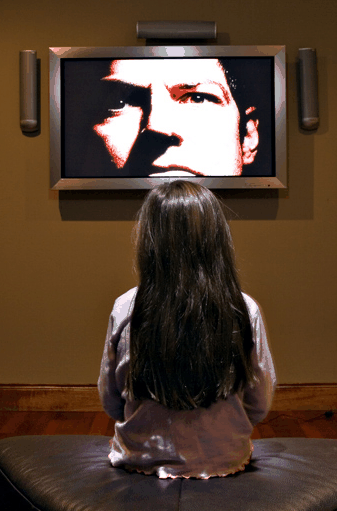
Text They do it late at night when their parents are asleep. They do it in restaurants and while crossing busy streets. They do it in the classroom with their hands behind their back. They do it so much their thumbs hurt. Spurred by the unlimited texting plans offered by carriers like AT&T Mobility and Verizon Wireless, American teenagers sent and received an average of 2,272 text messages per month in the fourth quarter of 2008, according to the Nielsen Company — almost 80 messages a day, more than double the average of a year earlier. The phenomenon is beginning to worry physicians and psychologists, who say it is leading to anxiety, distraction in school, falling grades, repetitive stress injury and sleep deprivation.

Dr. Martin Joffe, a pediatrician in Greenbrae, Calif., recently surveyed students at two local high schools and said he found that many were routinely sending hundreds of texts every day. “That’s one every few minutes,” he said. “Then you hear that these kids are responding to texts late at night. That’s going to cause sleep issues in an age group that’s already plagued with sleep issues.” The rise in texting is too recent to have produced any conclusive data on health effects. But Sherry Turkle, a psychologist who is director of the Initiative on Technology and Self at the Massachusetts Institute of Technology and who has studied texting among teenagers in the Boston area for three years, said it might be causing a shift in the way adolescents develop.

“Among the jobs of adolescence are to separate from your parents, and to find the peace and quiet to become the person you decide you want to be,” she said. “Texting hits directly at both those jobs.”

More here.

The rise and fall of Prabhakaran

M K Bhadrakumar in Asia Times:

Prabakaran7_img_assist_custom The Liberation Tigers of Tamil Eelam supremo Velupillai Prabhakaran's death circa May 19, 2009, in circumstances we will never quite get to know, concludes a morality play.

As the curtain comes down and we leave the theater, the spectacle continues to haunt us. We feel a deep unease and can't quite figure out the reason. Something rankles somewhere. And then we realize we have blood on our hands.

Not only our hands, but our whole body and deeper down, our conscience – what remains of it after the mundane battles of our day-to-day life – are also dripping with blood.

Prabhakaran's blood. No, it is not only Prabhakaran's, but also of 70,000 Sri Lankan Tamils who have perished in the unspeakable violence through the past quarter century.

All the pujas we may perform to our favorite Hindu god, Lord Ganesh, for good luck each morning religiously so that we march ahead in our life from success to success cannot wash away the guilt we are bearing – the curse of the 70,000 dead souls.

Our children and grandchildren will surely inherit the great curse. What a bitter legacy!

A long time ago, we created Prabhakaran. We picked him up as an urchin from nowhere. What we found charming about him was that he was so thoroughly apolitical – almost innocent about politics. He was a simpleton in many ways, who had a passion for weapons and the military regimen. He suited our needs perfectly.

Which was to humiliate the Junius Richard Jayewardene government in Sri Lanka and teach it a hard lesson about the dangers of being disrespectful to India's status as the pre-eminent power in the Indian Ocean.

More here.

Monday, May 25, 2009

Sunday, May 24, 2009

A journey through the heart of Iran

Hooman Majd in Newsweek:

ScreenHunter_07 May. 24 17.43 The layers of contradiction that make up the modern Islamic Republic of Iran are both pervasive and confounding, and not any less so in Yazd. Set amid the blistering deserts of central Iran, the city is home to the kind of fierce religiosity bred in Islam's starker landscapes, and many of its sons were sacrificed to the bloody war with Iraq. Yet it is also a capital of pre-Islamic Persia, and is well known for its Zoroastrian temples and grave sites. (At one fire temple, priests continue to tend a flame that they claim has burned for more than 500 years.) It is the only city in the world that can boast two native sons, Khatami and Moshe Katsav, who simultaneously served as presidents of Iran and Israel. Even the mosque where Sadoughi leads prayers is named after a Jewish convert.

The sermon that Sadoughi had delivered that morning had been equally impossible to categorize. He defended the inflammatory speech that President Mahmoud Ahmadinejad had delivered earlier that week at a United Nations conference on racism, chiding Western nations who “allegedly are … defenders of free speech” for walking out. But he also criticized the government, in this case for failing to ensure that Iranian pilgrims traveling to Iraq were adequately protected, a large number of them having been killed the day before in a suicide bombing near Baghdad. And he conceded that the United States had elected a new president who had promised to change its relationship with Iran. He declared that Iranians were waiting to witness real deeds from Washington, not mere rhetoric. But at the end of his 30–minute sermon, unlike past Friday prayers and prayers that same day in Tehran, there were no chants of “Death to America” or “Death to Israel,” not even halfhearted ones. Later that night in his office he repeated, wistfully, the same sentiment—that words alone were not enough from the United States, not for Iranians, who are master rhetoricians, and who well understand the many uses to which they can be put.

More here.

‘Israel won’t yield to U.S. demands, won’t halt settlement construction’

From Haaretz:

ScreenHunter_06 May. 24 16.58 Strategic Affairs Minister Moshe Ya'alon spoke to Channel 2 on Saturday about the meeting between Prime Minister Benjamin Netanyahu and U.S. President Barack Obama, held earlier this week, saying that Israel's government will not allow the U.S. to dictate its policy, and that “settlement construction will not be halted.”

“Settlements are not the reason that the peace process is failing, they were never an obstacle, not at any stage,” Ya'alon told Channel 2 News. “Even when Israel pulled out of [Palestinian] territory, the terror continued. Even when we uprooted [Jewish] communities, we got 'Hamastan.' That is why I propose that we think about it – not in slogans and not with decrees.”

According to Ayalon, “we will not halt the construction in the settlements within the framework of natural growth. There are people here who are living their lives, raising children. Housing is required ? it wasn't housing that has prevented peace.”

More here.

The Perfect Pantomime

From Ms. Magazine:

PerfectPantomime_sm Between the ages of 14 and 21, I spent countless hours cross-examining the emaciated reflection in my mirror. “What’s wrong with you?” I’d demand. “Who are you, anyway? And why don’t you know who you are?” Yet instead of recognizing my obsession with weight loss as a sign of an identity crisis, I told myself my problems would be solved if I just lost a few more pounds. Like most girls with eating disorders in the ’60s and early ’70s, I never received treatment. Then, at 22, I fell in love. My lover knew how to see and hear and touch me. He fed me pasta, wine and laughter, and, in so doing, taught me how to nourish myself. Suddenly, starving my body made no sense. But shadows of self-doubt remained and, within them, the half-life of my eating disorder. I no longer deprived myself of calories, but for decades, I “could not” eat meat. Evenings and weekends, I “had to” work, while everyone else had fun. And although I thought I was content with my husband, the slightest marital disagreement would render me mute. Instead of confronting our problems, I would run away, literally, often running through injuries for hours. By the age of 36, this relentless physical punishment had permanently crippled my right ankle.

Then, my marriage of 20 years fissured and, at age 46, I once again became a stranger to myself. The woman who lived in my skin would stand blinking blindly in front of the bathroom mirror.

More here.

Sunday Poem

Telephoning In Mexican Sunlight
Galway Kinnell

Talking with my beloved in New York
I stood at the outdoor public telephone
in Mexican sunlight, in my purple shirt.
Someone had called it a man/woman
shirt. The phrase irked me. But then
I remembered that Rainer Maria
Rilke, who until he was seven wore
dresses and had long yellow hair,
wrote that the girl he almost was
“made her bed in his ear” and “slept him the world.”
I thought, OK this shirt will clothe the other in me.
As we fell into long-distance love talk
a squeaky chittering started up all around,
and every few seconds came a sudden loud
buzzing. I half expected to find
the insulation on the telephone line
laid open under the pressure of our talk
leaking low-frequency noises.
But a few yards away a dozen hummingbirds,
gorgets going drab or blazing
according as the sun struck them,
stood on their tail rudders in a circle
around my head, transfixed
by the flower-likeness of the shirt.
And perhaps also by a flush rising into my face,
for a word — one with a thick sound,
as if a porous vowel had sat soaking up
saliva while waiting to get spoken,
possibly the name of some flower
that hummingbirds love, perhaps
“honeysuckle” or “hollyhock”
or “phlox” — just then shocked me
with its suddenness, and this time
apparently did burst the insulation,
letting the word sound in the open
where all could hear, for these tiny, irascible,
nectar-addicted puritans jumped back
all at once, as if the air gasped.

Rethinking the Global Money Supply

From Scientific American:

Rethink-the-global-money-supply_1 The People’s Bank of China jolted the financial world in March with a proposal for a new global monetary arrangement. The proposal initially attracted attention mostly for its signal of China’s rising global economic power, but its content also has much to commend it. A century ago almost all the world’s currencies were linked to gold and most of the rest to silver. Currencies were readily interchangeable, gold anchored exchange rates and the physical supply of gold stabilized the money supply over the long term. The gold standard collapsed in the wake of World War I. Wartime financing with unbacked paper currency led to widespread inflation. European nations tried to resume the gold standard in the 1920s, but the gold supply was insufficient and inelastic. A ferocious monetary squeeze and competition across countries for limited gold reserves followed and contributed to the Great Depression. After World War II, nations adopted the dollar-exchange standard. The U.S. dollar was backed by gold at $35 per ounce, while the rest of the world’s currencies were backed by dollars. The global money stock could expand through dollar reserves.

President Richard Nixon delinked the dollar from gold in 1971 (to offset the U.S.’s expansionary monetary policies in the Vietnam era), and major currencies began to float against one another in value. But most global trade and financial transactions remained dollar-denominated, as did most foreign exchange reserves held by the world’s central banks. The exchange rates of many currencies also remained tightly tied to the dollar.

More here.

Saturday, May 23, 2009

Declarations of Independence

Ami_150 Amitava Kumar in the Minnesota Review:

One of the things that can be said about much of postcolonial criticism is that it is boring, although it'd be more accurate to say that it is often unintelligible and boring. However, when I arrived in this country, in the late eighties, and read postcolonial critics for the first time, I was intrigued. They seemed such a welcome change from my teachers in Delhi. As an undergraduate at Hindu College, I would take a bus to the university. I'd look out of the window, and when we were crossing the gates of Nigambodh Ghat, I'd sometimes see men carrying in their arms little bundles wrapped in white. Each bundle was a child whose corpse was being taken to the river by the father. A small mute procession would follow some men, but often a man would be alone with his enormous burden. I would watch for a few moments from the bus—and then I'd arrive in class. My professors would be delivering lectures on Locke or Rousseau from notes held together with tape—the yellowing paper would flake off in little pieces when shaken in the air.

The pedagogical climate appeared dramatically different when I came to the US. In this country, I suddenly felt that criticism was something that was both fresh and live. My teachers were the critics whose writings one read in academic journals. What I was being taught was original work. In some classes, such work also felt urgent. I had never read Edward Said before, or others whose names brought them somehow closer to me in my imagination, critics like Homi Bhabha and Gayatri Chakravorty Spivak. But I didn't share the belief, seemingly dear to the editors of special issues devoted to postcolonial theory, that the 3.2 million poor in Chiapas or the half-million beggars in Calcutta hungered to read debates between the elite of New York and New Delhi in the pages of scholarly journals. My indifferent education in Delhi meant that I hadn't received any real training in writing, academic or non. But it became clear to me, as the years passed, that I wanted the words I wrote on the page to be worldly, sensual, even personal. I was trying to make postcolonial theory look more like what the larger world associated with postcolonials like Salman Rushdie. Couldn't our analyses become more exuberant, imaginative, and even playful? I wanted very badly to be a writer, and any writer needs readers, but it seemed impossible that postcolonial theorists would ever acquire a real audience.

The Origin of Life: A case is made for the descent of electrons

James Trefil, Harold Morowitz, and Eric Smith in American Scientist:

ScreenHunter_05 May. 23 20.37 As the frontiers of knowledge have advanced, scientists have resolved one creation question after another. We now have a pretty good understanding of the origin of the Sun and the Earth, and cosmologists can take us to within a fraction of a second of the beginning of the universe itself. We know how life, once it began, was able to proliferate and diversify until it filled (and in many cases created) every niche on the planet. Yet one of the most obvious big questions—how did life arise from inorganic matter?—remains a great unknown.

Our progress on this question has been impeded by a formidable cognitive barrier. Because we perceive a deep gap when we think about the difference between inorganic matter and life, we feel that nature must have made a big leap to cross that gap. This point of view has led to searches for ways large and complex molecules could have formed early in Earth’s history, a daunting task. The essential problem is that in modern living systems, chemical reactions in cells are mediated by protein catalysts called enzymes. The information encoded in the nucleic acids DNA and RNA is required to make the proteins; yet the proteins are required to make the nucleic acids. Furthermore, both proteins and nucleic acids are large molecules consisting of strings of small component molecules whose synthesis is supervised by proteins and nucleic acids. We have two chickens, two eggs, and no answer to the old problem of which came first.

More here.

The Torture Memos and Historical Amnesia

Noam Chomsky in The Nation:

ScreenHunter_04 May. 23 20.27 The torture memos released by the White House elicited shock, indignation and surprise. The shock and indignation are understandable. The surprise, less so.

For one thing, even without inquiry, it was reasonable to suppose that Guantánamo was a torture chamber. Why else send prisoners where they would be beyond the reach of the law–a place, incidentally, that Washington is using in violation of a treaty forced on Cuba at the point of a gun? Security reasons were, of course, alleged, but they remain hard to take seriously. The same expectations held for the Bush administration's “black sites,” or secret prisons, and for extraordinary rendition, and they were fulfilled.

More importantly, torture has been routinely practiced from the early days of the conquest of the national territory, and continued to be used as the imperial ventures of the “infant empire”–as George Washington called the new republic–extended to the Philippines, Haiti and elsewhere. Keep in mind as well that torture was the least of the many crimes of aggression, terror, subversion and economic strangulation that have darkened US history, much as in the case of other great powers.

Accordingly, what's surprising is to see the reactions to the release of those Justice Department memos, even by some of the most eloquent and forthright critics of Bush malfeasance: Paul Krugman, for example, writing that we used to be “a nation of moral ideals” and never before Bush “have our leaders so utterly betrayed everything our nation stands for.” To say the least, that common view reflects a rather slanted version of American history.

More here.

the most artificial person you’ll ever meet

Bacon090525_1_370

Francis Bacon, whose centenary is being marked by a Metropolitan Museum of Art retrospective opening this week, is the Irish-born English artist whom the English consider their Achilles: a truculent hero rising from the turbulence, an outlaw god. Indeed, the first word of Homer’s Iliad comes to mind when thinking about his paintings and tumultuous life: “Rage.” Those who knew the artist—some of them his friends—described him variously as “devil,” “whore,” “one of the world’s leading alcoholics,” “bilious ogre,” “sacred monster,” and “a drunken, faded sodomite swaying nocturnally through the lowest dives and gambling dens of Soho.” Bacon was no kinder: He called himself a “grinding machine” and “rotten to the core.” This hasn’t stopped admirers and critics alike from proclaiming him “the greatest painter in the world,” “the best … since Turner.” Never one to spare hyperbole, Robert Hughes wrote, “This painter of buggery, sadism, dread, and death-vomit has emerged as the toughest, the most implacable, lyric artist in late-twentieth-century England, perhaps in all the world.” For me, Bacon—who may be the only artist sharing a name with one of his main subjects, meat—has always been more of a cartoonist. He’s an illustrator of exaggerated, ultimately empty angst.

more from Jerry Saltz at New York Magazine here.

these are the killed

47076668

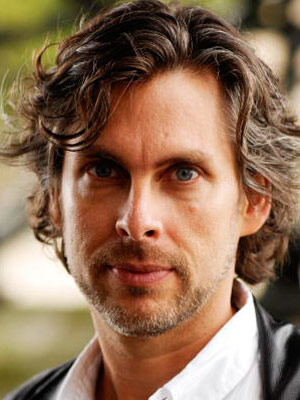
“The Collected Works of Billy the Kid” was first published by a small press in the 1970s when its author, Michael Ondaatje, was still in his 20s and two decades away from the success and fame that would arrive with “The English Patient.” Yet this early work already shows a door opening into the future; indeed, it might be argued that here, in his meditation on the legendary American outlaw, Ondaatje was already assembling the key tools in his writer’s bag. Not much is known for sure about Billy the Kid: His real name was William Bonney; he was involved, on the losing side, in a vicious land war in Lincoln County, N.M., then the most violent territory in America; he killed many men and himself died in 1881, at age 21, shot by his friend Pat Garrett at Fort Sumner. These are the bare bones of the legend, but Ondaatje pries the reader’s mind loose from them, bringing the climax of Billy’s tale, and his psychology, to life with a shocking ferocity.

more from Richard Rayner in the LA Times here.

majority rules

Blount-190

If language were set in concrete, there would be no call for new books on how to use it. These days, most such books are at pains not to seem prescriptive. In 1996, Patricia T. O’Conner gave us the admirably entitled “Woe Is I,” aptly subtitled “The Grammarphobe’s Guide to Better English in Plain English.” In this lucid and sensible book she criticized the use of “hopefully” to mean “It is hoped” or “I hope”: “Join the crowd and abuse ‘hopefully’ if you want; I can’t stop you. But maybe if enough of us preserve the original meaning it can be saved. One can only hope.” Now, in “Origins of the Specious,” she says, “I’m not hopeful about convincing all the fuddy-duddies out there, but here goes: It’s hopeless to resist the evolution of ‘hopefully.’ ” So use it, she says. “Hopefully, the critics will come to their senses.” According to how you look at it, O’Con­ner has turned on her fellow preservationists (“fuddy-duddies,” is it?), or she has evolved along with the language. In “Woe Is I,” she took a hard line on the difference between “disinterested” and “uninterested.” Now she says the one, generally speaking, means the other, because “as we all know, in English the majority rules.

more from Roy Blount Jr. in the NYT here.

Could Pakistan Dissolve Altogether?

From Mother Jones:

Pakistan-300x250.300wide Boston University anthropologist Thomas Barfield has been publishing relentlessly ever since the mid-1970s, when he wandered northern Afghanistan doing doctoral fieldwork. He has since emerged as one of America's foremost experts on the region, focusing on political development, provincial-state relations, and customary law. In 2006, Barfield, now president of the American Institute of Afghanistan Studies, received a prestigious Guggenheim Fellowship to complete his upcoming book on the changing concepts of political legitimacy in Afghanistan. I caught up with the professor to discuss the P-word—Pakistan—and its role in our current predicament. At the time of our interview, Pakistan's government had not yet signed its agreement with the Taliban that allowed for the imposition of strict Islamic law in six northwestern regions, including Swat.

Mother Jones: To what degree does future Afghan stability depend on reconciliation between India and Pakistan?

Thomas Barfield: The India/Pakistan relationship is probably central. Pakistan has from its inception defined itself in opposition to India, and that makes it difficult. But Kashmir needs to be reconciled. Pakistan could also dissolve: The four provinces have very little holding them together.

More here.

Mirror on America

David Brooks in The New York Times:

Cover-600 Alexis de Tocqueville introduced the genre and ruined it by actually being brilliant. In the 19th century Brilliant authors came with their superior European sensibilities. In the 1980s, Jean ­Baudrillard came armed with Theory and set the modern standard by dropping puerile paradoxes from coast to coast: “Americans believe in facts, but not in facticity.” Brilliant! “Here in the most conformist society the dimensions are immoral. It is this immorality that makes distance light and the journey infinite, that cleanses the muscles of their tiredness.” Brilliant!

Today, Brilliant writers seem to come with camera crews, and they seem to do much of their reporting while the crews set up their visuals. I enjoyed Bernard-Henri Lévy’s meditation a few years ago, and now the great historian Simon Schama has entered the field. Schama was born in Britain and makes documentaries for the BBC, but he has spent more time in the United States than most Brilliant authors, having taught at Harvard and now Columbia. But this is very much an outsider’s book, and if Schama doesn’t come from a strictly European perspective, let’s just say he comes from the realm of enlightened High Thinking that exists where The New York Review of Books reaches out and air-­kisses The London Review of Books.

His book is called “The American Future: A History” (which is a puerile paradox before you even open the cover), and it has nothing whatsoever to do with the American future.

More here.

Saturday Poem

On an Acura Integra
Paul Violi

Please think of this as not merely a piece
Of writing that anyone would fully
Appreciate, but as plain and simple
Words that attempt to arouse whatever
Appetencies you, especially, depend
Upon language to fulfull; that drench you
In several levels of meaning at once,
Rendering my presence superfluous.
In other words, welcome this as a poem,
Not merely a missive I've slowly composed
And tucked under your windshield wiper
So that these onlookers who saw me bash
In your fender will think I'm jotting down
The usual information and go away.

from Fracas by Paul Violi, Hanging Loose Press, 1999.