Saturday Poem

The City Planners

Cruising these residential Sunday
streets in dry August sunlight:
what offends us is
the sanities:
the house in pedantic rows, the planted
sanitary streets, assert
levelness of surface like a rebuke
to the dent in our car door.
No shouting here, or
shatter of glass; nothing more abrupt
than the rational whine of a power mower
cutting a straight swath in the discouraged grass.

Read more »

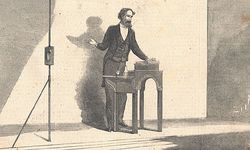
Why are we still reading Dickens?

From The Guardian:

Charles-Dickens-001 As someone who teaches and writes about Dickens, the question of why we still read him is something that's often on my mind. But that question was never more troubling than one day, nearly 10 years ago, when I was standing as a guest speaker in front of a class of about 30 high school students. I had been speaking for about 20 minutes with an 1850 copy of David Copperfield in my hand, telling the students that for Victorian readers, Dickens's writing was very much a “tune-in-next-week” type of thing that generated trends and crazes, much as their own TV shows did for them today. Then a hand shot up in the middle of the room.

“But why should we still read this stuff?”

I was speechless because in that moment I realised that, though I had begun a PhD dissertation on Dickens, I had never pondered the question myself. The answer I gave was acceptable: “Because he teaches you how to think,” I said. But lots of writers can teach you how to think, and I knew that wasn't really the reason. The question nagged me for years, and for years I told myself answers, but never with complete satisfaction. We read Dickens not just because he was a man of his own times, but because he was a man for our times as well. We read Dickens because his perception and investigation of the human psyche is deep, precise, and illuminating, and because he tells us things about ourselves by portraying personality traits and habits that might seem all too familiar. His messages about poverty and charity have travelled through decades, and we can learn from the experiences of his characters almost as easily as we can learn from our own experiences. These are all wonderful reasons to read Dickens. But these are not exactly the reasons why I read Dickens. My search for an answer continued but never with success, until one year the little flicker came – not surprisingly – from another high school student, whose essay I was reviewing for a writing contest.

“We need to read Dickens's novels,” she wrote, “because they tell us, in the grandest way possible, why we are what we are.”

More here.

Watch the Clock to Lose Weight

From Science:

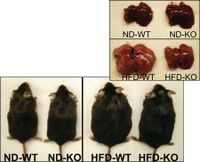
Fat When we eat may be just as important as what we eat. A new study shows that mice that eat when they should be sleeping gain more weight than mice that eat at normal hours. Another study sheds light on why we pack on the pounds in the first place. Whether these studies translate into therapies that help humans beat obesity remains to be seen, but they give scientists clues about the myriad factors that they must take into account. Observations of overnight workers have shown that eating at night disrupts metabolism and the hormones that signal we're sated. But no one had done controlled studies on this connection until now. Biologist Fred Turek of Northwestern University in Evanston, Illinois, and graduate student Deanna Arble examined the link between a high-fat diet and what time of day mice eat. A control group of six nocturnal mice ate their pellets (60% fat by calories, mostly lard) during the night. Another group of six ate the same meal during the day, Turek says, which disrupts their circadian rhythm–the body's normal 24-hour cycle.

After 6 weeks, the off-schedule mice weighed almost 20% more than the controls, Turek and Arble report today in Obesity, supporting the idea that consuming calories when you should be sleeping is harmful.

More here.

Why Israel is after my son

Fouad Sultani in The Electronic Intifada:

090903-rawi-sultani The persecution of Palestinian citizens inside Israel is not a new phenomenon. Yet, for me, this time it hit home. The Israeli intelligence agency Shabak, also known as the Shin Bet, accuses my son Rawi Sultani of “contact with a foreign agent” and “delivering information to the enemy.” Both are grave security offenses in Israeli law. These and similar offenses were used against many Palestinian leaders and activists such as Azmi Bishara of the National Democratic Assembly (NDA), Raed Salah of the Islamic Movement and Muhammad Kanaaneh of Sons of the Land. At times, even Jewish political activists sympathetic to Palestinians like Tali Fahima are similarly accused.

Rawi, a 23-year-old law student and a political activist of the NDA, is being charged in the district court of Petach Tikva with having contact with Hizballah members in order to deliver information on the whereabouts of the Israeli army's chief of staff.

More here.

Less brutish, still short

Review of Frans de Waal's The Age of Empathy: Nature’s Lessons for a Kinder Society, from The Economist:

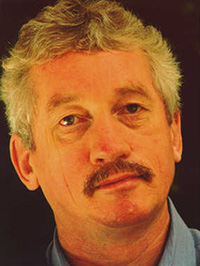
Frans_de_Waal His title has a double-meaning: empathy is both very old and freshly topical. It is as ancient as the entire mammalian line, he argues, engaging areas of the brain that developed in our distant ancestors over 100m years ago. And we are also entering a new age of empathy, he thinks, brought on by the financial crisis (the product of a selfishly oriented system), and marked by America’s election of President Barack Obama, who has re-emphasised the importance of compassion and helping one’s neighbour.

The book is a polemic, and its main target is what Mr de Waal takes to be a distorted idea of human life as relentlessly selfish and ruthlessly competitive. As an antidote to this picture, he offers plenty of evidence of apparently selfless sacrifice, unforced sympathy, co-operation and even a keen sense of fairness in our closest animal relatives, who evolved to reap the benefits of mutual aid. In other words, his answer to Thomas Hobbes’s famously gloomy statement that man’s existence tends to be “nasty, brutish and short” is, in effect, that it is unfair to brutes. Beasts are not actually all that beastly, and so we need not be either. Nature does not force us to be selfish.

More here.

Friday, September 4, 2009

Kennedy’s Rough Waters and Still Harbors

Michiko Kakutani in The New York Times:

Bookslide4 At the end of his deeply affecting memoir, the late Senator Edward M. Kennedy writes about his grandson “Little Teddy” — the son of his son “Medium Teddy” who delivered such a heartbreaking eulogy at the senator’s funeral on Saturday — and his difficulties mastering the family tradition of sailing. The senator told the 10-year-old “we might not be the best,” but “we can work harder than anyone,” and Little Teddy stayed with it, grew eager to learn and started winning races. That, the senator writes, “is the greatest lesson anyone can learn”: that if you “stick with it,” that if, as the title of his book suggests, you keep a “true compass” and do your best, you will eventually “get there.”

And that, in a sense, is the theme of this heartfelt autobiography: that persistence, perseverance and patience in pursuit of a cause or atonement for one’s failures can lead to achievement and the possibility of redemption. It’s the story of how this youngest and most underestimated of siblings slowly, painfully, incrementally found genuine purpose of his own in shouldering the weighty burden of familial expectations and the duty of carrying on his slain brothers’ work. He found a purpose, not as they did in the high-altitude pursuit of the presidency but in the dogged, daily grind of being a senator — of laboring over bills, of sitting through endless committee meetings, of wading through briefing books and making deals with members across the aisle. The resulting legislation — including the Civil Rights Act of 1964 and the State Children’s Health Insurance Program of 1997 — would help the poor and the disenfranchised and those with disabilities, and win him recognition as one of the foremost legislators in American history.

More here.

the outfielder can write

Xin_3120905181913875300128

I write from Caracas, the murder capital of the world, where I’ve been employed by the Leones to score runs and prevent balls from falling in the outfield. At the ankles of the Ávila Mountain amongst a patch of dusky high-rises, the downtown grounds of el Estadio Universitario packed beyond capacity are ripe for a full-bodied poem. A mere pitching change is an occasion “para rumbiar,” and the purse-lipped riot squad is always on the move with their spanking machetes swinging from their hips. The game isn’t paced necessarily by innings or score. It’s marked by the pulsating bass drums of the samba band that trail bright, scantily-clad, head-dressed goddesses strutting about the mezzanine. The young fireworks crew stand mere feet from flares that don’t always set out vertically, sometimes landing in the outfield still aflame. “The wave” includes heaving drinks into the sky.

more from Fernando Perez at Poetry Magazine here.

Heath Bars, Lapin and Mash

3763844.41

Swinging by the Pasadena Museum of California Art is often like grazing some kind of far-fetched fusion buffet — blithely mixing collectible vinyl action figures with early California Impressionist landscape painting, wrapped in a custom rainbow fumigation tent with a side order of spray-painted Kenny Scharf legume entities. The gestalt isn’t always successful, but the unexpected shifts can deliver the effect of cleansing the mental palate, piquing your appetite for the next new sensation. The current menu is particularly appetizing, sandwiching a combination of smooth midcentury modernist design and funky, quirky postmodernisms between two slices of contemporary landscape experiments. And, appropriately enough, the largest of these shows is devoted to dinnerware. Edith Heath (1911-2005) was a Danish farm girl from Iowa, who reinvented herself as one of the central figures of midcentury West Coast Modernist design, founding Heath Ceramics in 1947 with a mission to produce sturdy, functional and affordable ceramic products — primarily dishware and tiles — in a cool, Bauhaus-derived vocabulary of clear, simplified geometry and cool, subtle colors. The company still manufactures out of Sausalito and maintains a store on Beverly Boulevard.

more from Doug Harvey at The LA Weekly here.

genesis with reaction shots

Cover00-1

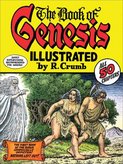
As presented in the Bible, the characters in Genesis have no internal lives: We see them speak and act, with little sense of their motivations. When a primary character (God or one of the patriarchs) speaks at length, we can only guess at how the words were received. Crumb’s major interpretive act is to offer reaction shots to this biblical speech making. When God tells Noah that divine justice demands the destruction of almost all life on earth, the poor farmer is aghast. In chapter 35, Jacob calls on the members of his household to cleanse themselves and destroy their idols. The text is silent about their reactions, but Crumb shows the women of the family quietly crying as they hand over their beloved objects. Among its many riches, Genesis is a book about bodies, a book where men and women constantly grapple with one another, where a servant swears an oath by putting his hand under his master’s thigh, where even angels are threatened with sexual violation. Crumb has long been the preeminent cartoonist of the body. His women are notoriously full-figured, with ample butts and protruding nipples (a motif he uses in this book). But more significantly, the bodies he draws—whether they are quivering or standing still, dancing or drooping—have a visceral impact few artists can match. That’s why he was the perfect cartoonist to illustrate the Book of Genesis, a fitting capstone to a great career.

more from Jeet Heer at Bookforum here.

Friday Poem

Where are the Waters of Childhood?

See where the windows are boarded up,
where the gray siding shines in the sun and salt air
and the asphalt shingles on the roof have peeled or fallen off,
where tiers of oxeye daisies float on a sea of grass?
That’s the place to begin.

Enter the kingdom of rot,
smell the damp plaster, step over the shattered glass,
the pockets of dust, the rags, the soiled remains of a mattress,
look at the rusted stove and sink, at the rectangular stain
on the wall where Winslow Homer’s Gulf Stream hung.

Go to the room where your father and mother
would let themselves go in the drift and pitch of love,
and hear, if you can, the creak of their bed,
then go to the place where you hid.

Read more »

A Healer Born of Genocide

From The Washington Post:

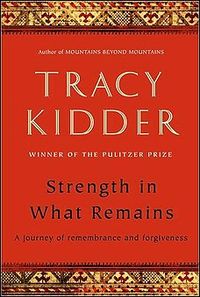
Book In the summer of 2005, a villager walked into a district hospital in Rwanda complaining of abdominal pain. The cause was not difficult to diagnose: an acutely enlarged spleen resulting from untreated malaria. But the American doctors were unable to identify a series of angry rings, scored deep into the skin, that covered the patient's distended belly. A medical student from Burundi recognized them at once: They were burns. Someone, possibly even a parent, had heated a metal pipe over a fire and pressed its red-hot tip into the very part of the body that hurt the most. “Distracting pain with pain,” the young doctor called it — a common practice among the people of Rwanda and Burundi, who know a good deal about agony and affliction.

That young medical student is the subject of Tracy Kidder's extraordinarily stirring new book, “Strength in What Remains”; and the gruesome business of numbing pain with pain is nothing less than a metaphor for the genocide that swept through Burundi and Rwanda in 1994, killing or displacing millions who had already suffered all the miseries of the damned.

More here.

Never mind the Taliban – Pakistan’s youth put their faith in rock’n’roll

Country's internal turmoil is feeding underground music scene and popular guitar school.

Declan Walsh in the The Guardian:

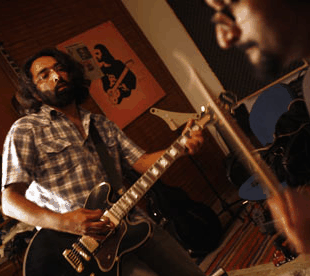
ScreenHunter_06 Sep. 04 10.34 Even in a summer of Taliban violence young Pakistanis are rocking on. An underground music scene is quietly thriving in the country's major cities, nourished by the internet and the passion of mostly amateur bands.

In Lahore a pair of unemployed rockers have tapped into that enthusiasm with a new school for rock'n'roll.

“We weren't getting a lot of gigs, and we needed to survive,” said co-founder Hamza Jafri. “So we thought we'd try this.”

The Guitar School, as it is known, has been surprisingly successful. Around 40 students have signed up, ranging from surly teenagers in drainpipe jeans to more practised musicians such as Ahsan looking to hone their skills. Classes take place in a small room lined with egg boxes; the school's teaching style is reflected in its motto: “Play it like you feel it.”

More here.

Rocking Karachi

What you never knew about the largest city in Pakistan.

H. M. Naqvi in Forbes:

Karachi If you like, you can listen to live qawwali every Thursday in one of the hundred shrines in and around the city. Or, for that matter, attend a rock concert. In the last decade, a rock culture has emerged that routinely stirs thousands of teens to Noori, a Lahori band that churns out youth anthems; Zeb and Haniya, a female Pathan duo; and Ali Azmat, the lead singer of the Sufi rock band Junoon. The music scene has been so explosive that MTV was compelled to establish a presence in the country, based in Karachi.

There are also fortnightly art exhibitions at galleries that include V.M., Canvas and Chawkandi; poetry readings and literary discussions at the Second Floor and the Commune; and new plays every week–that's every week–at the Pakistan Arts Council. And an amazing little endeavor, the Kara Film Festival, annually showcases the best of Pakistani films–from Silent Waters, Sabiha Sumar's brilliant meditation on history, to the zombie horror flick Zibakhana–and attracts directors from, say, far flung New Zealand, as well as Bollywood luminaries from across the border.

More here.

Thursday, September 3, 2009

How Did Economists Get it So Wrong?

06economic.2-650 Paul Krugman in the NYT:

It’s hard to believe now, but not long ago economists were congratulating themselves over the success of their field. Those successes — or so they believed — were both theoretical and practical, leading to a golden era for the profession. On the theoretical side, they thought that they had resolved their internal disputes. Thus, in a 2008 paper titled “The State of Macro” (that is, macroeconomics, the study of big-picture issues like recessions), Olivier Blanchard of M.I.T., now the chief economist at the International Monetary Fund, declared that “the state of macro is good.” The battles of yesteryear, he said, were over, and there had been a “broad convergence of vision.” And in the real world, economists believed they had things under control: the “central problem of depression-prevention has been solved,” declared Robert Lucas of the University of Chicago in his 2003 presidential address to the American Economic Association. In 2004, Ben Bernanke, a former Princeton professor who is now the chairman of the Federal Reserve Board, celebrated the Great Moderation in economic performance over the previous two decades, which he attributed in part to improved economic policy making.

Last year, everything came apart.

Few economists saw our current crisis coming, but this predictive failure was the least of the field’s problems. More important was the profession’s blindness to the very possibility of catastrophic failures in a market economy.

‘Home Boy’ is a slam-dunk for H.M. Naqvi

Carol Memmott in USA Today:
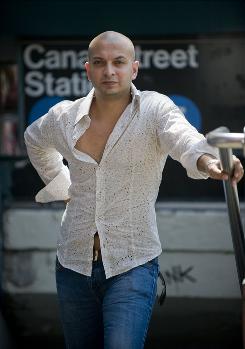
Home-boyx Genre: Contemporary fiction

What it's about: Three young Muslim men, living a carefree life in Manhattan, experience suspicion, prejudice and incarceration after 9/11.

Why it's noteworthy: A debut novel, it's an authentic and honest portrayal of what it's like to be a Muslim living in post-9/11 America.

Memorable line: “In prison, I finally got it. I understood that just as three black men were gangbangers, and three Jews a conspiracy, three Muslims had become what would be known as a 'sleeper cell.' “

Quick bio: Naqvi, 35, a citizen of Pakistan, was born in London (his father was a diplomat), raised in Algeria and Pakistan. Spent senior year of high school at St. Andrew's Episcopal School in Bethesda, Md., “where I was the only brown man in the class.” Graduated from Georgetown University. Taught creative writing at Boston University. Lives in Karachi with his wife and 2-year-old son.

Fun fact: Naqvi represented Pakistan in National Poetry Slam in 1995. “One could make a case that the formal beginnings of my literary career were as a slam poet. I was quite taken by the then-smoke-filled clubs and people getting up and reading their stuff.”

Inspiration for the novel: Based in part on a slam poem Naqvi wrote after his brother was randomly visited by U.S. authorities post-9/11.

On being Muslim in America at that time: “You find yourself in the peculiar position that you are reeling from this great tragedy and then you are subsequently and consequently suspected of being somehow part and parcel of it.”

Most admired authors: Graham Greene, V.S. Naipaul, J.M. Coetzee. “These are three writers that I read again and again.”

On his fall reading list: Émigré Journeys by Abdullah Hussein. “He's the greatest living writer of Urdu prose, and this was his first novel in English. It's kind of exciting to read a novel by somebody who figured he'd write a novel in English in his 80s.”

coetzee dressed up

Coetzee

It is the third in a trilogy of books relating the life, from childhood to his 30s, of a writer named “John Coetzee”. Boyhood (1997) and Youth (2002), are written in a free indirect third person that appears to offer an observation window into the unfolding consciousness of their subject. The new volume, Summertime, consists of scraps of the author’s notebooks and transcripts of interviews compiled by Mr Vincent, an English biographer who is investigating the author’s return from London and America to the South Africa of the 1970s. His “Coetzee” resembles the Nobel prize-winning writer in many aspects, except he has died before the book begins. How is she meant to read this trilogy of “memoirs”? Summertime has, after all, just been long-listed for the Booker prize for fiction (the author has won the award twice, for Life and Times of Michael K in 1983 and Disgrace in 1999). The slip between these registers is troubling. On the one hand, the trilogy seems to promise her insights into the formative experiences and obsessions of this notoriously elusive author. Reading Boyhood, for example, she notes that his antipathy towards his Afrikaner heritage and over-attuned sense of shame appear precociously present, almost inborn.

more from Delia Falconer at The Australian here.

Hotel Munch

ID_GL_WILSO_MUNCH_AP_001

Art critic Peter Schjeldahl once compared looking at Edvard Munch’s paintings to “listening to an album of a certain blues or rock song that, once upon a time, changed my life. I can’t hear the songs, as I can’t see the Munch images, without recalling earlier states of my soul, as if to listen or to look were, beyond nostalgia, an exercise in autobiography. Each song, each image, reminds me of myself.” I was thinking about this around 4 a.m. on a recent Saturday morning as I walked back to the Hotel Munch after an evening out in Oslo. I’d met some lovely people who’d taken me to a country music club to listen to a band called the Bastard Sons of Johnny Cash, and then to a rock club where a heavy metal cover band played Bon Jovi’s “Livin’ on a Prayer” for its last number, with everyone totally singing along. By then, it was late, or early, and I had to wake up in a few hours to meet some liquor industry people for a tasting. As I walked home, past lines of people waiting for kebabs and hot dogs, the sky was that amazing shade of dark blue it only turns during a Nordic summer, when the sun never quite goes away.

more from Jason Wilson at The Smart Set here.