Friends or Acquaintances? Ask Your Cell Phone

From Science:

Cell Your telephone may know more about your private life than you do, according to a new study of mobile phone calls. The insight opens the door to mining massive data sets from mobile phone call logs, which should allow researchers to test theories for how relationship networks make or break businesses, shape the flow of information, and even affect the course of epidemics.

A nagging problem for social scientists is the limitation of self-reported survey data. Not only are people expensive to poll, but they are also notoriously error-prone when they try to recall their own behaviors. What researchers would prefer is a record of people's behaviors that is cheap and accurate. Mobile phone call logs can certainly provide enormous amounts of cheap data. Researchers have used such data to map out people's social networks, utilizing the duration and frequency of calls between pairs of people as a measure of the intimacy of their relationships. Doing so has revealed patterns of people's contact with each other both in time and space, which is crucial for modeling everything from gossip to how flu viruses spread across populations.

But how accurately do call patterns reflect the intimacy of relationships? After all, sometimes the closest of friends rarely call each other, while some motor mouths call just about everyone.

More here.

The Humanitarian Crisis in Sri Lanka

IMAGE_0182-300x240Via Conor Foley over at Crooked Timber, Amnesty’s calling for an end to detention camps in Sri Lanka:

Amnesty International today called for the immediate release of 285,000 innocent civilians – including an estimated 50,000 children – being held in cramped and squalid camps in the north of Sri Lanka.

The camps – each surrounded by barbed wire and guarded by security forces – were set up during the recent Government offensive against the Liberation Tigers of Tamil Eelam, commonly known as the Tamil Tigers.

IMAGE_0262-300x240

Foley on the camps:

You can see in the first photo the emblems of a humanitarian agency. The second photo shows the barbed wire surrounding each camp. These were, and are, effectively concentration camps (in the original meaning of the word), and so the dilemma was whether humanitarian agencies should have helped to build and administer them?

The next two photos show the conditions that the people who are now in the camps were previously suffering. Thousands died either from direct shelling, or starvation and disease, in the space of a few months. Should the aid agencies have done more to publicise what was happening or spoken out louder for a ceasefire – even if it meant getting thrown out of the country or arrested?

Finally, should the agencies have allowed themselves to be used in part of a counter-insurgency campaign by the Government of Sri Lanka in which over a quarter of a million people have been forcibly displaced from their homes – which is a prime facie violation of the laws of armed conflict?

Augustus Saint-Gaudens

090824_r18733_p233

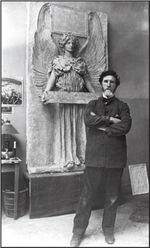
Augustus Saint-Gaudens’s gilded bronze equestrian statue of General William Tecumseh Sherman, at the southeast corner of Central Park, across from the Plaza, is my favorite public art work in New York. I always pause, when I have time, to contemplate the grizzled warrior and the Angel of Victory who strides ahead of him, arm raised in joyous salutation, and “seems to be leading the horse into Bergdorf’s,” as Frank O’Hara observed in a poem. There is so often a pigeon atop the General that it might as well be gilded, too. Old-fashioned monumental statuary attracts jokes and pigeons, of course. For generations now, we have lacked the mental means for taking it seriously, even when we notice it. But this work moves me. It is fantastically adept, for one thing. Willem de Kooning once remarked of Saint-Gaudens, “He got the guy to sit right on the horse! You know how hard that is?” The bluff oneness of rider and steed is indeed striking. And Sherman’s ravaged, ornery visage convinces utterly, crowning Saint-Gaudens’s signature feat of investing idealist art with realist grit. Modelling the head, in 1888, took eighteen two-hour sessions, during which the artist asked Sherman to button his collar and straighten his tie. The dishevelled sitter demurred: “The General of the Army of the United States will wear his coat any damn way he pleases.”

more from Peter Schjeldahl at The New Yorker here.

screw woodstock

WOO-035

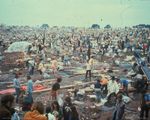
Woodstock’s 40th anniversary is being celebrated as well — with new books, a new documentary, a new Ang Lee movie and the inevitable remastered DVDs and CDs. But it’s “Mad Men” that has the pulse of our moment. Though the show unfolds in an earlier America than Woodstock, it seems of far more recent vintage, for better and for worse. As many boomers have noted, Woodstock’s nirvana was a one-of-a-kind, one-weekend wonder anyway, not the utopia of subsequent myth. It wasn’t even meant to be free; in the chaos, the crowds overwhelmed and overran the ticket sellers. That concept of “free” — known to some adults as “theft” — persists today in the downloading of “free” music, which has decimated the recording industry far more effectively than brown acid ever did. Even in Woodstock’s immediate aftermath, there was no consensus on its meaning. A Times editorial titled “Nightmare in the Catskills” saw “a nightmare of mud and stagnation” and asked rhetorically, “What kind of culture is it that can produce so colossal a mess?” Time magazine, surprisingly, was more sympathetic. “It is an open question,” the writer intoned, “whether some as yet unknown politician could exploit the deep emotions of today’s youth to build a politics of ecstasy.” Actually, both proved wrong. Woodstock was no apocalypse, but neither was it a political turning point. Nixon would be re-elected in 1972, and the only politician with a touch of ecstasy, Robert Kennedy, had already been murdered.

more from Frank Rich at the NYT here.

Law of Frequency of Error

Burnett_1

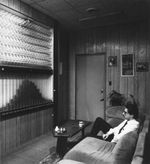
In the earliest laboratory notebooks, the wall-mounted m­echanism shown in this image was simply called “the pinball machine.” In the published output of the research program of which it was a part, it wen­t by the more dignified­ appellation Random Mechanical Cascade, yielding a catchy acronym: RMC. Around the lab, however, the ­device was known affectionately as ­Murphy, since if anything could go wrong, it would. In a way, of course, this was exactly the point: the whole system—the nine thousand polystyrene balls droppin­­g through a pegboard of 330 precisely cantilevered nylon pins, the real-time photoelectric counters tallying (by LED readout) the segmented heaps forming belo­w, the perennially balky bucket-conveyor for resetting an experimental run—had all been painstakingly constructed and ca­librated in order first to exemplify, and then to defy, what the Victorian statistician ­Francis Galton dubbed the “Law of Frequency of Error.”­

more from D. Graham Burnett at Cabinet here.

Tuesday Poem

Milton by Firelight
(Pine Creek, August 1955)

O HELL, what do mine eyes
with grief behold?’
Working with an old
Singlejack miner, who can sense
The vein and cleavage
In the guts of rock, can
Blast granite, build
Switchbacks that last for years
Under the beat of snow, thaw, mule hooves.
What use, Milton, a silly story
of our general parents,
eaters of fruit?

The Indian, the chainsaw boy,
And a string of six mules
Came riding down to camp
Hungry for tomatoes and green apples.
Sleeping in saddle blankets
Under the bright night-sky
Han River slantwise by morning.
Jays squall
Coffee boils

In ten-thousand years the Sierras
Will be dry and dead, home of scorpion.
Ice-scratched slabs and bent trees.
No paradise, no fall,
Only the weathering land
The wheeling sky,
Man, with his Satan
Scouring the chaos of the mind.
Oh HELL!

Fire down
Too dark to read
, miles from a road
The bell-mare clangs in the meadow
That packed dirt for a fill-in
Scrambling through loose rocks
On an old trail
All of a summer’s day.

by Gary Snyder

Tests Begin on Drugs That May Slow Aging

Nicholas Wade in The New York Times:

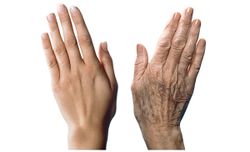
Hands It may be the ultimate free lunch — how to reap all the advantages of a calorically restricted diet, including freedom from disease and an extended healthy life span, without eating one fewer calorie. Just take a drug that tricks the body into thinking it’s on such a diet. It sounds too good to be true, and maybe it is. Yet such drugs are now in clinical trials. Even if they should fail, as most candidate drugs do, their development represents a new optimism among research biologists that aging is not immutable, that the body has resources that can be mobilized into resisting disease and averting the adversities of old age.

This optimism, however, is not fully shared. Evolutionary biologists, the experts on the theory of aging, have strong reasons to suppose that human life span cannot be altered in any quick and easy way. But they have been confounded by experiments with small laboratory animals, like roundworms, fruit flies and mice. In all these species, the change of single genes has brought noticeable increases in life span. With theorists’ and their gloomy predictions cast in the shade, at least for the time being, experimental biologists are pushing confidently into the tangle of linkages that evolution has woven among food intake, fertility and life span. “My rule of thumb is to ignore the evolutionary biologists — they’re constantly telling you what you can’t think,” Gary Ruvkun of the Massachusetts General Hospital remarked this June after making an unusual discovery about longevity.

More here.

Monday, August 17, 2009

Sunday, August 16, 2009

Secularism and Disenchantment

Brtaylorimage.img_assist_customBruce Robbins on Charles Taylor’s A Secular Age in n+1:

With Martin Amis championing secularism from what seems to be the right and Terry Eagleton making the case for faith from what must surely be the left, it is anything but obvious where enlightened common sense is now to be found…

In this context, the version of common sense offered by Charles Taylor’s A Secular Age is worth taking a second look at. A world-class philosopher, a practicing Catholic, and a very good citizen—he recently headed Canada’s portentously-named Consultation Commission on Accommodation Practices Related to Cultural Differences—Taylor came to the attention of the larger world in 2007 when he won the £1,000,000 Templeton Prize, which rewards “progress in humanity’s efforts to comprehend the many and diverse manifestations of the divine” (previous winners include Billy Graham, Aleksandr Solzhenitsyn, and Nixon Special Counsel Charles Colson). A decade earlier he had argued that secularism is indispensable to a healthy liberal democracy. This position was criticized by anthropologist Talal Asad as a deeply misguided glorification of the modern state. Now Taylor has joined Asad as a central figure in a wave of so-called “post-secular” thinking that is highly skeptical, to say the least, of democracy, liberalism, and the state, as well as of secularism. In A Secular Age, Taylor looks at secularism with the freshness and amazement that the New Atheists bring to God. What is this thing? What makes it work? How could anything so strange ever have come into existence in the first place? How could it have gotten so many people to take it seriously?

Taylor’s answers take some time to develop, and not everyone will make it through all eight hundred-plus pages, but the outline is clear enough. Secularism’s rise is generally presented as what Taylor calls a “subtraction” story. Religion is said to shrink as science, technology, and rationality expand. Thus superstition is little by little expelled from the world. In Taylor’s counter-story, secularism is not the widening zone of clarity that remains as myth and error are dissipated, but rather the product of shifts in thinking within religion, and in particular within Christianity.

Extradimensional Theories of the Universe as Opera

Hypermusic-prologue_INLINEElizabeth Cline over at Seed:

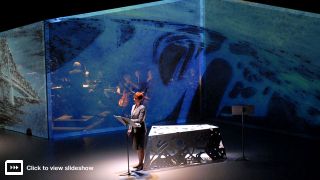
Since writing a bestselling book on her fascinating and complex extra-dimensional theory of the universe, Harvard physicist Lisa Randall has been busy re-imagining it as an appropriately cerebral art form—opera. After three years of development, Hypermusic Prologue: A Projective Opera in Seven Planes premiered at Paris’s prestigious Centre Pompidou in June and, like Randall’s book Warped Passages: Unraveling the Mysteries of the Universe’s Hidden Dimensions [Buy], it manages to translate the impenetrable world of theoretical physics into something that not only appeals to scientists, but to anyone willing to look beyond the obvious for clues about the nature of reality.

Spanish composer Hèctor Parra, 33, first saw artistic potential in Randall’s ideas after reading Warped Passages, which uses plain language to describe how hidden dimensions may explain some of physics’ greatest quandaries—such as why the gravitational force is so weak. When the book was released in Europe in 2006, Parra met up with Randall in Berlin to ask her to write a libretto based on her work. Randall admits she was “a little uncomfortable focusing so much on the physics,” she says, because she didn’t want to alienate the audience. “But I did see that the exploration of an extra dimension could be very nice as a metaphor. It seemed exciting.”

As its title suggests, Hypermusic Prologue doesn’t simply make art out of hard-to-grasp scientific theory, it inverts and renovates the genre of opera with an experimental score, a two-person cast, and minimalist and abstract stage design.

In America, Crazy Is a Preexisting Condition

Rick Perlstein in the Washington Post:

So the birthers, the anti-tax tea-partiers, the town hall hecklers — these are “either” the genuine grass roots or evil conspirators staging scenes for YouTube? The quiver on the lips of the man pushing the wheelchair, the crazed risk of carrying a pistol around a president — too heartfelt to be an act. The lockstep strangeness of the mad lies on the protesters’ signs — too uniform to be spontaneous. They are both. If you don’t understand that any moment of genuine political change always produces both, you can’t understand America, where the crazy tree blooms in every moment of liberal ascendancy, and where elites exploit the crazy for their own narrow interests.

In the early 1950s, Republicans referred to the presidencies of Franklin Roosevelt and Harry Truman as “20 years of treason” and accused the men who led the fight against fascism of deliberately surrendering the free world to communism. Mainline Protestants published a new translation of the Bible in the 1950s that properly rendered the Greek as connoting a more ambiguous theological status for the Virgin Mary; right-wingers attributed that to, yes, the hand of Soviet agents. And Vice President Richard Nixon claimed that the new Republicans arriving in the White House “found in the files a blueprint for socializing America.”

When John F. Kennedy entered the White House, his proposals to anchor America’s nuclear defense in intercontinental ballistic missiles — instead of long-range bombers — and form closer ties with Eastern Bloc outliers such as Yugoslavia were taken as evidence that the young president was secretly disarming the United States.

The emotional housekeeping of the world

From The Guardian:

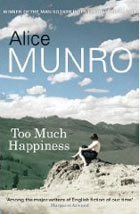
Alice-Munro---Too-Much-Ha-001 In “Fiction“, one of the 10 new stories collected in Too Much Happiness, a woman called Joyce takes a vague dislike to a guest at a family party. The guest, Maggie, whom Joyce thinks of as the sort of young woman “whose mission in life is to make people feel uncomfortable”, turns out to be a writer who's just published her first book. Joyce buys a copy on a whim a few days later, not sure if she'll actually read it (“she has a couple of good biographies on the go at the moment”). She becomes even more unsure when she realises that it's “a collection of short stories, not a novel . . . It seems to diminish the book's authority, making the author seem like somebody who is just hanging on to the gates of Literature, rather than safely settled inside.”

Alice Munro has said in interviews that she once had similar anxieties about short stories – that she spent her 20s fretting about not producing a novel. These days, along with William Trevor, she is one of the grandees of English-language short fiction. Yet people still like to worry about her authority. In truth, there's little substance to these anxieties: she's had an international readership since the 1970s; this year she added the Man Booker International prize to her already substantial collection of awards; and her daughter has published a memoir about being brought up by “an icon”. Even so, there's a persistent idea of her as an underpraised housewife-genius from the Canadian backwoods, perhaps because it's easier to talk about the literary politics of being a woman, Canadian or a short-story writer than it is to give a sense of her densely packed but effortless-seeming work.

More here.

Human See, Human Do–And That Goes for Monkeys, Too

From Scientific American:

Monkey-imitation-evolution-social-cooperation_1 Imitation is thought to be the sincerest form of flattery—even when the mimic and model are unaware of the mimicry. Now, new evidence from a study of capuchin monkeys shows a possible evolutionary benefit to being a clueless copycat (or copy-capuchin, in this case).

“We've known for awhile that we humans imitate each other all the time, unintentionally and unconsciously,” says Annika Paukner, a comparative behaviorist at the National Institute of Child Health and Human Development and lead author of the study published online today in the journal Science. “When people start using the same words or the same body language, it seems to help social interaction. People [who are imitated] say they like the other person better. It builds rapport and empathy.”

More here.

Sunday Poem

Overland to the Islands

Let’s go – much as the dog goes,
intently haphazard. The
Mexican light on a day that
‘smells like autumn in Connecticut’
makes iris ripples on his
black gleaming fur – a radiance
consorting with the dance.
……………………………Under his feet
rocks and mud, his imagination, sniffing,
engaged in its perceptions – dancing
edgeways, there’s nothing
the dog disdains on his way,
nevertheless he
keeps moving, changing
pace and approach but
not direction – ‘every step an arrival’.

by Denise Levertov

from Contemporary American Poetry;
Penguin Books Ltd, Middlesex, England, 1966

Saturday, August 15, 2009

How Much of Your Memory Is True?

PastKathleen McGowan in Discover:

Rita Magil was driving down a Montreal boulevard one sunny morning in 2002 when a car came blasting through a red light straight toward her… The accident left Magil with two broken ribs and a broken collarbone. It also left her with post-traumatic stress disorder (PTSD) and a desperate wish to forget. Long after her bones healed, Magil was plagued by the memory of the cement barriers looming toward her. “I would be doing regular things—cooking something, shopping, whatever—and the image would just come into my mind from nowhere,” she says. Her heart would pound; she would start to sweat and feel jumpy all over. It felt visceral and real, like something that was happening at that very moment.

Most people who survive accidents or attacks never develop PTSD. But for some, the event forges a memory that is pathologically potent, erupting into consciousness again and again. “PTSD really can be characterized as a disorder of memory,” says McGill University psychologist Alain Brunet, who studies and treats psychological trauma. “It’s about what you wish to forget and what you cannot forget.” This kind of memory is not misty and water­colored. It is relentless.

More than a year after her accident, Magil saw Brunet’s ad for an experimental treatment for PTSD, and she volunteered. She took a low dose of a common blood-pressure drug, propranolol, that reduces activity in the amygdala, a part of the brain that processes emotions. Then she listened to a taped re-creation of her car accident. She had relived that day in her mind a thousand times. The difference this time was that the drug broke the link between her factual memory and her emotional memory. Propranolol blocks the action of adrenaline, so it prevented her from tensing up and getting anxious. By having Magil think about the accident while the drug was in her body, Brunet hoped to permanently change how she remembered the crash. It worked. She did not forget the accident but was actively able to reshape her memory of the event, stripping away the terror while leaving the facts behind.