
Category: Recommended Reading
James Chance (1953 – 2024) Punk, Jazz, No Wave Musician
Sunday Poem
In Reply
Tell me, Rock, do you think
my mother misses feeling gravity’s sly tug
as she lifted her hand
to brush my cheek?
And would that be enough to lure her back
to sniff her roses,
to feel again the planet’s brow beneath her feet?
It seemed she loved it here.
But what do I know
of the dead, what they miss? I ask you questions,
Rock. And feel in reply,
the absence that grows
when the last of the afternoon birds goes quiet
and the evening birds
haven’t yet sung.
by Clare Rossini
from Plume Magazine
can you inherit memories from your ancestors?
Hannah Critchlow in The Guardian:
 Since the sequencing of the human genome in 2003, genetics has become one of the key frameworks for how we all think about ourselves. From fretting about our health to debating how schools can accommodate non-neurotypical pupils, we reach for the idea that genes deliver answers to intimate questions about people’s outcomes and identities. Recent research backs this up, showing that complex traits such as temperament, longevity, resilience to mental ill-health and even ideological leanings are all, to some extent, “hardwired”. Environment matters too for these qualities, of course. Our education and life experiences interact with genetic factors to create a fantastically complex matrix of influence. But what if the question of genetic inheritance were even more nuanced? What if the old polarised debate about the competing influences of nature and nurture was due a 21st-century upgrade?
Scientists working in the emerging field of epigenetics have discovered the mechanism that allows lived experience and acquired knowledge to be passed on within one generation, by altering the shape of a particular gene. This means that an individual’s life experience doesn’t die with them but endures in genetic form. The impact of the starvation your Dutch grandmother suffered during the second world war, for example, or the trauma inflicted on your grandfather when he fled his home as a refugee, might go on to shape your parents’ brains, their behaviours and eventually yours.
More here.
Sean Penn, Rebel With Many Causes
Maureen Dowd in The New York Times:
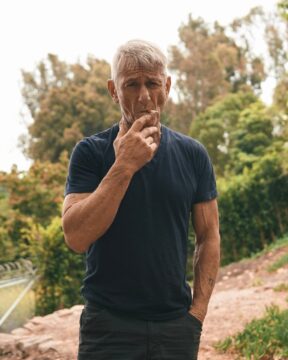 Don’t mellow my harsh, dude.
I was coming to talk to Sean Penn, the notorious Hollywood hothead who helped launch the word “dude” into the American bloodstream when he played stoner surfer Jeff Spicoli in the 1982 classic “Fast Times at Ridgemont High.” I was nervous because the Times photographer was already inside the Spanish-style ranch house with Penn, who has a history of throwing punches at paparazzi. I hurried past Penn’s three surfboards and silver Airstream in the front yard, half expecting to see the un-pacific denizen of the Pacific Coast wrestling on the floor with the photographer. Nah. Penn, in dark T-shirt, Columbia utility pants and sneakers, was charming, trailed by his adoring dogs, a golden retriever and a German shepherd rescue puppy. When I joked that I was relieved to see him treating the photographer sweetly, he laughed. “When I did my 23andMe,” he said, “I thought I might be part Hopi because they don’t like to be photographed.”
Penn, a lifelong Malibu resident, pointed in the direction of his old grade school in the days of a more rural Malibu. He said he gets up at 5:30 a.m. and goes, barefoot, out to his wood shop. “I even forget to smoke for five hours.” As it turns out, Penn has finally mellowed.
At 63, the weathered, tattooed rebel with many causes is a certified humanitarian — riding the crest into dangerous crises around the globe and saving lives in New Orleans and Haiti after disasters — and a crusading documentarian. He started out making the documentary “Superpower,” thinking it would be a story of how Volodymyr Zelensky, a comedian, ascended to Ukraine’s presidency. But then Vladimir Putin pounced.
More here.
Saturday, June 22, 2024
Gaza’s Past is Calling
Sarah Aziza in Lux:
My uncle’s voice reaches me across time and space in the form of fragmentary voice notes. His words are gruff but precise as he recalls the dimensions of the two-room shelter my grandmother constructed with the barest materials on a patch of ground in Deir al-Balah, Gaza, where she arrived as a refugee and a mother of four in 1955. This was seven years after Zionist soldiers ethnically cleansed the 626 inhabitants of her village, ‘Ibdis, along with 750,000 others across Palestine in the war we call the Nakba, or “Catastrophe.”
In the years in between the erasure of ‘Ibdis and their arrival to Deir al-Balah, my grandparents, Musa and Horea, hovered a few miles from their stolen land, subsisting as sharecroppers and sheltering with not-yet-displaced Bedouins. While much of their kin scattered across Gaza, Jordan, and beyond, they strove to stay as near to their village as they could. This, despite their poverty and the “mopping up” missions of the Israeli army, which sought to expel the Palestinians who remained. They were not ready, not able to believe their exile would be final. Their loss was a reality wider than their imaginations could yet hold.
It was not until their fourth child was born — their only daughter, Bahiya — that the young parents admitted their meager wages and borrowed floors could not suffice.
More here.
Confessions of a Black Conservative
How the Philosopher Charles Taylor Would Heal the Ills of Modernity
Adam Gopnik in The New Yorker:
Lyric poets and mathematicians, by general agreement, do their best work young, while composers and conductors are evergreen, doing their best work, or more work of the same kind, as they age. Philosophers seem to be a more mixed bag: some shine early and some, like Wittgenstein, have distinct chapters of youth and middle age; Bertrand Russell went on tirelessly until he was almost a hundred. Yet surely few will surpass the record of the Canadian philosopher Charles Taylor, who is back, at ninety-two, with what may be the most ambitious work ever written by a major thinker at such an advanced age. The new book, “Cosmic Connections: Poetry in the Age of Disenchantment” (Belknap), though ostensibly a study of Romantic poetry and music, is about nothing less than modern life and its discontents, and how we might transcend them.
A hard thinker to pigeonhole, Taylor has long been a mainstay of Canada’s social-democratic left; he helped found the New Democratic Party, running for office several times in Quebec, though losing, inevitably, to the Liberal Party and the charismatic Pierre Trudeau. He’s also a Catholic and a singularly eloquent critic of individualism and secularism, those two pillars of modern liberalism. He worries about the modern conception of the self—what he has called “the punctual self”—which he takes to be rooted in Enlightenment thought, and about the primacy it accords to autonomy, reason, and individual rights. By wresting our identities away from a sense of community and common purpose, the new “atomist-instrumental” model was, he thinks, bound to produce our familiar modern alienation. We became estranged from a sense of belonging and meaning.
More here.
Inequality Without Class
Simon Torracinta in Dissent:
An academic journal article on the technicalities of tax data is not usually cause for much excitement. Yet at the end of last year, one such publication in the Journal of Political Economy set #EconTwitter afire with debate, and prompted a full column in the Economist. The paper, by Gerald Auten and David Splinter, took aim at the famous studies on rising inequality conducted by Thomas Piketty, Emmanuel Saez, and Gabriel Zucman. If one employs different assumptions, Auten and Splinter argued, post-tax income inequality in the United States appears not to have risen much since the 1960s. While Piketty and his collaborators systematically challenged the findings, their detractors were quick to the draw. “The Piketty and Saez work is careless and politically motivated,” sniped James Heckman, a Nobel-winning Chicago School econometrician.
Whether it has risen in recent decades or merely plateaued, income and wealth inequality in the United States remains staggering. But the recent controversy illustrates the high stakes of empirical research on the subject, which burst into public view in 2014 with the publication of Piketty’s Capital in the Twenty-First Century. While it is hard to imagine the Biden administration’s announcement of a “new Washington consensus” centered on the “challenge of inequality” and its push for a global minimum tax without the shock wave of the 2016 election, Piketty’s high-profile work supplied a ready explanation for what had gone wrong.
The economist Branko Milanovic made his own major contribution to the study of inequality in 2016 with his breakout Global Inequality.
More here.
Baby Reindeer: The True Story Behind Netflix’s Breakout Hit
Amy Mackelden in Bazar:
 Netflix’s Baby Reindeer became an instant hit with viewers after it debuted earlier in April, with Variety calling the seven-episode limited series “shocking, hilarious, painful, and devastating,” and The New York Times dubbing it a “mesmerizing, complex drama.” The series follows Donny (played by creator Richard Gadd), a struggling comedian and bartender whose life is thrown into disarray when a customer named Martha (Jessica Gunning) comes into the bar. Soon she is sending him hundreds of emails, before her unwanted contact escalates even further. While attempting and failing to stop his stalker, Donny is also reminded of a period in his life during which he was violently abused by a mentor, Darrien (Tom Goodman-Hill).
While Baby Reindeer draws on events that occurred in Gadd’s real life, the series is also a work of fiction. Here’s what you need to know about the true story behind the Netflix hit.
Scottish performer Richard Gadd is as the writer, creator, and star of Baby Reindeer, and the Netflix series is the culmination of almost a decade of work. While the show takes its title from his one-man play of the same name, which debuted as part of the Edinburgh Fringe Festival in 2019, his previous work also inspired the series. In 2016, Gadd took home the Edinburgh Comedy Award for his show Monkey See Monkey Do, in which he revealed the catastrophic sexual violence he experienced as a young comic at the hands of a mentor.
More here.
The Surprising Issue That Could Help Biden With Young Voters
Daniel Cox in Time Magazine:
Joe Biden’s latest action on immigration has a whiff of desperation. It’s no secret that Biden is struggling with some core Democratic constituencies, and in taking executive action to restrict asylum seekers, the Biden campaign may be targeting wayward Republicans, centrists, and older voters, who tend to prioritize immigration. It’s not clear how effective these efforts will be, but addressing the immigration issue may help with another group of voters the campaign is struggling to reach: young voters.
Even if you are not convinced by polls showing the race effectively tied between Biden and Trump, there’s little doubt that Biden is worse off today than he was in 2020. In a new survey we conducted at the Survey Center on American Life, that includes a robust sample of more than 600 young voters, we’ve found that Biden has only a modest lead among young voters, well below his 2020 vote share.
The Biden-Harris campaign has sought to shore up support among young voters by emphasizing climate change, student loan forgiveness, and abortion rights. But what if the campaign took on the issue of immigration more directly in an effort to appeal to young voters?
It’s not as crazy as it sounds.
More here.
God’s Ghostwriters by Candida Moss
Peter Stanford at The Guardian:
 Graham Greene, who wrote so much about Catholicism in his novels, was regularly asked whether he was still a believer. It was listening to the gospel accounts of Jesus’s life, he replied, and hearing fleeting references thrown into the narrative that had no obvious purpose for being there – like the “other” unnamed disciple who sprints past Peter on his way to the empty tomb – that tempted him to believe the gospels might just be fact.
At least that speedy but redundant disciple is there in plain sight. In God’s Ghostwriters, Candida Moss argues there are many other figures passing all but hidden through the pages of the New Testament, who actually created and shaped these foundational texts of Christianity. In St Paul’s Letter to the Romans, she points out, the closing chapter contains a discordant line that I must have heard many times before but never clocked: “I, Tertius, the writer of this letter, greet you in the Lord.” Isn’t the writer supposed to be Paul?
more here.
“God: An Anatomy” With Candida Moss
Saturday Poem
The Corner of Bellington Street and Sparta
What could be more seemly?
To have three strong sons dress you
in breast plate and greaves, raising you up
on your shield, carrying you downstairs
to the minivan where we can all
drive up to Farnhams’ for fried clams,
and then perhaps the boardwalk above Crane’s,
to watch the brute surf slash and parry,
lunge and retreat, the comely maidens
ditching school and the boys stretched out
across their polished boards as if they were
the prows of dragon ships, venturing out
and returning in triumph.
And so I say goddamn
to the doctors and their blood-work oracles,
goddamn to the festering pancreas, goddamn
to the clamor of battle no longer needing
my strong arms, my courage – and
curse as well the wintery god Metastasis,
all the bloody spoils amassed in His keep,
and what care I if the mechanical bed is my
paltry throne and if, in a week, coma
like an invading army will overwhelm
my defenses and claim my vast lands? Who
can say I have not earned my sovereign sleep?
by Steven Ratiner
from Plume Magazine
How a Boston Physician Conquered the Thriller Genre
Alexandra Alter at the NYT:
 When Freida McFadden self-published her first novel, “The Devil Wears Scrubs,” more than a decade ago, she figured it would mark both the start and the end of her literary career.
McFadden, a doctor who treats brain disorders, had a demanding day job, and was raising two small children. But she’d always wanted to write fiction. So to entertain herself at night, she wrote a heavily autobiographical novel about a medical resident who is overworked and humiliated by a domineering supervisor.
“I thought, maybe I’ll publish this book, maybe a thousand people will buy it, and I’ll be done, end of my author story,” McFadden said from her home outside Boston, where she lives with her husband, an engineer; their two children, now 13 and 17; and a cat named Ivy.
“That did not happen,” she added.
more here.
Friday, June 21, 2024
Spreadsheet Superstars
David Pierce at The Verge:
 But I’d wager that if you wanted to see the most exciting drama happening at the MGM on this Friday night, you’d have to walk through the casino and look for the small sign advertising something called The Active Cell. This is the site of the play-in round for the Excel World Championship, and it starts in five minutes. There are 27 people here to take part in this event (28 registered, but one evidently chickened out before we started), which will send its top eight finishers to tomorrow night’s finals. There, one person will be crowned the Excel World Champion, which comes with a trophy and a championship belt and the ability to spend the next 12 months bragging about being officially the world’s best spreadsheeter. Eight people have already qualified for the finals; some of today’s 27 contestants lost in those qualifying rounds, others just showed up last-minute in hopes of a comeback.
More here.
Now is the time to take action on H5N1 avian flu, because the stakes are enormous
Matthew S Miller at The Conversation:
 Bird flu poses a massive threat, and the potential for a catastrophic new pandemic is imminent. We still have a chance to stop a possible humanitarian disaster, but only if we get to work urgently, carefully and aggressively.
This will require a major collective shift in the way we approach infectious diseases management — one that embraces a “One Health” approach and prioritizes prevention of human infection before widespread infection happens, rather than responding rapidly once human cases become widespread.
As Canada Research Chair in Viral Pandemics and director of the M.G. DeGroote Institute for Infectious Disease Research at McMaster University, I have spent my career studying the impact of previous pandemics, and developing new ways to prevent them in the future. The actions taken now will determine whether the highly pathogenic avian influenza (HPAI) H5N1 outbreak already affecting birds and mammals around the world takes hold in humans.
More here.
The Irani Cafes of Karachi
Mishal Zahoor Jamali at Medium:
 Stepping into High Ceiling and dimly lit Irani cafes with vintage furniture, mosaic chipped floors and tablecloths take one back to old Karachi. These desolate Irani cafes were once hubs of social and intellectual exchange and frequented by students, journalists, and intellectuals.
The history of Irani cafes can be traced back to the early 1900s when Parsis migrated to the port cities of the subcontinent to escape the economic crisis in Iran. Most settled in Bombay and the rest in Karachi.
Parsis established Irani cafes, coffee shops and bakeries all over Karachi. By the 70s there were hundreds of Irani cafes and restaurants now a few remain.
More here.
John Oliver: Trump’s Second Term
The Soul Of Strauss
Glenn Ellmers at The New Criterion:
 Last year marked the fiftieth anniversary of Strauss’s death. With the notable exception of a tribute by the (now retired) Harvard professor Harvey C. Mansfield in the Claremont Review of Books, this occasion went largely unremarked. Strauss—a refugee from Hitler’s Germany who spent most of his career at the University of Chicago—wrote for the few (or even the very few). He might not, therefore, have minded this neglect by the larger world. His scholarship, however, continues to exert an influence far out of proportion to his relative anonymity among the general public.
A new volume of essays, Leo Strauss’ Published but Uncollected English Writings, edited by Steven J. Lenzner and Svetozar Minkov (St. Augustine’s Press), is the latest of several new Strauss-related books. This collection includes important essays that can be found in other volumes (perhaps the most essential is “Farabi’s Plato”) as well as several that are obscure or hard to find (e.g., “On a New Interpretation of Plato’s Political Philosophy,” “Liberal Education and Mass Democracy,” “Greek Historians,” and “Machiavelli and Classical Literature”).
more here.