Kishore Mahbubani in the New York Times:
 The 20th anniversary of the fall of the Berlin Wall has just been celebrated. For many, that momentous event marked the so-called end of history and the final victory of the West.
This week, Barack Obama, the first black president of the once-triumphant superpower in that Cold War contest, heads to Beijing to meet America’s bankers — the Chinese Communist government — a prospect undreamt of 20 years ago. Surely, this twist of the times is a good point of departure for taking stock of just where history has gone during these past two decades.
Let me begin with an extreme and provocative point to get the argument going: Francis Fukuyama’s famous essay “The End of History” may have done some serious brain damage to Western minds in the 1990s and beyond.
Mr. Fukuyama should not be blamed for this brain damage. He wrote a subtle, sophisticated and nuanced essay. However, few Western intellectuals read the essay in its entirety. Instead, the only message they took away were two phrases: namely “the end of history” equals “the triumph of the West.”
Western hubris was thick in the air then. I experienced it. For example, in 1991 I heard a senior Belgian official, speaking on behalf of Europe, tell a group of Asians, “The Cold War has ended. There are only two superpowers left: the United States and Europe.”
More here. [Thanks to Kris Kotarski.]
Wan Chu's Wife In Bed
Wan Chu, my adoring husband,
has returned from another trip
selling trinkets in the provinces.
He pulls off his lavender shirt
as I lie naked in our bed,
waiting for him. He tells me
I am the only woman he'll ever love.
He may wander from one side of China
to the other, but his heart
will always stay with me.
His face glows in the lamplight
with the sincerity of a boy
when I lower the satin sheet
to let him see my breasts.
Outside, it begins to rain
on the cherry trees
he planted with our son,
and when he enters me with a sigh,
the storm begins in earnest,
shaking our little house.
Afterwards, I stroke his back
until he falls asleep.
I'd love to stay awake all night
listening to the rain,
but I should sleep, too.
Tomorrow Wan Chu will be
a hundred miles away
and I will be awake all night
in the arms of Wang Chen,
the tailor from Ming Pao,
the tiny village down the river.
By Richard Jones
from The Quarterly, 1990
W.W. Norton & Company, Inc., New York, NY

Leipzig is a very good place from which to approach eastern Europe.[1] For those coming from further west the city is a halfway stop, even if the train connections are not as good as perhaps one might have hoped twenty years ago, when the Iron Curtain disappeared. Leipzig is connected to eastern Europe and its history by a thousand threads – one need only think of the foundation of its university, or of the long-distance trade routes. At their intersection arose the trade fair, which during the Cold War became a sluice chamber, a contact yard between the hemispheres that opened for a moment every year. And consider the renewed interest in eastern Europe in Leipzig today, its book fair and its academic and research institutions, which have become trademarks of the city. So why should anyone from outside take the trouble of essaying an approach to the East in a place which is already so close – geographically, culturally, and academically? All the more so, since the topic of this conference is general and does not imply a question to which one must provide an answer. The chain of ideas “History of memory, places of memory, strata of memory” is more a set of associations and is intended to delimit an area.
more from Karl Schlögel at Eurozine here.

Fusion has been the Holy Grail of energy since long before anyone ever worried about global warming or strategic dependency on OPEC. Since the dawn of the atomic age, armies of scientists and researchers and government officials have invested billions of dollars and countless hours of toil and labor to replicate, in a controlled environment, what the sun is constantly doing: converting matter into energy through a fusion reaction. To figure this out would be to solve humanity’s energy needs once and for all. The development of successful fusion power plants would put an end to all the economic, environmental, and foreign policy troubles that plague the current global energy regime. Unlike windmills and solar panels, the potential of fusion energy is virtually limitless. This vision has spurred a movement of would-be discoverers lighting out for the fame and glory that would accompany the breakthrough of controlled fusion. A recent book chronicles this wild, oft-contentious scientific pursuit. Charles Seife, a former Science magazine writer and the author of the heralded 2000 bestseller, Zero: The Biography of a Dangerous Idea, has written a lively account of the history of fusion research—“a tragic and comic pursuit that has left scores of scientists battered and disgraced.”
more from Max Schulz at The New Atlantis here.
From The Guardian:
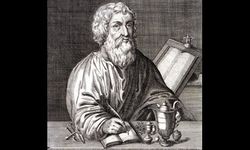 Last night I attended the prize ceremony for the inaugural Wellcome Trust book prize, awarded to “outstanding works of fiction and non-fiction on the theme of health, illness or medicine”. I was attracted by its slightly barmy mixing of literary disciplines. And I was impressed by the calibre of the judges, among whom were Jo Brand (chair, and 10 years a psychiatric nurse) and Raymond Tallis, one of the few people whose writing clarifies, rather than further muddles, my understanding of neuroscience.
The shortlist, which can be viewed in full here, comprised two novels and four non-fiction books ranging between autobiography, investigative journalism and biographical essays. The winning book, Keeper, Andrea Gillies' memoir of caring for a relative with Alzheimer's, hasn't received a single review since its publication in May – something this award will, one hopes, remedy.
Speaking with Brand and Tallis before the ceremony, I wondered which books they thought best demonstrated the qualities they were looking for. Interestingly enough, they both chose novels. Brand described Ken Kesey's One Flew Over the Cuckoo's Nest as being about “a very specific time in American history, when psychiatry was very unsophisticated and nurses were really no more than prison warders”. Tallis opted for Mann's The Magic Mountain, which “brilliantly fictionalises medicine, the thrill of science, and the mystery of the human body.”
The prize's website plays a similar game, suggesting García Márquez's Love in the Time of Cholera, Oliver Sacks's The Man Who Mistook His Wife for a Hat and Ian McEwan's Saturday as likely nominees from the past. But the possibility exists, of course, to reach back much further in the literary record than this. Illness, certainly, was present at the birth of western literature: just think of Apollo, angered by Agamemnon's insulting of the priest Chryses, sending a plague to ravage the Greek army in the Iliad. Medicine is present, too, albeit in primitive form: the many wounds Homer describes are anatomically accurate, while Machaon's herbal remedies and palliative care are doctoring of a sort.
More here. (For Dr. Alvan Ikoku who is sure to win this prize in the future.)
From Nature:
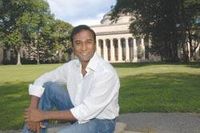 The first appointment in a scheme to recruit expatriate scientists to senior positions in the Council of Scientific and Industrial Research (CSIR) — India's largest science agency — seems to have misfired badly. A US scientist of Indian origin has been dismissed just five months after he was offered the position of 'outstanding scientist' and tasked with helping to commercialize technologies developed at CSIR institutes. Shiva Ayyadurai, an entrepreneur inventor and Fulbright Scholar with four degrees from the Massachusetts Institute of Technology in Cambridge, was the first scientist to be appointed under the CSIR scheme to recruit about 30 scientists and technologists of Indian origin (STIOs) into researcher leadership roles. “The offer was withdrawn as he did not accept the terms and conditions and demanded unreasonable compensation,” Samir Brahmachari, director general of the CSIR, told Nature.
Ayyadurai denies this. In a 30 October letter to Prime Minister Manmohan Singh, who is also president of the CSIR, he claims that he was sacked for sending senior CSIR scientists a report that was critical of the agency's leadership and organization. The report, published on 19 October, was authored by Ayyadurai and colleague Deepak Sardana, who joined the CSIR as a consultant in January. Ayyadurai says that the report — which was not commissioned by the CSIR — was intended to elicit feedback about the institutional barriers to technology commercialization. “Our interaction with CSIR scientists revealed that they work in a medieval, feudal environment,” says Ayyadurai. “Our report said the system required a major overhaul because innovation cannot take place in this environment.”
More here.
Tuesday, November 10, 2009

We now have everything in place to convert two texts into a game of chess: we simply feed the program the two novels, asking it to play one text as “white” and the other as “black”; the program searches through the white text until it finds the first tuple corresponding to a movable piece (in the case of an opening move, either a pawn or a knight), and then, having settled on the piece that will open, continues searching through the text until it encounters a tuple designating a square to which that piece can be moved. When it has done so, the computer executes that move for white, and then goes to the other text to find, in the same way, an opening move for black. And so it goes: white, black, white, black, until—quite by accident, of course, since we must suppose that the novels know nothing of chess strategy (and our program cannot help them, since it knows only the rules of the game)—one king is mated. Such a set up would be close (there turn out to be interesting differences, but put that aside for now) to permitting two monkeys to play chess against each other by giving each a keyboard and permitting them to jump about on them: send the resulting string of letters to our program, and it scans this string of gobbledygook for tuples that constitute legitimate moves, makes them, and voilà, monkey chess.
more from D. Graham Burnett and W. J. Walter at Cabinet here.
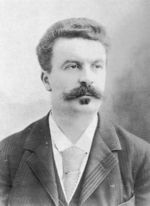
One of the great examples of literary advice-giving took place in the summer of 1878. Guy de Maupassant was on the verge of becoming famous. As Flaubert’s literary nephew, and a member of the new group calling themselves Naturalists, he was already well known in Paris; three years previously, he had made his first appearance – as ‘le petit Maupassant’ – in the Goncourt Journal, delighting a company of already famous writers with a long story about Swinburne’s decadent behaviour in Etretat. He had written poems, stories and journalism, coauthored a lewd play, and was working on his first novel, Une Vie. He was socially and sexually successful, and physically very fit: the previous summer, having bought a small boat on Zola’s behalf, he had rowed it the 50 kilometres from Bezons to Zola’s house at Médan. Yet on 3 August, two days before his 28th birthday, he made the following complaints to Flaubert about life: ‘Fucking women is as monotonous as listening to male wit. I find that the news in the papers is always the same, that the vices are trivial, and that there aren’t enough different ways to compose a sentence.’
more from Julian Barnes at the LRB here.
Rain
A teacher asked Paul
what he would remember
from third grade, and he sat
a long time before writing
“this year somebody tutched me
on the sholder”
and turned his paper in.
Later she showed it to me
as an example of her wasted life.
The words he wrote were large
as houses in a landscape.
He wanted to go inside them
and live, he could fill in
the windows of “o” and “d”
and be safe while outside
birds building nests in drainpipes
knew nothing of the coming rain.
by Naomi Shihab Nye
from New American Poets of the 90s;
David Godine, Publisher, 1991
Marina Warner in The Liberal:
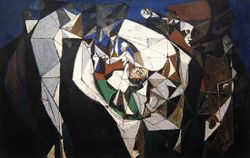 WRITERS don’t make up myths; they take them over and recast them. Even Homer was telling stories that his audience already knew. If some individuals present weren’t acquainted with Odysseus’s wanderings or the Trojan War, and were listening in for the first time (as I was when a child, enthralled by the gods and goddesses in H.A. Guerber’s classic retelling), they were still aware that this was a common inheritance that belonged to everyone. Its single author – if Homer was one at all – acted as a conduit of collective knowledge, picking up the thread and telling it anew.
In an inspired essay on ‘The Translators of The Arabian Nights’, Jorge Luis Borges praises the murmuring exchanges of writers across time and cultures, and points out that the more literature talks to other literatures, and reweaves the figures in the carpet, the richer languages and expression, metaphors and stories become. Borges wasn’t a believer in anything – not even magic – but he couldn’t do without the fantastic and the mythological. He compiled a wonderfully quixotic and useful bestiary, The Book of Imaginary Beings, to include the fauna of world literature: chimeras and dragons, mermaids and the head-lolling catoblepas whose misfortune is to scorch the earth on which he tries to graze with his pestilential breath. But Borges also included some of his own inventions – The Creatures who Live in Mirrors, for example, a marvelous twist on the idea of the ghostly double.
Borges liked myth because he believed in the principle of ‘reasoned imagination’: that knowing old stories, and retrieving and reworking them, brought about illumination in a different way from rational inquiry. Myths aren’t lies or delusions: as Hippolyta the Amazon queen responds to Theseus’ disparaging remarks about enchantment: ‘But all the story of the night told o’er, / And all their minds transfigured so together, / More witnesseth than fancy’s images / And grows to something of great constancy’ (A Midsummer Night’s Dream, V.i.24-7). One of Borges’s famous stories, ‘The Circular Ruins’, unfolds a pitch-perfect fable of riddling existence in the twentieth century: a magician dreams a child into being, and then discovers, as he walks unscathed through fire in the closing lines of the tale, that he himself has been dreamed.
More here.
From The New York Times:
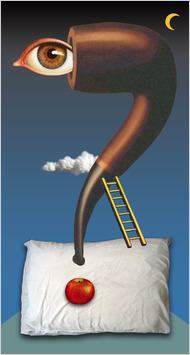 It’s snowing heavily, and everyone in the backyard is in a swimsuit, at some kind of party: Mom, Dad, the high school principal, there’s even an ex-girlfriend. And is that Elvis, over by the piñata?
Uh-oh.
Dreams are so rich and have such an authentic feeling that scientists have long assumed they must have a crucial psychological purpose. To Freud, dreaming provided a playground for the unconscious mind; to Jung, it was a stage where the psyche’s archetypes acted out primal themes. Newer theories hold that dreams help the brain to consolidate emotional memories or to work though current problems, like divorce and work frustrations. Yet what if the primary purpose of dreaming isn’t psychological at all?
In a paper published last month in the journal Nature Reviews Neuroscience, Dr. J. Allan Hobson, a psychiatrist and longtime sleep researcher at Harvard, argues that the main function of rapid-eye-movement sleep, or REM, when most dreaming occurs, is physiological. The brain is warming its circuits, anticipating the sights and sounds and emotions of waking. “It helps explain a lot of things, like why people forget so many dreams,” Dr. Hobson said in an interview. “It’s like jogging; the body doesn’t remember every step, but it knows it has exercised. It has been tuned up. It’s the same idea here: dreams are tuning the mind for conscious awareness.”
More here.
Monday, November 9, 2009
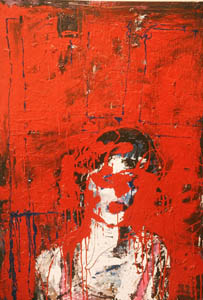
Katarzyna Gajewska. Against What? 2005
Mixed media on board.
More here, here and here.
Sunday, November 8, 2009
Stefany Anne Golberg in the Washington Post:
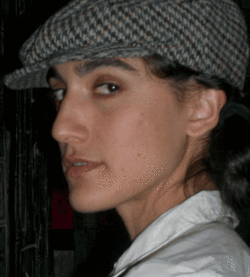 Pawn shops thrive in the United States. They are the country's original institutions of consumer credit, offering quick cash (sale or loan) for goods. Giant retailers such as EZPAWN and Cash America offer a Costco-like setting. Since the economy soured and bank loans dried up, Americans are becoming increasingly reacquainted with such stores. Pawn America, a chain in the Midwest, reported a 15 to 20 percent increase in revenue in 2008.
Offering a window into this world is “Pawn Stars,” whose viewers watch the amusing ins and outs of pawn shop life and learn about the business. The show is pulling record ratings for the History Channel. In one clip, proprietor Rick Harrison boasts about a 2001 Super Bowl ring once owned by a player he doesn't name with a story he doesn't remember. We learn instead how Super Bowl rings are made and how their worth is determined. In another clip, Harrison shows off two anonymous Olympic bronze medals, explaining that their value is determined by how, where and when they were won.
But why are Gold & Silver's customers pawning their most cherished belongings?
More here.
Water be a String to my Guitar
Water, be a string to my guitar. The new conquerors have arrived
and the old ones have gone. It’s difficult to remember my face
in mirrors. Be my memory that I may see what I lost…
Who am I after this exodus? I have a rock
that carries my name over hills that overlook what has come
and gone…seven hundred years guide my funeral behind the city walls…
and in vain time circles to save my past from a moment
that gives birth to the history of exile in me…and in others…
Water, be a string to my guitar, the new conquerors have arrived
and the old ones have gone south as nations who renovate their days
in the rubble of transformation: I know who I was yesterday, so what
will I become tomorrow under the Atlantic banners of Columbus? Be a string,
water, be a string to my guitar. There is no Egypt in Egypt, no
Fez in Fez, and Syria is distant. And no hawk
in my kin’s banner, no river east of the palm trees besieged
by quick Mongol horses. In which Andalus will I end? Right here
or over there? I will know that I perished here and left my best
behind me: my past. Nothing remains for me except my guitar,
O water, be a string to my guitar. The conquerors have gone
and the conquerors have come…
Mahmoud Darwish
translation: Fady Joudah
excerpted from If I Were Another;
Farrar, Straus, and Grioux, 2009
From The Washington Post:
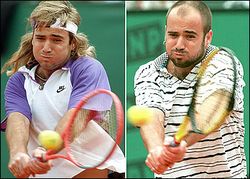 Agassi was born in Las Vegas to a brutal Iranian immigrant, a former Olympic boxer, who forced his four children to play tennis. As a pre-schooler, Andre began hitting balls on the backyard court for hours every day. School, friends, social life and especially thinking were considered distractions by his father, who terrified the entire family. But while his sisters rebelled and his older brother, Philly, finally lacked the killer instinct, Andre became his father's obsession and whipping boy — one who was expected to whip other boys and unsuspecting men on court. His father pitted him at age 8 against suckers, including football great Jim Brown, who foolishly bet $500 that he could beat the kid. Before junior tournaments, Mr. Agassi fed his son caffeine-laced pills. Later, he tried to turn Andre on to speed.
At the age of 12, Andre traveled to Australia with a team of elite young players. For each tournament he won, he got a beer as a reward. Then in the seventh grade he was shipped off to the Bollettieri Academy in Florida, where his tennis flourished, but his life turned feral. Drinking hard liquor and smoking dope, he wore an earring, eyeliner and a Mohawk. Nobody objected as long as he won matches. The academy, in Agassi's words, was “Lord of the Flies with forehands.” Since the press and the tennis community still regard Nick Bollettieri as a seer and an innovator whose academy spawned dozens of similar training facilities, Agassi's critical opinion of him may shock the ill-informed. But in fact, Bollettieri is the paradigmatic tennis coach: that is, a man of no particular aptitude or experience and no training at all to deal with children.
More here.
James Crabtree in Prospect Magazine:
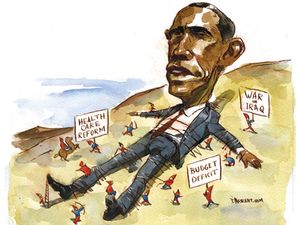 One year on from his election victory, how should we judge President Barack Obama? He has passed a $787bn (£500bn) stimulus package and a $3.4 trillion budget, bailed out America’s floundering car makers, and launched landmark legislation to reform healthcare, tighten regulation on a crippled financial sector, and cut greenhouse gases. Against a backdrop of economic chaos and partisan division, and especially if some form of health reform passes by the end of the year, Obama’s early record will look impressive. It’s been a good start.
That said, a president who promised unity has also brought discord. The saner wings of the American right (and some Democrats) worry that his moderate tone hides policies that dangerously expand the grip of the state, and the depth of its debt. The less sane gather in the streets and howl about the road to socialism. Critics on the left, meanwhile, already see a once-in-a-generation missed opportunity. Obama has a thumping electoral mandate, and control of congress. Yet he stimulated the economy too little, and fluffed a perfect moment to bring in radical measures to take on America’s banks and health insurers. Behind these worries, doubts lurk about what the president stands for, and whether the “Obama-ism” implicit in his campaign can translate into governance. Put more simply: has Obama begun to change Washington, or has Washington begun to change him?
More here.
Saturday, November 7, 2009
Lawrence Wright in The New Yorker:
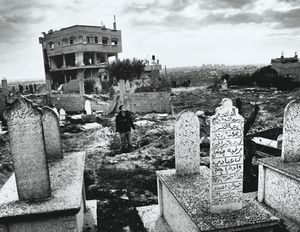 In southwest Israel, at the border of Egypt and the Gaza Strip, there is a small crossing station not far from a kibbutz named Kerem Shalom. A guard tower looms over the flat, scrubby buffer zone. Gaza never extends more than seven miles wide, and the guards in the tower can see the Mediterranean Sea, to the north. The main street in Gaza, Salah El-Deen Road, runs along the entire twenty-five-mile span of the territory, and on a clear night the guards can watch a car make the slow journey from the ruins of the Yasir Arafat International Airport, near the Egyptian border, toward the lights of Gaza City, on the Strip’s northeastern side. Observation balloons hover just outside Gaza, and pilotless drones freely cross its airspace. Israeli patrols tightly enforce a three-mile limit in the Mediterranean and fire on boats that approach the line. Between the sea and the security fence that surrounds the hundred and forty square miles of Gaza live a million and a half Palestinians.
Every opportunity for peace in the Middle East has been led to slaughter, and at this isolated desert crossing, on June 25, 2006, another moment of promise culminated in bloodshed. The year had begun with tumult. That January, Hamas, which the U.S. government considers a terrorist group, won Palestine’s parliamentary elections, defeating the more moderate Fatah Party. Both parties sent armed partisans into the streets, and Gaza verged on civil war. Then, on June 9th, a tentative truce between Hamas and Israel ended after an explosion on a beach near Gaza City, apparently caused by an Israeli artillery shell, killed seven members of a Palestinian family, who were picnicking. (The Israelis deny responsibility.) Hamas fired fifteen rockets into Israel the next day. The Israelis then launched air strikes into Gaza for several days, killing eight militants and fourteen civilians, including five children.
More here.
From The New York Times:
 Who would not wish for a close relative like Aunt Jane? In early 1817, the year she died, suffering, perhaps, from lymphoma and beginning work on a novel she became too ill to finish, Jane Austen wrote a letter to her 8-year-old niece, Cassandra.
“Ym raed Yssac,” it begins, “I hsiw uoy a yppah wen raey.”
Every word in the letter is spelled backward, from that opening New Year’s wish to her dear Cassy to the signature, “Ruoy Etanoitceffa Tnua, Enaj Netsua.” The author, here as elsewhere, does not condescend to her readers, but she also knows who they are and how to give them pleasure. Imagine an 8-year-old girl, perhaps as precocious as her aunt, playfully deciphering these good wishes. The difficulty comes, though, in imagining Austen herself. She was such a subtle reader of her characters’ manners, so knowing about their flaws and virtues, yet herself so opaque and mysterious a presence that it is hard to imagine her in the flesh. You have to read her the way her most sentient characters read their companions, attending to subtle signs, mannerisms and language.
And for anyone who has even begun to take her measure, there may be no greater pleasure than to visit the new exhibition at the Morgan Library & Museum, “A Woman’s Wit: Jane Austen’s Life and Legacy.” Like Austen’s own voice, the show is exquisitely informative while being almost laconic, displaying a wealth of material with careful explication, yet allowing the viewer to tease the writer’s sensibility out of the objects on display. The only thing out of character is a self-conscious, 16-minute documentary, “The Divine Jane,” created for the show, in which contemporary figures speak about Austen’s importance — though little that Cornel West, Fran Lebowitz or Colm Toibin have to say comes close to what the documents communicate on their own.
More here.
We make fun of Nostradamus and numerologists, but give editors an anniversary and the floodgates open. We’re anniversary-ologists, as USA Today might say. Unfortunately, trying to take the pulse of what happened in Eastern Europe in 1989 is more complex than counting back the years. Just as 1865 or 1945 can’t be explained without 1787 or 1933, so 1989 — the year communism either imploded or didn’t, the world either changed or didn’t and history either ended or kept going — poses challenges. One can take the “I was there” approach of Michael Meyer, Newsweek’s bureau chief for Germany, Central Europe and the Balkans between 1988 and 1992, in his book “The Year That Changed the World: The Untold Story Behind the Fall of the Berlin Wall.” Meyer places the spotlight on what happened — Hungary’s opening of its borders, the Nov. 9 fall of the Berlin Wall, the domino decline of other Eastern European states — while lacing in accessibly deep, if not Hegelian, historical explanation. Another tack is the “if you knew what I know” analysis offered in Princeton historian Stephen Kotkin’s “Uncivil Society: 1989 and the Implosion of the Communist Establishment,” which frames the story as badly told rather than untold: a fantasy of people power sweeping Europe that’s better dissected nation-by-nation, with insight into doomed governments and failed systems.
more from Carlin Romano at the LA Times here.
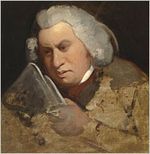
Johnson loved literary biography and practiced it superbly in his wonderful “Lives of the Poets” (1779-81). It is appropriate that he continues to be the subject of valuable literary biographies, of which the masterwork will always be his friend James Boswell’s “Life of Samuel Johnson” (1791). Boswell’s “Life” is so strong a book that common readers may wonder why more biographies of Johnson proliferate, to which the answer is the spiritual complexity and intellectual splendor of the most eminent of all literary critics. “Reflection” was one of Johnson’s favorite terms, and we need as many accurate reflections of and upon him that we can get. Johnson’s personality was worthy of Shakespearean representation: sometimes I rub my eyes to dispel the illusion that Shakespeare wrote, not Johnson’s work, but the man himself into existence. It delighted Johnson to identify himself with Falstaff, whose deliberate merriment he loved, even as he expressed moral disapproval of Shakespeare’s “compound of sense and vice; of sense which may be admired but not esteemed, of vice which may be despised, but hardly detested.” Thinking of his own dangerous melancholy, Johnson observed that Falstaff made himself necessary to Prince Hal “by the most pleasing of all qualities, perpetual gaiety, by an unfailing power of exciting laughter.”
more from Harold Bloom at the NYT here.
