3QD friend, Hadi Ghaemi of the International Campaign for Human Rights in Iran, over at PBS Frontline (via Andrew Sullivan):
More than a hundred detainees have been on trial for the past two months in what have been widely condemned by human rights organizations as “show trials” without minimal adherence to standards of due process and fair trials. The defendants are a mixture of well-known personalities, regular street protesters, and a small group who were detained before the election and accused of connections with opposition groups.
The inclusion of the latter group, arrested in April 2009, well before the June 12 election, in trials connected with post-election unrest has been somewhat of a mystery until now. The first set of death sentences was issued against this group, which includes three people accused of having communications with a small pro-Monarchist group known as Anjoman Padeshahi Iran and one person accused of making contacts with the Mojahedin-e Khalq Organization.
It appears the prosecutor intentionally threw these cases in among the post-election defendants to establish a precedent for bringing the charge of Moharebeh [“taking up arms against God”] in the mass indictments. By condemning these four defendants to death, the Judiciary has set the stage for justifying further execution sentences against ordinary protesters as well as well known politicians, journalists, and dissidents who are also on trial.
The four defendants sentenced to death are not guilty of any violent actions and their indictments clearly state that the Intelligence Ministry arrested them “before they could engage in any action.” Even under the existing laws, they could not be sentenced to death in fair trials. However, by using them as a front in a public relations ploy to justify death sentences in post-election trials, the government is pursuing two goals. First, the government is aiming to instill fear among reform-oriented Iranians, and raising the cost of participation in further protests, by signaling its power and determination to apply the death penalty at will. The second intent is to lay the groundwork for further political executions by desensitizing the broader population to state-sponsored violence.
Over at Artlog:
How do you feel about making something horrific aesthetically appealing? Do you feel conflicted in any way by making a profit off of a terrible reality
Khan: Most of my artistic practice is hardly ever about making a profit. When I make wall paintings, it feels like a non-precious act, knowing the work is living only for a certain time in a certain setting. On the other hand, making work in this vain forces the message of the work to be extremely precious in it’s limited existence. I suppose I’m using institutions and galleries as a forum for discourse. Of course there is the market, both through my gallery and through art fairs, which has helped me grow as a young artist…I don’t denounce that either; I think it’s flattering to have a collector want your artistic voice in their respective collection.
What is the experience of painting these scenes like for you? Is it therapeutic in any way? What is the process that you go through while working on your art?
Khan:Surprisingly, very therapeutic. One could go crazy thinking of all the injustice and violent acts (of all sorts, not just car bombs) taking place currently, not just in the Middle East, but all over the world. As artists, we live within this public and we are allowed to have a voice or stance. With my work, I suppose it is a way to get a sense of aggression out. My process usually starts with a conceptual idea. Then I gather reference material…often times, I shoot my own. After that, I spend most of the time in the studio working.

See here. [H/t: Jessie Morgan Owens]

Though Europe thrives, its writers and politicians are preoccupied with death. The mass killings of European civilians during the 1930s and 1940s are the reference of today’s confused discussions of memory, and the touchstone of whatever common ethics Europeans may share. The bureaucracies of Nazi Germany and the Soviet Union turned individual lives into mass death, particular humans into quotas of those to be killed. The Soviets hid their mass shootings in dark woods and falsified the records of regions in which they had starved people to death; the Germans had slave labourers dig up the bodies of their Jewish victims and burn them on giant grates. Historians must, as best we can, cast light into these shadows and account for these people. This we have not done. Auschwitz, generally taken to be an adequate or even a final symbol of the evil of mass killing, is in fact only the beginning of knowledge, a hint of the true reckoning with the past still to come. The very reasons that we know something about Auschwitz warp our understanding of the Holocaust: we know about Auschwitz because there were survivors, and there were survivors because Auschwitz was a labour camp as well as a death factory.
more from Timothy Snyder at Eurozine here.

But soon he discovered one of those newfangled iPhone applications, entitled Brushes, which allows the user digitally to smear, or draw, or fingerpaint (it’s not yet entirely clear what the proper verb should be for this novel activity), to create highly sophisticated full-color images directly on the device’s screen, and then to archive or send them out by e-mail. Essentially, the Brushes application gives the user a full color-wheel spectrum, from which he can choose a specific color. He can then modify that color’s hue along a range of darker to lighter, and go on to fill in the entire backdrop of the screen in that color, or else fashion subsequent brushstrokes, variously narrower or thicker, and more or less transparent, according to need, by dragging his finger across the screen, progressively layering the emerging image with as many such daubings as he desires.[2] Over the past six months, Hockney has fashioned literally hundreds, probably over a thousand, such images, often sending out four or five a day to a group of about a dozen friends, and not really caring what happens to them after that. (He assumes the friends pass them along through the digital ether.) These are, mind you, not second-generation digital copies of images that exist in some other medium: their digital expression constitutes the sole (albeit multiple) original of the image.
more from Lawrence Weschler at the NYRB here.

Fame came early to Charles Dickens, and friends and enemies alike recorded their memories and hoarded his letters, so that we now have one of the richest and most alluring of literary archives to mine. Most of his manuscripts and proofs survive, as do more than 15,000 letters, many of incomparable wit and vivacity. We know the games Dickens played as a boy, what he wore (bright colours, flashy waistcoats), what he liked to drink (the cellar-book survives), the cases he reported as a young lawyer’s clerk, the names of his father’s creditors and the books he read at the British Museum Reading Room. In later life, he couldn’t buy a pair of silk stockings in Hull without the fact being recorded for posterity and scholars deducing whose legs they were intended for.
more from John Bowen at the TLS here.
From The Guardian:
Life in the Wild is an exploration of the extraordinary diversity of the animal kingdom through photographic portraits of mammals, birds, reptiles, fish and invertebrates. It features the work of Thomas Marent, who has devoted his life to capturing the beauty of the natural world, and the acclaimed team of underwater cameramen, Scubazoo, who have filmed for the BBC, National Geographic and Animal Planet
Leafy sea dragon
The leafy sea dragon (Phycoduras eques) is a rare and stunning animal named after the leaf-like projections that cover its body. This remarkable camouflage means it has no natural enemies – except man. It has a long, pipe-like snout for feeding, primarily eating crustaceans, including plankton and mysids. However, although it will also eat shrimp and other small fish, it has no teeth, which is rare among animals with this diet. Leafy seadragons are found only in the waters of Australia from the southern to the western shoreline.
Peruvian grasshopper
Acrid chemicals in the body of this Peruvian grasshopper (Aplatacris colorata) act as a defence against insect-eating predators. The grasshopper's vivid pattern of warning colours advertises the fact that it has a noxious taste and, since most of its enemies are birds that hunt by sight, the warning is very effective. Any bird that tries to eat one of these grasshoppers is unlikely to make the same mistake twice. The concentrated toxins in the insect's body are made from chemicals in its food plants.
More here.
Carlo Strenger in The Guardian:
For some reasons it seems to be anathema to say that there might be an intrinsic reason for the correlation between educational level and the rejection of religion: atheism takes training, and is more difficult. We accept that in medicine, physics and mathematics, but, for reasons of political correctness, it is very much considered a faux pas to say the old 19th-century thing: it takes education to develop a worldview based on science. It would be even more outrageous to say that the reasons for choosing atheism over religion might actually be valid, as the so-called new atheists have dared to claim. It seems that it has become something of a class-thing (not necessarily socio-economic, but of belonging to the politically-correct elite) to bash Dawkins, Dennett and Hitchens.
Let's look at some facts and arguments, then. According to the Pew survey, 85% of humanity is religious in some way, and that's probably a low estimate, since nobody knows the true figures about China. This doesn't mean that religion is true (it can't, because religions contradict each other), but that there are strong cognitive and motivational factors that give religions an evolutionary advantage in the market of ideas. A scientific worldview is cognitively and emotionally more difficult, and hence at a disadvantage.
More here. [Thanks to Nikolai Nikola.]
From Scientific American:
For decades the cell nucleus has been a black box of biology—scientists have understood little about its structure or the way it operates. But thanks in part to new visualization technologies, biologists have recently begun probing the architecture of the nucleus in real time. And they are discovering that this architecture appears to change as we age or fall ill or as our needs shift. In fact, the structure of nuclear components—chromosomes, RNA, protein complexes and other small bodies—could be as biologically important as the components themselves.
…Chromosomes position themselves carefully relative to one another, too. Mouse olfactory cells contain the genes for 1,300 types of smell receptors, but only one of the genes turns on in each cell. In a 2006 paper researchers used fluorescent tags to show that a receptor gene becomes expressed only if it comes into physical contact with a specific part of chromosome 14. The idea is that “these two chromosomes come together in three-dimensional space, they kiss, and that’s how you get your regulation” of genetic activity, Misteli says. Chromosome “kissing” also appears to play a role in determining which X chromosome gets turned off in female cells, because only one copy is usually active.
More here.
Sean Carroll responds to this NYT article, which I posted a couple of days ago, in Cosmic Variance:
A recent essay in the New York Times by Dennis Overbye has managed to attract quite a bit of attention around the internets — most of it not very positive. It concerns a recent paper by Holger Nielsen and Masao Ninomiya (and some earlier work) discussing a seemingly crazy-sounding proposal — that we should randomly choose a card from a million-card deck and, on the basis of which card we get, decide whether to go forward with the Large Hadron Collider. Responses have ranged from eye-rolling and heavy sighs to cries of outrage, clutching at pearls, and grim warnings that the postmodernists have finally infiltrated the scientific/journalistic establishment, this could be the straw that breaks the back of the Enlightenment camel, and worse.
Since I am quoted (in a rather non-committal way) in the essay, it’s my responsibility to dig into the papers and report back. And my message is: relax! Western civilization will survive. The theory is undeniably crazy — but not crackpot, which is a distinction worth drawing. And an occasional fun essay about speculative science in the Times is not going to send us back to the Dark Ages, or even rank among the top ten thousand dangers along those lines.
More here.
Wednesday, October 14, 2009

You’ll have heard how the city once ended in fire, and around these parts, it threatens to end in ice every few years or so. But once, not too long ago, Chicago flirted with ending in water, an entirely preventable man-made inundation that few saw but everybody felt – a two-billion-dollar sucker-punch tsunami that weighed in among the dozenmost costly floods in American history. The groundwork for the Great Flood of 1992 was laid a century before, when the Illinois (later Chicago)Tunnel Company built a series of semi-official, semi-clandestine tunnels under almost every street downtown. The tunnels were only supposed to house telephone cables, but in a nice Pynchonian twist, the operators covertly decided to install a narrow-gauge railway for delivering freight, as well. The dirt hauled out of the tunnels filled in the lakefront and formed all the land now under Grant Park, the Field Museum, Soldier Field and McCormick Place. You’d think that amount of landfill ought to have tipped off more than a few officials that something besides phone cables was going in underground.
more from Richard Powers at Granta here.

In the Living Hall of the Frick Collection, on either side of a fireplace, there are portraits by Hans Holbein of the two most illustrious politicians of the court of Henry VIII. On the left is Sir Thomas More, Henry’s lord chancellor from 1529 to 1532, who, when the King needed an annulment of his marriage, and therefore a release from the duty of obedience to the Pope, was too good a Catholic to agree to this. For his refusal, he forfeited his office and, eventually, his life. Holbein’s portrait shows him thin and sensitive, with his eyes cast upward, as if awaiting the sainthood that the Church finally bestowed on him, in 1935. On the right side hangs Holbein’s portrait of Thomas Cromwell, the minister who did for Henry what More wouldn’t. He wrote the laws making the King, not the Pope, the head of the English Church, and declaring the English monasteries, with all their wealth, the property of the Crown. To achieve these epochal changes, he had to impose his will on many people, and that is clear in Holbein’s painting. Cromwell is hard and heavy and dressed all in black. His mean little eyes peer forward, as if he were deciding whom to pillory, whom to send to the Tower.
more from Joan Acocella at The New Yorker here.

The story of how a map of the world helped Copernicus to rethink the universe is rarely told. But the connection tells us something important about how great ideas are born. To understand it, we need to recall that medieval scholars didn’t consider geography and astronomy to be distinct disciplines. Instead, they considered them parts of a single field called cosmography – the study of the known world and its place in the cosmos. One of the field’s guiding principles went something like this: Looking down, we see up; looking up, we see down. By carefully studying the earth, cosmographers believed they could learn about the heavens, and by carefully studying the heavens they believed they could learn about the earth. Copernicus himself was a cosmographer, and shared this view. We remember Copernicus as one of the first great thinkers of the modern scientific era, but he inhabited a profoundly medieval thought-world – a world in which astrology and alchemy commanded as much attention as geography and astronomy. For all its obvious and sometimes laughable shortcomings, the medieval approach to learning was far more integrated than our own, and it allowed Copernicus to think on a truly grand scale. From a cosmic vantage point he looked down, at a map, and what he saw made the skies open up.
more from Toby Lester at the Boston Globe here.
“Love I sing, I say love”
–Meir Wieseltier
Liturgical Poem
Let’s pretend that the war here was made of love
An oppressed enemy swept away by love
A mutual, one-sided occupation of love
Bustling settlements swarming with love
The eyes of preachers in mosques bellowing love
In refugee camps, walls stained with slogans of love
The news every hour, sugared announcements dripping love
Roadblocks with barbed wires in the name of love
Terrorists infiltrating shopping malls buckled with love
Coexistence, a hollow word, an abandoned tank made of love.
by Shai Dotan
translation: Ohad Stadler
from On the Verge; Publisher: Am Oved,
Tel Aviv, 2005
From The Telegraph:
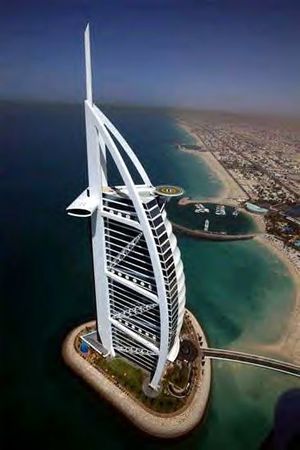
Dubai’s wealth came quickly, and it got a little carried away: artificial islands, gaudy hotels and pointy skyscrapers, spectacular or tasteless as they are, according to your viewpoint. But at first, wealth brought amenities we take for granted: running water, electricity, roads. Dubai’s first electric lights were hooked up in the Sixties. It put in taps and telephones around the same time. When the Emir of Qatar married a Dubai princess, the dowry was to pay for the city’s first tarmac road; a year later, he paid for a bridge connecting the emirate’s two halves. He probably felt sorry for his backward neighbour, which had just been taken over by his eccentric new father-in-law, Sheikh Rashid bin Saeed al-Maktoum. The sheikh’s eccentricity was shown in his determination that though he had seen nothing of the world, the world ought to know all about Dubai. He wanted the city’s name to be on everyone’s lips and he has certainly had his way.
In the late Forties, Dubai had suffered an extended famine in which people had eaten locusts, leaves and lizards in order to survive. Yet within a few years, Sheikh Rashid had ordered the Middle East’s biggest port, its tallest skyscraper and its largest airport. The rest is – well, not quite history because we can’t be sure how it will all turn out. By the time Sheikh Rashid died in 1991, Dubai was a commercial powerhouse, its port the most important in the Middle East. His successor, Sheikh Mohammed, extended his father’s methods, demanding ever more fantastical – some might say fanatical – monuments.
More here.
From Science:
In early 2007, a 28-year-old Japanese woman gave birth to a girl. Thirty-six days later, the mother was hospitalized with vaginal bleeding, which became uncontrollable. Doctors diagnosed leukemia, and she soon died. The baby developed normally until age 11 months, when a huge tumor appeared in her cheek. A biopsy determined the cancer was not sarcoma–a cancer of certain connective tissues–but a leukemic tumor somehow trapped in the child's cheek. The doctors alerted cell biologist Mel Greaves of the Institute of Cancer Research in Sutton Surrey, United Kingdom, who studies transmissible cancers. Scientists had suspected mother-to-fetus cancer in other cases with strong circumstantial evidence (especially with leukemia and melanoma, which both metastasize readily). But no one had done genetic tests to prove the cancer had grown from a single source and wasn't just an unfortunate coincidence.
In their investigation, Greaves and colleagues discovered incipient cancer cells in routine blood samples taken from the child at birth, strongly suggesting that the transmission happened in utero. They also examined a DNA sequence unique in each case of leukemia, the BCR-ABL1 sequence. It was identical in mother and daughter. Finally, tests showed the child's cancer cells were almost all maternal cells, with no genetic material from the father. This indicated that the transmission path was mother to fetus, not the reverse.
More here.
Malcolm Gladwell in The New Yorker:
Mike Webster, the longtime Pittsburgh Steeler and one of the greatest players in N.F.L. history, ended his life a recluse, sleeping on the floor of the Pittsburgh Amtrak station. Another former Pittsburgh Steeler, Terry Long, drifted into chaos and killed himself four years ago by drinking antifreeze. Andre Waters, a former defensive back for the Philadelphia Eagles, sank into depression and pleaded with his girlfriend—“I need help, somebody help me”—before shooting himself in the head. There were men with aching knees and backs and hands, from all those years of playing football. But their real problem was with their heads, the one part of their body that got hit over and over again.
More here. [Thanks to Kris Kotarski.]
Electrons dance to a quantum beat in the Hubbard model of solid-state physics.
Brian Hayes in American Scientist:
Mathematical models and computer simulations usually begin as aids to understanding, introduced when some aspect of natural science proves too knotty for direct analysis. Facing an intractable problem, we strip away all the messy details of the real world and build a toy universe, one simple enough that we can hope to master it. Often, though, even the dumbed-down model defies exact solution or accurate computation. Then the model itself becomes an object of scientific inquiry—a puzzle to be solved.
A good example is the Ising model in solid-state physics, which attempts to explain the nature of magnetism in materials such as iron. (I wrote about the Ising model in an earlier Computing Science column; see “The World in a Spin,” September–October 2000.) The Ising model glosses over all the intricacies of atomic structure, representing a magnet as a simple array of electron “spins” on a plain, gridlike lattice. Even in this abstract form, however, the model presents serious challenges. Only a two-dimensional version has been solved exactly; for the three- dimensional model, getting accurate results requires both algorithmic sophistication and major computer power.
More here.