Professor Video

From Harvard Magazine:

1109_p34_01 Near the University of Bologna—the world’s oldest, founded in 1088—is a medieval museum displaying carved memorial plaques that honor great professors of the past. “They all show the professor on the podium, with the students below,” says Thomas Forrest Kelly, Knafel professor of music. “Often the students are asleep, playing dice or cards, or fornicating.” Much has changed since the Middle Ages, but one thing that persists is the lecture. The medieval university invented lecturing—the word comes from the Latin verb legere, to read—to cope with the scarcity of books: a lecturer would read the only available copy of a book to the gathering of students. “That was high technology in the thirteenth century,” says Kelly, “but not high technology for the twenty-first century!”

Now sit in one of Kelly’s lectures in his undergraduate course Literature and the Arts B-51, “First Nights: Five Performance Premieres” (see “First Nights,” January-February 2000, page 52). This morning in Sanders Theatre, he is describing the 1913 Paris premiere of Igor Stravinsky’s ballet The Rite of Spring. He does not read from books. Instead, Kelly punches up audio recordings of Stravinsky reflecting on the tumultuous performance, and projects color slides of oil paintings and photographs of the composer, plus photographs of the dancers and conductor Pierre Monteux. Next come pictures of the ballet’s score and the original costumes, plus paintings by Nicholas Roerich, the set designer. There’s another audio track of Stravinsky, this time disparaging the work of the choreographer, Vaslav Nijinsky, and a modern video of the opening dance performed by the Joffrey Ballet. Next, as the Rite’s primal rhythms and fierce dissonances thump and cascade through the loudspeakers, Kelly breaks down the piece into its musical units, walking the class through the score with a flashlight pointer.

More here.
Firing Bullets of Data at Cozy Anti-Science

Janet Maslin in The New York Times:

ArticleInline “I always say that electricity is a fantastic invention,” the British economist Michael Lipton once told Michael Specter, whose bristling new book, “Denialism,” explores the dangerous ways in which scientific progress can be misunderstood. “But if the first two products had been the electric chair and the cattle prod,” Mr. Lipton continued, “I doubt that most consumers would have seen the point.” Here is what they would have done instead, if Mr. Specter, a staff writer for The New Yorker and former foreign correspondent for The New York Times, correctly captures the motifs that shape the stubbornly anti-scientific thinking for which his book is named: they would have denounced electricity as a force for evil, blamed its prevalence on venal utility companies, universalized the relatively rare horrific experiences of people who have been injured by electrical currents and called for a ban on electricity use.

The term “denialism,” used by Mr. Specter as an all-purpose, pop-sci buzzword, is defined by him as what happens “when an entire segment of society, often struggling with the trauma of change, turns away from reality in favor of a more comfortable lie.” In this hotly argued yet data-filled diatribe, Mr. Specter skips past some of the easiest realms of science baiting (i.e., evolution) to address more current issues, from the ethical questions raised by genome research to the furiously fought debate over the safety of childhood vaccinations.

More here.

Urs Fischer–izing

Ursfischer091109_560

Urs Fischer specializes in making jaws drop. Cutting giant holes in gallery walls, digging a crater in Gavin Brown’s gallery floor in 2007, creating amazing hyperrealist wallpaper for a group show at Tony Shafrazi: It all percolates with uncanny destructiveness, operatic uncontrollability, and barbaric sculptural power. It’s set expectations for his full-building retrospective at the New Museum incredibly high, and he’s working hard to meet them. Fischer has lowered ceilings, added lights, and closed off doors, trying to get the effects he wants in this cold, almost soulless exhibition space. So much so that the curator Massimiliano Gioni mused to one writer, “I have thought a couple of times of killing him.” Thrill seekers, be forewarned: There’s bravura work but no drop-dead moment here. Each of Fischer’s three floors is beautiful, and each has an elfin elusiveness and deep material intelligence. They also have dead spots and duds. Fischer is weakest at smaller discrete sculptures and best when he’s taking over entire spaces or reacting to other artworks nearby. (Also, at a rumored $330,000 to stage, the show is another example of an art world that doesn’t know when to say no.) Had Fischer made a swashbuckling statement by (let’s say) demolishing the museum’s second and third floors, he would have wowed everyone. Instead, thankfully, he took the hard way, putting together multiple ideas: exploring the sculptural-philosophical-experiential qualities of fullness on the fourth floor, emptiness on the third, and a mixture of both on the second floor.

more from Jerry Saltz at New York Magazine here.

Watteau you know

Watteau-italians

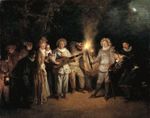
What kind of people love the paintings and drawings of Antoine Watteau? I think of them listening to Nick Drake and knowing every Alan Rudolph film. In fact, they are the present-day counterparts of the characters inhabiting Watteau’s paintings: young but already scuffed-up by life, dreamers of the exquisite woebegone. I don’t know how one can love Watteau without somehow making him one’s contemporary. For example, this premier painter of women’s necks seemed ever-present in the East Village of yore, with its hordes of women in nape-revealing punk haircuts. Watteau’s complex formula has a strong element of verité as it revels in artifice and seeps wistfulness. His sentiments, freshened by some readings on him, can seem eternally present. From what has been handed down through scraps of half-reliable information, Watteau, the son of a rather disagreeable roofer, escaped from the Flemish hinterlands, and the gritty, striving narrowness that appeared to be his inheritance, to Paris as an apprentice decorative painter. After several masters, including the theatre painter, Gillot, he made his mark among the rich intelligentsia who were ultimately only of use to him as a springboard towards creating the imaginative concoction that established him, the fête galante, a discontinuous tableau of love, flirtation and posturing. In most works, playfully-costumed aristocrats pose as actors, musicians, or themselves in the foregrounds of private parks. An elusive, complicated character himself, Watteau moved from one friend’s house to the next, often pursued by avid collectors, and died at 36 of tuberculosis.

more from Joe Fyfe at artcritical here.

sontag on Lévi-Strauss

SontagNov1974Cr

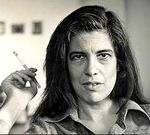
Claude Lévi-Strauss—the man who has created anthropology as a total occupation, involving a spiritual commitment like that of the creative artist or the adventurer or the psychoanalyst—is no man of letters. Most of his writings are scholarly, and he has always been associated with the academic world. Since 1960 he has held a very grand academic post, the newly created chair of social anthropology at the Collège de France, and heads a large and richly endowed research institute. But his academic eminence and ability to dispense patronage are scarcely adequate measures of the formidable position he occupies in French intellectual life today. In France, where there is more awareness of the adventure, the risk involved in intelligence, a man can be both a specialist and the subject of general and intelligent interest and controversy. Hardly a month passes in France without a major article in some serious literary journal, or an important public lecture, extolling or damning the ideas and influence of Lévi-Strauss. Apart from the tireless Sartre and the virtually silent Malraux, he must be the most interesting intellectual figure in France today.

more from Sontag’s 1963 essay in the NYRB here.

Hope for the Roma

Jo2562_thumb3George Soros and James D. Wolfensohn in Project Syndicate:

Hated, alienated, and shunned as thieves and worse, the Roma have for too long been easy and defenseless targets for disgruntled racists in Hungary, Romania, Slovakia, the Czech Republic, and other European countries.

The Roma, as a people, reaped next to nothing from the prosperity that the former East Bloc countries have enjoyed since the fall of the Berlin Wall. Nevertheless, even before the current economic downturn, right-wing political leaders in Eastern Europe resorted to Roma-bashing in order to win support on the cheap. The message of hate continues to appeal to many people, including a few who are ready to resort to violence.

In the past 14 months, nine Roma have been murdered during a killing spree in Hungary. In August, gunmen invaded the home of an impoverished Roma widow, Maria Balogh, shot her to death, and wounded her 13-year-old daughter. In April, killers gunned down a Roma factory worker as he was walking to his job. In February, a Roma father and his five-year-old son were killed in front of their home near Budapest. The house was burned to the ground.

Last November, a Roma couple was killed in northeastern Hungary. To their credit, Hungary’s police mounted an unprecedented manhunt and, in late August, arrested four suspects, including some who wore swastika tattoos. In the same month, two medical students in Romania killed and dismembered a 65-year-old Roma man and left his body in the trunk of a car.

Perhaps the rash of killings will dampen the racist rhetoric. Perhaps people will see that the underlying message being spun is one of criminal hatred, and perhaps the violence will subside. But it is safe to assume, however, that as long as the Roma are mired at the bottom of Europe’s socio-economic pecking order, it is only a matter of time before racist attacks on them begin again.

Look at the Birdie

Dave Eggers reviews a posthumous collection of stories by Kurt Vonnegut, in the New York Times Book Review:

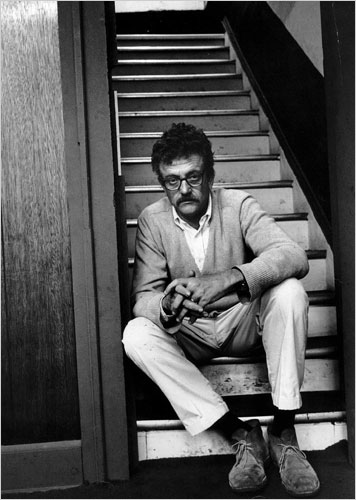
Popup It’s been two years since Kurt Vonnegut departed this world, and it’s hard not to feel a bit rudderless without him. Late in his life, Vonnegut issued a series of wonderfully exasperated columns for the magazine In These Times. During the darkest years of the Bush administration, these essays, later collected in “A Man Without a Country,” were guide and serum to anyone with a feeling that pretty much everyone had lost their minds. In a 2003 interview, when asked the softball question “How are you?” he answered: “I’m mad about being old, and I’m mad about being American. Apart from that, O.K.”

Vonnegut left the planet just about the time we, as a nation, were crawling toward the light again, so it’s tempting to wonder what he would have made of where we are now. Would he have been pleased by the election of Barack Obama? Most likely he’d have been momentarily heartened, then exasperated once again witnessing the lunatic-­strewn town halls, the Afghanistan quagmire, the triumph of volume over reason, of machinery over humanity.

For the last many decades of his life, Vonnegut was our sage and chain-­smoking truth-teller, but before that, before his trademark black humor and the cosmic scope of “Cat’s Cradle” and “Slaughterhouse-­Five,” he was a journeyman writer of tidy short fictions.

More here.

Ansel Adams in color

Richard B. Woodward in Smithsonian Magazine:

Ansel-Adams-Mono-Lake-6 Ansel Adams never made up his mind about color photography. Long before his death in 1984 at age 82, he foresaw that this “beguiling medium” might one day replace his cherished black and white. In notes tentatively dated to 1949, he observed that “color photography is rapidly becoming of major importance.”

Yet he once likened working in color to playing an out-of-tune piano. America's regnant Western landscape photographer tried to control every step of picture-making, but for much of his lifetime too many stages of the color process were out of his hands. Kodachrome—the first mass-market color film, introduced in 1935—was so complicated that even Adams, a darkroom wizard, had to rely on labs to develop it. Color printing was a crapshoot in the 1940s and '50s. Reproductions in magazines and books could be garish or out of register. Before the 1960s, black-and-white film often actually yielded subtler, less exaggerated pictures of reality.

Still, Adams' misgivings did not prevent him from taking hundreds of color transparencies.

More here.

Thursday, November 5, 2009

The Struggle Continues: An Interview with Wu Ming

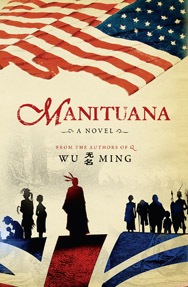
Verso-978-1-84467-342-1-manituana-smallGordon Darroch in The Herald (Scotland):

As Manituana, the latest novel by the Italian writing collective known as Wu Ming, is published, Gordon Darroch probes one of the anonymous quartet on matters of life, war, literature … and football.

If there’s one thing you can depend on from the Wu Ming foundation, it’s that nothing will be quite what it seems. The Italian writing collective has a short but distinguished tradition of confounding expectations, overturning convention and coaxing readers into viewing history on the reverse-angle replay.

Their third novel, Manituana, recounts the American war of independence from the losing side – the Six Nations of the Iroquois – and employs all the tricks and devices familiar to readers of their previous offerings, Q (written under the name Luther Blissett) and ’54: conflicting narratives, false trails, elaborate games and back-and-forth propaganda. Seasoned throughout with a neo-marxist outlook that throws up dozens more questions than it answers, it’s an enlightening, sometimes infuriating, but always invigorating read.

An interview with Wu Ming is, similarly, far from a run-of-the-mill event. Not least because it’s conducted by email, partly as a nod to the group’s distrust of old-style media manipulation, though also because Bologna to Glasgow is a much shorter distance in cyberspace.

Wu Ming’s ethos is tied in with the 20th-century pranksterist tradition of “art terrorism” and its suspicion of “old” media as being inherently shallow, duplicitous and obsessed with trivia. They refuse to be filmed or photographed by the media and identify themselves by number (there are currently four Wu Mings, known as Wu Ming 1, 2, 4 and 5, the number 3 shirt having been retired recently when a member left the band). Yet they are far from reclusive, travelling around the world to promote their books and diligently tending their website, wumingfoundation.com, where all their fiction can be downloaded for free.

Over the course of a fortnight Wu Ming 1 and I traded more than 4500 words on war, literature, cognitive reality, football and why you should never refer to the group as anarchists. Please note there are a few spoilers here – no drastic giveways, but if you don’t want to know how the War of Independence turns out, or what happens to Dread Jack, look away now.

Grime and Punishment

Bac1550e-c4f8-11de-8d54-00144feab49aJohn Thornhill in the FT:

The death of Russian literature has been declared many times. Russian poetry was supposed to have perished tragically early, interred with the body of Alexander Pushkin in 1837 following his fateful duel. Then along came Anna Akhmatova, Boris Pasternak, Osip Mandelstam and Marina Tsvetaeva, an astonishing quartet of poets who revived and reinvented the genre in an explosion of creativity in the early 20th century.

Epic Russian novels, meanwhile, were pronounced dead after Fyodor Dostoevsky and Leo Tolstoy. But in describing the brutalities of the second world war and the gulag, Vasily Grossman and Alexander Solzhenitsyn proved worthy heirs of those 19th-century masters.

Once again it has become fashionable to argue that Russian fiction is over, buried under the rubble of the former Soviet Union. Critics have decreed that no classic works of Russian literature have emerged in the past 18 years.

That may be true, but green shoots are now pushing through the fallen masonry. Four new Russian novels reveal flashes of fabulous writing, at times reminiscent of the wild imaginings of Mikhail Bulgakov, the dystopic visions of Yevgeny Zamyatin or the gentle humanity of Anton Chekhov. Russian literature has long ago left Socialist Realism panting behind – now it is striding out in the company of Capitalist Surrealism.

But modern-day Russia poses particular challenges to the fiction writer: everyday life appears so outlandish, at times, that it would be near-impossible to imagine it if it did not already exist. In a country that can elect to parliament a former KGB officer accused by the British police of murdering a British citizen by slipping radioactive poison into his tea, it must be a hard job for a fiction writer to know where reality ends and fantasy begins. Even the most mundane event can seemingly be explained only by convoluted conspiracy theory. Even the most fantastical event appears commonplace. Truth is so enmeshed in fiction that fiction has had to accelerate to outstrip it.

schiller: shakespeare plus freedom

Friedrich_schiller

In turn, part of Schiller’s anthropological realism was his recognition of fundamental “drives” or desires in Man. They were of a lesser physical denomination than Freud was to posit later, even though the subconscious and sexual drives are addressed in some of his plays, most importantly in Don Carlos. But the two main drives that Schiller identified in his theoretical writings are what he called the Stofftrieb and Formtrieb. They refer to Man’s desire to accumulate matter, “stuff”, substance, but also to the necessity to give shape to the amassed material. Again, the issue is how these drives relate to, or are compatible with, Schiller’s concept of freedom. He did not suggest that we could, or should, attempt to emancipate ourselves from those urges. Freedom means that we make use of them “freely”. We should “play” with them, for they should not govern or even overpower us. Schiller’s concern about how we can preserve our freedom in the face of conflicting interests, external pressures and expectations was echoed some 200 years later when Heinrich Böll, the 1972 Nobel Prize winner for Literature, said in his last major interview: “Every day one segment of our liberties passes away.” These concerns are today more relevant than ever. We need to be careful not to turn into captives of our ever-growing desire to increase self-protectionism. To live means to be exposed to risk. We can try to minimise it but we will never eliminate it. Fate and failure strike when we least expect them. We should remain free in the way we deal creatively with risk. The risk assessors and managers of today, who failed so blatantly prior to the recent credit crash, should read more Greek and Shakespearian tragedies, and a great deal of Schiller before they start assessing risks again. In short, we cannot afford ever to forget Schiller again, in this country or anywhere else.

more from Rüdiger Görner at Standpoint here.

Slouching Toward Sanity

Pa1293c_thumb3J. Bradford DeLong in Project Syndicate:

In America today – and in the rest of the world – economic-policy centrists are being squeezed. The Economic Policy Institute reports a poll showing that Americans overwhelmingly believe that the economic policies of the past year have greatly enriched the bankers of Midtown Manhattan and London’s Canary Wharf (they really aren’t concentrated along Wall Street or in the City of London anymore).

In America, the Republican congressional caucus is just saying no: no to short-term deficit spending to put people to work, no to supporting the banking system, and no to increased government oversight or ownership of financial entities. And the banks themselves are back to business-as-usual: anxious to block any financial-sector reform and trusting congressmen eager for campaign contributions to delay and disrupt the legislative process.

I do not claim that policy in recent years has been ideal. If I had been running things 13 months ago, the United States Treasury and Federal Reserve would have let Lehman and AIG fail – but I would have discounted their debt for cash at face value, provided that the debt also came with sufficient equity warrants. That would have preserved the functioning of the system while severely punishing the banking and shadow-banking systems’ equity holders, and today nobody would be claiming that their risk management practices were adequate and did not need reform.

If I had been running things 19 months ago, I would have nationalized Fannie Mae and Freddie Mac and for the duration of the crisis shifted monetary and financial policy from targeting the Federal Funds rate to targeting the price of mortgages.

more enduring even than Horatian bronze

514Y-sAAI8L._SS500_

For forty-five years a team of linguists, primarily led by Christian Kay at the University of Glasgow, has laboured to produce the Historical Thesaurus of the Oxford English Dictionary. It contains historically organised synonyms for almost every word in the second edition of the OED, and in addition contains the whole range of Old English words that the OED does not define (the policy of the OED is not to include words that didn’t survive into Middle English; the HTOED team wanted to include the entire history of the language). It is by far the largest thesaurus ever attempted in any language. We use a dictionary to look up a word; we will use the HTOED to look up a sense or a number of senses. It has no real precedent, and although it does at first seem daunting, with perseverance and concentration it becomes approachable; then you can see that soon it will provide support and entertainment, and soon after that it will have become an addictive companion, the two volumes stoutly flanking Shakespeare and the Bible on that shimmering desert island.

more from Elspeth Barker at Literary Review here.

faultless plasticity

Hofmannsthal_1893

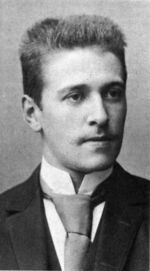
Can a bad economy make for great poetry? Hugo von Hofmannsthal thought so. Indeed, he saw his own gift for lyrical writing and reflection as being, in a way, a consequence of the stock market crash of 1873. This self-understanding starts with the fact that Hofmannsthal was conceived at the very moment of the bust. His father, a banker, got word of it soon after arriving in Naples for his honeymoon. Cutting his trip short, he hurried back to Vienna, where he was able to confirm that the family fortune, which stemmed from his silk-trading, noble “von”-earning, devoutly Jewish grandfather, had evaporated. But even harder hit, Hofmannsthal believed, was his mother. She already suffered from weak nerves; according to him, the cause was the tumultuous context of her own birth: the revolutions of 1848. When financial worries came, she dealt with them poorly. In Hofmannsthal’s view his mother’s stress imprinted itself on him in the womb. Its mark was the special sensitivity of the poet. Clearly, Hofmannsthal liked to spin myths about himself. Yet in treating his talent as a phenomenon that demanded a back story, he was merely acknowledging what was plain to see. Even Karl Kraus, who loathed Hofmannsthal and seized every opportunity to debunk him, acknowledged that Hofmannsthal was a great writer. In a fin-de-siècle Viennese literary scene famously well stocked with brilliant poets and thinkers Hofmannsthal stood out. It helped that he entered the scene so young. He was still in high school when, under the pseudonym “Loris”, he began placing essays and poems in literary journals. His precociousness as well as his virtuosity and the refinement of his observations were unrivaled.

more from Paul Reitter at the TLS here.

Tabloid Headlines Can Be Literally True But Very Misleading

John Allen Paulos in his excellent column Who's Counting at ABC News:

Tabloids_091030_mn I must admit I read tabloid headlines while in line at supermarkets.

Often the headlines and stories are true enough in a literal sense, but seriously misleading. In this regard they're not always that different from some cable or mainstream media stories.

In any case, here are five possible tabloid stories followed by five brief explanations. You might want to figure out your own explanations before reading the ones here.

Can You Spot the Misleading Headlines?

1. Thousands to Die After Swine Flu Vaccination

Many public health authorities privately fear that there will be many heart attacks among older people and miscarriages among pregnant women occurring soon after these people are inoculated with the H1N1 vaccine. In fact, they expect there to be thousands of cases of this sad combination of events. Autism activists may take this as further reason to skip not just the H1H1 vaccine, but other childhood immunizations.

2. New Birther Claims About Obama Well-Documented

A new birther group has come up with incontrovertible evidence that President Obama was, in fact, born overseas and not in the contiguous United States. The documentation this time is rock solid, and there are reports that Obama himself has privately acknowledged the group's claim.

More here.

Organic foods won’t help efforts to create a truly sustainable agriculture

Maywa Montenegro in Seed:

Fresh-vegetables When delegates from 192 nations arrive in Copenhagen in December for the UN COP15 summit, they will confront a 181-page draft negotiation text, 2,000 bracketed passages still in dispute, and just 11 days in which to come to some sort of consensus. To power them through these discussions, Denmark has promised a smorgasbord of ecologically minded fare: All water will be tap (not bottled), tea and coffee will be fair trade, and the food menu will be no less than 65 percent organic.

Though undoubtedly well-intentioned, this last provision is troubling, but not because anyone really cares about the provenance of Ban Ki-Moon’s turnip greens. Rather, it suggests a willful and dangerous ignorance about the tenuous state of global agriculture, and the prospects for feeding 9 billion people while also addressing biodiversity loss, water shortage, and, yes, climate change. Organic foods are enjoying skyrocketing popularity in the US and Europe, as are their ill-defined sidekicks, “natural,” “whole,” and “real” foods. Yet popular notions that these foods—and the agriculture that begets them—are at once better for people and for the planet turn out to be largely devoid of experimental support. Worse still, “organophilia” tends to go hand-in-hand with technophobic skepticism towards the very sorts of scientific approaches most likely to supercharge an ailing food system while leaving our planet intact.

More here.

Morgan Meis on the religion debates

This is from a couple of years ago, but I thought it worth posting anyway. From The Smart Set:

Morgan I came to the current religion debates a bored man. Started by the discussions around “intelligent design” and by the books of Dawkins, Hitchens, Dennett, and Harris (The Four Horsemen), the debate seemed to pit two irreconcilable views against one another, both vying for an empty prize. Religion, I gathered, will always have its place, as will the practices of science and rational inquiry. Perhaps one day some other arrangement, some other separation of powers, will come about, but it won’t be any time soon, and it will happen when no one is looking. It will happen on its own time, with the lazy mastodon movements of history, which lumbers and rarely sprints.

It has also often struck me in some inchoate way that while the basic tenets and practices of any specific religion aren’t terribly impressive, the intellectual dilemma of faith and faithlessness has something to it. Sure, religion has its ugly side and must strike everyone in at least one moment of clarity as being something close to crazy. But, then again, the cleverest of the religious thinkers have always admitted this, have even tried to turn it into a strength. It is hard, for instance, not to admire the way that Tertullian, the Carthaginian Christian philosopher of the second century, stood up to the fundamental absurdity of his faith and proclaimed “credo quia absurdum,” “I believe because it is absurd.” Not I believe even though it is absurd, but I believe because it is absurd. In a more modern variant, the tortured mental gymnastics that Kierkegaard goes through in his defense of the story of Abraham and Isaac goes beyond simplistic apologetics. For Kierkegaard, the story is powerful because it makes no sense from any reasonable perspective; it is utterly unthinkable that God would tell Abraham to sacrifice his son and then wait to see if he’d actually go through with it. The story is so terrible that it demands attention, and in demanding of us it gives us access to something more powerful and more true than what is generally encountered in the world of practical necessity and contingent decisions that we live in the rest of the time. It forces a decision.

More here.

Thursday Poem

A Question of Choice

I am a mountain
I laugh with those who laugh loudest
I’ve been a church
Seen them come
Of different ages, sizes, colours
Black, white, yellow, red and pink

A walk in and walk out
By the rich and the destitute

I have been beaten
Spat at, kicked and raped
My brain is a cold room
That stores torturous secrets
My flesh is like a football
Kicked all the way round

I am a balancing rock
Having survived all weather
A resting place for peace-loving birds
I live the way I believe
Because l have a strong will

by Freedom T.V. Nyambaya, 2009

from Poetry International, 2009