
Huw Price in Pearls and Irritations:
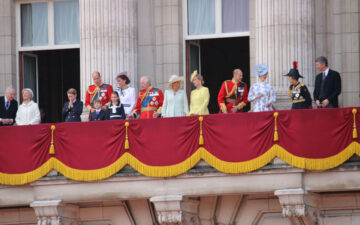
In 2012 I was in Cambridge, newly enthroned as the Bertrand Russell Professor of Philosophy. The town had a new Duke and Duchess that year, too, in William and Kate. When they announced they were expecting their first child, I wrote a piece for The Conversation. Welcome as Baby Cambridge would be, I said, she or he was entitled to normal choices in life.
I followed up with a second piece, after George’s birth. I pointed out that if we moved quickly, he could be allowed a comparatively normal childhood, with the opportunity to choose his own path. Like the then Prince of Wales, I became a grandfather that year. I congratulated him, but said that his grandson should not be denied freedoms that mine would take for granted.
I didn’t get much traction at the time, but the window has been shifting. In the wake of Harry’s book Spare, several writers made similar points. In the Guardian, for example, Jonathan Freedland compared the Windsors to the Truman Show. Kate Williams argued we don’t need a spare, and that Windsor children except the heir should be allowed a normal life. And Catherine Bennett said, “If the country can’t do without the family entirely, we could surely ration ourselves to one child victim per generation.”
This is progress, by my lights, especially Bennett’s use of the phrase ‘child victim’. But even she doesn’t spell out the important point.
More here.
Enjoying the content on 3QD? Help keep us going by donating now.
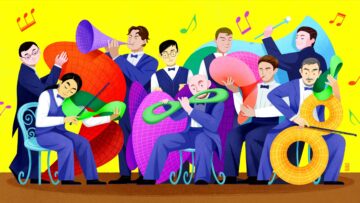 A group of nine mathematicians has proved the geometric Langlands conjecture, a key component of one of the most sweeping paradigms in modern mathematics.
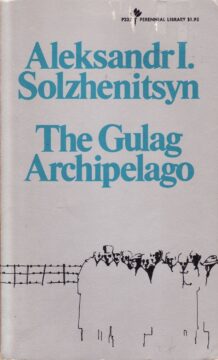
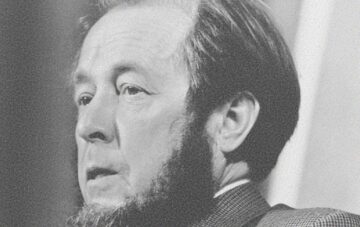 Western intellectuals expected that novelist Aleksandr Solzhenitsyn, once safely in the West after his expulsion from the Soviet Union in 1974, would enthusiastically endorse its way of life and intellectual consensus. Nothing of the sort happened. Instead of recognizing how much he had missed when cut off from New York, Washington, and Cambridge, Massachusetts, this ex-Soviet dissident not only refused to accept superior American ideas but even presumed to instruct us. Harvard was shocked at the speech he gave there in 1978, while the New York Times cautioned: “We fear that Mr. Solzhenitsyn does the world no favor by calling for a holy war.”
 I
I  Not so long ago, a friend texted me from a coffee shop. He said, “I can’t believe it. I’m the only one here without a tattoo!” That might not seem surprising: a quick glance around practically anywhere people gather shows that tattoos are widely popular. Nearly one-third of adults in the US have a tattoo, according to
 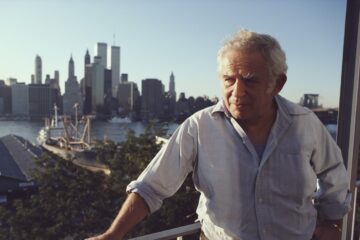 Alcove 1 at the City College of New York is surely the most famous lunch table in American intellectual history. No Ivy League dining hall can compete. In the 1930s, a remarkable coterie of students gathered there. (The neighboring alcove, Alcove 2, was a meeting place for students who hewed closer to the party line in Moscow, for the “Stalinists” as they would have been called in Alcove 1.) By now many books and documentaries have been made and written about Alcove 1 and its legacy, which in miniature is the saga of the “New York intellectuals.” They were mostly Jewish, uniformly gifted, and fabulously influential at midcentury. Their history can have the aura of myth.
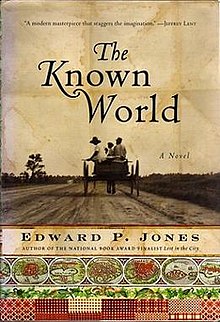 Its canonical status is hardly in doubt, but at the same time, 20 years after its publication, “The Known World” can still feel like a discovery. Even a rereading propels you into uncharted territory. You may think you know about American slavery, about the American novel, about the American slavery novel, but here is something you couldn’t have imagined, a secret history hidden in plain sight. The author occupies a similarly paradoxical status: He’s a major writer, yet somehow underrecognized. This may be partly because he doesn’t call much attention to himself, and partly because of his compact output. (When I asked, he said he wasn’t working on anything new at the moment, though there was a story that had been gestating for a while.) Jones, who teaches creative writing at George Washington University, is not a recluse, but he’s not a public figure either. Our meeting place was his idea.
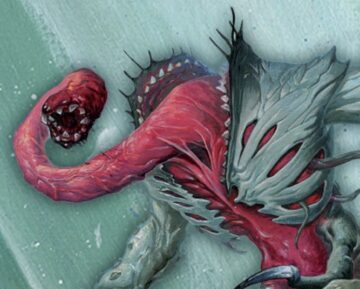 The Earth’s oceans remain a source of anxious uncertainty. For all that we’ve chartered upon the waves of the sea, that which lies beneath remains as dark as the impenetrable barriers through which surface light does not penetrate, a black kingdom of translucent glowing fish with jagged deaths-teeth and of massive worms living in volcanic trenches. More than even interstellar space, the ocean’s uncanniness disrupts because the entrance to this unknown empire is as near as the closest beach, where even on the sunniest days a consideration of what hides below can give a sense of what the horror author H.P. Lovecraft wrote in a 1927 essay from The Recluse, when he claimed that the “oldest and strongest emotion of mankind is fear, and the oldest and strongest kind of fear is a fear of the unknown.” The conjuring of that emotion was a motivating impulse in Lovecraft’s weird fiction, in which he imagined such horrors as the “elder god” Cthulhu, a massive, uncaring, and nearly immortal alien cephalopod imprisoned in the ancient sunken city of R’lyeh, located approximately 50 degrees south and 100 degrees west.
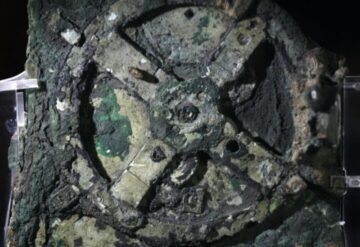 The inspiration for the titular device in last year’s blockbuster,
 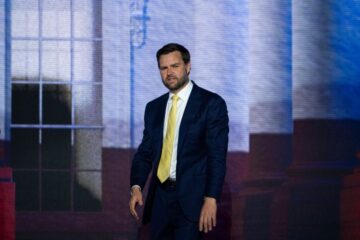 It can be a comfort and consolation to believe one’s political opponents don’t really mean what they say. They’re liars. Hypocrites. Shameless opportunists who will say and do anything to gain power. It’s impossible to take them seriously.
 W
W T
T Henry Grabar has had enough
  THERE ARE SOME things the American mind can’t fully grasp: a certain way of smoking a cigarette, a particular fit of track pant, Rita Ora as a genuine celebrity. But above all, we struggle with the reality that the largest cultural event in the world happens entirely off of our radar and outside of our influence. The