I am the son of a black man from Kenya

On this, the last day of Black History Month, which my sister Azra is foremost in celebrating here at 3QD, I am posting what I think of as the best political speech of my lifetime. This is Barack Hussein Obama on race, in America:

ScreenHunter_01 Feb. 27 21.24 “We the people, in order to form a more perfect union.”

Two hundred and twenty one years ago, in a hall that still stands across the street, a group of men gathered and, with these simple words, launched America’s improbable experiment in democracy. Farmers and scholars; statesmen and patriots who had traveled across an ocean to escape tyranny and persecution finally made real their declaration of independence at a Philadelphia convention that lasted through the spring of 1787.

The document they produced was eventually signed but ultimately unfinished. It was stained by this nation’s original sin of slavery, a question that divided the colonies and brought the convention to a stalemate until the founders chose to allow the slave trade to continue for at least twenty more years, and to leave any final resolution to future generations.

Of course, the answer to the slavery question was already embedded within our Constitution – a Constitution that had at its very core the ideal of equal citizenship under the law; a Constitution that promised its people liberty, and justice, and a union that could be and should be perfected over time.

And yet words on a parchment would not be enough to deliver slaves from bondage, or provide men and women of every color and creed their full rights and obligations as citizens of the United States. What would be needed were Americans in successive generations who were willing to do their part – through protests and struggle, on the streets and in the courts, through a civil war and civil disobedience and always at great risk – to narrow that gap between the promise of our ideals and the reality of their time.

More here. And/or see the video:
Saturday, February 27, 2010

The Nominees for the 2010 3QD Prize in Arts & Literature Are:

Alphabetical list of blog names followed by the blog post title:

(Please report any problems with links in the comments section below.)

For prize details, click here.

And after looking around, click here to vote.

  1. 3 Quarks Daily: How to Photograph the Heart
  2. 3 Quarks Daily: How to Search for Aliens
  3. 3 Quarks Daily: James Ensor: Keepin’ It Surreal
  4. 3 Quarks Daily: Knifers
  5. 3 Quarks Daily: Mapping the Cracks: Art-Objects in Motion
  6. 3 Quarks Daily: Rumination on the Life, Death, and Particularly the Legacy of a Man Barely Necessary to Introduce to Y’All, Beyond Mentioning (1) His Initials, D, F, and W, and (2) The Fact That This Very Headline Owes Him, Obviously, Everything
  7. 3 Quarks Daily: Somebody Nailed My Dress To The Wall
  8. 3 Quarks Daily: Stamp Your Feet. Hard.
  9. 3 Quarks Daily: The Bitter Taste of Life
  10. 3 Quarks Daily: The DMV
  11. 3 Quarks Daily: The Poetry of Jason Boone (1971-2008)
  12. A Piece of Monologue: Re Joyce
  13. All Things Pankish: Ask the Editor: Johnathon Williams
  14. Amitava Kumar: Postmortem
  15. Baroque in Hackney: A Christmas Play
  16. Baroque in Hackney: Cycling: the healthy mode of transport
  17. Baroque in Hackney: Finders keepers? the clash of intellectual property and a venerable poetic tradition
  18. Baroque in Hackney: Poetry wins book of the year, becomes accessible
  19. Chapati Mystery: Nine Lives
  20. Chicks Dig Poetry: Greatness
  21. Cognition and Culture: The universality of music: Cross-cultural comparison, the recognition of emotions, and the influence of the the Backstreet Boys on a Cockatoo
  22. Digital Emunction: A Lume Spento
  23. Digital Emunction: Fake Book Review 9
  24. Do You See?: About Aribam
  25. Do You See?: Cityspeak
  26. Flawnt: The Last Story
  27. Geoffrey Philp’s Blogspot: You’re Not My Son Anymore
  28. HTML Giant: Surfing for Writers
  29. Humorless Bitch: The Wheels On The Bus
  30. Imaginary Boundaries: To Live Outside the Law, You Must Be Honest
  31. Infrequent Thoughts, Haphazardly Published: Lucky
  32. In This Light: Lens and Pen as Mirrors
  33. Jabberwock: Stranger to History: Aatish Taseer on Islam’s ‘enclosed world’
  34. Jacob Russell’s Barking Dog: Two Poems
  35. Known Turf: My God!
  36. Letters From Exile: Letters From Exile IV
  37. Literary Kicks: In Gatsby’s Tracks: Locating the Valley of Ashes in a 1924 Photo
  38. Literature: Black Sun
  39. Michael Bérubé: Mighty Moloch, cure me of my severe allergy to the discourse of the “cure”
  40. Michael Bérubé: Time after time
  41. My Soul Is A Butterfly: The Letter Said, “Where Are You?”
  42. Nail Your Novel: Become a native in the world of your story
  43. Nail Your Novel: Developing a strong writing voice
  44. Narcissism, vanity, exhibitionism, ambition, vanity, vanity, vanity: Unsolicited Advice (for Eliza Blair)
  45. Novel Readings: Daniel Mendelsohn, The Lost
  46. PEN America: Tomasz Rozycki on “Scorched Maps”
  47. Perplexicon: Towards a literary science
  48. Potemkin: The Great Terror
  49. Quantum Tantra: The New Sex Robot
  50. Sound of the City: The 50 Worst Songs of the ’00s, F2K No. 1: Counting Crows ft. Vanessa Carlton, “Big Yellow Taxi”
  51. The Best American Poetry: Learning to Write the MFA Poem
  52. The Best American Poetry: Robert Creeley, LSD, and Thee
  53. The Literary Weevil: Jerome David Salinger
  54. The Middle Stage: On Daniyal Mueenuddin’s In Other Rooms, Other Wonders
  55. The Millions: About the Author
  56. The Millions: Book Lovers
  57. The Millions: Deckle Edge in the Age of Mechanical Reproduction
  58. The Millions: Ether Between the Covers: Gifting Books in a Digital Age
  59. The Millions: Everybody’s Holocaust: Jonathan Littell’s Fictional Nazi and Postmodernity’s Double Bind
  60. The Millions: Fair Hypocrites: Twilight By Way of Pamela
  61. The Millions: It’s All Right to Cry: Restoring Raymond Carver’s Voice
  62. The Millions: It’s Not You, It’s Me: Thoughts on Lorrie Moore’s A Gate at the Stairs
  63. The Millions: Nabokov, Wallace, and the Incredible Shrinking Book
  64. The Millions: Nobody Wants to Go Home: A Unified Theory of Reality TV
  65. The Millions: Proust’s Arabesk: The Museum of Innocence by Orhan Pamuk
  66. The Millions: The woman writes as if the Devil was in her…
  67. The Millions: Working the Double Shift
  68. The Reasoned Review: Telangana Resumption
  69. The Rumpus: Interview with Sam Anderson
  70. The Second Pass: Mary Flannery, Quite Contrary
  71. The Valve: Sita Sings the Freakin’ Gorgeous Blues
  72. Tiny Cat Pants: The Devil Lives on Lewis Street, I Swear
  73. Tom Paine’s Ghost: Beyond Energy
  74. Too Fond of Books: But Beautiful: A Book About Jazz by Geoff Dyer
  75. Too Fond of Books: The Absolutely True Diary of a Part-Time Indian by Sherman Alexie
  76. Too Fond of Books: The Soul of a Chef: The Journey Toward Perfection by Michael Ruhlman
  77. Unremitting Failure: Poem by Our Brother Jeffers
  78. Wisdom of the West: Realisms
  79. Writing Without Paper: Homage To a Sculptor: Ruth Duckworth

To vote, click here.

Brown v. Board of Education: The Climax of an Era

From The Nation:

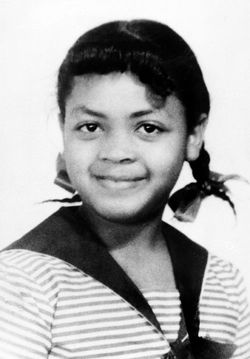
Lindabrown_slide The Supreme Court's decision outlawing segregation in American public education was unanimous. If anything, world opinion was even more emphatic. Even the Communist powers, we suspect, must privately have applauded the decision. In Kenya a spokesman for the Luo tribe voiced the growing world-wide sentiment against all forms of racial discrimination when he said “America is right . . . If we are not educated together, we will live in fear of one another. If we are to stay together forever, why should we have separate schools?” Quite apart from this sentiment, the decision was especially welcome at this time since it enabled us and our friends abroad for the first time in some years to be equally and simultaneously enthusiastic about an important announcement from Washington. The decision was a fine antidote to the blight of McCarthyism and kindred fevers.

The dead no less than the living must have rejoiced. Among the ghosts that smiled with pleasure–it is somehow easier to imagine them smiling than cheering–were Homer Adolph Plessy, the one-eighth-Negro plaintiff in Plessy v. Ferguson, in which the iniquitous “separate but equal” doctrine was first announced, and his counsel, Albion Winegar Tourgée–who is better known, perhaps, for his novels about the Reconstruction period. Another beaming ghost would be Justice John Marshall Harlan whose great dissents in this and the Civil Rights Cases have at long last been fully vindicated.

Not every ghost smiled, we may be sure. Glum and dour must have been the ghost of the late Senator Theodore G. Bilbo, but in this case, happily, there was compensation. For only a week or so before the Supreme Court's decision a life-size bronze statue of the Senator was unveiled in the Mississippi Capitol. “His imperfections were infinitesimal,” said Mississippi's Secretary of State in unveiling the statue, “when compared to the magnitude of his contribution to mankind.”

More here.

Devo’s Focus Group-Based Comeback Album

DevoTodd Martens in Pop & Hiss, the LA Times music blog:

Monday night, Devo will publicly launch the marketing campaign for its forthcoming album — its first in 20 years — when the Los Angeles-via-Ohio band performs at the Olympics in Vancouver, Canada. With the release of the album not due until the spring, the Olympics appearance won't be the grand unveiling of new material, which principal Gerald Casale promises will occur at the Coachella Valley Music & Arts Festival. But if all goes according to plan, the path leading up to the final product may make for a better story, anyway.

Casale speaks of Devo's May release, which the band has narrowed down to three possible titles, as somewhat of a formality. It's one aspect of a recently signed all-encompassing merch, music and tour record deal with Warner Bros., but the forthcoming album isn't necessarily the centerpiece.

“People still do that,” Casale said of releasing a new CD. “We don’t feel it’s very important. I don’t know how many people buy CDs. When you look at the number of downloads Lady Gaga had compared to hard physical product, it’s 100,000 to one. That’s the way people get their music. This idea of the precious order of a 12-song CD is passe. It’s over. People go and get what they want off the Internet and the put it on their iPod and shuffle it.”

That's one reason why Casale said the band won't be making the final decision on the songs and track-listing for its upcoming album. Instead, he said, the band will trust the consensus reached by those polled by an advertising agency. Casale said the new-wave pioneers have retained a company called Mother L.A. and that the firm will present focus groups with multiple mixes of new songs.

“It’s an art experiment,” Casale said. “The experiment is the business of art. It’s always there, but nobody ever talks about it.”

“Religious freedom” and Its Critics

ReligionTFScott Appleby in The Immanent Frame:

During his landmark address to the world, delivered in Cairo last June, President Obama proposed to open a new era of engagement with “Muslim communities”—engagement, that is, not just with Muslim states or regimes, but also with other economically and politically influential social sectors, including religious groups, educational institutions, civic organizations, health care institutions, and youth affiliations.

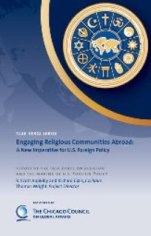
In the hopes of accelerating the process of rethinking America’s attitude toward the Muslim word, The Chicago Council on Global Affairs has issued a Task Force Report (TFR), entitled “Engaging Religious Communities Abroad: A New Imperative for U.S. Foreign Policy.” As co-chair of the task force (with Richard Cizik), which has been convening since the fall of 2008, I welcomed the president’s shrewd remarks about Islam, and I was pleased to work with the dozens of leaders in business, higher education, government, and media who signed the report, which was released today. Our hope is to build on the president’s ideas and explain why they apply not only to Islamic communities, but to religious communities more generally.

Three aspects of the approach sketched by Obama in Cairo are new, or at least newly placed front-and-center in American foreign policy. First is the administration’s willingness to see Islam (and, by extension, all transnational, globalizing religions) as a no-longer-ignorable “player of impact,” for both good and ill, in setting national and international agendas, ranging from the provision of health care to economic development and environmental sustainability to women’s rights, conflict resolution, and democratization. Second is the “for good” part of that formula. Even before 9/11, the agency of religious actors abroad has been perceived and framed primarily in terms of counterterrorism policy: how do we defeat Al-Qaeda and the Taliban? But this is just one part of the security and prosperity puzzle. The enormous constructive—or potentially constructive—roles of religious actors beyond our shores, while never formally denied by past administrations, have rarely been viewed as an asset to be developed. Oddly, for a religious nation such as ours, believers elsewhere have been seen as adversaries or obstacles, and not as partners.

How to build on this new awareness of religion? The TFR outlines the major elements of a comprehensive policy of constructive engagement with religions and religious actors abroad, indicating whom to engage, how to help them succeed, what vocabulary to use, and what the limits of such engagement are.

off-piste

6735

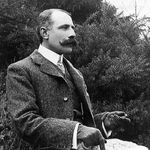
Going off-piste is about pursuing private passions. Mine include two eminent Victorian and Edwardian gentlemen, suitably whiskered, fond of wearing three-piece tweed suits and spats – although surely not together. They are seemingly the very antithesis of ardour and are more or less overlooked today: Alfred Edward Housman and Edward William Elgar. Last year marked the sesquicentenary of Housman’s birth, and it passed without pomp and circumstance; and notwithstanding the popularity of the tune of the same name at the Last Night of the Proms, few today associate Elgar with the piece. The two men originate from the same corner of the Welsh Marches where the counties of Shropshire, Worcestershire and Herefordshire meet, were born within a few miles of each other, and died at the same age. But as far as I can gather from the biographies I have devoured, they lived oblivious of each other. Sociology is obsessed with outsiders. As the Canadian sociologist Erving Goffman once said, the discipline finds itself at home in the world of hipsters, drug addicts, jazz musicians, night people, drifters, grafters and skid-row denizens: “It prefers the offbeat to the familiar, the standpoint of the hip outsider to the dull insider.” I disagree, or at least I believe this no longer applies. It is not people on the margins of society who are more interesting but those who transgress its boundaries; those who do not fit because they transcend rather than live outside convention.

more from John D. Brewer at THE here.

the whale

Leviathan

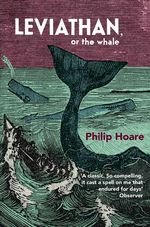
Philip Hoare is best known for his biography of Noel Coward, but he turns his attention to a much grimmer subject than the follies of “Mad Dogs and Englishmen” in “The Whale,” an eminently readable chronicle of the tragic interaction between humans and whales. Using Herman Melville’s life and “Moby-Dick” as touchstones, Hoare traces the whaling industry from its origins in 18th century New England to the present. Although the basic story of the near-extermination of the great whales is well known, the numbers Hoare cites are staggering. In the mid-18th century, more than 5,000 street lamps burned whale oil every night in London alone. Turning whales into oil, corset stays and scrimshaw was big business: “By 1833, seventy thousand souls and seventy million dollars were tied up in whaling and its associated crafts; ten years later that figure had nearly doubled. The United States exported a million gallons of oil to Europe each year.” Production on that scale decimated whale populations: more than 1 million sperm whales swam the world’s oceans in 1712; by the end of the 20th century 360,000 existed.

more from Charles Solomon at the LA Times here.

77,000 tons of apocalyptic yumminess

Bock-t_CA0-articleInline

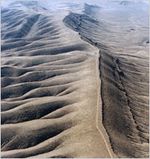
The mountain that John D’Agata is ostensibly concerned with in his slim but powerful new book, “About a Mountain,” is Yucca Mountain, located approximately 100 miles north of Las Vegas. And he’s not the only one interested in it: since the mid-1980s, the United States government has been doing back flips to bury the country’s entire reservoir of spent nuclear waste — some 77,000 tons of apocalyptic yumminess — deep inside Yucca. In the summer of 2002, the summer after D’Agata helped his mother move to a Vegas suburb, Congress was proceeding with plans to make the mountain a nuclear dump. Also that summer, 16-year-old Levi Presley jumped to his death from the observation deck of a third-rate Vegas hotel. These subjects, disparate though they are, animate D’Agata’s sprawling narrative. The author of a well-regarded book of essays and the editor of two exceptional essay anthologies, D’Agata has an encyclopedic understanding of the form’s intricate artistry. Moreover, he is a serious thinker who regularly lays down stylish, intelligent sentences: “I do not think that Yucca Mountain is a solution or a problem. I think that what I believe is that the mountain is where we are, it’s what we now have come to — a place that we have studied more thoroughly at this point than any other parcel of land in the world — and yet still it remains unknown, revealing only the fragility of our capacity to know.”

more from Charles Bock at the NYT here.

Saturday Poem

Fragile

I know these leaves
are not fragile,
but I'm alone
as I brush past them;
garbage in hand,
clear sky above
sharp with dawn.
The house is empty—
no socks on the floor,
no strands of hair in the tub,
just a few shreds
of cardboard from packing
and the fragile, faint
petal-soft
scent
of your missing soap.

by Christine Klocek-Lim

from How to Photograph the Heart
publisher: The Lives You Touch Publications, 2009

This is the second poem I've posted here of the poetry of Christine Klocek-Lim. Both are from a chapbook collection, How to Photograph the Heart. I like these poems. They're at the same time direct and nuanced. Her words are concise and lush, again at once. Her voice is clear. Her poems are grounded. To find out for yourself how full a little chapbook can be: just go here.

There’s something about Alice

A S Byatt in The Guardian:

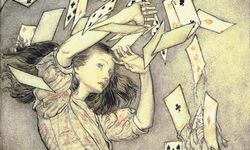
Alice-by-arthur-rackham-001 As a child, I think, I kept the Alice books in a different box in my brain from other books about imaginary children. I don't think they were read to me – there was “a war on”. I think I puzzled them out when I was about seven or eight, younger than ­Alice Liddell was on the famous “golden afternoon” in 1862 when she and her two sisters rowed from Folly Bridge, Oxford, to Godstow with the 30-year-old Lewis Carroll and his clerical friend Robinson Duckworth, and were told the first version of the story. A child reader's imagination inhabits the world of a book in many different ways, depending on the book. She walks deep into imaginary forests; she saves desperate beasts; she flirts with brave boys. The Harvard academic Maria Tatar has observed wisely that children do not usually “identify” with fictional children – they stand a little apart inside the fictional world and intensely observe the people and the action. But Wonderland and the world through the Looking Glass were, I always knew, different from other imagined worlds. Nothing could be changed, although things in the story were always changing. There was, so to speak, nothing going on in the hinterland of the clearing with the Mad Hatter's tea party, or beyond the Red Queen's garden gate. Carroll moves his readers as he moves chess pieces and playing cards. This is not to say that the reader's experience of the world is not vivid, enthralling and ­entirely memorable. It is just different.

More here.

Lights, Karma, Action

Daisy Rockwell in Chapati Mystery:

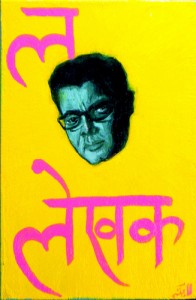
Amitava Kumar The quote at the beginning of this post is from the novel Home Products (Picador India, 2007), by Amitava Kumar, which will be published in the US in July 2010 under the title Nobody Does the Right Thing. I first heard this excerpt, along with other sections of the novel, presented as part of a year-long lecture series on ‘the city’ as a unit of study. Kumar’s lecture was the final presentation of what had been a series of buzz-word-heavy talks dealing exclusively with issues surrounding the ‘mega-city’—massive metropolises such as Bombay, Hong Kong and São Paolo. Kumar’s lecture itself was titled “Lights, Karma, Action: Report from Bombay.” As the series had progressed, I had been perplexed at the lack of attention being paid to all the lesser cities of the world, the also-rans, where millions of people live, but one can’t find a good wild-mushroom risotto for love nor money. I settled in for this final talk with low expectations: another afternoon, another trip to Bombay.

The lecture was, from the start, a surprise, as it was not a lecture at all, but a reading of a work of fiction. I kept waiting for the story to stop and the dry dissection to begin, but it never did. And what I, along with the rest of audience no doubt, had assumed would be a “report from Bombay” to us, the audience sitting in a lecture hall at a major research university in the United States, was instead a report from Bombay to Patna, the capital of Bihar. This change in direction was shocking and destabilizing, as we reversed direction to travel instead from mega-city to provincial city.

More here.

Up against the wall: challenging Israel’s impunity

Jamal Juma in Electronic Intifada:

ScreenHunter_04 Feb. 27 11.43 Six years ago, we were busy preparing for the start of the hearings of the International Court of Justice (ICJ) in The Hague. The world's highest court was to decide on the legal consequences of Israel's wall in the occupied West Bank, which together with the network of settlements, military zones and Jewish-only roads annexes around 46 percent of Palestinian West Bank land. The court's decision, months later, was clear: Israel's wall is illegal, it needs to be torn down and the international community has an obligation to ensure that it is dismantled.

A victory? Not quite. Until today, neither foreign governments nor the UN have joined the Palestinian communities who have been destroyed by Israel's wall in their efforts to dismantle it. Still, Palestinian villages show incredible perseverance and creativity in protesting the theft of their land and tearing down pieces of the cement blocks or iron fencing. They do so in the face of overwhelming repression.

The year 2004, when the court was deliberating the case, marked the first wave of repression aimed at the grassroots movement mobilizing against the wall. The key features of the Israeli attacks consisted of killings, mass injuries, arrests and collective punishment measures such as curfews, the closing of access to the villages protesting the wall and the denial of permits for farmers and workers to reach their jobs and lands beyond the wall or the “green line,” the internationally-recognized boundary between Israel and the occupied West Bank. The villages in northwest Jerusalem bore the brunt of Israeli violence.

Today the movement against the apartheid wall is once again in the crosshairs of Israeli repression.

More here.

Edward Anatolevich Hill

Our own Justin E. H. Smith has unearthed much information about yesterday's video. From Justin's blog:

The man singing is Edward Hill, also known as Eduard Khil', or, better yet, Эдуард Хиль. According to his Russian Wikipedia page, Hill was born in Smolensk in 1934, and finished his studies at the Leningrad Conservatory in 1960. By 1974 he had been named a People's Artist of the USSR, and in 1981 he was awarded the Order of the Friendship of Peoples. He is best known for his interpretations of the songs of the Soviet composer, Arkadii Ostrovskii. As for the peculiar name, I could find no information, but imagine that he is descended from the English elite that had established itself in western Russian cities by the 17th century. He is not a defector of the Lee Harvey Oswald generation. He is entirely Russian.

The song he is interpreting, “I Am So Happy to Finally Be Back Home,” is an Ostrovskii composition, and it is meant to be sung in the vokaliz style, that is to say sung, but without words. I have seen a number of comments online, ever since a flurry of interest in Hill began just a few days ago, to the effect that this routine must have been meant as a critique of Soviet censorship, but in fact vokaliz was a well established genre, one that seems close in certain respects to pantomime.

Recent interest in Hill has to do with the perceived strangeness, the uncanniness, the surreal character of this performance. There is indeed something uncanny about a lip-synch to a song with no words, and his waxed face and hair helmet certainly do not carry over well. But once one does a bit of research, one learns that the number was not conceived out of some desire to cater to the so-bad-it's-good tastes of the Western YouTube generation, but in fact was meant to please –to genuinely please– Soviet audiences who were capable of placing this routine, this man, and this song into a familiar context. The audiences would recognize, for example, that the same number had been performed by the Azerbaidzhani singer Muslim Magomaev in a film from the early 1960s, The Blue Spark:

More here.

Friday, February 26, 2010

Let Justice Roll Down

Martin Luther King Jr. in The Nation:

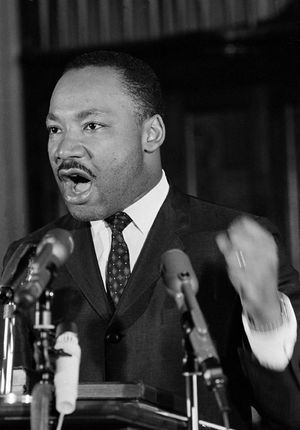
From 1961 to 1966, the Reverend Martin Luther King Jr. wrote an annual essay for The Nation on the state of civil rights and race relations in America. This article originally appeared in the March 15, 1965, issue.

Mlk_slide When 1963 came to a close, more than a few skeptical voices asked what substantial progress had been achieved through the demonstrations that had drawn more than a million Negroes into the streets. By the close of 1964, the pessimistic clamor was stilled by the music of major victories. Taken together, the two years marked a historic turning point for the civil rights movement; in the previous century no comparable change for the Negro had occurred. Now, even the most cynical acknowledged that at Birmingham, as at Concord, a shot had been fired that was heard around the world.

Before examining 1964 in greater depth, some comment is necessary on the events currently unfolding in Alabama. After the passage of the Civil Rights Act and with the defeat of Barry Goldwater, there was widespread expectation that barriers would disintegrate with swift inevitability. This easy optimism could not survive the first test. In the hard-core states of the South, while some few were disposed to accommodate, the walls remained erect and reinforced. That was to be expected, for the basic institutions of government, commerce, industry and social patterns in the South all rest upon the embedded institution of segregation. Change is not accomplished by peeling off superficial layers when the causes are rooted deeply in the heart of the organism.

Those who expected a cheap victory in a climate of complacency were shocked into reality by Selma and Marion, Ala. In Selma, the position was implacable resistance. At one point, ten times as many Negroes were in jail as were on the registration rolls. Out of 15,000 eligible to vote, less than 350 were registered.

More here. (Note: Thanks to Abbas Raza)

a giant burst of happiness for the infinite creativity of America

Whitneybiennial100301_slideshow_560

It’s also—praise God—small. The Biennial has finally been pared down to a manage-able 55 artists. It is not visually assaultive; it gives all the art room to breathe, whereupon you realize how bombastic most such shows are. The 2010 Biennial is anti-blockbuster. It avoids razzmatazz, star power, and high production. It’s more like a medium-size group show than a big museum smorgasbord. It isn’t New York–centric, youth obsessed, or drawn mainly from a coterie of high-powered New York galleries. It is quiet. The art world has clamored for these things for years, and people should cheer this show. They probably won’t, though. By now it’s clear that there is no such thing as a “good biennial,” that the form itself is bound to generate a mixed bag. This time, the clunkers are the bland placeholders. Too much of the two-dimensional work either recaps ideas about craft and abstraction in generic ways or touches on issues of identity without saying anything. But the unexpected curatorial choices outnumber the banal. I love that, instead of encountering a huge installation in front of the giant fourth-floor window, we see Richard Aldrich’s tiny abstract voodoo doll. Huma Bhabha’s Giacometti-esque sculpture of decaying gods stands almost directly below Sharon Hayes’s videos of someone trying to listen very hard: Does she hear them? Or that the self-reflective, formalistic films and photos of Babette Mangolte are given an entire room, and thus form one of the beating hearts of this show. This veteran artist’s obsessive examinations of what it means to make and display art, her investigations into seemingly outmoded ideas of modernism and presentation, and the ways these things make visible the self are touchstones for much of the work in this show.

more from Jerry Saltz at New York Magazine here.

Inside a book that contains the whole universe

1266925331150-1

My first perception of Borges is Borges himself. In other words: I see Borges. Let me explain. I must be nine or ten and I’m walking my uncle, who’s in his twenties, along the pedestrian Calle Florida in Buenos Aires. I say that I’m walking my uncle because my uncle is blind. My uncle hoped to become a great painter. During his adolescence he’d won important scholarships and prizes, but he went blind from juvenile diabetes, and at this point – he doesn’t know it, but he senses it – he has two or three or four years left to live. So we’re walking and suddenly someone says, ‘There’s Borges,’ and I look and I see Borges and I say to my uncle, ‘There’s Borges.’ Borges is coming toward us and he, too, is on the arm of a friend or a fan and then my blind uncle – who was the humorous type, wickedly funny – shouts ‘Borges! How are you? You look great.’ And Borges turns his unseeing gaze on the precise spot from which the voice of my blind uncle issues and reaches him and the two of them look at each other without seeing each other, and there I am, in between, unable to believe what I’m seeing.

more from Rodrigo Fresán at Granta here.

back to the real experiences!

ID_IV_WILSO_DOC_AP_001

We’ve all heard the trope that wine is an everyday pleasure, that there are so many interesting, authentic wines under $20. Yet so many people still ignore this notion, still remain intimidated by wine — or else approach wine as a luxury to be acquired, a foe to be conquered, or a scientific puzzle to be methodically solved. I want to weed out the so-called “luxury” experiences that don’t deliver, and seek out the ones that do. I want to tell stories about wines from lesser-known regions and grape varietals, as well as values from well-known producers. I want to talk about wine as an idea, rather than as a status symbol. Beyond the quality-price ratio, I want to explore wine as a legitimate plank of the humanities, worthy of the highest sort of criticism. A good value wine offers us an experience similar to that of a book or a film or an art exhibition. Tasting wine, then, becomes no different from study in any of the other humanities — reading works of Russian literature or looking at German Expressionist paintings or listening to Rigoletto. It goes without saying that you don’t have to be rich to enjoy those cultural activities. I believe it’s the same with the wine. That’s what this column will be about.

more from Jason Wilson at The Smart Set here.

Friday Poem

My Mother's Sari

There, in the wooden box
my mother's sari, enveloped in white muslin,
with mothballs.

Her sense of order is in each one
of its folds,
and the press of her palm.
A universe of ironing lies beneath the pillow.
Tiny packets of camphor, incense and
fragrant roots –
her perfume.

My mother's sari's tucked-in eagerness
coupled with the jingling of bangles
is the zest to get down to work.

Lines running across the broad pallu,
the unbroken bridges of an upright life,
keeping all evil at bay –
a cane to reprove naughty children.

Folds tucked into a knot,
a mysterious treasure-house of meanings,
the pretty yellow Madhura sari
with its green border of blooms . . .
. . . that queen was perhaps like my mother.
Read more »