
Enjoying the content on 3QD? Help keep us going by donating now.
Bill Gates in Gates Notes:
 Melinda and I sometimes read the same book at the same time. It’s usually a lot of fun, but it can get us in trouble when one of us is further along than the other—which recently happened when we were both reading A Gentleman in Moscow by Amor Towles. At one point, I got teary-eyed because one of the characters gets hurt and must go to the hospital. Melinda was a couple chapters behind me. When she saw me crying, she became worried that a character she loved was going to die. I didn’t want to spoil anything for her, so I just had to wait until she caught up to me.
That one scene aside, A Gentleman in Moscow is a fun, clever, and surprisingly upbeat look at Russian history through the eyes of one man. At the beginning of the book, Count Alexander Ilyich Rostov is sentenced to spend his life under house arrest in Moscow’s Metropol Hotel. It’s 1922, and the Bolsheviks have just taken power of the newly formed Soviet Union. The book follows the Count for the next thirty years as he makes the most of his life despite its limitations. Although the book is fictional, the Metropol is a real hotel. I’ve even been lucky enough to stay there (and it looked mostly the same as Towles describes in the book). It’s the kind of place where you can’t help but picture what it was like at different points in time. The hotel is located across the street from the Kremlin and managed to survive the Bolshevik revolution and the rise and fall of the Soviet Union. That’s a lot of history for one building.
More here. (Note: I just watched the 8 Episode series on TV at Abbas’s recommendation. Loved it!)
 Some of the 20th century’s greatest thinkers – Higgs, Freud, Einstein – reveal so much to us through the objects that surrounded them. Higgs’s passion for music and ordered thinking is apparent through his alphabetised collection. The lack of concern for updating his interior suggests a focus on what’s going on in his mind, rather than material possessions. There is a joy to knowing he waited 47 years for his theory to be verified by the Large Hadron Collider, but lived to see it and secure his Nobel Prize.
 Seemingly overnight, Elena Ferrante — or rather, the novelist writing as Elena Ferrante — found worldwide acclaim.
 The week after taking office in 2017, Donald Trump announced his administration’s signature policy on the administrative state—the constellation of agencies, institutions, and procedures that Congress has created to help the president implement the laws it passes—when he
 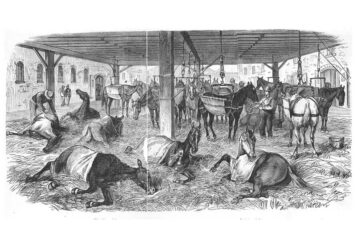 Before the automobile, cities were powered by horses. These urban equines ferried passengers in streetcars and carriages; they pulled fire engines and ambulances. They delivered everything from milk and ice to mail. They hauled the coal for locomotive and steam engines.
 I
I What kind of world is this? That’s the question prompted over and over by Joseph O’Neill’s new novel
  Amongst the many energy-hungry technologies supporting modern society, artificial intelligence (AI) is emerging as a major driver of energy demand. Data centers—the physical infrastructure enabling AI—are becoming larger, multiplying, and consuming more energy. Environmental organizations such as Greenpeace are
  When Henderson got to Yale on the G.I. Bill, he was shocked by the differences between him and his classmates. As he explains in the video above, he learned it was popular for his classmates to hold strong, seemingly progressive views about many of the concerns that shaped his life — drugs, marriage, crime. But they were largely insulated from the consequences of their views. Henderson found that these ideas came to serve as status symbols for the privileged while they, ironically, kept the working class down. He came to call these ideas luxury beliefs.
 Alice Munro, considered one of the greatest short-story writers of modern times, was a monster.
 O
O D
D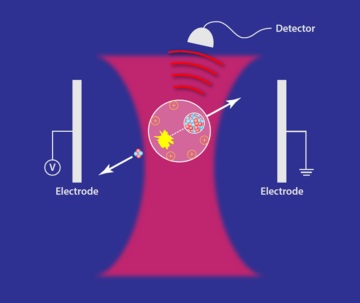 For centuries, physicists have exploited momentum conservation as a powerful means to analyze dynamical processes, from billiard-ball collisions to galaxy formation to subatomic particle creation in accelerators. David Moore and his research team at Yale University have now put this approach to work in a new setting: they used momentum conservation to determine when a radioactive atom emitted a single helium nucleus, known as an alpha particle (Fig.
 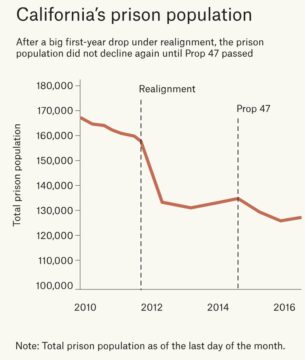 Asterisk: You’re responsible for managing one of the most comprehensive data sets of criminal outcomes for various criminal justice systems in California. It includes 12 counties and 60% of the state population. How did you put this resource together, and what kinds of outcomes you are tracking with it?