My mother is retired, toothless, diabetic and bedevilled by headaches and a blinding cataract

51OZjXLRWnL._SL500_AA300_

India is like a lot of Québecs. There are more than 1,600 languages spoken in India, and almost all are regional, with speakers centered in particular locales. After independence from the British Crown in 1947, one of India’s regional languages, Hindi, was named the country’s official language. Then, as now, what linguists call “native speakers” of Hindi comprised only about 40 percent of India’s population. There was much resistance to the language’s elevation. To this day, large numbers of Indians, particularly in the southern states (from Maharashtra and Andhra Pradesh to Tamil Nadu and Kerala), are bitter over this perceived “symbol and arbiter of North Indian cultural hegemony,” as the anthropologist Rashmi Sadana describes it. The majority of the “languages”—as the regional languages are known—have their own competing media, and speakers of Malayalam, Tamil, Kannada, and Telugu together number hundreds of millions. That the rancor persists is hardly surprising. Less expected, however, is what the conflict has meant for English: the language of India’s erstwhile colonial rulers, a language that first entered the country by armed force and bureaucratic “necessity,” has become, increasingly, “neutral.”

more from Michael Scharf at the Boston Review here.
two bad paradigms in arizona

Fish

The loud debate over the recently passed Arizona House Bill 2281, which bans from the public schools ethnic studies courses that promote race consciousness, is a clash between two bad paradigms. The first paradigm is embedded in and configures the bill’s targeted program, the Mexican American Studies Department of the Tucson Unified School District, which, its Web site tells us, adheres to the Social Justice Education Project model. That model includes “a counter-hegemonic curriculum” and “a pedagogy based on the theories of Paulo Freire.” Freire, a Brazilian educator, is the author of the widely influential book “Pedagogy of the Oppressed.” Freire argues that the structures of domination and oppression in a society are at their successful worst when the assumptions and ways of thinking that underwrite their tyranny have been internalized by their victims: “The very structure of their thought has been conditioned by the contradictions of the concrete, existential situation by which they were shaped.” If the ideas and values of the oppressor are all you ever hear, they will be yours — that is what hegemony means — and it will take a special and radical effort to liberate yourself from them.

more from Stanley Fish at The Opinionater here.

can-do energy and unflappability

TLS_Lowry_718814a

Today we associate Rudyard Kipling overwhelmingly with India, but this is a mistake. Never was a writer so much on the go. During a working career spanning half a century he lived on four continents and visited over twenty countries, including not only France, Spain, Italy and Belgium but also the United States and Canada, Brazil, Sweden, Czechoslovakia, Switzerland, South Africa, Australia and New Zealand, Algeria, Egypt and Palestine, Japan, China, Burma, Malaya, Singapore, Jamaica and Bermuda. A journalist by training and by nature a voracious observer, writing at a time when developments in mass transportation were making the globe ever smaller, Kipling was ideally placed, both historically and temperamentally, to chronicle the otherness of Britain’s colonies and beyond for his metropolitan readers at home. His appetite for travel was compulsive, his sense of the strangeness of abroad deeply ingrained. Born in Bombay in 1865 in the heyday of the British Raj, he spent his childhood shuttling between England and India, which appeared to have left him with an abiding sense of dislocation. For Kipling, almost everywhere was “other”: he remained, at heart, an outsider in every country he lived in or visited.

more from Elizabeth Lowry at the TLS here.

The Selfish Society

From The Telegraph:

Selfishrealstory_1637385f What is it that drives people to be brave and good? Psychologists set out to explore this intriguing question by studying a group of Holocaust “rescuers” who, at great risk to themselves, had saved the lives of Jews. This group was compared with the “bystanders” living in the same area or even the same street who didn’t help or refused to help when asked. The “immigrants” formed a control group: they were Europeans originating from the same or similar neighbourhoods as the rescuers and the bystanders but who had emigrated in the years leading up to the Second World War.

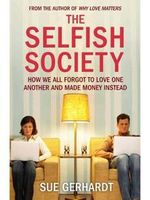
When the personality traits of the groups were compared, the bystanders and the immigrants were similar on every measure bar risk-taking (the immigrants scored slightly higher). The rescuers, however, scored higher than the other groups for every trait: altruism, moral reasoning, risk-taking, autonomy, tolerance, self-direction and, most strikingly, empathy and a sense of social responsibility. In The Selfish Society, psychotherapist Sue Gerhardt cites this 2005 study, published in the Journal of Personality, as an example of how individuals with a high degree of emotional development – as exemplified by the rescuers – are a force for good in a society corrupted by a didactic ideology.

More here.

Peering Inside the Social Brain

From Science:

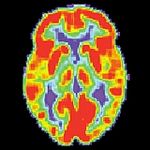
PET_BrainImage_160 What makes it possible for people to love, hate, help, or betray one another? How do we decode facial expressions? How do we understand and regulate our own emotional experiences? How do we separate the self from the other, make moral judgments, or decide how much money to save for retirement? What causes some people to turn to religious extremism, heroin, or politics? How does the brain fail those with social deficits such as autism? Questions like these sit at the junction of our social, emotional, and biological realities, and they drive the young but rapidly growing field of social neuroscience.

Until a few years ago, the idea that science could elucidate the neural foundations of social phenomena as complex as love, friendship, and trust “just basically seemed ludicrous,” says Janine Simmons, chief of the National Institute of Mental Health’s (NIMH's) program for affect, social behavior, and social cognition. Such “big questions” motivate many scientists to study neuroscience or psychology, she says — but soon they realize that the ability to address such questions is limited by technology. “It’s just recently that people have not been laughed at for taking on these more complex questions,” she says. Scientists seeking to understand the neural mechanisms underlying social cognition and emotion have drawn on a variety of methods, including studies of patients with neurological damage and single-cell recording of brain activity in nonhuman animals. These research tools have proven valuable, but it was the ready availability, starting about a decade ago, of functional neuroimaging technology that fueled an explosion in social neuroscience.

More here.

Wednesday, May 19, 2010

Energy Conservation “Nudges” Shaped by Political Ideology

Dora L. Costa and Matthew E. Kahn in Vox EU (via the Monkey Cage):

Residential electricity consumption represents roughly 35% of California's total electricity demand. Conservation by consumers would both reduce greenhouse gas emissions and economise on the construction of costly new power plants. But how can we encourage conservation?

Behavioural economists have promoted the use of “nudges” to encourage energy conservation (Allcott and Mullainathan 2010 and Thaler and Sunstein 2008). “Nudges” offer a politically palatable alternative to stricter building codes and price increases. Research by Allcott (2009), Ayers et al. (2009), and Schultz et al. (2007) found that providing feedback to customers on home electricity and natural gas usage with a focus on peer comparisons decreased consumption by 1% to 2%, potentially saving 110 million kWh per year if feedback were provided to all of the utility’s customers (Ayers et al. 2009).

Conservatives and conservation

In recent research, we present evidence that behavioural economists have underestimated the role that ideological heterogeneity plays in determining the effectiveness of energy conservation nudges.

We find that the effectiveness of energy conservation nudges depend on an individual’s political views. Although liberals and environmentalists are more energy efficient than conservatives (Costa and Kahn 2010b) – thus making it harder for them to reduce consumption further – we find that liberals and environmentalists are more responsive to these nudges than the average person. In contrast, for certain subsets of Republican registered voters, we find that the specific “treatment nudge” that we evaluate has the unintended consequence of increasing electricity consumption.

People who refuse the “treatment” of a feedback nudge or do the opposite of what the nudge is meant to encourage are known in the literature as “defiers” (Freedman 2006). But there are few specific examples of what motivates the defiers. We argue that political ideology may provide one explanation; an energy-conservation nudge may be ignored by conservative Republicans. Some may increase their consumption as they learn that their past consumption was “low” relative to others.

Living in denial: Why sensible people reject the truth

Debora MacKenzie in New Scientist:

Mg20627606_100-1_300 Heard the latest? The swine flu pandemic was a hoax: scientists, governments and the World Health Organization cooked it up in a vast conspiracy so that vaccine companies could make money.

Never mind that the flu fulfilled every scientific condition for a pandemic, that thousands died, or that declaring a pandemic didn't provide huge scope for profiteering. A group of obscure European politicians concocted this conspiracy theory, and it is now doing the rounds even in educated circles.

This depressing tale is the latest incarnation of denialism, the systematic rejection of a body of science in favour of make-believe. There's a lot of it about, attacking evolution, global warming, tobacco research, HIV, vaccines – and now, it seems, flu. But why does it happen? What motivates people to retreat from the real world into denial?

Here's a hypothesis: denial is largely a product of the way normal people think. Most denialists are simply ordinary people doing what they believe is right. If this seems discouraging, take heart. There are good reasons for thinking that denialism can be tackled by condemning it a little less and understanding it a little more.

Whatever they are denying, denial movements have much in common with one another, not least the use of similar tactics (see “How to be a denialist”). All set themselves up as courageous underdogs fighting a corrupt elite engaged in a conspiracy to suppress the truth or foist a malicious lie on ordinary people. This conspiracy is usually claimed to be promoting a sinister agenda: the nanny state, takeover of the world economy, government power over individuals, financial gain, atheism.

More here.

The Failure of the American Jewish Establishment

Peter Beinart in the New York Review of Books:

Netanyahu_benjamin-061109_jpg_230x867_q85 Among American Jews today, there are a great many Zionists, especially in the Orthodox world, people deeply devoted to the State of Israel. And there are a great many liberals, especially in the secular Jewish world, people deeply devoted to human rights for all people, Palestinians included. But the two groups are increasingly distinct. Particularly in the younger generations, fewer and fewer American Jewish liberals are Zionists; fewer and fewer American Jewish Zionists are liberal. One reason is that the leading institutions of American Jewry have refused to foster—indeed, have actively opposed—a Zionism that challenges Israel’s behavior in the West Bank and Gaza Strip and toward its own Arab citizens. For several decades, the Jewish establishment has asked American Jews to check their liberalism at Zionism’s door, and now, to their horror, they are finding that many young Jews have checked their Zionism instead.

Morally, American Zionism is in a downward spiral. If the leaders of groups like AIPAC and the Conference of Presidents of Major American Jewish Organizations do not change course, they will wake up one day to find a younger, Orthodox-dominated, Zionist leadership whose naked hostility to Arabs and Palestinians scares even them, and a mass of secular American Jews who range from apathetic to appalled. Saving liberal Zionism in the United States—so that American Jews can help save liberal Zionism in Israel—is the great American Jewish challenge of our age. And it starts where Luntz’s students wanted it to start: by talking frankly about Israel’s current government, by no longer averting our eyes.

More here.

Wednesday Poem

Google Earth

The poet's eye, in fine frenzy rolling,
Doth glance from heaven to earth, from
earth to heaven.
……….. Theseus, from a Midsummer Night's Dream
……….. (Act V, Scene 1) Shakespeare

We started in Africa, the world at our fingertips,
dropped in on your house in Zimbabwe; threading
our way north out of Harare into the suburbs,
magnifying the streets–the forms of things unknown,
till we spotted your mum's white Mercedes parked
in the driveway; seeming–more strange than true,
the three of us huddled round a monitor in Streatham,
you pointed out the swimming pool and stables.
We whizzed out, looking down on our blue planet,
then like gods—zoomed towards Ireland–
taking the road west from Cork to Kinsale,
following the Bandon river through Innishannon,
turning off and leapfrogging over farms
to find our home framed in fields of barley;
enlarged the display to see our sycamore's leaves
waving back. Then with the touch of a button,
we were smack bang in Central London,
tracing our footsteps earlier in the day, walking
the wobbly bridge between St Paul's and Tate Modern;
the London Eye staring majestically over the Thames.
South through Brixton into Streatham–
one sees more devils than vast hell can hold–
the blank expressions of millions of roofs gazing
squarely up at us, while we made our way down
the avenue, as if we were trying to sneak up
on ourselves; till we were right outside the
door:
the lunatic, the lover and the poet– peeping through
the computer screen like a window to our souls.

by Adam Wyeth
from Landing Places: Immigrant Poets in Ireland
Dedalus Press, Dublin, 2010

start them off in the wrong direction

Movies-gone-bad.4770139.40

Artist/filmmaker Pat O’Neill’s 1989 Sundance Grand Jury Prize–winning experimental feature Water & Power — a sort-of Chinatown-meets–Koyaanisqatsi-on-nootropics dealie — is rightfully recognized as one of the signal artifacts of late 20th century L.A. culture, not to mention a radical turning point in experimental cinema. Since making that splash, after a quarter-century toiling in the experimental-cinema mines (and the somewhat more lucrative special-effects fields), O’Neill has expanded his reputation into the art world with gallery and museum exhibitions of his sculptures, drawings, prints and projection-based installations. His double-barreled 2002 magnum opus film/interactive CD-ROM, The Decay of Fiction, took his ambivalent relationship with narrative into even more interdimensional realms (by way of Hollywood noir and the Ambassador Hotel), and marked his first artistic engagement with digital media.

more from Doug Harvey at the LA Weekly here.

a bedu hick town

Crude_meridian

MUZAHMIAH WAS A BEDU HICK TOWN in 1968, when my father was nine years old, and it’s a Bedu hick town now. The one-truck farming outpost twenty-five miles west of Riyadh is best known as the home of the Reem International Circuit, Saudi Arabia’s answer to the Daytona International Speedway. But back in 1968, it was not even that. My father, Mohamed, remembers that winter as “the season of the television,” when his world was dilated by the arrival of a black-and-white Sears set on a ledge overlooking my great-uncle Saleh’s courtyard. In my father’s telling of the seasons, that winter was preceded by “the season of the Hell,” when he’d encountered his first oil flare. He and Uncle Ali were hitching a ride to a relative’s camp near al-Hassa on the back of a postman’s truck. It was dusk, and the sun had settled deep into the reddening west. But oddly, there was also light coming from the east: a clean, yellow, too-bright light that threatened to bring the morning out to meet the night. My father and Ali climbed up from behind the shield of the cab and into the open, where they were buffeted by sandy gales. On the horizon there appeared a roaring flame, more brilliant than the sun. It was unfathomably large and impossibly high off the ground, exactly like a mirage—only there was no way this was an illusion.

more from Sophia Al-Maria at Triple Canopy here.

the new authoritarian Marxism

Badiou

I propose to write a series of posts on what I will call the “new authoritarian Marxism” of Alain Badiou and Slavoj Žižek. I think their ideas are a theoretical disaster and I find their popularity on campuses across Europe and North America to be deeply depressing. In this first post I claim that at the theoretical core of the new authoritarian Marxism is a terrorist theory of the state based on totalitarian notions of (always capitalized) Truth and Good. Here is the leading philosopher of the new authoritarian Marxism, Alain Badiou:

My personal position is the following: It is necessary to examine, in a detailed way, the contemporary theory of Evil, the ideology of human rights, the concept of democracy. It is necessary to show that nothing there leads in the direction of the real emancipation of humanity. It is necessary to reconstruct rights, in everyday life as in politics, of Truth and of the Good. (…) Terror is a political tool that has been in use as long as human societies have existed. It should therefore be judged as a political tool, and not submitted to infantilizing moral judgment. (…) As for the love of the Other, or, worse, the “recognition of the Other,” these are nothing but Christian confections. There is never “the Other” as such. There are projects of thought, or of actions, on the basis of which we distinguish between those who are friends, those who are enemies, and those who can be considered neutral.

more from Alan Johnson at Dissent here.

Lingering Questions

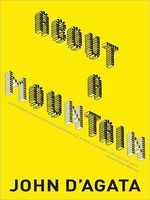
Vu Tran reviews About a Mountain by John D'Agata in The Wilson Quarterly:

D'agata-about a mountain Our relentless search for solutions to our self-created problems, D'Agata posits, has made us displace our grasp on reason and reality, on the problems (the questions) themselves. This is where his myriad investigations dovetail with suicide. D'Agata learns that Levi Presley was the fourth person since 2000 to jump off the Stratosphere, and that shiny Las Vegas has the country's highest suicide rate, though he hunts fruitlessly for someone in town to explain why. His investigation into the circumstances surrounding Levi's death is similarly stymied, yielding only arbitrary details of the boy's life (his affinity for Applebee's restaurants, purple-tinted glasses, a girl named Mary, etc.). So, eschewing psychoanalysis, D'Agata reconstructs Levi's journey through the Stratosphere's carnival of games and wares and advertisements, up its 1,149-foot tower, and to his death, in the book's most profound statement on the absurdity of how we as humans invent, communicate, and self-destruct.

About a Mountain is ultimately about that absurdity: the unreasonableness of reason. Yucca Mountain may be the most thoroughly studied parcel of land in the world, but its endless unknowns reveal “only the fragility of our capacity to know.” The one certain truth is that we interpret the elusive universe at our own risk, that meaning — however one may confront or pursue it — is inevitably fluid, conditional, and ambiguous.

More here.

Doomsayers Beware, a Bright Future Beckons

John Tierney on The Rational Optimist by Matt Ridley in The New York Times:

Lamp “The modern world is a history of ideas meeting, mixing, mating and mutating,” Dr. Ridley writes. “And the reason that economic growth has accelerated so in the past two centuries is down to the fact that ideas have been mixing more than ever before.” Our progress is unsustainable, he argues, only if we stifle innovation and trade, the way China and other empires did in the past. Is that possible? Well, European countries are already banning technologies based on the precautionary principle requiring advance proof that they’re risk-free. Americans are turning more protectionist and advocating byzantine restrictions like carbon tariffs. Globalization is denounced by affluent Westerners preaching a return to self-sufficiency.

But with new hubs of innovation emerging elsewhere, and with ideas spreading faster than ever on the Internet, Dr. Ridley expects bottom-up innovators to prevail. His prediction for the rest of the century: “Prosperity spreads, technology progresses, poverty declines, disease retreats, fecundity falls, happiness increases, violence atrophies, freedom grows, knowledge flourishes, the environment improves and wilderness expands.”

If you’re not ready to trust an optimist, if you still fear a reckoning is at hand, you might consider the words of Thomas B. Macaulay, a British poet, historian and politician who criticized doomsayers of the mid-1800s. “We cannot absolutely prove,” he wrote, “that those are in error who tell us that society has reached a turning point, that we have seen our best days. But so said all who came before us, and with just as much apparent reason.”

More here.

Tuesday, May 18, 2010

The Red and the Slack

1272912258kirsch_050310_380pxAdam Kirsch in The Tablet:

Is it too soon to say that the Brandeis novel is having a moment? It is, at least, an intriguing coincidence that two novels published recently are set at Brandeis University in the 1970s and that both feature a comically ineffectual campus protest. In 36 Arguments for the Existence of God, which came out at the beginning of this year, Rebecca Newberger Goldstein thinly disguised the school as Frankfurter University (Brandeis was the first Jewish Supreme Court Justice, Frankfurter the second) and joked about a student uprising against the introduction of fraternities and sororities. Taking a cue from some earlier Jews who didn’t like the Greek system, Goldstein’s protesters call themselves Maccabees.

Politics and protest are far more central to Something Red, the new novel by Jennifer Gilmore, but she too conceives of a Brandeis uprising as something inherently comical. Early in the book, Benji Goldstein, the athlete son of a liberal D.C. clan, stumbles into a ragged rally on the Waltham campus—actually a counterprotest, in which a few students are opposing a larger student movement to ban nonkosher food from the dining halls. Here Benji meets Rachel Feinglass—“olive-skinned, black-haired, short, big-breasted”—who is sufficiently political to fight for the right of Jewish students to eat pork, even though she herself is a vegetarian. “This is about truth, about what this university is supposed to stand for. This is a participatory democracy,” she harangues, and Benji is more than convinced. On the spot, he falls in love with Rachel, with Brandeis, and with the idea of radical protest, all of which are mixed up in his inarticulate but heartfelt declaration, “I fucking love college.”

Of course, student demonstrations at Brandeis were not always so silly. In the 1960s, Benji learns in his class “American Protest!” (the exclamation point is a nice touch), the school produced radicals like Abbie Hoffman and Angela Davis. But Gilmore’s novel is set in 1979—the year of the Iran hostage crisis and President Carter’s grain embargo on the Soviet Union—and all that remains of the ’60s spirit is the Grateful Dead and dropping acid. “Each and every day Benji sat in a lecture, he wished he’d been born a decade and a half previously,” Gilmore writes, and this sense of belatedness is the real theme of Something Red. Can Jews in the 1970s—and by implication, in our own time—really lay claim to the legacy of Jewish radicalism that dates back to the early 20th century?

Non-Normalizable Probability Measures for Fun and Profit

Seancarroll Sean Carroll over at Cosmic Variance:

Here’s a fun logic puzzle (see also here; originally found here). There’s a family resemblance to the Monty Hall problem, but the basic ideas are pretty distinct.

An eccentric benefactor holds two envelopes, and explains to you that they each contain money; one has two times as much cash as the other one. You are encouraged to open one, and you find $4,000 inside. Now your benefactor — who is a bit eccentric, remember — offers you a deal: you can either keep the $4,000, or you can trade for the other envelope. Which do you choose?

If you’re a tiny bit mathematically inclined, but don’t think too hard about it, it’s easy to jump to the conclusion that you should definitely switch. After all, there seems to be a 50% chance that the other envelope contains $2,000, and a 50% chance that it contains $8,000. So your expected value from switching is the average of what you will gain — ($2,000 + $8,000)/2 = $5,000 — minus the $4,000 you lose, for a net gain of $1,000. Pretty easy choice, right?

A moment’s reflection reveals a puzzle. The logic that convinces you to switch would have worked perfectly well no matter what had been in the first envelope you opened. But that original choice was complete arbitrary — you had an equal chance to choose either of the envelopes. So how could it always be right to switch after the choice was made, even though there is no Monty Hall figure who has given you new inside information?

Here’s where the non-normalizable measure comes in, as explained here and here. Think of it this way: imagine that we tweaked the setup by positing that one envelope had 100,000 times as much money as the other one. Then, upon opening the first one, you found $100,000 inside. Would you be tempted to switch?

Paul Berman, Tariq Ramadan, Ayaan Hirsi Ali and Western liberals

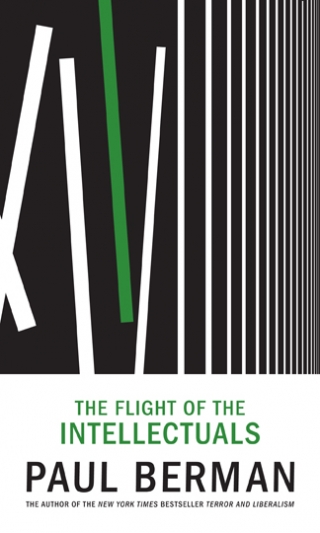
FlightoftheIntellectuals Hussein Ibish over at his blog:

Paul Berman's important and frequently brilliant, but also seriously flawed, new book “The Flight of the Intellectuals” (Melville House, 2010) is an old-fashioned polemic that takes aim at two main targets. Berman's main subject, judging from the title and certainly the conclusion of the book, are his fellow liberal intellectuals Ian Buruma and Timothy Garton Ash, who he accuses of a witches' brew of offenses involving white liberal guilt and displaced racism, abandoning Enlightenment values and craven cowardice in the face of Islamist bullying, and who he sees as emblematic of a widespread rot in the Western liberal intelligentsia. But to get to them, he has to go through Tariq Ramadan, the Swiss Muslim academic and activist who also happens to be the grandson of the founder of the original Muslim Brotherhood party in Egypt, Hassan al-Banna, and the son of his second in command, Said Ramadan. So actually, the bulk of the book dwells on not only Ramadan but also al-Banna and, in great detail, his ally Amin al-Husseini, the one-time “grand mufti” of Jerusalem.

The book makes a series of loosely connected cases, some much stronger than others, and hits some very important points with extreme precision, but in other cases runs wildly off the mark and occasionally goes running down a rabbit hole of pointlessness. Even within each case, there are moments when Berman seems to lose the plot completely and inexplicably. In my first response to this very significant book I want to look at the strengths and weaknesses of the two main cases one by one.

Case one: Tariq Ramadan

Berman does a very good job of explicating Ramadan's highly problematic family background and his troubling, albeit perfectly natural, fealty to the frankly baneful legacies of his grandfather and, to a lesser extent, his father. I don't think Berman is exaggerating at all in his no holds barred description of al-Banna's extremism and the highly negative impact his thinking has had on contemporary Muslim political discourse. Describing him as the godfather of all practical applications of contemporary Islamism, especially in the Arab world, is exactly right. I also don't think he's exaggerating how problematic Ramadan's championing and soft-pedaling of his grandfather's ideas and legacy really is. But, he concedes, the son is not the father or the grandfather, and ultimately needs to be considered on his own terms. And, Berman is to be congratulated for, it is sad to say unusually, actually reading his Arab subjects' writings carefully, taking them seriously and taking them at their word.

The Times Square Bomber: Home-Grown Hatred?

GettyImages_91593635_jpg_230x363_q85Ahmed Rashid in the NYRB blog:

The Pakistani media is in a state of apoplexy about the would-be Times Square bomber, the Pakistani-born US citizen Faisal Shahzad. Predictably a great many commentators in the press and on the non-stop talk shows that run on over 25 TV news channels have discussed whether it was a CIA plot to embarrass Pakistan or provide an excuse for American troops to invade us: Was Shahzad an Indian or Israeli agent? And in any case, why should Washington hold Pakistan responsible, since he was an American citizen?

Not surprisingly, the Zardari government, the army, and Pakistani politicians have also muddied the waters. Although the government has said it will fully cooperate with US investigators seeking to find out which extremist groups trained Shahzad and where, Islamabad continues to fudge the paramount issue—the need for Pakistan to launch a comprehensive campaign against all extremist groups rather than the hit-and-miss anti-terrorism measures it is presently pursuing. That selective campaign leaves untouched the Afghan Taliban based in Pakistan—including Mullah Omar and other top leaders—who are not killing Pakistanis but are organizing attacks against US troops in Afghanistan; it also has ignored the Punjabi Taliban groups who have been attacking Indian nationals and government buildings in Kashmir, Kabul, and elsewhere, as well as killing numerous Pakistanis in suicide bombings in Lahore and other cities.

Both the Zardari government and the press have also made much of the conflicting statements by US officials, with Hilary Clinton threatening Pakistan with dire consequences if it does not deal with terror attacks, while General David Petraeus, the head of US Central Command, and other military officials suggesting that Shahzad may have been a lone wolf. But what about the US press?

One would have thought that with the growing number of American Muslims who have been radicalized and planned or even launched an act of terrorism—the Fort Hood shooting spree of Army doctor Nadal Hasan last November is another example—there would be some effort to determine why Islamic radicalism is growing in the United States. But so far there has been very little.