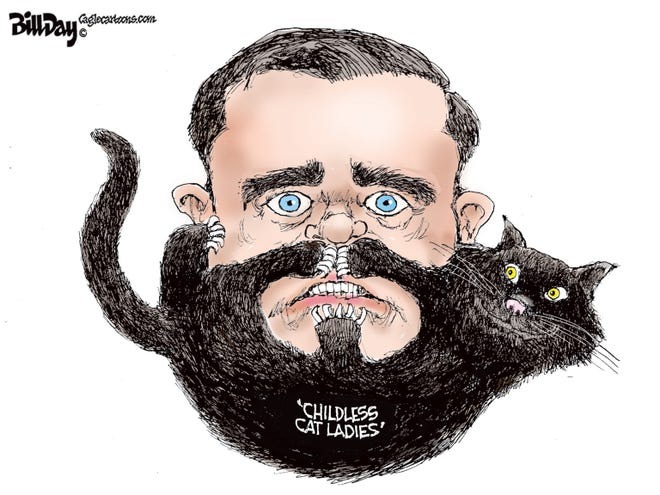
Carole Cadwalladr in The Guardian:
 In 2016, a historically unprecedented incident took place. And yet, barely anyone even noticed. Even years later, we’ve failed to acknowledge it or to have begun the process of understanding it. Because we still can’t even see it.
And that’s because this incident involved a woman. And she was asking for it.
The woman was Hillary Clinton. What she was asking for was votes. And what she got was the single biggest outpouring of misogyny in human history.
We can now say that. Although no one ever does. But this was an unprecedented previously unimaginable event. Because 2016 was when the world’s first global instant mass communication technology – social media – crashed up against the most ancient of prejudices – misogyny.
And the result was an earthquake: Donald Trump.
More here.
Enjoying the content on 3QD? Help keep us going by donating now.
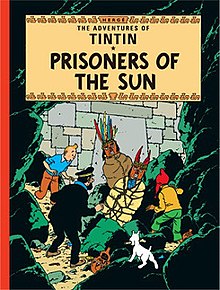 When Tintin is captured by an ancient Inca tribe in his fourteenth adventure, Prisoners of the Sun, he finds an article on his cell floor that forecasts a coming solar eclipse. This will prove to be significant since he, Captain Haddock, and Professor Calculus are to be burned at the stake. Tintin manages to see to it that the execution is staged at the right moment. When the Inca Prince of the Sun orders the pyre to be lit, Tintin invokes the Sun God: “O God of the Sun, sublime Pachacamac, display thy power, I implore thee! … If this sacrifice is not thy will, hide thy shining face from us!” In this patronizing Occidental fable of mathematical calculation triumphing over traditional belief, the weather god gives way to the scientist, whose knowledge gives Tintin the power to produce an apparent miracle.
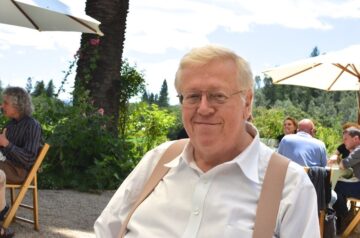 JOHN TOOBY (July 26, 1952-November 9, 2023) was the founder of the field of Evolutionary Psychology, co-director (with his wife, Leda Cosmides) of the Center for Evolutionary Psychology, and professor of anthropology at UC Santa Barbara. He received his PhD in biological anthropology from Harvard University in 1989 and was professor of anthropology at the University of California, Santa Barbara. Tooby and Cosmides also co-founded and co-directed the UCSB Center for Evolutionary Psychology and jointly received the 2020 Jean Nicod Prize.
 C
C A
A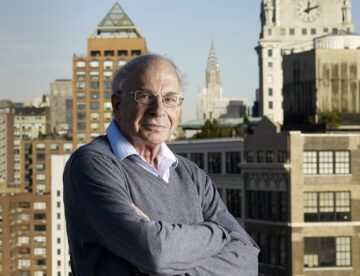 The day I met Daniel Kahneman, he had asked me to join him for lunch at the Bowery Road restaurant in Lower Manhattan. Danny proposed this venue because it has comfortable booths and ‘is mostly deserted’. I arrived
  The IMO is considered the world’s most prestigious competition for young mathematicians. Correctly answering its test questions requires mathematical ability that AI systems typically lack.
 In his acceptance speech for the vice presidency at the Republican National Convention, JD Vance stated that “one of the things that you hear people say sometimes is that America is an idea.” But, Vance asserted, the country was not just a “set of principles … but a homeland.” He went on to illustrate this by referring to his family’s cemetery where he hoped seven generations would be buried in a plot in eastern Kentucky. He said the country welcomed newcomers like his wife’s family from India, but “when we allow newcomers into our American family, we allow them on our terms.”
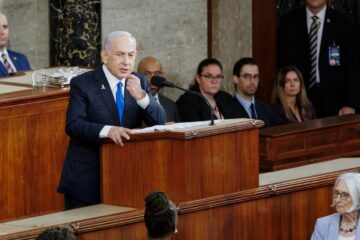 In the past, Washington has served as a sort of relief valve for Netanyahu, a place he could count on strong support, even when his political position looked rocky at home. In that first speech back in 1996, after receiving a five-minute standing ovation from Congress, he
  Computer chips are a hot commodity. Nvidia is now one of the most valuable companies in the world, and the Taiwanese manufacturer of Nvidia’s chips, TSMC, has been called a
 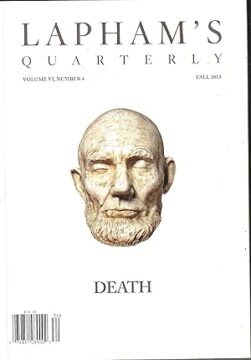 It is dangerous to excel at two different things. You run the risk of being underappreciated in one or the other; think of Michelangelo as a poet, of Michael Jordan as a baseball player. This is a trap that Lewis Lapham has largely avoided. For the past half century, he has been getting pretty much equal esteem in a pair of distinct roles: editor and essayist. As an editor, he is hailed for his three-decade career at the helm of Harper’s, America’s second-oldest magazine, which he reinvigorated in 1983; and then, as an encore a decade ago, for Lapham’s Quarterly, a wholly new kind of periodical in his own intellectual image. As an essayist, he was called “without a doubt our greatest satirist” by Kurt Vonnegut.