Maybe America doesn’t want an immobilized judicial branch

Dahlia Lithwick in Slate:

ScreenHunter_03 Apr. 27 10.46 The public conversation about the judiciary in recent decades has often conflated a broad fear of unelected judges with a clear definition of what judges should do. In the wake of the Jackson Pollock-style jurisprudence of the Warren Court, anxiety about overreaching judges morphed into a widespread sense that judges simply do too much. Conservative groups happily pushed the line that liberal judges were all merely unelected “activists” bent on “legislating from the bench.” But this says little about how a judge should decide cases and much about our fear of the bench. Originalism and textualism aren't the only way to constrain judges, but they dovetail nicely with the idea that if you confine yourself to what the framers would want, you can't make as much of a mess with the yellow paint.

That's how judicial “activism”—a word we all should acknowledge is meaningless—turned into a catchall term for judges who did anything one didn't like. They were, after all, acting. It's only in recent years that we've discovered that the opposite of an “activist” judge is, in fact, a deceased one.

When John Roberts captured the hearts of America during his confirmation hearing, with his language of “minimalism” and “humility” and “restraint,” he brilliantly reassured Americans that at his very best, he would do just about nothing from the bench.

More here.

The Pope, the Church, and skepticism

Phil Plait in Bad Astronomy:

Ratzinger Let me be as clear as I can here: if Pope Ratzinger in any way stalled or prevented an investigation, Church-based or otherwise, into any aspect of child molestation by priests, then he needs to be indicted and brought to trial; an international tribunal into all this is also necessary and should be demanded by every living human on the planet. Obviously, a very thorough and major investigation of the Catholic Church’s practices about this needs to be held. It is a rock solid fact that there are a lot of priests who have molested children, and it’s clear that the Church has engaged in diversionary tactics ever since this became public (like the abhorrent Cardinal Tarcisio Bertone who says homosexuality lies at the heart of this scandal).

The skeptic community has been up in arms about this, as one would expect, since organized religion is a major target of skeptical thinkers. There have been rumors and misinformation about all this, including a dumb article (one of Rupert Murdoch’s papers, natch) that said that Richard Dawkins and Christopher Hitchens — both noted skeptics and atheists — were going to try to arrest the Pope if he visited England. This has been debunked by Dawkins himself.

But the idea of Dawkins swooping in to arrest the Pope got a lot of people fired up, notably in the skeptic community. A lot of folks have sounded off about what the skeptic community should do about this as individuals, as organized groups, and as a whole.

But the ideas being tossed around, to me, are a bit confused. The bottom line is, what role does the skeptic movement, such as it is, have in all this?

More here.

At least we are not Dubai

George Fulton in The Express Tribune:

ScreenHunter_02 Apr. 27 10.06 We haven’t got a lot to be thankful for these days in Pakistan.

But at least we are not Dubai.

Fed up with loadshedding, bombs, and TV cynicism pervading Pakistan, I recently escaped to Dubai for a holiday. Big mistake. Huge. Ten days later I returned, gasping for Karachi’s polluted, but far sweeter, air. Dubai may have the world’s tallest building and the world’s largest shopping mall, but it also has the world’s tiniest soul. It’s a plastic city built in steel and glass.

It has imported all the worst aspects of western culture (excessive consumption, environmental defilement) without importing any of its benefits (democracy, art). This is a city designed for instant gratification a hedonistic paradise for gluttons to indulge in fast food, fast living and fast women. It’s Las Vegas in a dish dash. You want to eat a gold leaf date? Munch away.

You want to drink a Dhs 3,000 bottle of champagne? Bottoms up. You want a UN selection of hookers at your fingertips? Tres bien. Let’s start with the malls. These cathedrals of capitalism, these mosques of materialism are mausoleums of the living dead. Slack jawed zombies roam around consuming food, clothes and electronics in a desperate attempt to fill the emptiness of their existence.

More here. [Thanks to Ali Altaf.]

Monday, April 26, 2010

Sunday, April 25, 2010

Anderson’s Amphibologies: On Perry Anderson

1270737547-largeMark Mazower in The Nation:

As a student during the 1980s, I gave the “European Union” section in the library a wide berth. The pall of soporific technocracy that hung over it made the adjacent shelves of books on law and political science enticing by comparison. A lot more has been written on the EU since then, most of it perpetuating that same “mortal dullness,” to borrow a phrase from the historian Perry Anderson. Dullness, on the other hand, is one charge no one has ever levied at Anderson, whose new book, The New Old World, is as insightful, combative and invigorating as its illustrious predecessors. Given Anderson's long and intimate engagement with Europe, both as an editor of the New Left Review and a regular contributor to the London Review of Books for the past two decades, one looks forward to what one gets–a bracing assault from somewhere on the left on the conventional Europieties, and new perspectives on the evolution, and likely future trajectory, of one of the most important political and cultural experiments of our time.

Anderson states the fundamental analytical difficulty of his project at the outset. Europe appears to be an “impossible object,” constantly slipping among three quite distinct literatures. There are histories of the postwar continent, mostly written in the shadow of the cold war and paying little attention to the European Union; there is the vast outpouring of works, popular and scholarly, focusing not on Europe per se but on this or that European country. (The EU may be a polity of sorts, but the political and intellectual energies of most Europeans still flow at the national level.) Finally, there is what we might call professional EUrology: a series of interventions, chiefly by legal scholars and political scientists, on the technicalities of the integration process and its institutions. Given the amnesiac quality of much of this last in particular, Anderson's ability to move fluently among the three literatures, and above all to evaluate the EU as an ideology, is necessary and timely.

Anderson takes as his starting point a series of reflections on the work of the historian Alan Milward, who in The Reconstruction of Western Europe, 1945-51 (1984), The European Rescue of the Nation-State (1992) and The Frontiers of National Sovereignty (1993) demonstrated the degree to which the politics of the nation-state remained vital in explaining the postwar drive toward European integration.

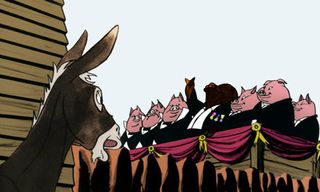
Christopher Hitchens re-reads Animal Farm

Animal-Farm-001 In the Guardian:

Like much of his later work – most conspicuously the much grimmer Nineteen Eighty-Four – Animal Farm was the product of Orwell's engagement in the Spanish civil war. During the course of that conflict, in which he had fought on the anti-fascist side and been wounded and then chased out of Spain by supporters of Joseph Stalin, his experiences had persuaded him that the majority of “left” opinion was wrong, and that the Soviet Union was a new form of hell and not an emerging utopia. He described the genesis of the idea in one of his two introductions to the book:

. . . for the past ten years I have been convinced that the destruction of the Soviet myth was essential if we wanted a revival of the socialist movement. On my return from Spain I thought of exposing the Soviet myth in a story that could be easily understood by almost anyone . . . However, the actual details of the story did not come to me for some time until one day (I was then living in a small village) I saw a little boy, perhaps ten years old, driving a huge carthorse along a narrow path, whipping it whenever it tried to turn. It struck me that if only such animals became aware of their strength we should have no power over them, and that men exploit animals in much the same way as the rich exploit the proletariat.

I proceeded to analyse Marx's theory from the animals' point of view.

The simplicity of this notion is in many ways deceptive. By undertaking such a task, Orwell was choosing to involve himself in a complex and bitter argument about the Bolshevik revolution in Russia: then a far more controversial issue than it is today. Animal Farm can be better understood if it is approached under three different headings: its historical context; the struggle over its publication and its subsequent adoption as an important cultural weapon in the cold war; and its enduring relevance today.

Our Giant Banking Crisis–What to Expect

Krugman_wells_1-051310_jpg_230x464_q85Robin Wells and Paul Krugman in the NYRB:

From an economist’s point of view, there are two striking aspects of This Time Is Different. The first is the sheer range of evidence brought to bear. Reading Reinhart and Rogoff is a reminder of how often economists take the easy road—how much they tend to focus their efforts on times and places for which numbers are readily available, which basically means the recent history of the United States and a few other wealthy nations. When it comes to crises, that means acting like the proverbial drunk who searches for his keys under the lamppost, even though that’s not where he dropped them, because the light is better there: the quarter-century or so preceding the current crisis was an era of relative calm, at least among advanced economies, so to understand what’s happening to us one must reach further back and farther afield. This Time Is Different ventures into the back alleys of economic data, accepting imperfect or fragmentary numbers as the price of looking at a wide range of experience.

The second distinguishing feature is the absence of fancy theorizing. It’s not that the authors have anything against elaborate mathematical modeling. Professor Rogoff’s influential 1996 book Foundations of International Macroeconomics, coauthored with Maurice Obstfeld, contains literally hundreds of fairly abstruse equations. But This Time Is Different takes a Sergeant Friday, just-the-facts-ma’am approach: before we start theorizing, let’s take a hard look at what history tells us. One side benefit of this approach is that the current book manages to be both extremely useful to professional economists and accessible to the intelligent lay reader.

The Reinhart-Rogoff approach has already paid off handsomely in making sense of current events. In 2007, at a time when the wise men of both Wall Street and Washington were still proclaiming the problems of subprime “contained,” Reinhart and Rogoff circulated a working paper—now largely subsumed into Chapter 13 of This Time Is Different—that compared the US housing bubble with previous episodes in other countries, and concluded that America’s profile resembled those of countries that had suffered severe financial crises. And sure enough, we had one too. Later, when many business forecasters were arguing that the deep recession would be followed by a rapid, “V-shaped” recovery, they circulated another working paper, largely subsumed into Chapter 14, describing the historical aftermath of financial crises, which suggested that we would face a prolonged period of high unemployment—and so we have.

Sunday Poem

from Song of Myself

I think I could turn and live with animals, they are so placid
and self-contained,
I stand and look at them long and long.
They do not sweat and whine about their condition,
They do not lie awake in the dark and weep for their sins,
They do not make me sick discussing their duty to God,
Not one is dissatisfied, not one demented with the mania of
owning things,
Not one kneels to another, nor to his kind that lived thousands
of years ago,
Not one is respectable or unhappy over the whole earth. . . .

A gigantic beauty of a stallion, fresh and responsive to my caresses,
Head high in the forehead, wide between the ears,
Limbs glossy and supple, tail dusting the ground,
Eyes full of sparkiling wickedness, ears finely cut, flexibly moving.
His nostrils dilate as my heels embrace him,
His well-built limbs tremble with pleasure as we race around
and return.


by Walt Whitman

Cure cancer with diet?

From Sheknows.com:

Legumes Food extracts as powerful as drugs

In his $40M laboratory at the University of Montreal, Dr. Richard Beliveau used to test new drugs that may help treat cancer. One day, tugged by children with leukemia who stopped him in the corridor of the hospital to ask if he had something new for them to use, he started experimenting with simple food extracts. Beliveau discovered that many simple food extracts had anticancer properties as powerful as many of the drugs he had been testing for the past 30 years. Lenny, one of his friends, learned that he had pancreatic cancer. His wife begged Beliveau to help her design an anticancer diet. She fed Lenny, every day, three times a day, with foods that all had been tested for their anticancer properties. Lenny lived five years beyond his prognosis.

Curry power

Today, the MD Anderson Cancer Center, the largest cancer research institution in the world, is also exploring this avenue. Long used in Ayurvedic medicine in India, the common spice turmeric (one of the main spices in curry) has been found to contain the most potent natural anti-inflammatory ever described – the molecule “curcumin”. Researchers at MD Anderson have shown that it inhibits cancer growth by not only reducing inflammation (necessary for invasion of neighboring tissues) but by inducing cancer cell death (“apoptosis”), slowing down the growth of new blood vessels necessary for tumor expansion (“angiogenesis”), and increasing the efficacy of chemotherapy. This research was recently reviewed in the Journal of the National Cancer Institute (2008).

More here. (Note: I highly recommend the excellent book Anti-Cancer Diet by David Servan-Schreiber.)

Saturday, April 24, 2010

THE DEBAUCHERY OF THE PREAKNESS INFIELD

Manager_clip_image022

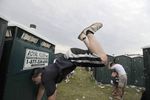
And the fights. I’ve seen everything from slap fights and chest-bumping matches, which occur with greater frequency as race day wears on, to terrifying, bloody, ten-on-one gang-style assaults. The most notorious combatant was Lee Chang Ferrell, who, during the seventh race in 1999, jumped the infield’s fence, ran onto the track, planted his feet into the dirt, and fixed his eyes on the thoroughbreds thundering toward him, poised to duel. As the horses swerved to the rail to dodge Ferrell, he swung his fist and caught jockey Jorge Chavez’s leg. Chavez’s horse, which was toward the front of the pack, turned an ankle and lost pace, while the others sped by untouched. Somehow Ferrell avoided what should have been a certain mauling. In the photograph printed in the Baltimore Sun the next day, he looked almost heroic as he braced to strike the stampeding fleet. A news story published on the day of last year’s Preakness reported that Ferrell has no memory of the encounter.

more from Ben Yaster at Triple Canopy here.

the deadly and mysterious Phoenix flu

In-a-Perfect-World

The first words of “In a Perfect World” are startling: “If you are READING this you are going to DIE!” They come straight from Sara’s journal, which is conspicuously left in the open, as if inviting the detested Jiselle to read it. (She does.) The words are doubly unnerving for us, the readers, for surely they are accurate: By reading the novel, we are reading the journal, too, and the curse turns out to be the common curse on all mankind. Yet we read on, forgetting those words, as Kasischke subtly, believably frees her characters from their anguish. Their resourcefulness in the face of the plague and the gradual mending of seemingly irreparable rifts feel both inevitable and true. Without giving anything away, the book’s final, winding sentence at last puts the words “a perfect world” in their perfect place. The reader may well come away with the odd, exhilarating feeling that a spell has both been cast and broken.

more from Ed Park at the LA Times here.

the bleached regrets / of an old man’s memoirs

Kirchwey-t_CA0-articleInline

More than almost any other contemporary poet, Derek Walcott might seem to be fulfilling T. S. Eliot’s program for poetry. He has distinguished himself in all of what Eliot described as the “three voices of poetry”: the lyric, the narrative or epic, and the dramatic. Since at least his 1984 book “Midsummer,” Walcott has been publishing what might be described as concatenated lyrics, individual poems numbered consecutively and intended to form a conceptual whole. His long 1990 poem “Omeros” would be called canonical were that word not so problematic these days. And, like Eliot, Walcott is also a playwright. Through his long connection with the Trinidad Theater Workshop, he has amassed an impressive body of dramatic works, both in prose and in that tricky form called verse drama. But the kinship with Eliot, for Walcott, extends beyond genre. In his essay “Tradition and the Individual Talent” (1919), Eliot opined that “the more perfect the artist, the more completely separate in him will be the man who suffers and the mind which creates.” Walcott has deliberately avoided the confessional path pioneered by his early friend and supporter Robert Lowell, choosing instead a post-Romantic voice, closely allied with landscape, in which the particulars of a life are incidental to a larger poetic vision, one in which the self is not the overt subject.

more from Karl Kirchwey at the NYT here.

Saturday Poem

Sinead's Voice

Sinead's voice falls into me, impregnating me
as the Holy Spirit impregnated the Virgin Mary.

“Sometimes I am told in commendation . . .
that my movement perished
under the firing squads
of 1916,” wrote Yeats.

Over half a century later,
in a documentary, I see Ben Bulben,
and at its foot, the poet's grave
surrounded by the evening halo.

Still fearing my own end
I foretell the end of the world.
Life still scares me.
Restless, my horse still neighs in his stable.

On the other side of the scales
is the voice of Sinead O'Conner,
perfumed in musk,
like amber in which
forever the whale's death shriek
is captured.

In Sinead's voice, Yeats calm
departure always resounds.

Now it falls into me and impregnates me
like the light of a forgotten
pagan god.

by Peter Semolic
from Hiša iz besed
publisher: Aleph, Ljubljana, 1996
translation: 2004, Ana Jelnikar

What Tea Party Backers Want

From The New York Times:

The latest New York Times/CBS News poll focusing on Tea Party supporters found most of them very angry, generally well-educated, financially secure and deeply pessimistic about the direction of the country. We asked political analysts and historians what they found most illuminating about the poll’s findings, and whether the views of the Tea Party backers have commonly run through American politics.

Past Grievances, Present Hype

Rick Perlstein

Rick Perlstein is the author of “Nixonland: The Rise of a President and the Fracturing of America” and “Before The Storm: Barry Goldwater and the Unmaking of the American Consensus.”

Watching the rise of the Tea Party movement has been a frustration to me, and not just because it is ugly and seeks to traduce so many of the values I hold dear. Even worse has been the overwhelming historical myopia. As the Times’s new poll numbers amply confirm — especially the ones establishing that the Tea Partiers are overwhelming Republican or right-of-Republican — they are the same angry, ill-informed, overwhelmingly white, crypto-corporate paranoiacs that accompany every ascendancy of liberalism within U.S. government. “When was the last time you saw such a spontaneous eruption of conservative grass-roots anger, coast to coast?” asked the professional conservative L. Brent Bozell III recently. The answer, of course, is: in 1993. And 1977. And 1961. And so on.

More here.