An Awareness of What is Missing

Stanley-fish

The German philosopher Jürgen Habermas has long been recognized as the most persistent and influential defender of an Enlightenment rationality that has been attacked both by postmodernism, which derides formal reason’s claims of internal coherence and neutrality, and by various fundamentalisms, which subordinate reason to religious imperatives that sweep everything before them, often not stopping at violence. In his earlier work, Habermas believed, as many did, that the ambition of religion to provide a foundation of social cohesion and normative guidance could now, in the Modern Age, be fulfilled by the full development of human rational capacities harnessed to a “discourse ethics” that admitted into the conversation only propositions vying for the status of “better reasons,” with “better” being determined by a free and open process rather than by presupposed ideological or religious commitments: “…the authority of the holy,” he once declared, “is gradually replaced by the authority of an achieved consensus.”

more from Stanley Fish at The Opinionater here.

an Angel of Death, hangs over France, noyading, fusillading, fighting, gun-boring, tanning human skins

TLS_Scurr_707688a

“It is a wild savage Book, itself a kind of French Revolution; – which perhaps, if Providence have so ordered it, the world had better not accept when offered it? With all my heart! What I do know of it is that it has come hot out of my own soul; born in blackness whirlwind and sorrow; that no man, for a long while, has stood speaking so completely alone under the Eternal Azure, in the character of man only; or is likely for a long while so to stand:– finally that it has gone as near to choking the life out of me as any task I should like to undertake for some years to come; which also is an immense comfort, indeed the greatest of all.” The term exhaustion scarcely covered the state he was in: he wanted to weep and pray when he put down his pen, but did not do either “at least not visibly or audibly”. He was poor, he had a sick wife to support and his own health was fragile. He was forty-two and had long hoped to live by writing, but his only substantial work so far, Sartor Resartus, (an experimental narrative serialized in Fraser’s Magazine between 1833 and 1834) had met with general bafflement. For his book on the French Revolution, Carlyle had a “half- profits” contract with his publisher James Fraser, which would give him no income from the finished text until the production and printing costs had been recouped. Only then would he be entitled to half of any money it might make.

more from Ruth Scurr at the TLS here.

Friday Poem

The Heart of Herakles

Lying under the stars,
In the winter night,
Late, while the autumn
Constellations climb the sky,
As the cluster of Hercules
Falls down the west
I put the telesccope by
And watch Deneb
Move towards the zenith.
My body is asleep. Only
My eyes and brain are awake.
The stars stand around me
Like gold eyes. I can no longer
Tell where I begin and leave off.
The faint breeze in the dark pines,
And the invisible grass,
The tipping earth, the swarming stars
Have an eye that sees itself.

by Kenneth Rexroth

Why are volcanic plumes so dangerous?

From MSNBC:

Fumes The mushrooming cloud of ash from the eruption of the Eyjafjallajoekull volcano in Iceland has resulted in the closure of major airports throughout the U.K. and Scandinavia. The grounded flights make sense, as these super-heated plumes can do more than reduce visibility. They're downright hazards for airplanes. “Basically, planes and volcanic ash don't mix,” Elizabeth Cory, a spokesperson for the Federal Aviation Administration, said today. “When ash is ingested into the engine, it creates problems for the plane, including electrical failure.” The thing that makes volcanic plumes so dangerous is that they look extremely similar to regular clouds, visibly and on radar screens. Even when ash isn't visible to the human eye, it can still pose a threat to aircrafts because of the chemicals floating within volcanic plumes.

Airborne ash makes air travel extremely dangerous and difficult for several reasons, the number one being that when the air that gets sucked through an aircraft's jet engine is mixed with ash, it can cause engine failure. The ash particles that make up volcanic clouds contain powder-size to sand-size particles of igneous rock material that have been blown into the air by an erupting volcano. The tiny particles instantly melt when faced with the internal temperature of an in-flight jet engine, which exceeds 1,832 degrees Fahrenheit (1,000 degrees Celsius).

More here.

Thursday, April 15, 2010

the least interesting thing to do with a puzzle is solve it

22378_299520147847_538727847_4552072_6181312_s

Why would anyone want to play with a toy that is so damn hard? The Rubik’s Cube entered our collective cultural experience 30 years ago, next month, and there is still no satisfying answer. At first, in the early ’80s, we all had fun just spinning it around in our hands. The original Cube was an elegant object — a perfect 3x3x3, solid but also flexible and smooth. It was covered in bright colored stickers and felt good to hold. But it didn’t make hilarious noises or crazy smells. It didn’t talk or pee or dance. You couldn’t dress it up and (a minor thing here) it was impossible. Even so, we all had to have it. Its impossibility was funny, and this satisfied us. Then, quietly, slowly, we started to hear the stories. People, children like us, were starting to solve it. The Cube transformed these boys (because they were mostly boys) from goofy weird dudes without social skills into superhuman weird dudes that were intimidating. The boys who solved Rubik’s Cube were like wizards, distant and terrifying demigods with magical qualities. This is because a single, unspeakable question lingered around them: How much committed alone time had they spent with the Cube? We didn’t want to know the answer. Hours? Days? Weeks?

more from Stefany Anne Golberg at The Smart Set here.

He Conquered the Conjecture

Paulos_1-042910_jpg_230x704_q85John Allen Paulos reviews Masha Gessen's biograpghy of Grigory Perlman, Perfect Rigor: A Genius and the Mathematical Breakthrough of the Century, in the NYRB:

Masha Gessen’s Perfect Rigor is a fascinating biography of Grigory (Grisha) Perelman, the fearsomely brilliant and notoriously antisocial Russian mathematician. Perelman proved the Poincaré Conjecture, one of mathematics’ most important and intractable problems, in 2002—almost a century after it was first posed, and just two years after the Clay Mathematics Institute offered a one-million-dollar prize for its solution.

Gessen herself grew up in the former Soviet Union, is roughly Perelman’s age, and has a mathematical background, which facilitated her interviews with many of his classmates, mentors, teachers, and colleagues. Not surprisingly, she did not interview the reclusive mathematician or his mother, with whom he currently lives. But the others give a convincing picture not only of him but also of the strange world of Soviet mathematics, which was divided between the official, rigid mathematical establishment and the informal mathematical counterculture. The former, because of its historical importance to engineering and military projects, was supported by the Party and the government; the latter consisted of scholars who loved mathematics for its own sake and used it as a way to escape the stultifying influence of officious apparatchiks.

Born in 1966 to Jewish parents, Perelman came of age when this distinction was breaking down during the era of glasnost and perestroika. By the time he was ten he began to show a talent for mathematics, and his mother, who had abandoned her own graduate work in the field in order to raise him, enrolled him in an after-school math club coached by Sergei Rukshin, a mathematics undergraduate at Leningrad University. Rukshin was a troubled youth who became obsessed with mathematics and gradually developed a rigorous, distinctive, and very effective method of teaching problem-solving. Over the last twenty years, approximately half of all Russian entrants to the International Mathematical Olympiad have studied with him.

Only nineteen himself when he met Perelman, Rukshin stayed in contact with him from his first after-school math club until, it seems, a relatively recent break. He found that the not yet adolescent Perelman, described by Gessen as “an ugly duckling among ugly ducklings…pudgy and awkward,” was already unusually deliberate and precise in his thinking. Alexander Golovanov, who studied math alongside Perelman, said that Rukshin’s growing commitment to and love for Perelman came to give meaning to his own life. Like many a competitive sports coach, Rukshin hated it when his charges engaged in anything other than his sport. This was an unnecessary restriction in Perelman’s case since from the beginning he seemed uninterested in girls or anything other than mathematics.

7 Unproduced Screenplays by Famous Intellectuals

300px-GeorgesBataille Elif Batuman in Salon:

Theodor Adorno and Max Horkheimer

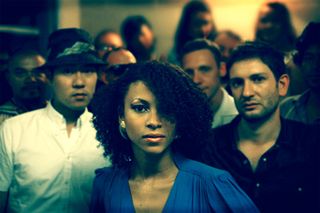
In Los Angeles in the 1940s, Frankfurt School philosophers Theodor Adorno and Max Horkheimer spent nearly six years working on a screenplay about prejudice. The final draft, titled “Below the Surface,” features a violent commotion on a subway car, during which a woman carrying a vacuum cleaner either falls or is pushed onto the tracks. A one-legged peddler tries to rally the passengers against a Jewish man, who had previously jostled him. At the end of the film, the audience is to be polled regarding the guilt or innocence of the Jew; other audiences might be shown a similar film in which the Jew would be substituted by a “Negro” or a “Gentile white-collar worker.” “Below the Surface” was batted around Hollywood for years, subjected to numerous scriptwriting consultations, and pitched to the likes of Jack Warner and Elia Kazan. It was never produced.

Georges Bataille

In 1944, the French writer and philosopher Georges Bataille, the so-called “metaphysician of evil,” decided to write a “commercial” film starring Fernandel, a singer-comedian particularly famous for his horselike teeth. In a departure from earlier roles, Fernandel was to play a bourgeois Marseilles soap manufacturer who, during his children’s holidays, assumes the costume and character of the Marquis de Sade. With the participation of some local prostitutes, he reenacts the practices described in “120 Days of Sodom,” Sade’s novel about four scientific-minded libertines who lock themselves for months in a medieval castle, subjecting forty-six innocent young people to escalating sexual torture, culminating with murder. When the soapmaker’s experiments likewise result in the death of a prostitute, he commits suicide, effecting “the triumph of morality.” After approaching one producer, who was not encouraging, Bataille abandoned the script, which has been lost to posterity.

Aldous Huxley

In 1945, Walt Disney signed Aldous Huxley to write a screenplay for “Alice and the Mysterious Mr. Carroll”: a combination live-action and animated incorporation of “Alice’s Adventures in Wonderland” with the biography of Lewis Carroll (Charles Dodgson). Dodgson, a beleaguered Oxford lecturer known as the Dodo, has already written “Alice in Wonderland” under the name Lewis Carroll. He and Alice take refuge in Wonderland from Alice’s cruel governess and Dodgson’s Tory vice-chancellor. These villains, who disapprove of “nonsense books,” must never learn that Dodgson and Carroll are the same person, lest Dodgson be barred from a coveted university librarianship. A series of fantastic adventures culminates with the resolution of the Carroll-Dodgson identity through a deus-ex-machina appearance by Queen Victoria. “It was so literary I could understand only every third word,” Disney said of Huxley’s script, which he didn’t end up using for his adaptation of “Alice in Wonderland” (1951).

[H/t: Amitava Kumar]

The Single Mother’s Manifesto

240px-Jk-rowling-crop Chris Bertram over at Crooked Timber points to this piece by J. K. Rowling on why she will not be voting Tory, in The Times (London):

[S]ome will say. Given that you have long since left single parenthood for marriage and a nuclear family; given that you are now so far from a life dependent on benefits that Private Eye habitually refers to you as Rowlinginnit, why do you care? Surely, nowadays, you are a natural Tory voter?

No, I’m afraid not. The 2010 election campaign, more than any other, has underscored the continuing gulf between Tory values and my own. It is not only that the renewed marginalisation of the single, the divorced and the widowed brings back very bad memories. There has also been the revelation, after ten years of prevarication on the subject, that Lord Ashcroft, deputy chairman of the Conservatives, is non-domiciled for tax purposes.

Now, I never, ever, expected to find myself in a position where I could understand, from personal experience, the choices and temptations open to a man as rich as Lord Ashcroft. The fact remains that the first time I ever met my recently retired accountant, he put it to me point-blank: would I organise my money around my life, or my life around my money? If the latter, it was time to relocate to Ireland, Monaco, or possibly Belize.

I chose to remain a domiciled taxpayer for a couple of reasons. The main one was that I wanted my children to grow up where I grew up, to have proper roots in a culture as old and magnificent as Britain’s; to be citizens, with everything that implies, of a real country, not free-floating ex-pats, living in the limbo of some tax haven and associating only with the children of similarly greedy tax exiles.

A second reason, however, was that I am indebted to the British welfare state; the very one that Mr Cameron would like to replace with charity handouts. When my life hit rock bottom, that safety net, threadbare though it had become under John Major’s Government, was there to break the fall. I cannot help feeling, therefore, that it would have been contemptible to scarper for the West Indies at the first sniff of a seven-figure royalty cheque. This, if you like, is my notion of patriotism. On the available evidence, I suspect that it is Lord Ashcroft’s idea of being a mug.

No Time for a Trade War

Pa3444c_thumb3Joseph E. Stiglitz in Project Syndicate:

The battle with the United States over China’s exchange rate continues. When the Great Recession began, many worried that protectionism would rear its ugly head. True, G-20 leaders promised that they had learned the lessons of the Great Depression. But 17 of the G-20’s members introduced protectionist measures just months after the first summit in November 2008. The “Buy American” provision in the United States’ stimulus bill got the most attention. Still, protectionism was contained, partly due to the World Trade Organization.

Continuing economic weakness in the advanced economies risks a new round of protectionism. In America, for example, more than one in six workers who would like a full-time job can’t find one.

These were among the risks associated with America’s insufficient stimulus, which was designed to placate members of Congress as much as it was to revive the economy. With soaring deficits, a second stimulus appears unlikely, and, with monetary policy at its limits and inflation hawks being barely kept at bay, there is little hope of help from that department, either. So protectionism is taking pride of place.

The US Treasury has been charged by Congress to assess whether China is a “currency manipulator.” Although President Obama has now delayed for some months when Treasury Secretary Timothy Geithner must issue his report, the very concept of “currency manipulation” itself is flawed: all governments take actions that directly or indirectly affect the exchange rate. Reckless budget deficits can lead to a weak currency; so can low interest rates. Until the recent crisis in Greece, the US benefited from a weak dollar/euro exchange rate. Should Europeans have accused the US of “manipulating” the exchange rate to expand exports at its expense?

Although US politicians focus on the bilateral trade deficit with China – which is persistently large – what matters is the multilateral balance. When demands for China to adjust its exchange rate began during George W. Bush’s administration, its multilateral trade surplus was small. More recently, however, China has been running a large multilateral surplus as well.

Saudi Arabia also has a bilateral and multilateral surplus: Americans want its oil, and Saudis want fewer US products. Even in absolute value, Saudi Arabia’s multilateral merchandise surplus of $212 billion in 2008 dwarfs China’s $175 billion surplus; as a percentage of GDP, Saudi Arabia’s current-account surplus, at 11.5% of GDP, is more than twice that of China. Saudi Arabia’s surplus would be far higher were it not for US armaments exports.

A Genetic Disorder That Removes Racial Bias?

340x_social-anxietyAnnalee Newitz in io9.com:

People with Williams Syndrome lack 26 genes found in a typical human genome. As a result they are inordinately friendly, and experience no social anxiety. Now a new study reveals that they may also be free of racial bias.

Over at Not Exactly Rocket Science, Ed Yong talks about the new study, published this week in Current Biology. Yong writes:

Santos compared the behaviour of 20 white children with Williams syndrome, aged 7 to 16, and 20 typical white children of similar backgrounds and mental ages. To do so, she used a test called the Preschool Racial Attitude Measure (PRAM-II), which is designed to tease out traces of gender or racial biases in young children.

PRAM-II consists of a picture book where every page includes a pair of people of different genders or skin types. The researcher tells a selection of stories to accompany the images and the children have to point to the person whom they think the story is about. As they hear positive or negative adjectives, they reveal any underlying racial bias if they point to light-skinned or dark-skinned people, or men or women, more frequently.

The typical children showed a strong tendency to view light-skinned people well and dark-skinned people poorly. Out of their responses, 83% were consistent with a pro-white bias. In contrast, the children with Williams syndrome only showed such responses 64% of the time, which wasn't significantly different from chance.

War or Peace on the Indus?

John Briscoe in The South Asian Idea Weblog:

ScreenHunter_01 Apr. 15 14.34 Anyone foolish enough to write on war or peace in the Indus needs to first banish a set of immediate suspicions. I am neither Indian nor Pakistani. I am a South African who has worked on water issues in the subcontinent for 35 years and who has lived in Bangladesh (in the 1970s) and Delhi (in the 2000s). In 2006 I published, with fine Indian colleagues, an Oxford University Press book titled India’s Water Economy: Facing a Turbulent Future and, with fine Pakistani colleagues, one titled Pakistan’s Water Economy: Running Dry.

I was the Senior Water Advisor for the World Bank who dealt with the appointment of the Neutral Expert on the Baglihar case. My last assignment at the World Bank (relevant, as described later) was as Country Director for Brazil. I am now a mere university professor, and speak in the name of no one but myself.

I have deep affection for the people of both India and Pakistan, and am dismayed by what I see as a looming train wreck on the Indus, with disastrous consequences for both countries. I will outline why there is no objective conflict of interests between the countries over the waters of the Indus Basin, make some observations of the need for a change in public discourse, and suggest how the drivers of the train can put on the brakes before it is too late.

More here.

Thursday Poem

Foxtail Pine

Foxtail pinebark smells like pineapple: Jeffries
cones prick you hand: Ponderosa

nobody know what they are, saying
“needles three to a bunch.”

….turpentine tin can hangers
….high lead riggers

“the true fir cone stands straight,
the doug fir cone hangs down.”

—wild pigs eat acorns in those hills
cascara cutters
tanbark oak bark gatherers
myrtlewood burl bowl-makers
little cedar dolls,
……baby girl born from the split crotch
…………..of a plum
………daughter of the moon—

foxtail pine with a
clipped curve-back cluster of tight
…….five-needle bunches
….the rough red bark scale
and jigsaw pieces sloughed off
……………scattered on the ground.
—what am I doing saying “foxtail pine”?

these conifers whose home was ice
age tundra, taiga, they of the
…….naked sperm
do whitebark pine and white pine seem the same?
…….a sort of tree
…….its leaves are needles
…….like a fox's brush
(I call him fox because he looks that way)
…….and call this other thing, a
;;;;;;;foxtail pine

by Gary Snyder
from The Back Country;
New Directions Publishing, 1963

Freeing human eggs of mutant mitochondria

From Nature:

News.2010.180 Researchers have successfully transplanted the genetic material in the nucleus of a fertilized human egg into another fertilized egg, without carrying over mitochondria, the energy-producing structures of the cell. The technique could be used to prevent babies from inheriting diseases caused by mutations in the DNA of mitochondria, which are present in the cytoplasm of the egg. The British team carrying out the study used fertilized eggs donated by couples undergoing fertility treatment, and which were unsuitable for in vitro fertilization (IVF). At this early stage the sperm and egg nuclei, which contain most of the parental genes, have not yet fused. The researchers removed these nuclei and transferred them into another fertilized egg cell which had had its own nuclei removed.

As very little cytoplasm was transferred with the nuclei, the transfer left behind almost all the mitochondria from the donor egg. The researchers then grew the manipulated embryos for 6 to 8 days to determine whether they were able to continue development, and tested for the presence of donor mitochondrial DNA. Their work is published online by Nature today. Last year, researchers in the United States used a similar technique in monkeys; four embryos developed to term, and so far seem to be healthy and normal. “It's very exciting,” says David Thorburn, a geneticist who studies mitochondrial diseases at the Murdoch Childrens Research Institute in Melbourne. “It's a real shot in the arm for families that have had their children die from these various diseases.”

More here.

A New Culprit in Cancer’s Spread

From Science:

Image Researchers say they have discovered a new molecular player in determining whether breast cancer cells will spread through the body: long strands of RNA known as lincRNAs that turn off tumor suppressor genes. The finding may lead to a test for predicting metastasis as well as drugs for preventing it. Several factors influence whether cells will turn cancerous and later go mobile. Mutations in tumor suppressor genes such as p53 and BRCA1, play a role, as do “microRNAs” that silence critical genes. Problems with lincRNAs appear to be another mechanism. Researchers first identified lincRNAs—short for large intervening noncoding RNAs—9 years ago. Often hundreds or thousands of times longer than microRNAs, which run about 22 nucleotides, some lincRNAs seem to influence gene expression by binding to enzymes that modify chromatin, the DNA-protein package that makes up chromosomes. The lincRNAs direct these chromatin-shaping enzymes to specific sites along the chromosomes, where they tack chemical groups onto genes, blocking them from being expressed. A lincRNA known as HOTAIR, for example, helps tell embryonic skin cells which genes to express depending on their location in the body.

Because some cancer genes had popped up in this skin cell work, cancer biologist Howard Chang of Stanford University began exploring whether HOTAIR and other lincRNAs might also play a role in cancer. His group and collaborators eventually homed in on HOTAIR in human breast cancer samples. Levels of HOTAIR were hundreds of times higher than normal in samples from metastatic breast cancer, the researchers found, and they were sometimes abnormally high in primary tumors as well. Looking at samples from 132 women with breast cancer followed for many years, the team also found that women with high HOTAIR levels in their primary tumor were three times more likely to develop metastatic cancer and die.

More here.

Wednesday, April 14, 2010

We Can’t Let the Pope Decide Who’s a Criminal

100412_FW_PopeTN Christopher Hitchens in Slate:

It must be noted, also, that all the letters from diocese to Ratzinger and from Ratzinger to diocese were concerned only with one question: Can this hurt Holy Mother Church? It was as if the children were irrelevant or inconvenient (as with the case of the raped boys in Ireland forced to sign confidentiality agreements by the man who is still the country's cardinal). Note, next, that there was a written, enforced, and consistent policy of avoiding contact with the law. And note, finally, that there was a preconceived Ratzinger propaganda program of blaming the press if any of the criminal conduct or obstruction of justice ever became known.

The obscene culmination of this occurred on Good Friday, when the pope sat through a sermon delivered by an underling in which the exposure of his church's crimes was likened to persecution and even—this was a gorgeous detail—to the pogroms against the Jews. I have never before been accused of taking part in a pogrom or lynching, let alone joining a mob that is led by raped deaf children, but I'm proud to take part in this one.

The keyword is Law. Ever since the church gave refuge to Cardinal Bernard Law of Boston to spare him the inconvenience of answering questions under oath, it has invited the metastasis of this horror. And now the tumor has turned up just where you might have expected—moving from the bosom to the very head of the church. And by what power or right is the fugitive cardinal shielded? Only by the original agreement between Benito Mussolini and the papacy that created the pseudo-state of Vatican City in the Lateran Pact of 1929, Europe's last remaining monument to the triumph of Fascism. This would be bad enough, except that Ratzinger himself is now exposed as being personally as well as institutionally responsible for obstructing justice and protecting and enabling pederasts.

One should not blame only the church here. Where was American law enforcement during the decades when children were prey? Where was international law while the Vatican became a place of asylum and a source of protection for those who licensed or carried out the predation?

The Ghost of Bobby Lee

BobbyLee Ta-Nehisi Coates:

Ken Burns' Civil War documentary makes note of the fact that General Lee was opposed to slavery. I basically took that as true, until–in all honesty–some of my commenters informed me that it, in fact, was not. One of the saddest, and yet telling, aspects of the War, for me personally, is that on the two occasions when Confederate troops headed North, they kidnapped free blacks and sold them into slavery. Ditto for black soldiers who were captured and “lucky” enough not to be killed. Anyway, if you have a moment check out this lecture a reader was kind enough to send to me. At about the 55:00 mark, Elizabeth Brown Pryor talks about Lee's relationship to slavery, and more interestingly, how the myth that he was somehow anti-slavery came to be.

It was sad to hear frankly. If the war actually weren't about slavery, I think all our lives would be a lot easier. But as I thought on it, my sadness was stupid. What undergirds all of this alleged honoring of the Confederacy, is a kind of ancestor-worship that isn't. The Lost Cause is necromancy–it summons the dead and enslaves them to the need of their vainglorious, self-styled descendants. Its greatest crime is how it denies, even in death, the humanity of the very people it claims to venerate. This isn't about “honoring” the past–it's about an inability to cope with the present.

The God of History bounds the Confederacy in its own chains. From the declaration off secession in Texas…

…in this free government *all white men are and of right ought to be entitled to equal civil and political rights* [emphasis in the original]; that the servitude of the African race, as existing in these States, is mutually beneficial to both bond and free, and is abundantly authorized and justified by the experience of mankind, and the revealed will of the Almighty Creator, as recognized by all Christian nations; while the destruction of the existing relations between the two races, as advocated by our sectional enemies, would bring inevitable calamities upon both and desolation upon the fifteen slave-holding states….

To Virginia…

That Dating vs. Hooking Up Study

LindsayLindsay Beyerstein in Focal Point:

A recent study on college students' preferences for dating vs. hookup is, unaccountably, generating national media attention. The authors found that a bunch of 18-year-old college freshmen in the South embraced traditional gender norms. The study is called “To Hook Up or Date: Which Gender Benefits?” Notice the operative assumptions: That hooking up and dating are mutually exclusive; and that college intimacy is a zero-sum game that pits one gender against the other.

The paper opens with a startling claim, namely that “hooking up has replaced dating” on college campuses. The authors go on to say that college students now report more hookups than first dates. The authors define a hookup as an encounter between strangers or passing acquaintances with no expectation of commitment. The physical component can be anything from kissing to intercourse.

The authors acknowledge that theirs was a “sample of convenience. 221 subjects completed the 20-minute pencil and paper survey. They were all undergraduates, mostly freshmen, at James Madison University, a public school in Virginia. Their average age was 18.72 years. Women subjects outnumbered men by more than 2:1 (presumably because there were more female psych students in need of research participation credit).

If hookup culture killed dating, you wouldn't know it from this sample. Nearly half the subjects said they were in a relationship: 29 had been dating for less than 6 months; 76 had been dating for at least 7 months, and 1 was engaged. Unfortunately, the study doesn't break down relationship status by gender.

Students were asked whether they preferred traditional dating or hooking up in general. They were also asked about their preference for dating vs. hooking up in a variety of specific situations. For example, if they were drinking alcohol with an attractive person, would they prefer to go on a date with them or hook up with them? If they saw a potential for a long-term relationship with someone, would they prefer to date or hook up?

Zizek on Avatar

20100303_2010+10avatar_w Fatema Ahmed in the LRB blog reports:

The highlight of the April issue of Cahiers du Cinéma is an interview with Slavoj Žižek. Following up on a piece he wrote about Avatar, reprinted in the March issue of Cahiers, he confesses to his interviewers that he hasn’t seen the film; as a good Lacanian, the idea is enough, and we must trust theory. Žižek promises that he will see the film and then write a Stalinist ‘self-criticism’.

The good Lacanian goes on to inform the Cahiers editors that he wrote about The Talented Mr Ripley before seeing it, and that although he has seen Psycho and Vertigo (the interviewers sound quite jittery by this point), there’s a long chapter on Rossellini in Jacques Lacan in Hollywood and out and, no, he hadn’t seen the films when he wrote it. Out of respect for Lacan? Not this time: ‘As a good Hegelian, between the idea and the reality, I choose the idea.’

Zizek's reading without having seen the film, in the New Statesman:

Given the 3-D hyperreality of the film, with its combination of real actors and animated digital corrections, Avatar should be compared to films such as Who Framed Roger Rabbit (1988) or The Matrix (1999). In each, the hero is caught between our ordinary reality and an imagined universe – of cartoons in Roger Rabbit, of digital reality in The Matrix, or of the digitally enhanced everyday reality of the planet in Avatar. What one should thus bear in mind is that, although Avatar's narrative is supposed to take place in one and the same “real” reality, we are dealing – at the level of the underlying symbolic economy – with two realities: the ordinary world of imperialist colonialism on the one hand, and a fantasy world, populated by aborigines who live in an incestuous link with nature, on the other. (The latter should not be confused with the miserable reality of actual exploited peoples.) The end of the film should be read as the hero fully migrating from reality into the fantasy world – as if, in The Matrix, Neo were to decide to immerse himself again fully in the matrix.

This does not mean, however, that we should reject Avatar on behalf of a more “authentic” acceptance of the real world. If we subtract fantasy from reality, then reality itself loses its consistency and disintegrates. To choose between “either accepting reality or choosing fantasy” is wrong: if we really want to change or escape our social reality, the first thing to do is change our fantasies that make us fit this reality. Because the hero of Avatar doesn't do this, his subjective position is what Jacques Lacan, with regard to de Sade, called le dupe de son fantasme.

This is why it is interesting to imagine a sequel to Avatar in which, after a couple of years (or, rather, months) of bliss, the hero starts to feel a weird discontent and to miss the corrupted human universe. The source of this discontent is not only that every reality, no matter how perfect it is, sooner or later disappoints us. Such a perfect fantasy disappoints us precisely because of its perfection: what this perfection signals is that it holds no place for us, the subjects who imagine it.