
Temples of Smoke
Fire shimmied and reached up
From the iron furnace and grabbed
Sawdust from the pitchfork
Before I could make it across
The floor or take a half step
Back, as the boiler room sung
About what trees were before
Men & money. Those nights
Smelled of greenness & sweat
As steam moved through miles
Of winding pipes to turn wheels
That pushed blades and rotated
Man-high saws. It leaped
Like tigers out of a pit,
Singeing the hair on my head,
While Daddy made his rounds
Turning large brass keys
In his night-watchman’s clock,
Out among columns of lumber & paths
Where a man and woman might meet.
I daydreamed some freighter
Across a midnight ocean,
Leaving Taipei & headed
For Tripoli. I saw myself fall
Through a tumbling inferno
As if hell was where a boy
Shoveled clouds of sawdust
Into the wide mouth of doubt.
by Yusef Komunyakaa
from New American Poets of the ’90s
David R. Godine, publisher, 1991
 Anne Applebaum, as anyone familiar with her writing will know, is well-positioned to catalogue this new age of autocracy. Like her, Autocracy, Inc. is clear-sighted and fearless. I remember disagreeing with her genteelly at editorial meetings in the early 1990s, when she was writing about the danger that Russia’s post-communist implosion would one day present for the west, after Boris Yeltsin left office. She talked even then about the need for Nato to build up its defences against the time when Russia would be resurgent; while I, having spent so much time in the economic devastation of Moscow and St Petersburg, thought the best way for the west to protect itself was by being far more generous and welcoming towards Russia. Events have shown which of us was right, and it wasn’t me.
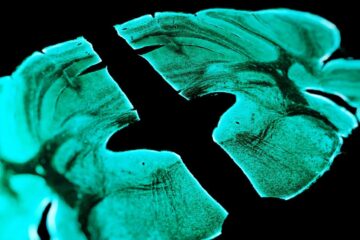 A newly identified brain pathway in mice could explain why placebos, or interventions designed to have no therapeutic effect, still relieve pain. Developing drugs that target this pathway may lead to
  Once upon a time, Henderson argues, the upper classes used to signal their status by purchasing expensive material goods. But as the kinds of goods that used to be reserved for members of the upper classes have become available to a much wider stratum of society, the affluent and highly educated have resorted to different status symbols to signal their superior standing. This is why luxury beliefs—jargon-heavy political slogans calling for positions that are widely unpopular among the general population—have substituted for luxury goods.
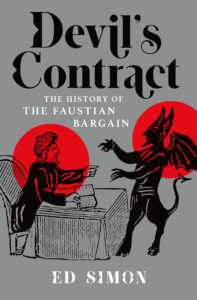 My desire to write a cultural history of the Faust legend goes back a few years earlier than my pilgrimage to the Deptford churchyard, around the time that I attended an adaptation of the play entitled faustUS staged by the theater collective 404 Strand in my hometown of Pittsburgh. Basing the script on the shorter, so-called “Text A” of Marlowe’s play, a tauter and more cryptic work that cuts the slapstick that mars more traditional productions of Doctor Faustus, the performance was hallucinatory, ritualistic, psychedelic, incantatory. A work of conjuration. With the audience invited to sit in an ad hoc theater-in-the-round constructed on the stage of the Kelly Strayhorn Theater, we all faced a rusted iron-cage in which the action of the play would be set. I was in the front row.
 If you ask Bette Midler how she got her part in the new film The Fabulous Four, it wouldn’t have anything to do with her legendary status as a performer, or that she’s an Oscar-nominated actor. “I think they needed a ham, a big ole ham. So, I got that part.” Midler plays Marilyn, a widow getting remarried who rekindles a friendship with her three college girlfriends, played by Susan Sarandon, Sheryl Lee Ralph and Megan Mullally. “No actor doesn’t like to chew the scenery, even if they don’t admit it. So, to have the permission to pull out all the stops is always great.” What was also great was working with her three costars. “Working with these these girls…girls, girls, oh my God, we’re 100! These women! Working with these women was really an eye-opener because everybody’s process is different.”
 A climate scientist who was demoted for speaking out by the administration of former US president Donald Trump is seeking an investigation into her case and demanding changes to personnel policies to prevent similar retaliation against others in future. Her supporters say the proposed reforms could help her agency, the US Geological Survey (USGS), as well as others safeguard science in the event of a second Trump administration, which many fear will be even more efficient than the first at
  L
L Sixty-five years ago, on July 17, 1959, Billie Holiday died at Metropolitan Hospital in New York. The 44-year-old singer arrived after being turned away from a nearby charity hospital on evidence of drug use, then lay for hours on a stretcher in the hallway,
  Perhaps the greatest quest in particle physics, for perhaps half a century now, has been to find a discrepancy between theory and experiment when it comes to the Standard Model. One fascinating place to look is at the magnetic moment of the muon: a heavy, unstable relative of the electron. A Fermilab experiment known as
  Last Tuesday, President Biden signed into law America’s first comprehensive nuclear energy bill
  T
T America currently finds itself in
  Anthe (ಅಂತೆ) is one of my favorite words in the Kannada language. Somewhat meaningless by itself, it adds so much nuance and emotion when appended to a sentence that we Kannadigas cannot carry on a conversation without using it. Depending on the context and the speaker’s tone, anthe can convey an expression of surprise or the understanding that gossip is being shared. It could mean “so it happened,” “that’s how it is,” “apparently,” or “it seems.” The latter comes closest to a direct translation, but is a frustratingly simple choice. Anthe will only ever half-heartedly migrate to English. Banu Mushtaq, whose short stories I have been translating recently, and whose “