The Chilean Forest
Under the volcanoes, beside the snow-capped mountains,
among the huge lakes, the fragrant, the silent, the tangled
Chilean forest…
My feet sink down into the dead leaves, a fragile twig crackles,
the giant rauli trees rise in all their bristling height,
a bird from the cold jungle passes over, flaps its wings,
and stops in the sunless branches. And then, from its hideaway,
it sings like an oboe…
The wild scent of the laurel, the dark scent of the boldo herb,
enter my nostrils and flood my whole being…
The cypress of the Guaitecas blocks my way…
This is a vertical world: a nation of birds, a plenitude of leaves…
I stumble over a rock, dig up the uncovered hollow,
an enormous spider covered with red hair
stares up at me, motionless, as huge as a crab…
A golden carabus beetle blows its mephitic breath at me,
as its brilliant rainbow disappears like lightning…
Going on, I pass through a forest of ferns
much taller than I am: from their cold green eyes
sixty tears splash down on my face and, behind me,
their fans go on quivering for a long time…
A decaying tree trunk: what a treasure!…
Black and blue mushrooms have given it ears,
red parasite plants have covered it with rubies,
other lazy plants have let it borrow their beards,
and a snake springs out of the rotted body
like a sudden breath, as if the spirit of the dead trunk
were slipping away from it… Farther along,
each tree stands away from its fellows…
They soar up over the carpet of the secretive forest,
and the foliage of each has its own style, linear, bristling,
ramulose, lanceolate, as if cut by shears moving in infinite ways…
A gorge; below, the crystal water slides over granite and jasper…
A butterfly goes past, bright as a lemon, dancing between
the water and the sunlight… Close by, innumerable calceolarias
nod their little yellow heads in greeting…
High up, red copihues (Lapageria rosea) dangle like drops
from the magic forest’s arteries…
A fox cuts through the silence like a flash, sending a shiver
through the leaves, but silence is the law of the plant kingdom…
The barely audible cry of some bewildered animal far off…
The piercing interruption of a hidden bird… The vegetable world
keeps up its low rustle until a storm chums up all the music of the earth.
Anyone who hasn’t been in the Chilean forest
doesn’t know this planet.
I have come out of that landscape,
that mud, that silence, to roam,
to go singing through the world.
by Pablo Neruda
from Memoirs

 The medals keep coming for US swimmers at the 2024 Olympic Games in Paris — and that’s in part thanks to science.
 This remarkable book begins dramatically and truthfully: ‘A monstrous child is blocking my view and has carved a nest in the soft darkness of my head. It eats the hours, this child, leaving me only crumbs.’ Motherhood can be overwhelming, however longed for. It is never a small thing, even if the rest of the world chooses to ignore it or view it as a block to professionalism. Cyril Connolly’s remark in Enemies of Promise (1938), ‘There is no more sombre enemy of good art than the pram in the hall’, was, of course, a reference to male creativity. But women have routinely been brainwashed into concurring with this dismissive observation – made, admittedly, before Connolly had children. In the 1950s, respected male tutors in colleges of art would dismiss female making as ‘frustrated maternity’. The sculptor Reg Butler asked Slade School of Fine Art students in 1962, ‘Can a woman become a vital creative artist without ceasing to be a woman except for the purposes of a census?’
 Fifty years ago, a young woman was kidnapped by the Symbionese Liberation Army, a ragtag group of revolutionaries willing to kill for gentle causes. For weeks, she recorded strident, sarcastic messages at her captors’ bidding, messages that bewildered and disturbed their intended audience. In time, she was taught the group’s thinking, given a nom de guerre (Tania), and handed a sawed-off carbine. She waved it around to help the SLA rob a bank—and later sprayed bullets from a machine gun to help them escape arrest. Of her own volition, she hid out with them for nearly a year. Public response swung from warm concern to fury.
 A backup of life on Earth could be kept safe in a permanently dark location on the moon, without the need for power or maintenance, allowing us to potentially restore organisms if they die out.
 Traditionally, Donald Trump has been
 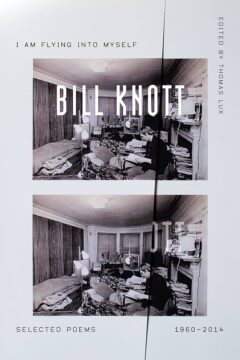 While Knott may have alienated his peers in what
 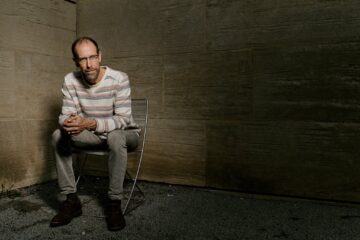 David Keith was a graduate student in 1991 when a volcano erupted in the Philippines, sending a cloud of ash toward the edge of space. Seventeen million tons of sulfur dioxide released from Mount Pinatubo spread across the stratosphere, reflecting some of the sun’s energy away from Earth. The result was a drop in average temperatures in the Northern Hemisphere by roughly one degree Fahrenheit in the year that followed. Today, Dr. Keith cites that event as validation of an idea that has become his life’s work: He believes that by intentionally releasing sulfur dioxide into the stratosphere, it would be possible to lower temperatures worldwide, blunting global warming.
 Baldwin Hills juts up 500 feet from the flat expanse of the Los Angeles Basin, the result of millennia of seismic activity along the Newport-Inglewood Fault, a dextral strike-slip fault that runs for 47 miles from Culver City through Signal Hill to Newport Beach. The fault, formed some 30 million years ago when the Pacific plate collided with the North American plate (an intersection that now sits at the San Andreas Fault), expresses on the surface as a series of low, irregular hills. Below the surface, seismic activity created a series of oil and gas reservoirs, including the Inglewood Oil Field.
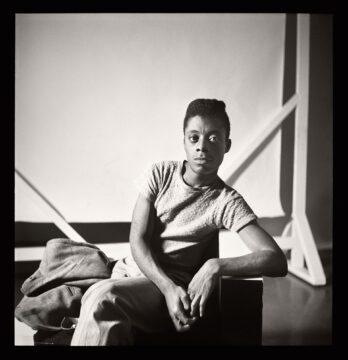 I underwent, during the summer that I became fourteen, a prolonged religious crisis. I use “religious” in the common, and arbitrary, sense, meaning that I then discovered God, His saints and angels, and His blazing Hell. And since I had been born in a Christian nation, I accepted this Deity as the only one. I supposed Him to exist only within the walls of a church—in fact, of our church—and I also supposed that God and safety were synonymous. The word “safety” brings us to the real meaning of the word “religious” as we use it. Therefore, to state it in another, more accurate way, I became, during my fourteenth year, for the first time in my life, afraid—afraid of the evil within me and afraid of the evil without. What I saw around me that summer in Harlem was what I had always seen; nothing had changed. But now, without any warning, the whores and pimps and racketeers on the Avenue had become a personal menace. It had not before occurred to me that I could become one of them, but now I realized that we had been produced by the same circumstances. Many of my comrades were clearly headed for the Avenue, and my father said that I was headed that way, too. My friends began to drink and smoke, and embarked—at first avid, then groaning—on their sexual careers. Girls, only slightly older than I was, who sang in the choir or taught Sunday school, the children of holy parents, underwent, before my eyes, their incredible metamorphosis, of which the most bewildering aspect was not their budding breasts or their rounding behinds but something deeper and more subtle, in their eyes, their heat, their odor, and the inflection of their voices.
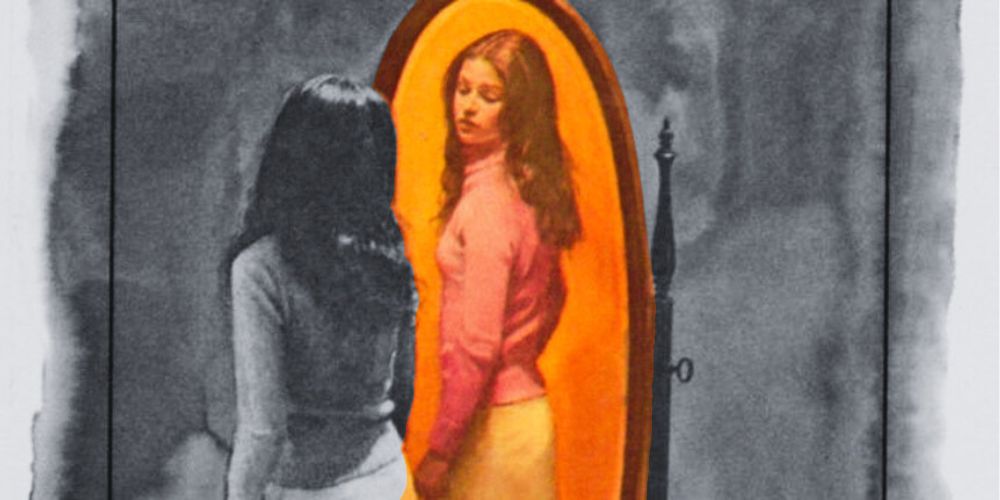 Like many adolescents, Deenie has a secret.
 This notion — that LLMs are “just” next-word predictors based on statistical models of text — is so common now as to be almost a trope. It is used, both correctly and incorrectly, to explain the flaws, biases, and other limitations of LLMs. Most importantly, it is used by AI skeptics like [Gary] Marcus to argue that there will soon be
  Qamar-ul Huda opens the first chapter of his new book Reenvisioning Peacebuilding and Conflict Resolution in Islam with the differing American and Norwegian approaches to Afghanistan, illustrating how international efforts to end wars and support peace in Muslim countries can be successful, especially when conducted on Islamic terms.
 As a musician, Charli XCX was born online. Her first album circulated via CD-Rs and MySpace when the artist was just fourteen. Journalists love to drop this detail, but seldom do they follow up on how this ever-shifting www. vernacular inflects her songwriting style. Her compositions often hinge on the repetition of single words or phrases, like “focus,” “airport,” or “number one.” Syncopation spins the familiar into an earworm, disarticulating the very meaning of a lyric into a melodic vibe. After a couple of major-label albums failed to connect, Charli saw promise in how this approach might marry with the emergent underground PC