Marxism: Radical Alternative or Totalitarian Relic?

Criticaldivide_1_84x84 Jirí Pehe and Benedict Seymour in Eurozine:

MS: Was communism a Romantic idea, a Romantic approach to history and to human destiny? Or is it a rational, thought-through and working system?

BS: I would say that Marxism does come from Romanticism: historically Marx emerges from the Romantic critique of the Enlightenment. But he doesn't remain within Romanticism – although arguably capitalism does. For me, Marxism manages to pose a critique of post-Enlightenment, industrial, capitalist market society. Marxist writings contain a critique that could only emerge through Romanticism. More concretely, it seems to me that Marx sees in capitalist society a kind of metaphysical, mad, inverted world. He therefore complicates the picture of capitalism as rational. The whole point is that capitalism is profoundly irrational, but in a way that is scrupulously and narrowly rational. Marx is interesting because he manages to think this strange combination of rationality and irrationality.

What I am trying to get at is the idea that communism has not yet existed; that what was called communism in the twentieth century was not worthy of the name. But the possibility of the communist society is still something that capitalism secretes. Capitalism, to paraphrase Amadeo Bordiga, is an inverted phenomenology of communism. It is very basic to Marx that communism would not be just the antitheses, the black to the white of capitalism, but the realization of something that is already there, latent in capitalism.

Capitalism's normal function is romantic, it is dependent on the mobilization of the national myths, of personal and social mythologies and fantasies. As we enter a crisis, we are likely to see capitalism become more romantic. As we have seen in the past, in the 1930s for example, there is a great romanticism to a society that has passed its sell-by-date, as it keeps rehearsing these melodramas of final collapse – which are dangerous because we are the ones cast in these dramas.


Michael Oakeshott’s Skepticism

J9367 Chapter 1 of Aryeh Botwinick's new book, over at Princeton University Press:

What the theoretical trajectory of Oakeshott’s career dramatizes for us are the inextricable theoretical fortunes of religious belief and skepticism. There is a very pronounced religious impulse animating skepticism. A world comprehended from start to finish from the perspective of a lack of finality of judgment is a world that negatively recaptures the prospect of wholeness: none of our intellectual schemata have an unreserved claim to truth. The truth (if it exists) is beyond us and elsewhere. The skeptic restores to God the conceptually empty universe that He bequeathed to us at the moment of Creation—indirectly reaffirming by his critical renunciations the space that God occupies.

This book is devoted to making the case that on grounds of reasoned argument skepticism issues forth in mysticism. The skeptic is driven to question everything—except his own deployment of skepticism. To be consistent, he needs to turn the critical engine of skepticism inward in relation to the tenets of skepticism themselves. However, to preserve protocols of consistency, he cannot merely dilute skepticism to the level of a generalized agnosticism—so that what results is a tepid, irresolute maintenance of both skepticism and its critical targets. To be consistently applied, the skeptical questioning of skepticism must encompass a thick, full-blooded rehabilitation of all of the objects of skeptical attack. The theoretical mandate of skepticism extends to making the “yes” of skepticism as resoundingly rich as its “no.” Whatever objects are devastated by skepticism need, according to the internal logic of skepticism itself, to be thoroughly rehabilitated by it.

Why are we getting fatter?

From PhysOrg:

Obesity_surgery1 Allison, a professor of biostatistics in the UAB School of Public Health, is senior author on a paper to be published Nov. 24, 2010, in the British journal Proceedings of the Royal Society B. That paper, provocatively titled “Canaries in the coal mine: A cross-species analysis of the plurality of obesity epidemics,” suggests that the root cause of obesity may be much more complicated than the conventional wisdom — too much food availability, too little opportunity to exercise.

Allison's current sleuthing began when he was looking over data on small primates called marmosets from the Wisconsin Non-Human Primate Center. He noted that the population as a whole showed pronounced weight gain over time. Checking with the center, he could find no compelling reason. The nature of the diet had changed, but controlling for the exact date of the change, easily doable with animals living in a controlled laboratory environment, only strengthened the mysterious phenomenon.

More here.

Tuesday, November 23, 2010

Do I dare to eat a peach?

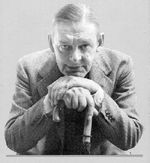
Ts-eliot

In his general essays—“Tradition and Individual Talent,” “The Function of Criticism,” “Religion and Literature,” and others—Eliot wrote with a range and an amplitude of interest not seen in literary criticism since Matthew Arnold in the previous century or Samuel Johnson nearly two centuries earlier. This breadth, in which he spoke not for literature alone but also for the larger social context in which literature was created, made Eliot seem, somehow, grander, more significant than such estimable American critics as Wilson and Trilling. Through the power of his prose style, Eliot was able to convey, even when writing about the most narrowly literary subjects, that something greater than mere literature was at stake. Wallace Stevens’s poetry is more beautiful, and Robert Frost’s often more powerful, than Eliot’s, but the latter’s, once read, refuses to leave the mind. How much does memorability matter in literature? A vast deal, I suspect, and in poetry above all. And here, in the realm of the memorable, Eliot has left a greater literary residue than any other poet of the 20th century.

more from Joseph Epstein at Commentary here.

hornby follows eggers

2837e886-f384-11df-b34f-00144feab49a

In 2002, Dave Eggers, author of the memoir A Heartbreaking Work of Staggering Genius, decided that he wanted to help, in some practical way, those of his friends who were struggling with their teaching jobs in overcrowded and underfunded US state schools. They always made the same complaint: there wasn’t enough time to give the children the attention they needed. Eggers hit on the idea of a writing school for inner-city children, a place that would offer one-to-one tuition for anyone who wanted it. He had recently founded the quarterly (in a good year) magazine McSweeney’s and knew young editors, writers and illustrators who were able to help. The best premises he could find for the school happened to be in a shop. The landlord was happy to rent it to him but told him that local zoning laws meant he had to sell things – hence the Pirate Store. 826 Valencia operates as a drop-in centre after school hours; during the school day, teachers bring in classes. The work produced is frequently and beautifully published. But what is really extraordinary is that, very quickly, 826 went national: there are 826s in New York City and Los Angeles, Denver and Washington, DC, Chicago and Seattle, Ann Arbor and Boston. And every centre has a shop. In Brooklyn you can buy everything you need to turn yourself into a superhero, including suckers that really do enable you to climb walls (I eventually had to hide them away in our house); 826 LA provides for all your time-travel needs. What is it that people find so inspirational about the project? Why, all over America, are busy professionals saying to themselves that what they really want to do is to found a non-profit organisation that will require funds, volunteers, grant applications and board meetings for ever and ever?

more from Nick Hornby at The FT here.

the real killing fields

Bloodlands-Europe-Between-Hitler-and-Stalin-0465002390-L

In mid-April 1945 American GIs entered Buchenwald while their British compatriots marched, horrified, into Bergen-Belsen. There they found scenes of unimaginable suffering, men of bones and skin standing, somehow, on spindly legs, amid piles of emaciated corpses. In those dark days at Buchenwald, Gen. Dwight Eisenhower postponed the burial of the dead so that journalists could be brought to the scene to tell the world what the fight had been about. Even as thousands of typhus-stricken survivors died, witnesses to a liberation that came too late for them, Edward R. Murrow filed reports and Margaret Bourke-White made chilling photographs that documented what must have seemed the nether pole of human depravity, the worst an inhuman regime could achieve. A picture of evil was set; yet that picture, it has long been clear, was distorted and mistaken. A little over a year ago, as he put the finishing touches on his important new work of history, Bloodlands, Timothy Snyder published a much remarked-upon piece in The New York Review of Books titled—somewhat portentously—”The Holocaust: The Ignored Reality.” As in the finished volume, Snyder offered a powerful reminder that the true killing fields of the Holocaust were in German-occupied territories in the east, where first with mass shootings and then at killing centers like the hellish Treblinka the Jews were put to death as Jews—most of them immediately, without staying the night. “The fate of the concentration camp inmates, horrible though it was, is distinct from that of those many millions who were gassed, shot, or starved,” Snyder writes in his book. “American and British forces,” he continues, “saw none of the major killing sites.”

more from Samuel Moyn at The Nation here.

A primatologist discovers the social factors responsible for maternal infanticide

Eric Michael Johnson in Scientific American:

Emj1_Medea A mother’s affection for her child is thought to be absolute, a fact of evolution in which women have been “endowed with a nurturing maternal instinct.”

Yet, throughout history, from the fictional Medea to the tragic reports of modern times, women have taken the lives of their children under a variety of contexts, whether it is to punish the father, escape from the burden of motherhood, or even to protect a child from what they perceive as a fate worse than death. In this regard humans share yet another feature, albeit a tragic one, with nonhuman animals since females in a variety of species have been observed to abandon, abuse or even kill their own offspring. To stress the importance of motherhood in human societies today, how can we best understand this behavior so that we can better predict, and prevent, its recurrence?

One hundred years after Mary Stastch took her child’s life another Chicago immigrant may have some answers. Dario Maestripieri has spent most of his career studying maternal behavior in primates. In particular, he’s focused on the factors that influence a mother’s motivation towards her young. As a professor of Comparative Human Development, Evolutionary Biology, Neurobiology, and Psychiatry at the University of Chicago he has enjoyed the kind of cross-disciplinary success that most scientists only dream of. His 153 academic papers and six books have been cited more than a thousand times by scholars (including this one) in many of the world’s top scientific journals. His latest paper is scheduled to be published in early 2011 by the American Journal of Primatology. In it Maestripieri lays out the argument he’s built over the last two decades showing how one of the most serious impacts on maternal behavior, one with potentially lethal results, is so common in modern life as to be nearly invisible: stress.

More here.

Sex, Lies, and Hemingway

From The Paris Review:

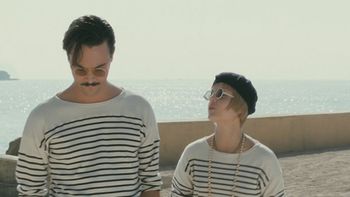
Gardenofeden_blog On a late night last week, I slipped out of the Paris Review offices, and into a more glamorous setting across the street. On lower level of the Tribeca Grand Hotel, movie stars were posing with practiced ease in front of a cluster of photographers. The occasion was a preview screening of the film Garden of Eden, which will be released on December 10. Among the celebrities there were Mena Suvari—who oozed classic Hollywood glamour in an all-black ensemble, bright red lipstick, and soft, blond, Veronica Lake waves—and Matthew Modine, tan, rugged, and sporting a jaunty blue scarf. Both star in the new film, based on the Ernest Hemingway novel of the same name. It’s an autobiographical tale set in Europe between the wars that chronicles a love triangle between Hemingway stand-in David Bourne (Jack Huston), his wife, Catherine (Suvari), and the stunning Italian heiress Marita (Caterina Murino), whom Catherine introduces into the relationship during the couple’s seaside honeymoon—a decision she will later come to regret.

The novel, unfinished at the time of Hemingway’s death and published—amid editing controversies—in 1986, was recently adapted for the screen by James Linville, former managing editor of The Paris Review. “My experience in the film industry has been very good so far,” he told me. “And much less rough and tumble than the New York poetry world. I’m being fun,” he hastened to add, though it's easy to see why one would want to trade the world of rejection slips for the chance to mingle with beautiful people.

More here.

In Cybertherapy, Avatars Assist With Healing

From The New York Times:

Cyber His talk was going just fine until some members of the audience became noticeably restless. A ripple of impatience passed through the several dozen seated listeners, and a few seemed suddenly annoyed; then two men started to talk to each other, ignoring him altogether. “When I saw that, I slowed down and then stopped what I was saying,” said the speaker, a 47-year-old public servant named Gary, who last year took part in an unusual study of social anxiety treatment at the University of Quebec.

The anxiety rose in his throat — What if I’m not making sense? What if I’m asked questions I can’t answer? — but subsided as his therapist, observing in the background, reminded him that the audience’s reaction might have nothing to do with him. And if a question stumped him, he could just say so: no one knows everything. He relaxed and finished the talk, and the audience seemed to settle down. Then he removed a headset that had helped create an illusion that the audience was actually there, not just figures on a screen. “I just think it’s a fantastic idea to be able to experience situations where you know that the worst cannot happen,” he said. “You know that it’s controlled and gradual and yet feels somehow real.” For more than a decade, a handful of therapists have been using virtual environments to help people to work through phobias, like a fear of heights or of public spaces. But now advances in artificial intelligence and computer modeling are allowing them to take on a wider array of complex social challenges and to gain insight into how people are affected by interactions with virtual humans — or by inhabiting avatars of themselves.

More here.

Johann Hari gets to grips with his weight

Johann Hari in The Independent:

12hari2_500389t There are moments in life when you feel the universe is telling you – as politely as possible – that you have become a Fat Bastard. For me, the most crucial of those celestial hints came on 23 December last year.

I was jabbering on my phone and hurried into my local KFC to inhale a mixture of lard, salts and chicken corpse when one of the staff exclaimed: “Johann! We have something for you!” And from below the counter, he pulled out a large Christmas card, signed by everybody who worked there. “You are our best customer!” he exclaimed, and – in unison – the staff applauded me. I half-expected Colonel Sanders himself to descend from the back room and smother me with his secret blend of herbs and spices.

This was not an isolated incident. Shortly before, I was watching television late at night, ambling through the channels pointlessly, when I burst out laughing. I had stumbled across a person who looked like a really fat version of me. Chuckling, I texted a friend of mine who is also usually awake at 3am – and then suddenly it hit me. It was a repeat of a programme I had recorded a week before. It was no lookalike. It was me.

Oh, and when I interviewed the Dalai Lama, even he called me fat. When a man revered as an infinitely forgiving living deity calls you a munter, you take the hint.

More here.

Let’s not waste the blasphemy law, please!

Ejaz Haider in Pakistan's Express Tribune:

ScreenHunter_06 Nov. 23 09.59 Now this NCSW [National Commission on the Status of Women], I am told, has strongly condemned the death sentence an additional sessions judge, in his infinite wisdom, has passed on Aasia Bibi. Worse, it is now talking about gross irregularities in the judicial process and questioning how an illiterate Christian woman could have cited Islamic textual and exegetical references to blaspheme against the Prophet (pbuh).

As if the prickly Human Rights Commission of Pakistan (HRCP) was not bad enough. I ask you! How can technicalities be invoked to prevent the faithful from doing the right thing? Would we now have to subject the operation of our piety to such commissions?

But let me present a simpler argument. It’s a case of logistics. The best catch, I agree, is always an Ahmadi, preferable to a Christian, a Hindu or a Shia or even a shrine-worshipping Muslim. But it’s not every day that one can find an Ahmadi. Some we have allowed to escape to infidel lands. The remnants are breeding slower than the rate at which we can find and kill them. (There’s an argument here, in fact, that we should spare Ahmadis for a while so they can breed enough for our sport.) They are not always readily available, even though we have the ever-vigilant Khatm-e-Nabuwwat sniffing for them everywhere. So, what does one do on a bad, no-Ahmadi day? Right! One should get hold of whoever is available. And if it’s a Christian woman, so be it.

A sort of lagniappe, a Christian woman, but something is better than nothing. Also, my sense is that while killing a Christian is not going to get prime real estate in Paradise, even the shanty side of Paradise is likely to be pretty good.

More here.

Monday, November 22, 2010

Portrait of an Artist as a Middle-Aged Man

Munger-sculptureLet's get one thing straight: Mark isn't really my brother. He's my stepbrother, but I'm closer to him than any other member of my family. At first glance, you wouldn't expect us to have much in common. I have two graduate degrees; he has a GED. I'm training for a marathon; he can barely walk a mile.

For over two decades, the only times we spoke to each other were at infrequent family gatherings. I didn't even call him when my stepsister—his sister—died in a horrible accident. But about six years ago, I was working on a memoir and contacted him to verify some details of the manuscript. He emailed a week later with an apology: “I'm sorry that I didn't get back to you sooner. Everything in my life seems to go slow.” But he had read the whole thing and gave me excellent, detailed feedback. Then he closed with this:

Well, I have so much more to say, but I'm already sore from sitting this long…. I don't know if you know this or not, but I have some seriously painful arthritis in my hips and lower back. So much so, that I had to quit school. I guess I don't know if you even knew that I was going. That's the reason I moved to Tacoma, to try to get a better life… Oh well… Right now I'm in constant pain and I can't walk as well as an average 80 year old!

He had been taking classes to become a dental technician. Years of working in warehouses and construction had taken a serious toll on his body, and he thought this new career would be something he would be able to do. But it was too late—even sitting at a workbench was too painful for him, and he had to drop out, in debt with thousands of dollars in student loans and no way to pay rent.

He wasn't on speaking terms with his father (my stepfather), and his mother had financial problems of her own. A few months later, when I was finally able to visit him (we live on opposite coasts of the country), I saw that he wasn't exaggerating about his condition. Although at the time he was just 39 years old, he stood stooped over, like a man twice his age. He leaned hard on his walking stick, and labored as he shuffled along, periodically wincing in pain.

Although Mark's situation was tragic, it's by no means unusual. Over 13 million Americans receive Federal benefits for a disability that makes them unable to work, and many others are rejected from the program even though they cannot work. The benefit Mark now receives, about $600 per month, is almost enough to cover his essential living expenses, but it can't cover unanticipated surprises like the $400 pair of insoles he had to buy a few months ago to relieve excruciating pain in his feet. Due to byzantine health regulations, if he had had diabetes, the insoles would have been covered, but since his foot pain was caused by arthritis, he had to pay for them himself.

Why isn't more being done about people like Mark, who worked for two decades and paid into a Social Security system that is now letting him down?

I would submit that at least part of the reason is this: Not enough people like me know people like Mark. My friends are professors, administrators, and other professionals who may struggle paying the bills from time to time, but certainly don't face the sort of day-in and day-out fight for the rudiments of survival that Mark does. If you've never sold a car to pay your rent, or had a bullet sail through the wall of your apartment, or had police shut down a meth lab in your building, you probably don't understand the kind of life Mark has had to lead.

Read more »

Sunday, November 21, 2010

Landmarks in the Critical Study of Secularism

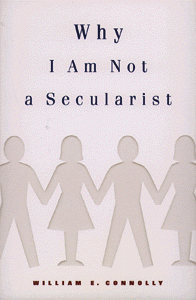
0816633320.big_ Matthew Scherer over at the SSRC's The Immanent Frame:

In September of 2010, Talal Asad, William E. Connolly, Charles Hirschkind, and I met at the annual American Political Science Association conference to discuss two seminal texts in a recently emerging field of study, which could tentatively be called the critical study of secularism. The texts in question were Connolly’s Why I Am Not a Secularist (1999) and Asad’s Formations of the Secular: Christianity, Islam and Modernity (2003), each now roughly a decade old.

In preparing for this conversation, we did not set the task of doing justice to the scope and subtlety of these texts but aimed instead to use them as a starting point for taking stock of and thinking about the ground that has been covered in the critical study of secularism since their original publication. What follows here are five questions that emerged for me in re-reading Why I Am Not a Secularist and Formations of the Secular. They aim to draw together common themes, underline divergences, and generally open Asad’s and Connolly’s texts again for discussion.

First question: What is secularism?

It sounds naive, but disagreement about the basic significance of “secularism” is a recurrent problem in today’s discussions. There may, however, be important reasons for the muddle that besets critical literatures on “the secular,” “secularity,” “secularism,” and “secularization,” sending them around this question again and again.

Why I Am Not a Secularist and Formations of the Secular, at any rate, remain two of the most striking, ambitious, and important restatements of the problem of secularism. To be sure, they acknowledge and grapple with the persistence of familiar and, in some sense, indispensable answers: That secularism is simply the separation of church and state. That it is, more specifically, a form of separation that makes religion private while making power and reason public. That secularism is an ideology. That it is an institutional formation that governs the conduct of individuals and communities. Yet they also show how such answers are insufficiently accurate, woefully unhistorical, and incomplete in more fundamental ways.

As Tigers Near Extinction, A Last-Ditch Strategy Emerges

Tiger_recovery_175b Caroline Fraser at Yale Environment 360:

The most venerated predator on Earth, the tiger is also the most vulnerable, described in a recent World Bank document as “enforcement-dependent.” The phrase is borrowed from the medical world, where patients reliant on blood products are known as “transfusion-dependent.” Saved only by scarce conservation dollars and thin ranks of poorly equipped park guards, the tiger’s hold on life is tenuous. Without future infusions of expensive, well-coordinated, state-of-the-art life-support, Panthera tigris is doomed in the wild.

Now, in one of the most high-profile conservation interventions in recent memory, the World Bank is stepping in to try to secure that life support. At a meeting later this month, the bank's president, Robert Zoellick, will seek approval from the leaders of 13 tiger range countries for an extraordinarily ambitious plan to save the world’s few remaining tigers and their habitat. At the same time, a group of leading tiger scientists and conservationists is lobbying for a similar effort to protect the tiger’s last remaining breeding populations.

The tiger’s situation has grown desperate in a mere century. A hundred years ago, there were over 100,000 in the wild, with more than 40,000 in India alone. Currently, the total number of tigers worldwide is calculated at fewer than 3,500. Three subspecies — Javan, Bali, and Caspian tigers — vanished during the 20th century. A fourth, the South China tiger, has not been seen in the wild for more than 25 years and is assumed to have gone extinct during the 1990s.

Snob

Rebecca Mead in The New Yorker:

ScreenHunter_05 Nov. 21 19.21 It is to William Makepeace Thackeray that the English language owes the colloquial use of the word “snob”—a formerly obscure term that the novelist popularized in a series of satirical essays published in Punch in the mid-nineteenth century. In them, Thackeray—who went on to write “Vanity Fair”—attempted a taxonomy of the type, ranging from the Military Snob (“With his great stupid pink face and yellow moustachios”) to Sporting Snobs (“Those happy beings in whom Nature has implanted a love of slang”) and the Dinner-giving Snob (“a man who goes out of his natural sphere of society to ask Lords, Generals, Aldermen, and other persons of fashion, but is niggardly of his hospitality towards his own equals”). “I have (and for this gift I congratulate myself with a Deep and Abiding Thankfulness) an eye for a Snob,” Thackeray wrote. “You must not judge hastily or vulgarly of Snobs: to do so shows that you are yourself a Snob.”

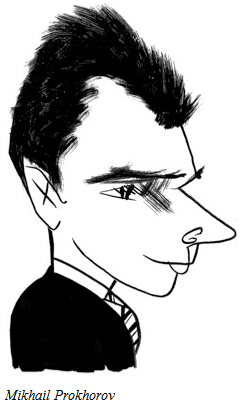
This last observation has been taken as a motto by Snob, a Russian-language magazine that, having been launched in Russia and Europe, has just been rolled out in the United States. Snob, which is being funded by Mikhail Prokhorov, the Russian billionaire who recently acquired the New Jersey Nets and an interest in a big chunk of Brooklyn real estate, looks like a cross between Tatler and The New York Review of Books, printed on the kind of paper stock usually reserved for royal invitations. It features articles by Gary Shteyngart and Salman Rushdie, photography by Ellen von Unwerth and Francesco Carrozzini, and an alarming cover price of eight dollars. It is aimed at international Russians—those successful, educated cosmopolites who might live part of the time in London or New York but who, the folk at Snob like to say, think in Russian.

More here.