
Galen Watts in The Point:
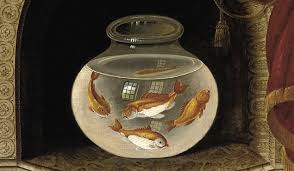 According to Alexandre Lefebvre, professor of politics and philosophy at the University of Sydney and author of the new book Liberalism as a Way of Life, the allegory that best captures the liberal self-conception was given to us by the late David Foster Wallace, during his commencement speech at Kenyon College. I suspect you know it, but if not, here’s the truncated version: two younger fish are swimming by an older one. When the older fish politely asks, “How’s the water?”, one of the younger fish looks at the other and says, “What the hell is water?” Lefebvre would say the water is liberalism; I’m one of the younger fish.
This metaphor—liberalism as the water we swim in—dwells at the heart of Liberalism as a Way of Life. I write “we” because the book begins with a wager: there is a good chance that if you’re reading this, you are a liberal. That is, the norms you take for granted, the values you cherish, and even your basic way of being in the world have been comprehensively shaped by the tradition of liberalism.
More here.
Enjoying the content on 3QD? Help keep us going by donating now.
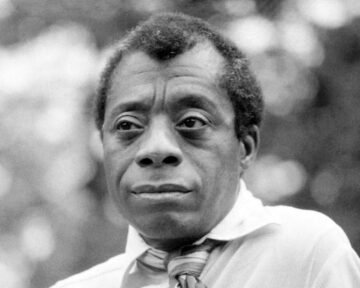 Baldwin’s imagination remained passionately connected to the destiny of his country. He lacked the guile and watchfulness that might have tempted him to keep clear of what was happening in America; the ruthlessness he had displayed in going to live in Paris and publishing Giovanni’s Room was no use to him later as the battle for civil rights grew more fraught. It was inevitable that someone with Baldwin’s curiosity and moral seriousness would want to become involved, and inevitable that someone with his sensitivity and temperament would find what was happening all-absorbing.
 Fine, the title is an exaggeration. But only a small one. GLP-1 receptor agonist medications like Ozempic are already FDA-approved to treat diabetes and obesity. But an increasing body of research finds they’re also effective against
  John Rawls, the preeminent political philosopher of the
  W
W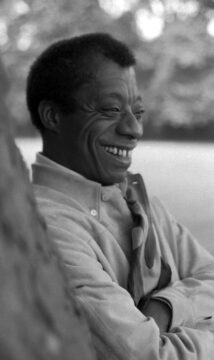 I read James Baldwin’s Go Tell It on the Mountain just after my eighteenth birthday, at a time when I presumed that my Catholic upbringing would soon mean little to me. During my first year at university, which I had just completed, I told no one that I had come close to joining a seminary. Some of my memories of almost having a vocation for the priesthood were embarrassing. I wished they belonged to someone else. But now my religious feelings had not merely ended; I hoped they had been effectively erased. Such feelings, I noticed, were mostly absent from the books I was reading, the films I was watching, the plays I was seeing, the conversations I was having.
 W
W B
B It must be dismal to come of age in an era so drenched in utility as ours. What was once called soul hunger is now relentlessly thwacked aside by engines of ever greater efficiency, from effective altruism to generative AI. Even the animating realms of art and sex appear to have contracted to the merely serviceable, functional, and fair-minded.
 Being rational necessarily involves engagement with probability. Given two possible courses of action, it can be rational to prefer the one that could possibly result in a worse outcome, if there’s also a substantial probability for an even better outcome. But one’s attitude toward risk — averse, tolerant, or even seeking — also matters. Do we work to avoid the worse possible outcome, even if there is potential for enormous reward? Nate Silver has long thought about probability and prediction, from sports to politics to professional poker. In his his new book
  Central to the Cold War between the United States and the Soviet Union was a rivalry to develop the technologies of the future. First came the race to deploy nuclear weapons on intercontinental missiles. Then came the space race. Then came US President Ronald Reagan’s “Star Wars” program, which seemed to launch a new race to build missile-defense systems. But it soon became clear that the Soviet economy had fallen decisively behind.
 OVER THREE DAYS
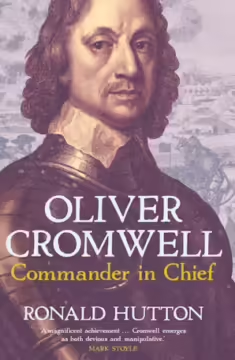 Ever since Thomas Carlyle first launched his Letters and Speeches of Oliver Cromwell on the world in 1845, the Lord Protector’s published words have exercised an almost mesmeric hold on posterity. Overnight, they transformed a figure who had hitherto been a byword for villainy – was he not the killer of King Charles I? – into a hero for the new Victorian age: a God-fearing, class-transcending champion of ‘russet-coated captains’ who became Britain’s first non-royal head of state. His words resonated with a newly politically ascendant and morally earnest middle class. And in Hamo Thornycroft’s vast sculpture installed outside Westminster Hall in 1899, the Carlylean transformation of Oliver begun by the Letters and Speeches found its embodiment in bronze.
 An age ‘clock’ based on some 200 proteins found in the blood can predict a person’s risk of developing 18 chronic illnesses, including