Thursday Poem

A Color of the Sky
.
Windy today and I feel less than brilliant,
driving over the hills from work.
There are the dark parts on the road
when you pass through clumps of wood
and the bright spots where you have a view of the ocean,
but that doesn’t make the road an allegory.

I should call Marie and apologize
for being so boring at dinner last night,
but can I really promise not to be that way again?
And anyway, I’d rather watch the trees, tossing
in what certainly looks like sexual arousal.

Otherwise it’s spring, and everything looks frail;
the sky is baby blue, and the just-unfurling leaves
are full of infant chlorophyll,
the very tint of inexperience.

Read more »

Wednesday, June 22, 2011

Ahmadinejad vs. The Ayatollah

Abbas Milani in The National Interest:

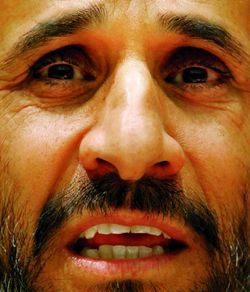
Ahmad2Ahmadinejad and his oligarch cronies have been having a rough couple of months. The ayatollah is out for blood, and those in “elected” office are under attack. In fact, the dominant narrative taking over the Islamic Republic has lately sounded a great deal more like the magical realism of Gabriel García Márquez than the realpolitik of Hans Morgenthau. It has been two months of bizarre allegations of voodoo and venal sins taking place in the offices and homes of the president’s closest aides and confidants—not to mention the far more run-of-the-mill charges of their financial corruption and sweetheart deals in places like Belarus. It has been a time of repeated open threats of the president’s impeachment, the same president who was not too long ago the darling of Ayatollah Ali Khamenei, close as Mahmoud Ahmadinejad was to the supreme leader’s own ideas and ideals. It has been a time when more than a hundred members of Iran’s parliament, the Majlis, have requested an investigation into the last presidential election and the allegation that 9 million votes were purchased through cash payments from government coffers. Amazing how the tables can turn. Indeed, just like the police chief in Casablanca, these conservative (ayatollah-backing) members of the Majlis are “shocked, shocked” that electoral cheating is going on in Iran. Lest we forget, Mir Hussein Moussavi (the “losing candidate” in that same presidential election), his wife, Zahra Rahnavard, Mehdi Karroubi (the other “losing” candidate) and his wife, Fatemeh, have been under house arrest for months—for making the same accusations of fraud. Thousands of Iranians have been imprisoned, and about a hundred of the regime’s past ministers, deputy ministers and directors were put on Stalinist-era-like show trials to confess to the crime of alleging a bought-and-paid-for vote. Hundreds of young women and men were tortured, dozens raped and thousands forced into exile for questioning the June 2009 presidential-election results. It was of course all, according to Khamenei, a sinister U.S. plot to create a “velvet revolution” using Gene Sharp’s model and George Soros’s money.

More here.

MICK JAGGER: “EXCESS WAS THE ORDER OF THE DAY”

From The Talks, a new online magazine of interviews:

ScreenHunter_05 Jun. 23 10.45Mr. Jagger, what kept you from completely going off the deep end?

I mean we all did excessive things and I had a lot of unstable moments as I’m sure everyone does in their life. Maybe it helped me that I had a very centered upbringing.

So your parents basically.

Yeah, I think so. When you are young and you have a sort of close family life and stuff, it helps you to be centered for later. If you don’t have a centered upbringing, I think it is much more difficult.

You still had a very destructive lifestyle back then.

Excess was the order of the day. But that was just a period. You know you get excessive people nowadays as well. Today people are excessive consuming things, like consumer goods.

But you were even chased by the police for your drug abuse. How do you remember those days?

At the time it wasn’t very funny. It wasn’t very good because it completely took over our lives creatively and we couldn’t do this and couldn’t do that. You had to spend all your time trying to deal with all the police and you didn’t have time to do anything else.

More here.

A Review of Jon Cotner’s Spontaneous Society

James Yeh in The Faster Times:

1-300x215

Is it possible, in this age of earbuds and smart phones, to spread “good vibes” among strangers on the street through something as simple as conversation? The poet Jon Cotner thinks so. That’s why Cotner—who, along with Andy Fitch, co-authored Ten Walks/Two Talks—created Spontaneous Society, a walking tour designed to create “gentle interventions” aimed at “replacing urban anonymity with something bordering on affection—even if it’s fleeting.”

The premise is simple: to each participant, Cotner gives two very simple, very basic lines to recite to passersby. The lines (which Cotner lovingly describes as “oceanic”) are, generally and in essence, positive observations about something that passerby is currently doing as a means of initiating a brief, but positive, social exchange. For example, “That looks like a good spot for a picnic,” said when passing someone eating on a bench, a blanket, or doorstep; or “It’s a good day to have the feet out,” said when someone approaches with a carriage in which at least one inhabitant is shoeless.

More here.

Rule Breaker

From The Chronicle of Higher Education:

Photo_12955_carousel Patricia S. Churchland, the philosopher and neuroscientist, is sitting at a cafe on the Upper West Side, explaining the vacuousness, as she sees it, of a vast swath of contemporary moral philosophy. “I have long been interested in the origins of values,” she says, the day after lecturing on that topic at the nearby American Museum of Natural History. “But I would read contemporary ethicists and just feel very unsatisfied. It was like I couldn't see how to tether any of it to the hard and fast. I couldn't see how it had anything to do with evolutionary biology, which it has to do, and I couldn't see how to attach it to the brain.” For people familiar with Churchland's work over the past four decades, her desire to bring the brain into the discussion will come as no surprise: She has long made the case that philosophers must take account of neuroscience in their investigations.

While Churchland's intellectual opponents over the years have suggested that you can understand the “software” of thinking, independently of the “hardware”—the brain structure and neuronal firings—that produced it, she has responded that this metaphor doesn't work with the brain: Hardware and software are intertwined to such an extent that all philosophy must be “neurophilosophy.” There's no other way. Churchland, professor emerita of philosophy at the University of California at San Diego, has been best known for her work on the nature of consciousness. But now, with a new book, Braintrust: What Neuroscience Tells Us About Morality (Princeton University Press), she is taking her perspective into fresh terrain: ethics. And the story she tells about morality is, as you'd expect, heavily biological, emphasizing the role of the peptide oxytocin, as well as related neurochemicals.

More here.

D.J. and Dylan Thomas

Stefany Anne Golberg in The Smart Set:

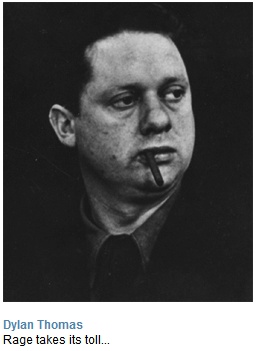
ScreenHunter_04 Jun. 22 15.24As a boy, D.J. was a promising student. He had received a scholarship to study English at the University College of Wales at Aberystwyth where he graduated with first-class honors. Like many promising students of English, D.J. had dreams of being a poet. Instead, he became a grammar school teacher. He watched in anger and shame as colleagues of clearly inferior worth gained appointments to higher university positions while he remained where he was. D.J. was often ill, and wondered why he had no visitors. He cultivated a devastating schoolmaster’s sarcasm that shielded his fragile pride. Students of Schoolmaster Thomas remember an unforgiving tyrant who cursed stupid boys and dirty boys. But he made Shakespeare come alive and became known for getting his boys into Oxford and Cambridge. D.J.’s great passion for English literature was available for any boy willing to receive it. To his son Dylan, however, the clever, disappointed father gave his entire dream of a poet’s life.

From childhood, Dylan Thomas accepted the poet’s life as his fate and set out to prove that his father’s rage, along with his love of language, would live on. He cultivated a big sonorous voice and a big sonorous presence in which rage and poetry thrived. Dylan was doughy, curly-headed, soft, and at the same time asthmatic, wild, and prone to nightmares and depression. Dylan would lie awake at night thinking of “God and Death and Triangles,” and would develop an alcoholism as famous as his poetry. Just as D.J.’s eccentric mannerisms and dramatic storytelling made people uncomfortable, the same mannerisms, performed by the son, became a trademark. D.J.’s hypochondria became Dylan’s sensitivity. Just as D.J. used rage to hide from regret, Dylan used it to further his poet’s identity. The father and son would feed off each other, each raging himself into a state that was alternately more wronged and more poetic than the other. It was the rage that allowed them to be larger than life, larger than themselves. The rules of this father/son project were catalogued in Dylan’s most famous poem, “Do not go gentle into that good night.” The poem was written during D.J.’s declining years, after the father had allowed himself to become quiet and frail and resigned.

More here.

The most ridiculously poisonous animal in America

Carl Zimmer in his excellent blog, The Loom:

ScreenHunter_03 Jun. 22 14.20

The scientific tale of the rough-skinned newt begins five decades ago, with a story about three dead hunters in Oregon. Reportedly, the bodies of the hunters were discovered around a camp fire. They showed no signs of injury, and nothing had been stolen. The only strange thing about the scene was the coffee pot. Curled up inside was a newt.

In the 1960s, a biologist named Butch Brodie got curious about the story. The newt in the coffee pot–known as the rough-skinned newt–has a dull brown back, but when it is disturbed, it bends its head backward like a contortionist to reveal an orange belly as bright as candy corn. Bright colors are common among poisonous animals. It’s a signal that says, in effect, “If you know what’s good for you, you’ll leave me alone.” Brodie wondered if the newts were toxic, too.

Toxic, it turns out, doesn’t do the newts justice. They are little death machines. The newts produce a chemical in their skin called tetrodotoxin, or TTX for short, that’s made by other poisonous animals like pufferfish. Locking onto sodium channels on the surface of neurons, TTX blocks signals in the nervous system, leading to a quick death. In fact, TTX is 10,000 times deadlier than cyanide. While we may never know for sure what killed those three Oregon hunters, we do know that a single rough-skinned newt could have easily produced enough TTX to kill them, and have plenty of poison left over to kill dozens more.

More here.

The Road From Abbottabad Leads to Lame Analysis

C. Christine Fair in the Huffington Post:

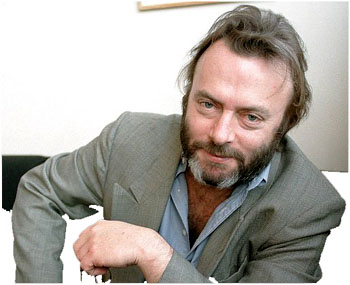
Dontfuckwithhitchens While the Pakistani press is rife with caricatures of U.S. policy, distorted versions of history, and outright falsehoods, American journalists are capable of equal chicanery. Mr. Christopher Hitchens' latest offering in Vanity Fair, “From Abbottabad to Worse,” is an appalling example of American commentary that undermines the efforts of saner voices in this critical debate.

His piece commences with a dramatic reference to rape — not as a crime but as a punishment — and honor killing. The former refers to the rare, horrific instances where women and girls are subject to sexual assault by, in the words of the author, “tribal and religious kangaroo courts.” The latter refers to killing women (and sometimes men) in the name of honor. In this paragraph a complex polity of 180 million — most of whom condemn both practices — are essentialized as a barbarous people who embrace the notion that “moral courage consists of the willingness to butcher your own daughter.” This literary amuse bouche foretells the absurdities, fallacies and dubious assertions in the rest of his troubling account of Pakistan's malaise.

More here.

Books for Dads Who Love to Cook (Or Want to Learn)

From Smithsonian:

Book Family meal planning stereotypically falls on the shoulders of women; however an increasing number of men are working in the kitchen. In 1965, dad helmed the stove only about 5 percent of the time. By 2005, at least according to statistics presented in the book Changing Rhythms of American Family Life, that figure had grown substantially: the paternal unit was responsible for a third of a family’s time spent cooking. (Some sources point to the increasing number of women in the out-of-home workforce, others see that having cooking know-how is a means of making a man more attractive to a potential romantic interest.) And with websites such as Man Tested Recipes and television programming like “Top Chefthat put a highly competitive spin on cooking, our 21st century culture is encouraging men to dispense with old gender roles and crack out the pots and pans. If the father figure in your life is already master of the kitchen—or if you’re trying to encourage one to expand his cooking abilities beyond the occasional bit of grilling—here are a few Father’s Day book ideas that we hope will get his creative gears turning.

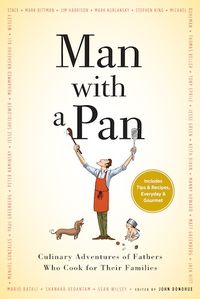
Man With a Pan: New Yorker editor John Donahoe offers this collection of essays—and yes, a few recipes—in which notable personalities from author Stephen King to chef Mario Batali open up about their foibles and triumphs in the kitchen. If nothing else, it reinforces the idea that learning how to make meals for loved ones is a wonderful way to provide for one’s family. Donahoe caught the cooking bug after he and his wife had their first child and he realized that, if he was going to have satisfying dining experiences, he was better off making meals at home than dining out. “Night after night,” Donohue says in his introduction, “when I whipped up something delicious that pleased Sarah and fed Aurora and Isis, I felt like I was doing something so right that I couldn’t possibly go wrong.” For those of you looking to go beyond the book, Donahoe tracks his culinary escapades by way of his blog.

More here.

Wednesday poem

The Man Born to Farming

The Grower of Trees, the gardener, the man born to farming,
whose hands reach into the ground and sprout
to him the soil is a divine drug. He enters into death
yearly, and comes back rejoicing. He has seen the light lie down
in the dung heap, and rise again in the corn.
His thought passes along the row ends like a mole.
What miraculous seed has he swallowed
That the unending sentence of his love flows out of his mouth
Like a vine clinging in the sunlight, and like water
Descending in the dark?

by Wendell Barry

Tuesday, June 21, 2011

The Address Book

Robin McKie in The Observer:
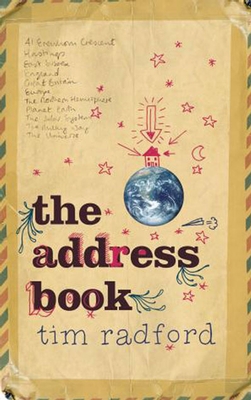
The-Address-Book At the start of each school term, Tim Radford – as so many other pupils have done over the decades – would scribble his name in his exercise book, add his address, and then for good measure put in his hometown, his country, his planet, the solar system, galaxy and finally the universe. It was “an obsessive little ritual”, says Radford, but it was an important one. “It might have been my first independent search for answers to questions posed consciously and unconsciously by everyone in every culture. Where did I come from and where am I going?”

Radford, one of the Guardian's most experienced writers, has now returned to the concept of the extended address to establish where he stands in the universe today and, through his story, help us understand our own positions in the cosmos. As he notes: “Place is a powerful part of identity.”

Hence we are taken on an autobiographical trail of Radford's life: the houses he lived in, the towns and cities he settled in, and the countries that were his homelands – New Zealand and Britain. We are given a geological history of Hastings, where Radford eventually settled, and provided with an outline of the creation of the British Isles – “a 500-million-year accident of geophysics, the story of how Scotland crossed an ancient, vanished ocean and attached itself to what would become England”.

Each chapter peels back a different layer of the complexities of Homo sapiens, creatures with close-knit private histories, but who also live in a frighteningly large universe, on a world created out of the rubble of the explosive big bang birth of the cosmos 13.7 billion years ago. The trick for Radford is to explain not just the immediate and personal but outline the cosmic and the significant in this grand picture. And to a considerable degree, he is successful. Radford is an adroit writer and, as a former literary editor as well as ex-science editor, he comes very well-prepared for the task.

More here.

The Illusions of Psychiatry

Marcia Angell in the New York Review of Books:

ScreenHunter_01 Jun. 21 23.42 One of the leaders of modern psychiatry, Leon Eisenberg, a professor at Johns Hopkins and then Harvard Medical School, who was among the first to study the effects of stimulants on attention deficit disorder in children, wrote that American psychiatry in the late twentieth century moved from a state of “brainlessness” to one of “mindlessness.”2 By that he meant that before psychoactive drugs (drugs that affect the mental state) were introduced, the profession had little interest in neurotransmitters or any other aspect of the physical brain. Instead, it subscribed to the Freudian view that mental illness had its roots in unconscious conflicts, usually originating in childhood, that affected the mind as though it were separate from the brain.

But with the introduction of psychoactive drugs in the 1950s, and sharply accelerating in the 1980s, the focus shifted to the brain. Psychiatrists began to refer to themselves as psychopharmacologists, and they had less and less interest in exploring the life stories of their patients. Their main concern was to eliminate or reduce symptoms by treating sufferers with drugs that would alter brain function. An early advocate of this biological model of mental illness, Eisenberg in his later years became an outspoken critic of what he saw as the indiscriminate use of psychoactive drugs, driven largely by the machinations of the pharmaceutical industry.

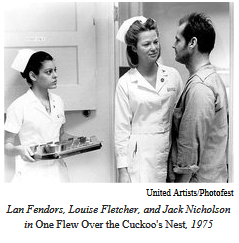
When psychoactive drugs were first introduced, there was a brief period of optimism in the psychiatric profession, but by the 1970s, optimism gave way to a sense of threat. Serious side effects of the drugs were becoming apparent, and an antipsychiatry movement had taken root, as exemplified by the writings of Thomas Szasz and the movie One Flew Over the Cuckoo’s Nest. There was also growing competition for patients from psychologists and social workers. In addition, psychiatrists were plagued by internal divisions: some embraced the new biological model, some still clung to the Freudian model, and a few saw mental illness as an essentially sane response to an insane world. Moreover, within the larger medical profession, psychiatrists were regarded as something like poor relations; even with their new drugs, they were seen as less scientific than other specialists, and their income was generally lower.

More here.

California paid $308 million for each of the 13 executions carried out since 1978

Carol J. Williams in the Los Angeles Times:

Texas-death-chamber The examination of state, federal and local expenditures for capital cases, conducted over three years by a senior federal judge and a law professor, estimated that the additional costs of capital trials, enhanced security on death row and legal representation for the condemned adds $184 million to the budget each year.

The study's authors, U.S. 9th Circuit Judge Arthur L. Alarcon and Loyola Law School professor Paula M. Mitchell, also forecast that the tab for maintaining the death penalty will climb to $9 billion by 2030, when San Quentin's death row will have swollen to well over 1,000.

In their research for “Executing the Will of the Voters: A Roadmap to Mend or End the California Legislature's Multi-Billion-Dollar Death Penalty Debacle,” Alarcon and Mitchell obtained California Department of Corrections and Rehabilitation records that were unavailable to others who have sought to calculate a cost-benefit analysis of capital punishment.

More here.

From Urdu to Hindi, Farsi and Beyond

Anjum Altaf in The South Asian Idea:

Biryani_in_hindi_and_urdu_and_english_tshirt-p235162567083032565qm73_400 As an Urdu speaker, I had always felt it would be simple to learn Hindi and Farsi. The first shares the grammar and much of the essential vocabulary, differing only in script; the second shares the script and a considerable number of words, differing in construction of sentences and manner of speaking. My attempts to transform resolve into results yielded both confirmations and surprises and taught me something about learning, about languages, about our world and about myself.

I had always believed Hindi would be easier to learn than Farsi, but not by much. I felt I could learn Hindi within a month and Farsi within six. My Hindi-speaking friends tried to disabuse me by regularly tossing alien and tough-sounding words in my direction. I kept reminding them that I was fluent in English, yet did not know the meaning of many words. All that implied was the need for a handy dictionary if the context failed to provide sufficient clues. As for Farsi, I did not have any Farsi-speaking friends to guide me in any way.

As it turned out, Hindi did not require any learning. It was simply a question of mastering the mechanics of a different script, associating a particular shape with a particular sound. It took me all of one week in cumulative time using freely available material on the Internet to be able to start reading the BBC Hindi news feed and to write simple sentences without making egregious mistakes. From there on it was just a matter of practice. Thanks to the advances of technology, I didn’t even need a dictionary. All that was required was to cut and paste an unfamiliar Hindi word into the Google translator; it would not only pop back the meaning but spell the word phonetically and verbalize it to eliminate any errors.

On the other hand, Farsi was indeed like learning a new language where method mattered. Without guidance and deceived by the superficial similarities I went off on the wrong track. After nine months I was still struggling, repeatedly memorizing and forgetting the construction of simple sentences let alone mastering the conjugations and the tenses. This, despite investing a few hundred dollars on the highly recommended Rosetta Stone software and working with a much-touted Internet resource.

I take away a number of thoughts from this experience that might be of interest to others.

More here.

dante in love

14_poemforever_dante_alighieri

According to Harold Bloom, Dante bestrides world literature alongside Shakespeare. Jorge Luis Borges labelled Dante’s Commedia ‘the greatest gift that literature can give us’. For Yeats, Dante was ‘the chief imagination of Christendom’. And yet it is not at all clear that English-speaking readers quite grasp why the Commedia (the ‘Divine’ epithet was a later addition) is such a preternatural literary force. In fact, we are fortunate to live in a golden age of Dante translation: the Commedia has been stunningly well-served by a series of muscular, creatively experimental, and ambitious versions appearing one after the other over the last thirty years, by Allen Mandelbaum, Mark Musa, Robert Pinsky, Robert and Jean Hollander, and most recently by Robin Kirkpatrick in a superb new Penguin Classics edition. What A N Wilson has spotted, however, is a gap in the market: the near-absence of accessible, and poetically and intellectually invigorating exegeses of the poem. Who is to help us read this early-fourteenth-century epic of vice and virtue, politics and love? Dante in Love is Wilson’s impassioned attempt to plug the gap. He guides us with the verve and vision of an able storyteller, steeped in the Christian tradition, and an amateur’s engagement with the vast field of Dante commentary and scholarship.

more from Robert Gordon at Literary Review here.

Death and Drugs in Colombia

Wilkinson_1-062311web_jpg_470x433_q85

In February 2003, the mayor of a small town on Colombia’s Caribbean coast stood up at a nationally televised meeting with then President Álvaro Uribe and announced his own murder. “Señor Presidente, I am the mayor of El Roble,” Tito Díaz said as he walked toward the stage where Uribe sat with several cabinet ministers and officials from the state of Sucre, where the meeting was held. Pacing back and forth before the President, Díaz delivered what was probably the first public denunciation of a web of violence and corruption involving politicians and paramilitary groups—what he called a “macabre alliance”—that would eventually become an explosive national scandal. Singling out several local officials, including the governor, Salvador Arana, seated at the President’s side, Díaz declared: “And now they’re going to kill me.” President Uribe listened impassively for several minutes, then cut the mayor off midsentence: “Mr. Mayor, we have allowed this disorder because of the gravity of the matter, but we also ask that you be considerate of our time.” Uribe is a small, tidy man, with a bland face that is boyish yet stern. When he addresses the public, it is with the commanding tone of the wealthy cattle rancher and the intensity of a man on a mission. “With utmost pleasure,” Uribe then assured Díaz that he would order an investigation, “for transparency cannot have exceptions, and security is for all Colombians.” Within weeks, the national police stripped Díaz of his bodyguards. On April 5, 2003, he disappeared. On April 10 his corpse appeared on the edge of Sucre’s main highway.

more from Daniel Wilkinson at the NYRB here.

lit and life coaching

Cover00

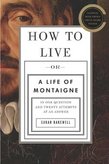
No sooner had essays and novels emerged as popular literary forms in seventeenth-century Europe than readers came to seek in them the kinds of spiritual and practical guidance they had always found in more overtly philosophical works like Ecclesiastes and the Meditations of Marcus Aurelius. The eighteenth-century novelist Samuel Richardson was certainly aware of this when he extracted what he called “moral and instructive sentiments, maxims, cautions, and reflexions” from his own novels and published them as a separate volume. The desire to distill wisdom from literature is still with us, albeit with a contemporary self-help bent. Consider William Deresiewicz’s A Jane Austen Education and Sarah Bakewell’s How to Live: Both books take well-known literary texts and use them to show how the reader might learn to lead a better life, though the authors’ tactics—and degrees of success—differ as profoundly as their destinations. A Columbia Ph.D. and former Yale faculty member, Deresiewicz has positioned himself as a polemicist bent on exposing (to borrow the title of his widely discussed 2008 essay in the American Scholar) “the disadvantages of an elite education.” There he insists that Yale and its peers “forgot that the true purpose of education is to make minds, not careers,” observing that there’s now no place at such schools for the searchers and inquiring minds that educational institutions might once have welcomed. Deresiewicz confidently embraces, in other words, the narrative of decline that structures so many accounts of contemporary—well, fill in the blank: education, literacy, morality, youth itself.

more from Jenny Davidson at Bookforum here.

James Joyce: A deft biography of one of the greatest voices of 20th-century literature

From The Telegraph:

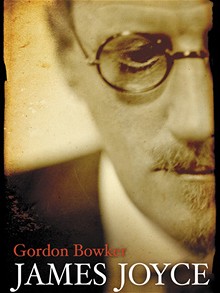
Joyce-cover_1916618f “Sunny Jim” was James Joyce’s boyhood nickname in Victorian Dublin, and “Herr Satan” was the epithet by which he was known in Zurich during the final phase of his life. It is Gordon Bowker’s task, in this deft, accomplished biography, to explain how Sunny Jim became Herr Satan.

…Bowker begins with a vivid, elegant prologue focusing on three epiphanies in Joyce’s life: the evening in 1898 when the 16 year old was seduced on a towpath by a woman he had never met; the Dublin street scene in 1904 when he met Nora Barnacle, the muse who helped to change 20th-century literature; and a Sunday in 1932 when his daughter burst into madness on a Paris railway platform. Bowker ends with an equally stylish recapitulation of Joyce’s life story: a pious schoolboy who became an apostate and was persecuted by his fellow Catholics; an Irish nationalist who never revisited Ireland after the age of 30; a Modernist who drew his insurrectionary ideas from the past; a medical student, operatic tenor manqué, bank clerk, Berlitz language teacher, and the ill-starred pioneer of the first cinema in Ireland. Joyce was a shatteringly frank man who could be shockingly devious; a clown who was prone to livid indignation; an encyclopedist who lived in chaos; a man of staid habits who was condemned as a pornographer. Like many Irish when they were ruled by Englishmen, he could be sly and ingratiating with those with authority over him before suddenly turning angry, ungrateful and destructive. These jarring contradictions made Joyce’s “literary genius”, Bowker argues.

More here.