My Summer at an Indian Call Center

Lessons learned: Americans are hotheads, Australians are drunks—and never say where you're calling from.

Andrew Marantz in Mother Jones:

ScreenHunter_02 Jul. 12 10.51 Every month, thousands of Indians leave their Himalayan tribes and coastal fishing towns to seek work in business process outsourcing, which includes customer service, sales, and anything else foreign corporations hire Indians to do. The competition is fierce. No one keeps a reliable count, but each year there are possibly millions of applicants vying for BPO positions. A good many of them are bright recent college grads, but their knowledge of econometrics and Soviet history won't help them in interviews. Instead, they pore over flashcards and accent tapes, intoning the shibboleths of English pronunciation—”wherever” and “pleasure” and “socialization”—that recruiters use to distinguish the employable candidates from those still suffering from MTI, or “mother tongue influence.”

In the end, most of the applicants will fail and return home deeper in debt. The lucky ones will secure Spartan lodgings and spend their nights (thanks to time differences) in air-conditioned white-collar sweatshops.

More here.

Monday, July 11, 2011

Sunday, July 10, 2011

The Philosophy of Applied Mathematics

Nautilus Phil Wilson in Plus Magazine:

I told a guest at a recent party that I use mathematics to try to understand migraines. She thought that I ask migraine sufferers to do mental arithmetic to alleviate their symptoms. Of course, what I really do is use mathematics to understand the biological causes of migraines.

My work is possible because of a stunning fact we often overlook: the world can be understood mathematically. The party goer's misconception reminds us that this fact is not obvious. In this article I want to discuss a big question: “why can maths be used to describe the world?”, or to extend it more provocatively, “why is applied maths even possible?” To do so we need to review the long history of the general philosophy of mathematics — what I will loosely call metamaths.

Before we go any further, we should be clear on what we mean by applied mathematics. I will borrow a definition given by an important applied mathematician of the 20th and 21st centuries, Tim Pedley, the GI Taylor Professor of Fluid Mechanics at the University of Cambridge. In his Presidential Address to the Institute of Mathematics and its Applications in 2004, he said “Applying mathematics means using a mathematical technique to derive an answer to a question posed from outside mathematics.” This definition is deliberately broad — including everything from counting change to climate change — and the very possibility of such a broad definition is part of the mystery we are discussing.

The question of why mathematics is so applicable is arguably more important than any other question you might ask about the nature of mathematics. Firstly, because applied mathematics is mathematics, it raises all the same issues as those traditionally arising in metamaths. Secondly, being applied, it raises some of the issues addressed in the philosophy of science. I suspect that the case could be made for our big question being in fact the big question in the philosophy of science and mathematics. However, let us now turn to the history of metamaths: what has been said about mathematics, its nature and its applicability?

How Google Disrespected Mexican History

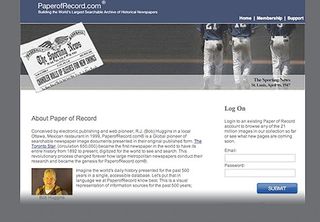
Mmw-paper-of-record Richard J. Salvucci in Miller-McCune:

Paper of Record is a Canadian website that boasts of building the world’s largest searchable archive of historical newspapers. It was conceived, appropriately enough, in a Mexican restaurant in Ottawa by R. J. (Bob) Huggins. Paper of Record is, to my knowledge, the most extensive searchable archive of Mexican historical newspapers in the world. There are more than 150 logged newspapers, some dating as far back as the 1840s. Paper of Record became, outside of the National Newspaper Library of Mexico, the single most important resource of its kind for scholars like me working in Mexican history — in Mexico, the United States, anywhere. With an excellent user interface and powerful search engine, Paper of Record made a vast collection of what had been nearly unusable and generally inaccessible primary sources searchable and exploitable, at no charge to users. For some scholars, especially those of us doing commercial, political or economic history, Paper of Record became literally indispensable.

Then Google bought it.

Google closed down Paper of Record, made the papers inaccessible, promised to make them available under Google News, but mostly didn’t, and then virtually refused to discuss what had happened with anyone. Research projects in Mexico and the United States came to a halt. Advanced graduate students were stymied. A Mexican colleague asked me over lunch what had happened to Paper of Record. Not having visited the site for a couple of weeks, I didn’t know it was gone. Neither Google nor Paper of Record had seen fit to give its users any notice. They just pulled the plug … and then darkness.

On the First Socialist Tragedy

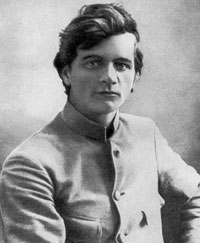
Platonov_a Andrei Platonov in New Left Review:

[Editor's introduction to the piece] The year 1934, his thirty-fifth, was a significant watershed in the life of Andrei Platonov. He had already written The Foundation Pit and Chevengur, the novels for which he is today best known, but neither had been published in full. Soviet readers knew him mainly for a few short stories and, above all, his semi-satirical account of collectivization, ‘For Future Use’, which had been met by a storm of official criticism when it appeared in 1931. For the next three years, Platonov was unable to publish anything. But in the spring of 1934, he was included in a brigade of writers sent to Turkmenistan to report on the progress of Sovietization, and the same year was asked to contribute to a series of almanachs. Under Gorky’s general editorship, these were to celebrate the completion of the second Five-Year Plan in 1937; but they never appeared. The text reproduced here was written for one of these, titled ‘Notebooks’; it arrived on Gorky’s desk in early January 1935—a month after the assassination of Kirov, an event which unleashed a wave of purges that presaged the terror to come. Within a few days Gorky had rejected Platonov’s text as ‘unsuitable’ and ‘pessimistic’; in early March the organizing secretary of the Writers’ Union publicly denounced the unpublished article as ‘reactionary’, ‘reflecting the philosophy of elements hostile to socialism’.

[Platonov] One should keep one’s head down and not revel in life: our time is better and more serious than blissful enjoyment. Anyone who revels in it will certainly be caught and perish, like a mouse that has crawled into a mousetrap to ‘revel in’ a piece of lard on the bait pedal. Around us there is a lot of lard, but every piece is bait. One should stand with the ordinary people in their patient socialist work, and that’s all.

This mood and consciousness correspond to the way nature is constructed. Nature is not great, it is not abundant. Or it is so harshly arranged that it has never bestowed its abundance and greatness on anyone. This is a good thing, otherwise—in historical time—all of nature would have been plundered, wasted, eaten up, people would have revelled in it down to its very bones; there would always have been appetite enough. If the physical world had not had its one law—in fact, the basic law: that of the dialectic—people would have been able to destroy the world completely in a few short centuries. More: even without people, nature would have destroyed itself into pieces of its own accord. The dialectic is probably an expression of miserliness, of the daunting harshness of nature’s construction, and it is only thanks to this that the historical development of humankind became possible. Otherwise everything on earth would long since have ended, as when a child plays with sweets that have melted in his hands before he has even had time to eat them.

Where does the truth of our contemporary historical picture lie? Of course, it is a tragic picture, because the real historical work is being done not on the whole earth, but in a small part of it, with enormous overloading.

The Dark Art of ‘Breaking Bad’

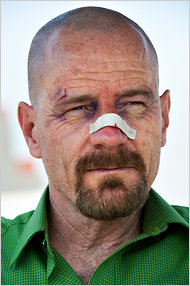
Mag-10Bad-t_CA1-articleInline David Segal in the NYT Magazine:

In its first season, “Breaking Bad” seemed like the story of the nuttiest midlife crisis ever, told with elements that felt vaguely familiar. The structure — felonious dad copes with stress of work and family; complications ensue — owed an obvious debt to “The Sopranos,” and the collision of regular people and colorfully violent thugs nodded to Tarantino. The story and setting were an update of the spaghetti Western, minus the cowboys and set in the present.

But it was soon clear that “Breaking Bad” was something much more satisfying and complex: a revolutionary take on the serial drama. What sets the show apart from its small-screen peers is a subtle metaphysical layer all its own. As Walter inches toward damnation, Gilligan and his writers have posed some large questions about good and evil, questions with implications for every kind of malefactor you can imagine, from Ponzi schemers to terrorists. Questions like: Do we live in a world where terrible people go unpunished for their misdeeds? Or do the wicked ultimately suffer for their sins?

Gilligan has the nerve to provide his own hopeful answer. “Breaking Bad” takes place in a universe where nobody gets away with anything and karma is the great uncredited player in the cast. This moral dimension might explain why “Breaking Bad” has yet to achieve pop cultural breakthrough status, at least on the scale of other cable hits set in decidedly amoral universes, like “True Blood” or “Mad Men,” AMC’s far-more-buzzed-about series that takes place in an ad agency in the ’60s. The total audience for “Breaking Bad” is only slightly smaller than that of “Mad Men” — 19.5 million versus 22.4 million cumulative viewers in their respective third seasons — but the top three markets for “Breaking Bad” are Albuquerque/Santa Fe, Kansas City and Memphis; neither New York nor Los Angeles are in its top 10. The show, in other words, doesn’t play on the coasts. It gets chatter, just not among what has long been considered the chattering class.

People are Not My Thing

4107110371 Mark Jay Mirsky reviews Lev Loseff's Joseph Brodsky: A Literary Life, in Ha'aretz:

Brodsky, who was born in 1940, dropped out of high school at 15 and worked at a series of low-level jobs, including apprentice machinist and hospital attendant, but also joined geological expeditions to the Soviet Far East beginning in 1957, where he came in contact with a group associated with the Mining Academy. Brodsky would claim that he found his way as a poet when he stumbled on the work of Evgeny Baratynsky, a 19th-century elegist, in 1959, but he was already writing poetry in 1957 and 1958. He never attended university, though he did enroll in evening classes and audit university lectures. As an autodidact, he pumped his university-educated friends regularly for information, Loseff relates.

Brodsky was not part of the establishment; he didn't belong to the Writers' Union of the USSR and wasn't involved in academia. He did, however, enjoy a deep friendship with the doyenne of Russian poetry, Anna Akhmatova, who was also a victim of Soviet persecution. Though Brodsky was an outsider with no regular employment, his work began to enjoy significant popularity but he also rubbed a number of established poets the wrong way. “His performances … were the loudest and most emotional … [Brodsky] left early … without listening to the rest of the readings,” writes Loseff. Publishing in the underground Samizdat journal Sintakis, as well as participating in a hare-brained scheme to hijack a plane and jump the USSR border, also put him in ill odor with the KGB. His growing reputation as a poet attracted the attention of a malicious informer, who denounced him to the authorities.

Loseff gives us a chilling account of the young Brodsky's kangaroo trial, in 1964, in which he was convicted of “parasitism,” after a futile attempt to hide in a brutal Soviet mental institution. Despite the nightmare of the exile to which he was sentenced, he would write some of his best work in the remote Siberian village of Norenskaya, and after he left it, he recalled its landscape and denizens in verse.

The Good Short Life

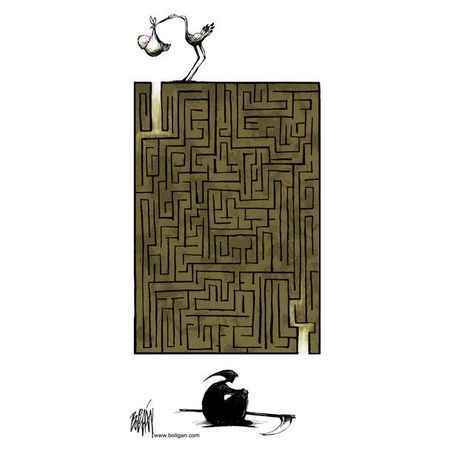
Dudley Clendinen in The New York Times:

Lou I HAVE wonderful friends. In this last year, one took me to Istanbul. One gave me a box of hand-crafted chocolates. Fifteen of them held two rousing, pre-posthumous wakes for me. Several wrote large checks. Two sent me a boxed set of all the Bach sacred cantatas. And one, from Texas, put a hand on my thinning shoulder, and appeared to study the ground where we were standing. He had flown in to see me.

“We need to go buy you a pistol, don’t we?” he asked quietly. He meant to shoot myself with.

“Yes, Sweet Thing,” I said, with a smile. “We do.”

I loved him for that.

I love them all. I am acutely lucky in my family and friends, and in my daughter, my work and my life. But I have amyotrophic lateral sclerosis, or A.L.S., more kindly known as Lou Gehrig’s disease, for the great Yankee hitter and first baseman who was told he had it in 1939, accepted the verdict with such famous grace, and died less than two years later. He was almost 38. I sometimes call it Lou, in his honor, and because the familiar feels less threatening. But it is not a kind disease. The nerves and muscles pulse and twitch, and progressively, they die. From the outside, it looks like the ripple of piano keys in the muscles under my skin. From the inside, it feels like anxious butterflies, trying to get out. It starts in the hands and feet and works its way up and in, or it begins in the muscles of the mouth and throat and chest and abdomen, and works its way down and out. The second way is called bulbar, and that’s the way it is with me. We don’t live as long, because it affects our ability to breathe early on, and it just gets worse. At the moment, for 66, I look pretty good. I’ve lost 20 pounds. My face is thinner. I even get some “Hey, there, Big Boy,” looks, which I like. I think of it as my cosmetic phase. But it’s hard to smile, and chew. I’m short of breath. I choke a lot. I sound like a wheezy, lisping drunk. For a recovering alcoholic, it’s really annoying.

More here.

Sunday Poem

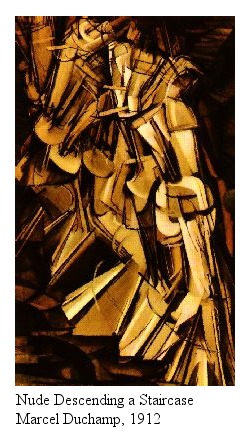
Nude Descending

Nude Descending a Staircase

Toe upon toe, a snowing flesh,
A gold of lemon, root and rind,
She sifts in sunlight down the stairs
With nothing on. Nor on her mind.

We spy beneath the banister
A constant thresh of thigh on thigh–
Her lips imprint the swinging air
That parts to let her parts go by.

One-woman waterfall, she wears
Her slow descent like a long cape
And pausing, on the final stair
Collects her motions into shape.

by X.J. Kennedy

.

The man who invented free love

From The Guardian:

Women-dancing-naked-in-a--007 When Wilhelm Reich, the most brilliant of the second generation of psychoanalysts who had been Freud's pupils, arrived in New York in August 1939, only a few days before the outbreak of war, he was optimistic that his ideas fusing sex and politics would be better received there than they had been in fascist Europe. Despite its veneer of puritanism, America was a country already much preoccupied with sex – as Alfred Kinsey's renowned investigations, which he had begun the year before, were to show. However, it was only after the second world war that the idea of sexual liberation would permeate the culture at large. Reich could be said to have invented this “sexual revolution”; a Marxist analyst, he coined the phrase in the 1930s in order to illustrate his belief that a true political revolution would be possible only once sexual repression was overthrown. That was the one obstacle Reich felt had scuppered the efforts of the Bolsheviks. “A sexual revolution is in progress,” he declared, “and no power on earth will stop it.”

…Soon after he arrived in the United States – by which time his former psychoanalytic colleagues were questioning his sanity – Reich invented the Orgone Energy Accumulator, a wooden cupboard about the size of a telephone booth, lined with metal and insulated with steel wool. It was a box in which, it might be said, his ideas about sex came almost prepackaged. Reich considered his orgone accumulator an almost magical device that could improve its users' “orgastic potency” and, by extension, their general, and above all mental, health. He claimed that it could charge up the body with the life force that circulated in the atmosphere and which he christened “orgone energy”; in concentrated form, these mysterious currents could not only help dissolve repressions but treat cancer, radiation sickness and a host of minor ailments. As he saw it, the box's organic material absorbed orgone energy, and the metal lining stopped it from escaping, acting as a “greenhouse” and, supposedly, causing a noticeable rise in temperature in the box. The charismatic Reich persuaded Albert Einstein to investigate the machine, whose workings seemed to contradict all known principles of physics. After two weeks of tests Einstein refuted Reich's claims. However, the orgone box became fashionable in America in the 1940s and 50s, and Reich grew increasingly notorious as the leader of the new sexual movement that seemed to be sweeping the country. The accumulator was used by such countercultural figureheads as Norman Mailer, JD Salinger, Saul Bellow, Paul Goodman, Allen Ginsberg, Jack Kerouac, Dwight Macdonald and William S Burroughs. In the 1970s Burroughs wrote an article for Oui magazine entitled “All the Accumulators I Have Owned”. In it, he boasted: “Your intrepid reporter, at age 37, achieved spontaneous orgasm, no hands, in an orgone accumulator built in an orange grove in Pharr, Texas.” At the height of his James Bond fame, Sean Connery swore by the device, and Woody Allen parodied it in Sleeper (1973), giving it the immortal nickname the “Orgasmatron”.

More here.

Saturday, July 9, 2011

Noam Chomsky and Robert Trivers Discuss Deceit

TriversChomsky_HS Trivers_salon Over at Seed:

Noam Chomsky: …Throughout history it’s been mostly the property holders or the educated classes who’ve tended to support power systems. And that’s a large part of what I think education is—it’s a form of indoctrination. You have to reconstruct a picture of the world in order to be conducive to the interests and concerns of the educated classes, and this involves a lot of self-deceit.

Robert Trivers: So you’re talking about self-deception in at least two contexts. One is intellectuals who, in a sense, go through a process of education which results in a self-deceived organism who is really working to serve the interests of the privileged few without necessarily being conscious of it at all. The other thing is these massive industries of persuasion and deception, which, one can conceptualize, are also inducing a form of either ignorance or self-deception in listeners, where they come to believe that they know the truth when in fact they’re just being manipulated.

So let me ask you, when you think about the leaders—let’s say the present set of organisms that launched this dreadful Iraq misadventure—how important is their level of self-deception?

Indian History Happens Elsewhere. In Chicago, For Instance

Authorphoto_1 Amitava Kumar in Indian Site:

“I am an American, Chicago born – Chicago, that somber city…” That was Saul Bellow in The Adventures of Augie March, introducing us to a city in motion, a city made of immigrants whose energy, and whose words, the stories that they forged for themselves, were changing America. But Bellow’s first-generation immigrants and even their offspring spoke with “an unerasable Yiddish twang”. His Chicago wasn’t made up of Indians or Pakistanis or Sri Lankans or Bangladeshis, the mixed nation of what one desi rapper has called “oblique brown.” But they are there, and from this distance they are shaping events, for good and for bad, in their homelands too.

For the past several days, I have been following the tweets of reporters inside the Chicago courtroom where former Pakistani Army doctor Tahawwur Rana was standing trial. Late last evening there was a tweet from Chicago Sun-Times reporter Rummana Hussain: “#Ranatrial: There is a verdict!”

The jury was split. It found Rana guilty of providing material support to Lashkar-e-Taiba as well as participating in the conspiracy to commit terrorist acts against the Danish newspaper that printed cartoons of the Prophet Muhammad. However, the jury acquitted Rana of what might be regarded as the principal charge, of involvement in the November 2008 attacks on Mumbai.

Questioning “Social Contagion”

110630_SCI_christakis_fowlerTN Dave Johns in Slate:

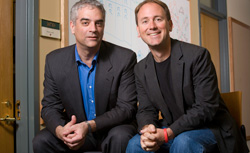
Have you heard that divorce is contagious? A lot of people have. Last summer a study claiming to show that break-ups can propagate from friend to friend to friend like a marriage-eating bacillus spread across the news agar from CNN to CBS to ABC with predictable speed. “Think of this 'idea' of getting divorced, this 'option' of getting divorced like a virus, because it spreads more or less the same way,” explained University of California-San Diego professor James Fowler to the folks at Good Morning America.

It's a surprising, quirky, and seemingly plausible finding, which explains why so many news outlets caught the bug. But one weird thing about the media outbreak was that the study on which it was based had never been published in a scientific journal. The paper had been posted to the Social Science Research Network web site, a sort of academic way station for working papers whose tagline is “Tomorrow's Research Today.” But tomorrow had not yet come for the contagious divorce study: It had never actually passed peer review, and still hasn't. “It is under review,” Fowler explained last week in an email. He co-authored the paper with his long-time collaborator, Harvard's Nicholas Christakis, and lead author Rose McDermott.

A few months before the contagious divorce story broke, Slate ran an article I'd written based on a related, but also unpublished, scientific paper. The mathematician Russell Lyons had posted a dense treatise on his website suggesting that the methods employed by Christakis and Fowler in their social network studies were riddled with statistical errors at many levels. The authors were claiming—in the New England Journal of Medicine, in a popular book, in TED talks, in snappy PR videos—that everything from obesity to loneliness to poor sleep could spread from person to person to person like a case of the galloping crud. But according to Lyons and several other experts, their arguments were shaky at best. “It's not clear that the social contagionists have enough evidence to be telling people that they owe it to their social network to lose weight,” I wrote last April. As for the theory that obesity and divorce and happiness contagions radiate from human beings through three degrees of friendship, I concluded “perhaps it's best to flock away for now.”

The Death Throes of Franco: Spain’s New Reckoning with the Dictatorship and Civil War

Franco-spanishcivilwar-jd Julián Casanova in Eurozine:

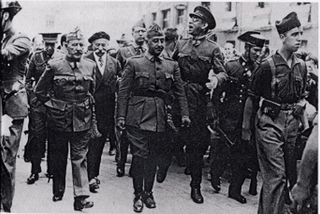
The arrival of a socialist government under José Luís Rodríguez Zapatero opened a new era. For the first time in the thirty-year-old democracy, politics was to take the initiative in redressing this historic injustice. This was the prime significance of the bill introduced at the end of July 2006, later to be known as the Ley de Memoria Histórica (The Historical Memory Act). This led to memory being discussed more openly than ever before, and the past was to become a lesson for the present and the future. The bill did not deal with different interpretations of the past: it was not trying to define responsibility or point the finger of guilt. Nor did it propose a Truth Commission, as had been set up in other countries to register the mechanisms of death, violence and torture and identify the victims and their executioners.

Even so, it provoked strong reaction from the opposition Right (Mariano Rajoy, the leader of the PP, stated that his party would repeal the Act if it came to power), the Catholic Church and its media outlets. Esquerra Republicana (the Catalan Republican Left party) rejected it because it failed to call for the quashing of Francoist trials, while the moderate Basque and Catalan nationalists also imposed their conditions: the former requiring the return of Basque government documents held in the Archive at Salamanca, the latter calling for clearer acknowledgement of crimes and violence on the Republican side.

Spanish democracy needed this act, which was finally passed on 31 October 2007, and while it did not go far enough, it did open new avenues for moral redress and legal and political recognition for the victims of the Civil War and Francoism.

Saving Affirmative Action from Itself

Affirmativeaction2 Nicolaus Mills in Dissent:

THESE DAYS the future of affirmative action in higher education is in jeopardy. A series of states—among them Michigan, California, Florida, Nebraska, and Arizona—have banned the consideration of race, ethnicity, or gender by any unit of state government, including public colleges and universities. As a result, state-run institutions of higher education with the greatest capacity for accepting minorities are increasingly less able to do so.

Nor can these institutions turn to the public for support on affirmative action. By a 55-to-36 percent margin voters believe affirmative action should be abolished altogether, and by a 61-to-33 percent margin they oppose affirmative action for blacks in hiring, promotion, and college entry, according to a 2009 Quinnipiac University poll.

This negative view of affirmative action in higher education can, in part, be explained by the rightward shift of the country since 1980 and the pressures the current recession has put on state budgets. But even more important is the way in which affirmative action has strayed from its 1960s roots and lost sight of its own history.

Today, the only way affirmative action in higher education can save itself from losing still more public support is for it to become far more inclusive in practice. It needs to reach high-school students who for a variety of reasons—not just because of their race or ethnicity—have been disadvantaged in the struggle to get into college.

Soft-drink Cans Beat the Diffraction Limit

News406-i0.1 Jon Cartwright over at Nature News [h/t: Jennifer Ouellette:

Sound, like light, can be tricky to manipulate on small scales. Try to focus it to a point much smaller than one wavelength and the waves bend uncontrollably — a phenomenon known as the diffraction limit. But now, a group of physicists in France has shown how to beat the acoustic diffraction limit — and all it needs is a bunch of soft-drink cans.

Scientists have attempted to overcome the acoustic diffraction limit before, but not using such everyday apparatus. The key to controlling and focusing sound is to look beyond normal waves to 'evanescent' waves, which exist very close to an object's surface. Evanescent waves can reveal details smaller than a wavelength, but they are hard to capture because they peter out so quickly. To amplify them so that they become detectable, scientists have resorted to using advanced man-made 'metamaterials' that bend sound and light in exotic ways.

Some acoustic metamaterials have been shown to guide and focus sounds waves to points that are much smaller than a wavelength in size. However, according to Geoffroy Lerosey, a physicist at the Langevin Institute of Waves and Images at the Graduate School of Industrial Physics and Chemistry in Paris (ESPCI ParisTech), no one has yet been able to focus sound beyond the diffraction limit away from a surface, in the 'far field'. “Without being too enthusiastic, I can say [our work] is the first experimental demonstration of far-field focusing of sound that beats the diffraction limit,” Lerosey says.