
Enjoying the content on 3QD? Help keep us going by donating now.
Category: Recommended Reading
David Jones’s Parenthetical Epic
Jared Marcel Pollen at Commonweal:
 I’m accustomed to saying that In Parenthesis by David Jones is the greatest work of modernist poetry you’ve never read. It exists in the same class as The Waste Land and The Cantos, and is arguably second only to the former. Eliot himself considered Jones a writer of “major importance” and the poem “a work of genius.” W. H. Auden likewise regarded it as “a masterpiece” and “the greatest book about the First World War.” Despite this, it suffered decades of critical neglect, perhaps because of its status as a “prose poem,” or perhaps because, until the late 1980s, Faber didn’t officially list Jones among its published poets, leading to its own parenthetical status in the modernist canon. One can go through an entire undergraduate program and never encounter Jones. This would have been the case for me, too, had I not studied under Thomas Dilworth, an eminent Jones scholar, who has described In Parenthesis as “probably the greatest literary work on war in English” and “the only great epic since Paradise Lost.”
more here.
Enjoying the content on 3QD? Help keep us going by donating now.
Folklore Is Philosophy
Abigail Tulenko at Aeon Magazine:
 In recent years, ‘canon-expansion’ has been a hot-button topic, as philosophers increasingly find the exclusivity of the field antithetical to its universal aspirations. As Jay Garfield remarks, it is as irrational ‘to ignore everything not written in the Eurosphere’ as it would be to ‘only read philosophy published on Tuesdays.’ And yet, academic philosophy largely has done just that. It is only in the past few decades that the mainstream has begun to engage seriously with the work of women and non-Western thinkers. Often, this endeavour involves looking beyond the confines of what, historically, has been called ‘philosophy’.
Expanding the canon generally isn’t so simple as resurfacing a ‘standard’ philosophical treatise in the style of white male contemporaries that happens to have been written by someone outside this demographic. Sometimes this does happen, as in the case of Margaret Cavendish (1623-73) whose work has attracted increased recognition in recent years. But Cavendish was the Duchess of Newcastle, a royalist whose political theory criticises social mobility as a threat to social order.
more here.
Enjoying the content on 3QD? Help keep us going by donating now.
Jamaica Kincaid, The Art of Fiction
Darryl Pinckney in The Paris Review:
 Jamaica Kincaid was born Elaine Potter Richardson on Antigua in 1949. When she was sixteen, her family interrupted her education, sending her to work as a nanny in New York. In time, she put herself on another path. She went from the New School in Manhattan to Franconia College in New Hampshire, and worked at Magnum Photos and at the teen magazine Ingenue. In the mid-’70s, she began to write for The Village Voice, but it was at The New Yorker, where she became a regular columnist for the Talk of the Town section, that everything changed for her. Her early fiction, much of which also appeared in that magazine, was collected in At the Bottom of the River (1983), a book that, like her Talk stories, announced her themes, her style, the uncanny purity of her prose. She has published the novels Annie John (1985), Lucy (1990), The Autobiography of My Mother (1996), Mr. Potter (2002), and See Now Then (2013). A children’s book, Annie, Gwen, Lilly, Pam and Tulip, came out in 1986. Aside from the collected Talk Stories (2001), her nonfiction works include A Small Place (1988), a reckoning with the colonial legacy on Antigua; My Brother (1997), a memoir of the tragedy of AIDS in her family; and two books on gardening, My Garden (Book) (1999) and Among Flowers: A Walk in the Himalaya (2005).
Kincaid divides her time between Cambridge, Massachusetts, where she is a professor of African American studies at Harvard University, and Bennington, Vermont, where her large brown clapboard house with yellow window trim is shielded by trees. She has two children from her marriage to the composer Allen Shawn, the son of the former New Yorker editor William Shawn, and in the living room she displays on a table—proudly, apologetically—productions from the arts-and-crafts camps and classes that her son and daughter attended over the years.
More here.
Enjoying the content on 3QD? Help keep us going by donating now.
The Constitution Is Sacred. Is It Also Dangerous?
Jennifer Szalai in The New York Times:
 The United States Constitution is in trouble. After Donald Trump lost the 2020 election, he called for the “termination of all rules, regulations and articles, even those found in the Constitution.” Outraged critics denounced him for threatening a document that is supposed to be “sacrosanct.” By announcing his desire to throw off constitutional constraints in order to satisfy his personal ambitions, Trump was making his authoritarian inclinations abundantly clear.
It’s no surprise, then, that liberals charge Trump with being a menace to the Constitution. But his presidency and the prospect of his re-election have also generated another, very different, argument: that Trump owes his political ascent to the Constitution, making him a beneficiary of a document that is essentially antidemocratic and, in this day and age, increasingly dysfunctional.
After all, Trump became president in 2016 after losing the popular vote but winning the Electoral College (Article II). He appointed three justices to the Supreme Court (Article III), two of whom were confirmed by senators representing just 44 percent of the population (Article I). Those three justices helped overturn Roe v. Wade, a reversal with which most Americans disagreed. The eminent legal scholar Erwin Chemerinsky, worried about opinion polls showing “a dramatic loss of faith in democracy,” writes in his new book, “No Democracy Lasts Forever”: “It is important for Americans to see that these failures stem from the Constitution itself.”
More here.
Enjoying the content on 3QD? Help keep us going by donating now.
On Anthony E. Kaye’s Groundbreaking History Of Nat Turner
Enjoying the content on 3QD? Help keep us going by donating now.
Thinking Big
Jess McAllen in The Baffler:
 Earlier this year, the founder of Think Coffee sent out an email to his more than one hundred employees with the subject line “Opening a Dialog Between Us.” Workers at the ethically minded coffee chain had been organizing a union drive across its eleven New York City stores, and Jason Scherr wasn’t thrilled. “It has come to my attention that some of you may be considering whether to join a labor union,” he wrote, going on to add that “it pains me to learn that some of you feel that your problems and concerns are not being heard.”
These emails have become commonplace, according to his employees. “He’s very much seeing [unionization] as going against Think’s culture,” said cashier Hannah. “We’ve gotten at least ten of them,” added Halle, a baker. Workers say the emails, all sent over the past five months, attacked the union and suggested employees not join. In his initial email, Scherr claimed that the city’s shift to working from home because of Covid-19 had significantly cut into the chain’s profits.
More here.
Enjoying the content on 3QD? Help keep us going by donating now.
The Perverse Legacy of Participation in Human Genomic Research
Misha Angrist in Undark Magazine:
 “It sounds as if the donor knows who he is,” wrote Francis Collins, former director of the then-called National Center for Human Genome Research, in a 1996 email. “That’s not the way it should have been done.”
This quote appears in Undark and STAT’s recent, deeply reported exposé on how the first human genome was sequenced in the late 1990s and early 2000s by the Human Genome Project. Collins was referring to the provenance of one of the initial DNA samples donated for the project, but I reckon that he would have objected just as vehemently had any of the donors been able to spot their own DNA within the final “reference” genome. This includes one prominent donor: The subject of the Undark/STAT story, an anonymous man from Buffalo, New York, known as RP11, who wound up being the project’s primary DNA source. Despite signing a consent form saying the researchers expected that no single person’s DNA would account for more than 10 percent of the reference genome, RP11’s DNA made up 74 percent of that genome.
More here.
Enjoying the content on 3QD? Help keep us going by donating now.
The Art Of Frank Stella
Enjoying the content on 3QD? Help keep us going by donating now.
Sunday, September 1, 2024
Where to start with: James Baldwin
Tom Jenks in The Guardian:
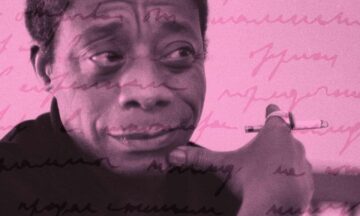 Baldwin was 33 in 1957, when he published his short story Sonny’s Blues, and it might be said that the whole of his lifetime went into the story. Readers today coming for the first time to this tale of Harlem life and heroin addiction might view it in contemporary terms, and there’s no harm in that: the messages in the story are as evergreen as the biblical allusions Baldwin uses in the story. But it is also worth recalling that in 1957 there was no Civil Rights Act, the struggle over Jim Crow laws and segregation had a long way to go, and racial conditions and inequalities were deplorable and disregarded by most white Americans. The story poses two brothers’ estrangement over addiction and their ultimate rapprochement as a quietly implicit analogy to racial division and an inspiration toward unity and love, and rides, as its title suggests, on music, specifically jazz. Only a reader with a heart of stone will fail to be moved to tears of recognition, sorrow and joy when the story reaches its conclusion.
More here.
Enjoying the content on 3QD? Help keep us going by donating now.
When Hitchens Was Good
Morten Jensen in Commonweal Magazine:
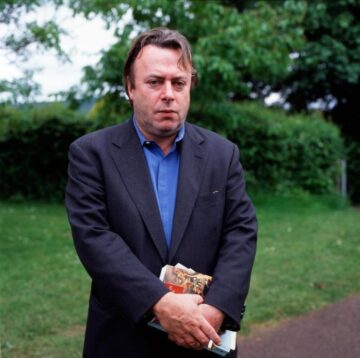 Like Saul Bellow’s Von Humboldt Fleisher, Hitchens was a “champion detractor,” a terrific hater, and always more fun to read when he was denouncing than when he was praising. Rare is the enemy or ideological foe who gets mentioned in these pages without incurring a quick swat of the pen. Thus, we are treated to “the sinister cretin Reagan,” “that recreational vulpicide Roger Scruton,” “Senator Karl Mundt, a dinosaur Republican and tireless witch-hunter,” “James Jesus Angleton, crazed and criminal head of the CIA,” and so on. Some critics have found such comments silly or bad-mannered. “He was always too ready with abuse,” George Scialabba wrote after Hitchens’s death. I agree, and no doubt being so amused by name-calling is a bad habit, but reading these essays I found it one I was more than happy to indulge.
Less silly and just as amusing are those instances when, simply by exposing them, Hitchens lets his targets do the (self-)ridiculing for him. When George Bush Sr. quotes Tom Paine (“These are the times that try men’s souls”) in a speech announcing the 1991 invasion of Iraq, Hitchens has only to point out that Bush was quoting from Paine’s pamphlet The American Crisis, which goes on to speak with scorn of “summer soldiers and sunshine patriots,” for the president to look a fool.
More here.
Enjoying the content on 3QD? Help keep us going by donating now.
Ten Ways to Spot Gen Z, According to ChatGPT
Alice Gibbs in Newsweek:
 From causing a stir with unexpected office wear to dominating social media, members of Generation Z aren’t shy about making their opinions known. As of 2023, those born between 1997 and 2012 make up the largest generation in the world, but how easy are they to spot? If you’re wondering how you can identify someone from this generation without asking for a date of birth, Newsweek asked artificial intelligence text chatbot ChatGPT to provide 10 ways to spot someone from Gen Z. Here is the question: “Tell me 10 ways I might spot someone from Generation Z, born between 1997 and 2012. In your response, please consider factors like fashion, entertainment, language use, social indicators and media consumption.”
- Fashion Choices
Gen Z has brought back the Y2K aesthetic in a big way, favoring oversized clothing, wide-leg jeans and chunky sneakers. The look often includes crop tops, bucket hats and tiny sunglasses. Gen Zers are also likely to opt for sustainable fashion and are more likely to shop secondhand or support eco-friendly brands. - Language and Slang
If you hear phrases like “no cap” (meaning no lie), “slay” (doing something exceptionally well) or “bet” (agreement), you’re likely speaking to someone from Gen Z. Gen Zers have developed a language all their own, often popularized on TikTok, and frequently use internet slang like “FR” (for real) and “SMH” (shaking my head).
- Fashion Choices
More here.
Enjoying the content on 3QD? Help keep us going by donating now.
On Severance: Fragments on the Time of Inqisām
Liron Mor over at the Critical Inquiry blog:
This is the time of inqisām. A time of severance, of breaking apart, of the utter destruction of Gaza, the dissolution of its inhabitants, its communities, and its infrastructures, of lives and everything that sustains them, of the very habitability of the land.
But this word, inqisām, names much more. Meaning “severance” or “being partitioned” in Arabic, it helps designate and illuminate several political, conceptual, social, and psychological aspects of Israel’s war on Gaza and on Palestinians more broadly, both before and after October 2023. It is, first and foremost, the proper name for an Israeli mode of segregation, which separates not only colonizers from colonized but also, and more importantly, the colonized from one another. It indexes technologies of distancing that produce Israeli blindness and apathy to Palestinian subjectivity. It accurately manifests the current stage of what is known as the Israeli-Palestinian conflict, a stage defined by the temporally cyclical and spatially binary logic of blood feuds and revenge, with its tendency to decontextualize and its recurrent moral rebooting of history. Finally, it helps demonstrate that what is going on at present does not constitute a break with the previous Israeli paradigm of “conflict management,” which many declared to have been shattered. Instead, this severance is simply its continuation by other means. Since “conflict management” has long involved periodic large-scale operations of mass killing and infrastructural devastation—a violence whose seasonal nature is captured by the term Israeli politicians have given it, mowing the lawn—what sets apart the current violence in Gaza is primarily its unprecedented scale.
More here.
Enjoying the content on 3QD? Help keep us going by donating now.
Fish Do Not Aspire to Wetness
Stephen Holmes in The Ideas Letter:
Today’s disheartening resurgence of authoritarianism, xenophobia, race-baiting, brazen sexism and religious zealotry, not to mention homicidal rampages in the name of ethnic identity, makes rallying to the defense of a beleaguered liberalism into an intellectual and moral imperative. Even Alexander Lefebvre, a delightfully entertaining Professor of Politics and Philosophy at the University of Sidney, acknowledges in an aside that “liberal institutions and values are threatened worldwide.” But his stylishly chatty and evangelizing new book aims to defend liberalism against a threat less grimly consequential than those making newspaper headlines. The danger to which he draws our attention is more bookish and professorial than blood-dimmed and existential. In making his eloquent case for liberalism, he says little about the malignant movements of the far right thriving on political confusion and division in the United States and the European Union. Instead, he concentrates his hostile fire on a fashionable but unjustifiably cramped interpretation of the teachings of his philosophical hero, John Rawls.
The mission he sets himself is to present Rawls’ thought in a new light and thereby overturn “the reigning orthodoxy of how to do political philosophy within the Anglophone academy.” The orthodoxy with which he takes issue is the idea that liberalism is an exclusively and narrowly political doctrine focused on organizing political institutions to guarantee the equal rights and liberties of all members of the community. He invites us to look beyond its strictly political aspirations and appreciate liberalism’s promise of personal fulfillment through fair and generous treatment of friends, family, acquaintances, colleagues and the strangers we occasionally meet.
The charm of Lefebvre’s approach to Rawls lies in how he transforms the dense and conceptually innovative analysis of A Theory of Justice into a frolicking, page-turning “work of self-help for liberals.”
More here.
Enjoying the content on 3QD? Help keep us going by donating now.
The Strange Rise of Daydreaming
Kristen French in Nautilus:
Throw on the Power Lights! Rev her up to 8,500! We’re going through!” shouts the commander to his crew, as he navigates through the worst storm in his 20 years of flying. A harrowing scene unfolds but then Walter Mitty is brought back to reality by the sound of his wife’s voice, the daydream fading into the byways of his mind. Not long after that, he’s struck with a new fantasy, and then another. Over the course of an afternoon, while running mundane errands, Mitty proceeds to have a series of increasingly dazzling daydreams in which he performs acts of great heroism, vivid narratives that bubble like a geyser into his mind.
This is the plot of “The Secret Life of Walter Mitty,” a short story written by James Thurber in 1939 that has been retold over and over in popular film and theater adaptations. The story has captured so many imaginations because getting lost in daydreams is a very human thing to do. We all occasionally script narratives in our minds in which our deepest desires come true, as a refuge from some of the more disappointing facts of life.
For some, though, the delight of daydreaming can turn into a curse: The fantasies become such a successful form of escape that they take over the mind, becoming compulsive and preventing the dreamer from paying attention to important facets of reality—work, school, other people.
Psychologists have been fascinated with daydreams since at least the time of Freud, who believed they bore the hallmarks of unconscious yearnings and conflicts. But Israeli research and clinical psychologist Eli Somer was the first to describe excessive daydreaming as a distinct psychiatric problem.
More here.
Enjoying the content on 3QD? Help keep us going by donating now.
The great wealth wave
Daniel Waldenström in Aeon:
Recent decades have seen private wealth multiply around the Western world, making us richer than ever before. A hasty glance at the soaring number of billionaires – some doubling as international celebrities – prompts the question: are we also living in a time of unparalleled wealth inequality? Influential scholars have argued that indeed we are. Their narrative of a new gilded age paints wealth as an instrument of power and inequality. The 19th-century era with low taxes and minimal market regulation allowed for unchecked capital accumulation and then, in the 20th century, the two world wars and progressive taxation policies diminished the fortunes of the wealthy and reduced wealth gaps. Since 1980, the orthodoxy continues, a wave of market-friendly policies reversed this equalising historical trend, boosting capital values and sending wealth inequality back towards historic highs.
The trouble with the powerful new orthodoxy that tries to explain the history of wealth is that it doesn’t fully square with reality. New research studies, and more careful inspection of the previous historical data, paint a picture where the main catalysts for wealth equalisation are neither the devastations of war nor progressive tax regimes. War and progressive taxation have had influence, but they cannot count as the main forces that led to wealth inequality falling dramatically over the past century. The real influences are instead the expansion from below of asset ownership among everyday citizens, constituted by the rise of homeownership and pension savings. This popular ownership movement was made possible by institutional changes, most important democracy, and followed suit by educational reforms and labour laws, and the technological advancements lifting everyone’s income.
More here.
Enjoying the content on 3QD? Help keep us going by donating now.
An Impressive Monument to Christopher Isherwood
Alexandra Jacobs at the NYT:
 Many writers’ graves are tourist attractions. Not Christopher Isherwood’s. Indeed, he doesn’t have one. Best remembered for his “Berlin Stories,” which became “I Am a Camera” which became “Cabaret” — and latterly for “A Single Man,” which the designer Tom Ford made into a movie — Isherwood, who died in 1986 at 81, signed away his corpse to science.
Now the director of his foundation, Katherine Bucknell, a novelist herself, has with great care erected a massive literary cenotaph entitled, with an apt echo of this summer’s most successful movie, “Christopher Isherwood Inside Out.” It joins Peter Parker’s equally gargantuan “Isherwood: A Life Revealed,” from 20 years ago: twin lions guarding fiercely the library of Isherwood’s own prodigious autofiction, letters and journals. The biographers’ little-lion friend, their main Christopher whisperer, is Don Bachardy: the artist and Isherwood’s longtime partner, 30 years his junior and fondly known as Kitty. A landed-gentry Englishman who’d uprooted improbably to Los Angeles, Isherwood was Dobbin, after a toy horse he’d been given by his nanny as a child. They called themselves the Animals, their private domestic idyll the “basket.”
more here.
Enjoying the content on 3QD? Help keep us going by donating now.
A Year With Lawrence
Nick Duerden at The Guardian:
 In 2004, the British journalist Chris Heath spent more than a year shadowing Robbie Williams’s every movement for his book on the singer, Feel. If this was above and beyond the usual requirements of a biographer, you could see why he thought it might pay off. We tend to be fascinated by success, and the cost that fame can exact upon the individual. And so who better to take such an approach with than both the biggest pop star of his generation and the most self-critical?
The music writer Will Hodgkinson clearly took note, because now he has done something similar, albeit with a singer the vast majority of us will never have heard of: Lawrence. But then navigation of failure is far more interesting than the navigation of success. It’s easier to relate to, too. Like Lulu (and Sting, and Jedward), Lawrence goes by no surname. Back in the 1980s, he had a glimmer of cult appeal with his indie band Felt, and then again a decade later with Denim.
more here.
Enjoying the content on 3QD? Help keep us going by donating now.
Can You Guess These Novels That Originally Got Bad Times Reviews?
JD Biersdorfer in The New York Times:
 Welcome to Lit Trivia, the Book Review’s regular quiz about books, authors and literary culture. This week’s installment challenges you to identify classic novels from the descriptions in their original — and, well, not wholly positive — reviews in the pages of The New York Times. In the five multiple-choice questions below, tap or click on the answer you think is correct. After the last question, you’ll find links to the books if you’d like to do some further reading.
1 of 5
“One can say that it is much too long because its material — the cavortings and miseries of an American bomber squadron stationed in late World War II Italy — is repetitive and monotonous. Or one can say that it is too short because none of its many interesting characters and actions is given enough play to become a controlling interest.”
“Gravity’s Rainbow”
“Heart of Darkness”
“Slaughterhouse-Five”
“Catch-22”
More here.
Enjoying the content on 3QD? Help keep us going by donating now.
Jack Russell (1960 – 2024) Singer For Great White
Enjoying the content on 3QD? Help keep us going by donating now.