China’s European Shopping Spree?

1250007608Mark Blyth in Foreign Affairs:

Last week's EU agreement to refinance Greece's debt seems to have calmed markets concerned with the possible default of Greece and subsequent contagion in the eurozone. But EU refinancing was not the only solution on offer: in June, an entirely different solution was hinted at from an unlikely source.

When Chinese Premier Wen Jiabao was on a tour of European capitals last month, he stressed two things at each stop: that a stable eurozone is vital to China and that China is Europe's friend. Indeed, from Beijing's perspective, when it comes to Europe, self-interest and altruism neatly coincide. If China were to buy only half of all outstanding Greek sovereign debt (a bargain at around $220 billion, a fraction of China's dollar assets), it would not only resolve the eurozone crisis and add to Chinese prestige but it would help give Beijing the sort of reserve asset that it needs to diversify its holdings out of dollars. Currently, 70 percent of China's reserves are in dollars, and China does not even make the list of the top 40 holders of Greek debt. But why would China not take such an opportunity?

For one, China probably has as little faith in the EU's ability to solve its debt crisis over the long run as do the rest of the world's financial markets, more bailouts notwithstanding. But another answer is possible — one that links the 2008 financial crisis and the 2011 European bond market crisis to a possible Chinese end run around the 2007 Foreign Investment and National Security Act. This U.S. law makes it hard for China to diversify out of its $3 trillion-plus holdings of U.S. dollars and buy sensitive U.S. assets such as aerospace, technology, and defense-related companies.

As a result of the unintended consequences of U.S. and European actions in financial markets, there is now the possibility that, even with this latest bailout, China could buy such sensitive assets from Europe, at fire-sale prices.


Neocons’ Iraq Criticism Rings Hollow

Town_Crier F. Gregory Gause III in The National Interest:

While Washington gets ready to default, another deadline looms on the horizon: December 31, 2011, when all American forces are due to be out of Iraq. The dysfunction of Iraqi politics has made it impossible for Baghdad to do what most people think is the rational thing—to request that some American forces remain to assist the Iraqi government in strengthening both its internal and external security capabilities. The Obama administration has signaled repeatedly that it is willing to do so, but that has not stopped neoconservative critics and former Bush administration officials from blaming Obama for Iraq’s failure to get its act together. The irony, of course, is that the democracy they were so proud to give Iraq (at such great cost to both Americans and Iraqis) is the reason that their preferred policy of continued American military presence in the country is not working out.

The neocon criticism of the Obama administration for not doing enough to bring the Iraqis to their senses is shot through with internal contradictions. Frederick and Kimberly Kagan wrote in the Weekly Standard in April that “[t]he ball is not in Maliki’s court. It is in Obama’s court,” contending that a lack of serious American commitment to Iraq was forcing Maliki into Iran’s arms. They called on the president to “stand by Iraq’s leaders as long as those leaders stand by the democratic processes now tenuously in place.”

But it is those very democratic processes that are blocking Maliki from renegotiating the Status of Forces Agreement (sofa) that sets the December 31 deadline. The Sadrist bloc in the Iraqi Parliament, an important part of Maliki’s governing majority, is dead set against a continued American military presence. Other Iraqi politicians, who whisper to visiting American journalists and pundits how much they want U.S. forces to stay, will not argue that position in public or try to put together a parliamentary majority in favor of an extension of the sofa. Maliki himself is unwilling to take this case directly to the parliament or the Iraqi people. Presumably they, as democratic politicians, know their own public opinion and their own political landscape better than the Kagans do. It is hard to escape the conclusion that the desire of committed ideological minorities like the Sadrists to get the Americans out is not counterbalanced by any mobilized Arab Iraqi constituency that wants them to stay, and that the median Arab Iraqi voter (Kurds would hold different opinions) would be just as happy to see the U.S. troops go. That might be the wrong decision, but it seems to be the democratic one.

On Discovering Life

Sasselov-life_HS Dimitar Sasselov in Seed:

CERN’s Large Hadron Collider has begun refining our understanding of the fabric of space and time, and NASA’s Kepler mission is sharpening our estimates of how common Earth-like planets are in our galaxy. Yet as these cosmic-scale projects open the second decade of the new millennium they are returning science to a frontier that seems oddly 19th century. Science is going back to the scale of life—that middle ground of minute energies and high complexities that lies between the immense galaxies and the infinitesimal particles.

My statement that life is science’s new focus sounds naive and out-of-touch—after all, just open the newspapers or see the research budgets for biology and medicine, and you’ll notice an overwhelming amount of interest and funding for the life sciences. But that all has to do with us humans: first and foremost, with our health and bodies, and second, with our environment, the ecosystems of planet Earth. There is an aspect of life sciences that has been largely absent: the confrontation of fundamental questions of biology much as particle accelerators grapple with fundamental questions of physics. The roll call of early pioneers and prospectors is notable, but short. Fortunately, increasing numbers of researchers are now re-entering this fertile frontier.

The open secret of this emerging frontier is that we do not have a fundamental definition or understanding of life. Similarly, we do not understand life’s origins, how life emerges from chemistry. We do know that the chemistry of life on Earth, or “Terran” biochemistry for short, is rather restrictive in its molecular permutations. Unnecessarily so, it seems, given the enormous choice of good options provided by chemistry for building biological bodies and functions. However, we do not know whether nature or nurture is the reason. The bio-chemistry we see (and are!) could be universal, like gravity, where the same basic rules apply anywhere. Or our biochemistry could instead be one of many options, one that just happened to fit Earth’s environmental conditions.

Hell on Utøya

Prabhleen Prableen Kaur in Eurozine:

I'm awake. I can't sleep anymore. I'm sitting in the living room. Feel grief, anger, happiness, God I don't know what. There are too many emotions. There are too many thoughts. I am afraid. I react to every noise. I will now write about what happened at Utøya. What my eyes saw, what I felt, what I did. The words come straight from the gut, but I will still withhold many names out of respect for my friends.

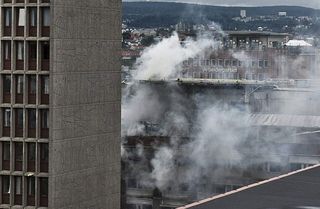
We'd had an emergency meeting in the main building after the bombings in Oslo. Then there was a separate meeting for the members from Akershus and Oslo. After the meetings, many were still in and around the main building. We took comfort in being in safety on an island. No one knew that hell was about to explode around us too.

I was in the main hallway when panic struck. I heard shots. I saw him shoot. Everybody started to run. The first thought was: “Why is the police shooting at us? What the f***?” I ran into the small assembly hall. People ran. Screamed. I was scared. I managed to get into one of the rooms towards the back of the building. We were many in there. We were all lying on the floor. We heard more shots. Got more scared. I cried. I didn't understand. I saw my best friend through the window and wondered if I should go out to get him. I didn't have time. I saw the fear in his eyes. I remained lying on the floor in the room for a few minutes. We agreed not to let anyone else in in case the killer came. We heard more shots and decided to jump out of the window. Panic broke out among us. Everybody in the room rushed to the window and tried to jump out. I was the last and thought: “I am the last one to jump out of the window. Now I will die. I'm sure, but perhaps it is ok, then I know that the others are safe.” I threw my bag out the window. Tried to climb down but lost my grip. I landed hard on the left side of my body. A boy helped me up. We ran into the woods. I looked around. “Is he here? Is he shooting at me? Can he see me?” A girl had broken her ankle. Another was badly injured. I tried to help a little before continuing down to the water. I took shelter behind some sort of cement wall. We were many. I prayed, prayed, prayed. I was hoping that God could se me. I rang mum and said it was not certain we would meet again but that I would do everything I could to make it through. I told her several times that I loved her. I heard the fear in her voice. She cried. It hurt. I sent an SMS to my dad, said I loved him. I sent an SMS to someone else I love very, very much. We kept in contact for a while. I sent an SMS to my best friend. He did not reply.

He didn’t want to fight, but Ifti Nasim could provoke

From Chicago Tribune:

Ifti Ifti Nasim, who died of a heart attack Friday night at 64, was one of the most famous Chicagoans most Chicagoans have never heard of. He was a columnist, a radio show host and a poet who earned followers around the world for his poems about life as a gay Pakistani.He was a luxury-car salesman at Loeber Motors for a while, too, and once, the story goes, sold a Mercedes to Oprah Winfrey. She asked how big the engine was. He replied, “Are you going to sleep with it?” Since last weekend, Nasim has been mourned by friends and fans from India to France, from Facebook to the shops of Chicago's Devon Avenue. On Saturday, 1,000 or so crowded into the Muslim Community Center on Elston Avenue to pray over his body.

“According to every convention, my friend Ifti was all wrong,” blogged Azra Raza, a prominent oncologist. “He was born in the wrong country. He should have been born in Hollywood. … He was born in the wrong body. He should have been Marilyn Monroe.” Being born “wrong” was what made Nasim the remarkable person he was, though. The son of a newspaper owner in Faisalabad, an industrial city built on cotton, he was the fifth of seven kids of his father's first marriage. His mother died when he was young. “As one of a large family,” he once said, “I was the invisible child.”

More here.

Think healthy, eat healthy: Scientists show link between attention, self-control

From PhysOrg:

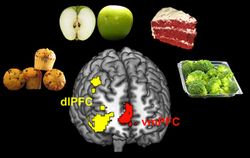
Thinkhealthy You're trying to decide what to eat for dinner. Should it be the chicken and broccoli? The super-sized fast-food burger? Skip it entirely and just get some Rocky Road? Making that choice, it turns out, is a complex neurological exercise. But, according to researchers from the California Institute of Technology (Caltech), it's one that can be influenced by a simple shifting of attention toward the healthy side of life. And that shift may provide strategies to help us all make healthier choices—not just in terms of the foods we eat, but in other areas, like whether or not we pick up a cigarette. Their research is described in a paper published in the July 27 issue of the Journal of Neuroscience.

When you decide what to eat, not only does your brain need to figure out how it feels about a food's taste versus its health benefits versus its size or even its packaging, but it needs to decide the importance of each of those attributes relative to the others. And it needs to do all of this more-or-less instantaneously. When the dorsolateral prefrontal cortex (dlPFC) is active, it allows the ventral medial prefrontal cortex (vmPFC) to take into account health benefits as well as taste when it assigns a value to a particular food.

More here.

Wednesday Poem

Where I Live

is vertical:
garden, pond, uphill

pasture, run-in shed.
Through pines, Pumpkin Ridge.

Two switchbacks down
church spire, spit of town.

Where I climb I inspect
the peas, cadets erect

in lime-capped rows,
hear hammer blows

as pileateds peck
the rot of shagbark hickories

enlarging last
year's pterodactyl nests.

Granite erratics
humped like bears

dot the outermost pasture
where in tall grass

clots of ovoid scat
butternut-size, milky brown

announce our halfgrown
moose padded past

into the forest
to nibble beech tree sprouts.

Wake-robin trillium
in dapple-shade. Violets,

landlocked seas I swim in.
I used to pick bouquets

for her, framed them
with leaves. Schmutzige

she said, holding me close
to scrub my streaky face.

Almost from here I touch
my mother's death

by Maxine Kumin
from Where I Live: New & Select Poems 1990-2010
W.W. Norton

Tuesday, July 26, 2011

Rebellion Against Pluralism

Image Yascha Mounk in n+1:

If we are to make sense of the horrific terror attack that shook Norway this past Friday, we must try to place it in the context of recent European politics. That context, in turn, points to one fact more than any other: over the last decade, Europeans have grown increasingly obsessed with the threat supposedly posed by foreigners, immigrants, and Muslims.

All over the continent, far-right parties have been celebrating remarkable successes. Establishment politicians, once keen to display their enlightened attitudes towards outsiders, have honed their populist rhetoric against foreigners. Books about the doom that would ensue if ethnic Europeans should become minorities in their own countries—like Germany Does Away with Itself, Thilo Sarrazin’s runaway success last year—have topped bestseller lists week in and week out.

Naturally, some commentators have expressed concern about these developments. But both in newsrooms and on the streets they mostly have been decried as fools whose obsession with multiculturalism is a naïve remnant of a more innocent era. Nothing wrong with their good intentions, Europeans of all nationalities and social strata intone, but they are sadly inapplicable to the 21st century, when islamofascism in general, and hordes of unwashed Muslims in particular, are threatening the European way of life.

Anders Behring Breivik, who has admitted responsibility for the death of seventy six innocents, is undoubtedly a madman. But madmen can be spurred on by anything in their environment they are able to construe as legitimation or encouragement—and, in recent years, there was plenty of that to go around in Europe.

The Radical Loser

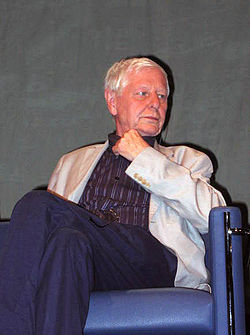
250px-Hans_Magnus_Enzensberger Hans Magnus Enzensberger from a while ago, in Sign and Sight:

Those who content themselves with the objective, material criteria, the indices of the economists and the devastating findings of the empiricists, will understand nothing of the true drama of the radical loser. What others think of him – be they rivals or brothers, experts or neighbours, schoolmates, bosses, friends or foes – is not sufficient motivation. The radical loser himself must take an active part, he must tell himself: I am a loser and nothing but a loser. As long as he is not convinced of this, life may treat him badly, he may be poor and powerless, he may know misery and defeat, but he will not become a radical loser until he adopts the judgement of those who consider themselves winners as his own.

Since before the attack on the World Trade Center, political scientists, sociologists and psychologists have been searching in vain for a reliable pattern. Neither poverty nor the experience of political repression alone seem to provide a satisfactory explanation for why young people actively seek out death in a grand bloody finale and aim to take as many people with them as possible. Is there a phenotype that displays the same characteristics down the ages and across all classes and cultures?

No one pays any mind to the radical loser if they do not have to. And the feeling is mutual. As long as he is alone – and he is very much alone – he does not strike out. He appears unobtrusive, silent: a sleeper. But when he does draw attention to himself and enter the statistics, then he sparks consternation bordering on shock. For his very existence reminds the others of how little it would take to put them in his position. One might even assist the loser if only he would just give up. But he has no intention of doing so, and it does not look as if he would be partial to any assistance.

Ostalgia

Our own Morgan Meis in The Smart Set:

269805_10150320698707848_538727847_9456576_171588_n Was there something good about communism? Was there something decent about the form of life that existed behind the Iron Curtain? As a political question, this can be answered definitively in the negative. Soviet-style communism was a failure by definition. It couldn't sustain itself. It was also a system that relied — in its Stalinist period — on outright terror. Its totalitarian tendencies continued past the Stalinist days. Even in the relatively benign incarnation of the ’70s and ’80s, the world of the Soviet Empire was a world of political repression and the stifling of civil society. We are all aware of these facts. Indeed, they are so comfortable that we never seem to tire of repeating them. That is also why an art show such as “Ostalgia” hides behind imprecise language and an ambivalence of purpose. It is a show that doesn't want to be caught taking the wrong political line. We are assured — in the explanations of artwork, in the press releases, in the catalogue, and in much of the work chosen — that this is a show that will do its job in critiquing the evils of communism.

But that is not what drove the curators at the New Museum to put up a show called “Ostalgia.” No one is interested in a show that condemns the politics of a civilization that no longer exists. In fact, the core impulse of “Ostalgia” is to explore a feeling that has nothing directly to do with politics at all. What art can show us about the society of the former Soviet Bloc is something that discussions of politics and society don't have immediate access to. Art can show us the immediacy of life as it was felt and experienced in that time, in that place.

What we find in “Ostalgia” is surprising. We find a great deal of ease. I'm not talking about material comfort or an “easy life.” I am talking about human ease, to coin a term.

More here. [Photo shows Morgan in Moscow last week.]

Breivik and His Enablers

Roger Cohen in the New York Times:

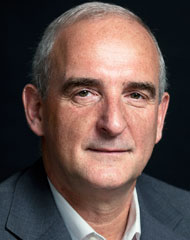
Cohen_New-articleInline On one level Anders Behring Breivik, the Norwegian responsible for the biggest massacre by a single gunman in modern times, is just a particularly murderous psychotic loner: the 32-year-old mama’s boy with no contact with his father, obsessed by video games (Dragon Age II) as he preens himself (“There was a relatively hot girl on [sic] the restaurant today checking me out”) and dedicates his time in asexual isolation to the cultivation of hatred and the assembly of a bomb from crushed aspirin and fertilizer.

No doubt, that is how Islamophobic right-wingers in Europe and the United States who share his views but not his methods will seek to portray Breivik.

We’ve seen the movie. When Jared Loughner shot Representative Gabrielle Giffords this year in Tuscon, Arizona — after Sarah Palin placed rifle sights over Giffords’ constituency and Giffords herself predicted that “there are consequences to that” — the right went into overdrive to portray Loughner as a schizophrenic loner whose crazed universe owed nothing to those fanning hatred under the slogan of “Take America Back.” (That non-specific taking-back would of course be from Muslims and the likes of the liberal and Jewish Giffords.)

Breivik is no loner. His violence was brewed in a specific European environment that shares characteristics with the specific American environment of Loughner: relative economic decline, a jobless recovery, middle-class anxiety and high levels of immigration serving as the backdrop for racist Islamophobia and use of the spurious specter of a “Muslim takeover” as a wedge political issue to channel frustrations rightward.

More here.

With friends like these

Feisal H. Naqvi in the Express Tribune:

ScreenHunter_23 Jul. 26 16.06 Till recently, I had nothing but respect for Mr Shashi Tharoor. He is not only an accomplished writer and a former under-secretary-general of the UN, but a popularly elected member of India’s parliament. All these are substantial achievements. At the same time, Mr Tharoor’s recent column “Delusional liberals” (Deccan Chronicles, July 21) left me greatly disappointed.

Since Mr Tharoor’s column was but the latest in a series of cross-boundary literary salvos, some background is necessary. This latest border incident began with an examination by Aatish Taseer of Pakistan’s so-called ‘obsession’ with India and, more specifically, the fact that even ‘liberals’ like his late father took much pleasure in any travails which happened to come India’s way. In terms of content, what Taseer Jr had to say was not entirely incorrect, though grossly overstated. However, the references to his father were entirely gratuitous as seen by some Pakistanis, which combined with the tenuous nature of his conclusions, inspired one Ejaz Haider to pen a response (titled “Aatish’s personal fire” and published on these pages on July 19).

Ejaz’s reply to Aatish Taseer made, in essence, two points. The first was that the article was massively simplistic. The second was that our apparent obsession with India was partly justified given the Pakistan-specific nature of India’s military preparations.

Tharoor sahib’s response to Ejaz, in turn, also had two things to say. The first was that Ejaz had missed the apparently evident point that India is a peace-loving nation whose military capabilities are all non-violent and defensive in nature. The second was that, like other Pakistani liberals, Ejaz’s commitment to critical thinking was liable to be overwhelmed by atavistic nationalistic impulses.

More here.

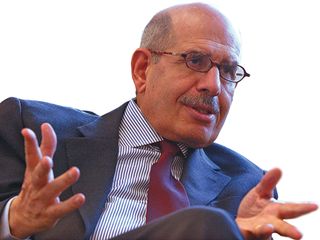
If I ruled the world: Mohamed ElBaradei

Mohamed ElBaradei in Prospect:

185_ruled_august Every person ought to spend an afternoon writing an essay with this title. It is stimulating to dream about how we could change our world.

Putting daydreams aside, a re-engineering of global governance is long overdue. Communicable diseases spread as rapidly as viral videos, multinational corporations are more powerful than many governments, and climate change does not respect borders. Arms sales, agricultural subsidies and energy strategies are agreed with little thought of the repercussions, which can include refugee migrations, famine, pandemics, environmental degradation and civil wars.

If I could, I would overhaul the United Nations system. In six-and-a-half decades, the UN has worked hard to bring about greater international co-operation in managing and overcoming common challenges. Its organisations have often been successful in redressing societal ills. But the system is in dire need of a serious rethink.

My highest priority would be to transform the UN security council: to revamp the council’s modus operandi for responding to longstanding tensions, armed conflicts, and other threats; to ensure representative membership; and to re-examine selective veto power. A humanitarian force, chartered with the “responsibility to protect” against war crimes, crimes against humanity, and other conflicts in which innocent civilians are the primary victims, would stand ready to intervene, to prevent the kind of slaughter taking place in Libya and elsewhere. The International Court of Justice would be granted compulsory global jurisdiction. A global energy agency would be launched to help nations achieve energy security and develop environmentally responsible strategies.

More here.

Happy animals: the joy beyond the struggle to survive

From Guardian:

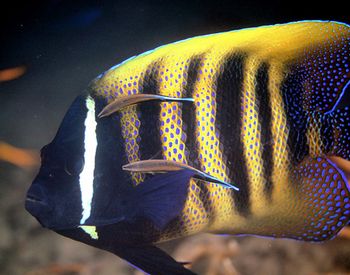
Six-barred-angelfish-002 Scientists have been wary of discussing the pleasures experienced by animals, seeing nature as a brutal struggle for survival. But as the similarities in physiology and biochemistry between humans and animals become ever clearer it becomes harder to ignore the joy of life in the wild. Animal behaviour scientist Jonathan Balcombe takes us on a tour of the sunny side of animal life, and argues that a shared capacity for feeling demands a radical shift in our relationship with the animal world.

Six-barred angelfish
“One of nature's many mutualisms is demonstrated by cleaner fishes which pluck parasites and nibble algae and loose skin from client fishes. These relationships, built on trust and cemented by the rewards of touch and nourishment, have been well studied, but I've yet to see any specific mention of the word pleasure in any of the papers I've read. Here a team of two cleaner wrasses provide spa treatment to an angelfish. It's clearly in the angelfish's interests to get rid of parasites, but there's mounting evidence for a more immediate, complementary benefit for this behaviour: the tactile ministrations of the cleaner wrasses feel good”

More here.

Evolution Right Under Our Noses

Carl Zimmer in The New York Times:

Evo Dr. Munshi-South has joined the ranks of a small but growing number of field biologists who study urban evolution — not the rise and fall of skyscrapers and neighborhoods, but the biological changes that cities bring to the wildlife that inhabits them. For these scientists, the New York metropolitan region is one great laboratory.

White-footed mice, stranded on isolated urban islands, are evolving to adapt to urban stress. Fish in the Hudson have evolved to cope with poisons in the water. Native ants find refuge in the median strips on Broadway. And more familiar urban organisms, like bedbugs, rats and bacteria, also mutate and change in response to the pressures of the metropolis. In short, the process of evolution is responding to New York and other cities the way it has responded to countless environmental changes over the past few billion years. Life adapts. The mice are the object of Dr. Munshi-South’s attention. Since 2008, he and his colleagues have fanned out across the city to study how the rise of New York influenced the evolution of the deer mice.

More here.

Tuesday Poem

Anahata

aside from faith,
as far as you know,
you will never have another heart.
better to grow the one you were born with.
fill it with blood & love. risk.
let the strange world sneak inside.
accept all of life in your chest.
death is the end of percussion.
breathe deeply, the music
will function. listen close.
freedom thaws in your ribcage.
dance with vehemence
to feel its fast-pumping.
tempt two lips to greet your throat
& take note: your racing pulse
will laugh & kiss back. god is strong
in the clock of your desire.
every tick, my friend, divine
confirmation: you are alive. beat. yes!
you are alive

by Lenelle Moïse
from The Poetry Center at Smith College
© 2008-2010

Monday, July 25, 2011

Sunday, July 24, 2011

Breivik was my friend on Facebook. I’ve seen what fed his hatred

Camilla Ragfors in The Guardian:

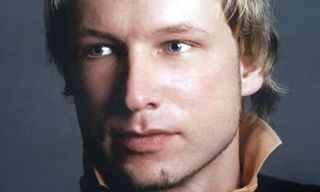
Anders-breivik-007 I understand how a man like Anders Behring Breivik fed the flames of his hatred, even if that was not the only reason for his terrible act of terrorism, because I was, for a while, his friend on Facebook.

I joined the Sweden Democrats many years ago. It wasn't because I was a nationalist, or terrified of Muslims. There were two reasons: one was pure and simple curiosity; the other was that I was interested to see how democracy works. I had soon had enough, not because the rest of the world hated me for being a member, but because of all the hate which came my way from people who saw the SD as God's solution to all the world's problems. I had never before come across such hatred.

One day I had a friend request on Facebook from Anders Breivik. There wasn't anything odd about that: when I was a member of SD I was magnetically attractive to everyone who called himself a nationalist: both those for whom it was a game, and the real extremists. Those were, in fact, the people who drove me away from the party. A machine of hate propaganda pumped through my feed on Facebook. There were YouTube clips of massacre victims, demands that all the “fucking niggers” should get out of the country, and far more horrible things.

I reacted by backing away. But for many other people who are weak, or feel bad for some reason, this stream was something to drink from.

More here.